

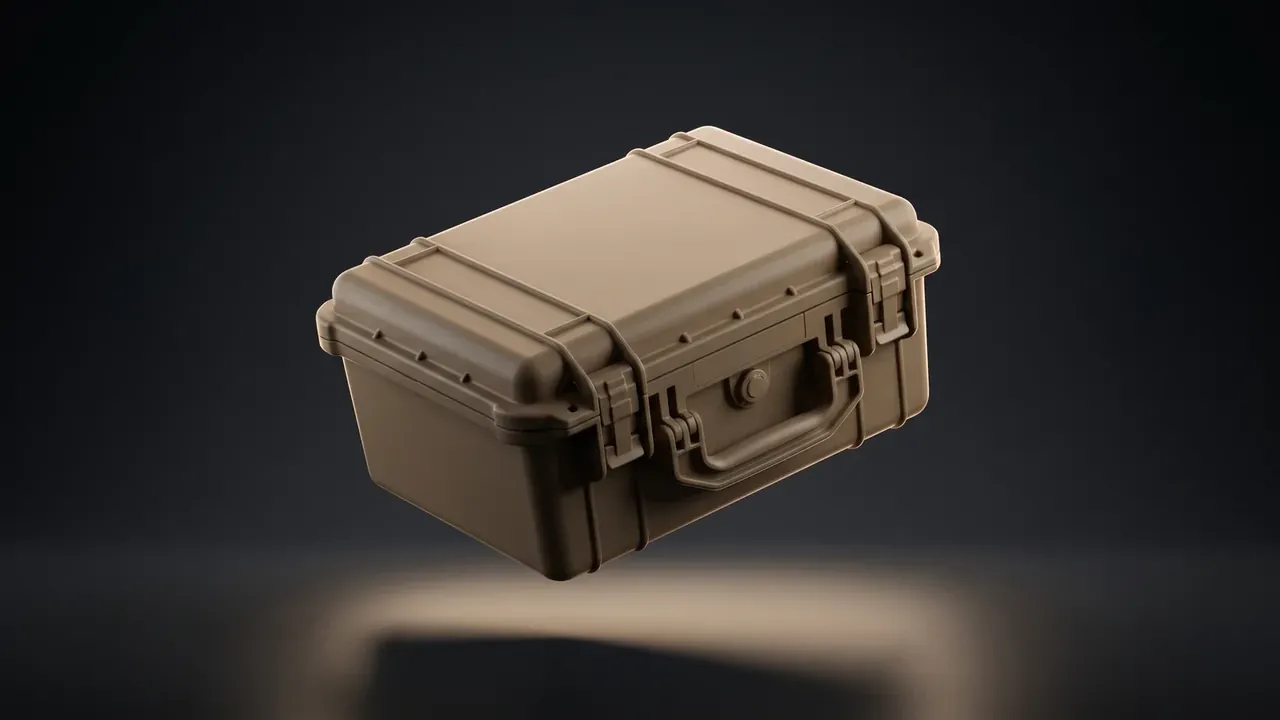
Quick answer: Accepting an Ammunition Transit Case is not about testing everything. It is about testing first the items whose failure costs far more than the test. Latches, sealing and whole-case strength take minutes to check and days to recover once missed.
Table of contents
- Where the acceptance budget leaks
- Locks and latches after five thousand cycles
- Sealing: spray and pressure, two pass lines
- Whole-case strength: drop, stack, roll
- Rejects and the boundary of concession
- FAQ
1. Where the acceptance budget leaks
Two hundred Ammunition Transit Case units from one run, tested item by item before dispatch, cost roughly three to five percent of the quoted price. That looks modest until a missed item surfaces downstream, because recovery is priced by the batch: unpacking, freight, retest, late delivery.
So the plan should not chase a long checklist. Put first the items where the gap between test cost and failure cost is widest.
| Item | Time per unit | Recovery if missed | Cost versus the test |
|---|---|---|---|
| Appearance, dimensions | 3 minutes | Sort on site, ship spares | 2 times |
| Latches, locks | 5 minutes | Replace housings by batch | 4 times |
| Sealing | 20 minutes | Strip and reseal the batch | 6 times |
| Drop, stack | 3 units per batch | Retool and rebuild samples | 10 times or more |
The lower an item sits, the longer it takes to test and the harder it is to fix later.
2. Locks and latches after five thousand cycles
Latches are the item most often replaced by feel. A crisp click on a new Ammunition Transit Case proves nothing; the verdict comes after five thousand open-close cycles, when holding force and tongue wear can be measured.
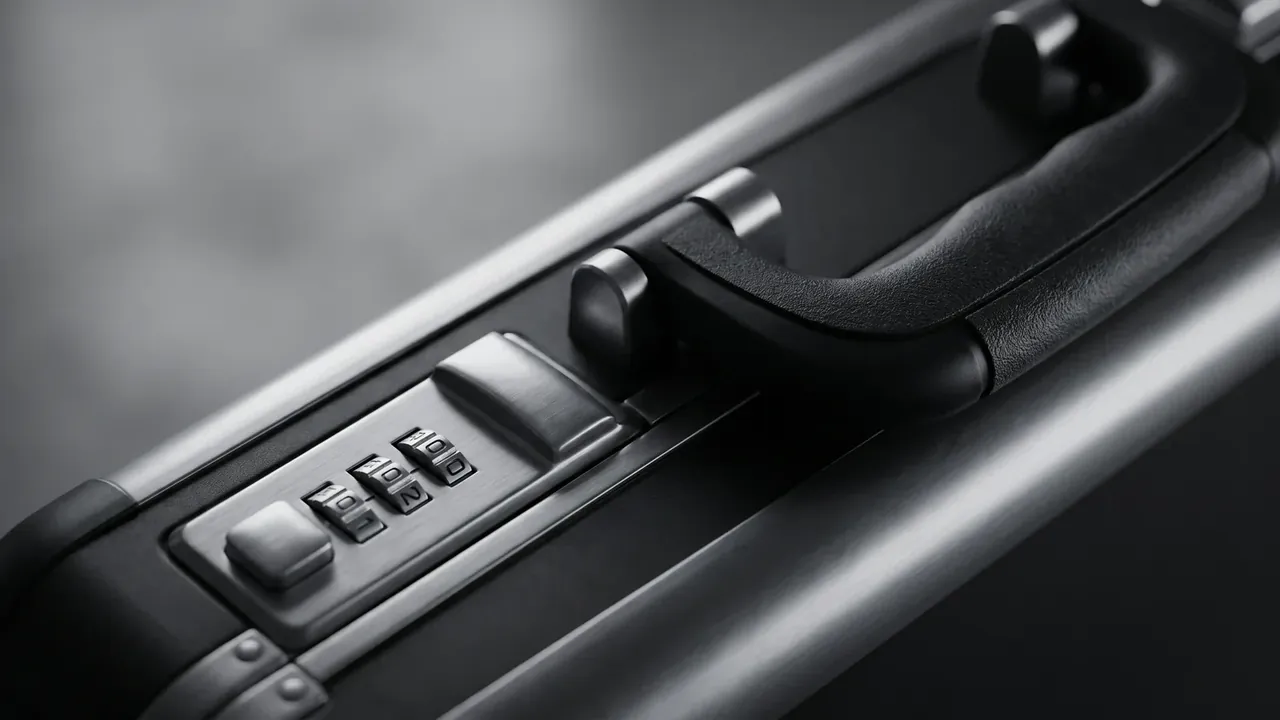
The rig runs ten cycles a minute, five thousand in eight and a half hours, unlubricated and uncleaned. Afterwards holding force may not drop more than twenty percent, tongue wear may not exceed 0.5 mm on either side, and the riveted housing must stay tight.
The pull test runs separately: with the latch closed, 800 N is applied along the opening direction for one minute, and the latch may not release or crack. This exposes material problems faster than the rig, since latches with a high share of regrind start deforming near 500 N.
The lock needs one more look: dial feel in the cold. After four hours at minus twenty the dials must not stick.
3. Sealing: spray and pressure, two pass lines
An Ammunition Transit Case has two ways to prove its seal, one for water and one for air. They do not replace each other: spray finds an uneven lid clamp, pressure a flawed cord.
| Method | Parameter | Pass line | Used for |
|---|---|---|---|
| Spray | 50 mm/h, 30 minutes, tilted 15 degrees | No droplets or mist inside | Routine batch test |
| Pressure | 20 kPa, held 60 seconds | Drop no more than 1 kPa | New gasket batch |
| Immersion | 100 mm of water, 10 minutes | No seepage on opening | Disputed lots |
| Cold seal | Freeze 4 hours at minus thirty, retest | Same 1 kPa limit | Cold-region orders |
Tilt is where spray tests get faked. Upright, water runs off the lid before it can enter; at 15 degrees it sits on the seam, which is the only position that proves anything.
Temperature is the trap in the pressure test: a warm case cools and the gauge drop looks like a leak, so let it sit four hours first.
4. Whole-case strength: drop, stack, roll
The strength of an Ammunition Transit Case is checked in three trials, each aimed at a different surface: drop at the corners, stack at the lid, roll at the base and wheels.
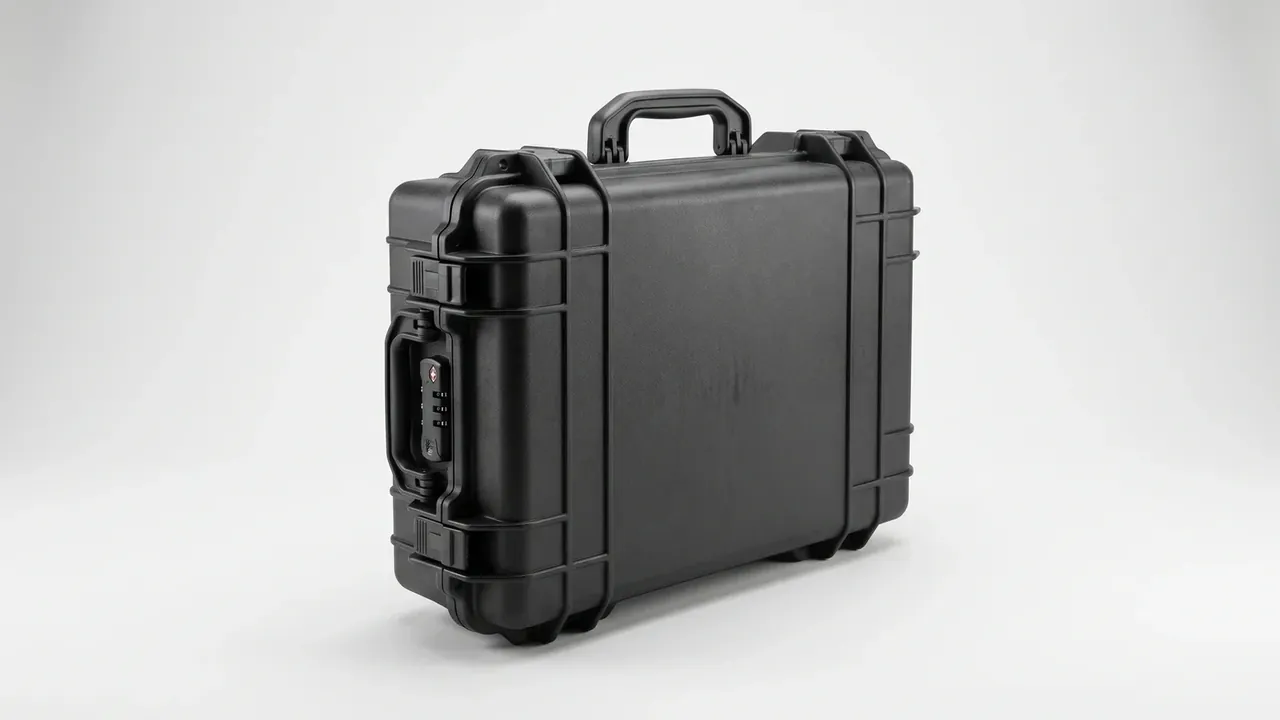
Drop runs at 1.2 m across six faces, three edges and the weakest corner, ten impacts in total. After each one the case is opened and checked for cavity cracks and latches that no longer close. Stacking applies 200 kg for 24 hours, with residual set on the lid limited to 2 mm. The roll test covers wheeled models: two kilometres loaded, no axle play, no feet worn through.
Roll is the trial most often skipped: smooth concrete hides the fault, gravel at two kilometres exposes the wheel mounts.
5. Rejects and the boundary of concession
A verdict on an Ammunition Transit Case is half the job. The rules that follow decide the cost, so put these five into the acceptance sheet first.
- Critical: seal failure, latch release, cracking after drop. Reject the batch, no concession.
- Major: wall under nominal by more than five percent, lid set above 2 mm. Sort and accept, mark rejects separately.
- Minor: colour drift, label position, print shifted past 1.5 mm. Concession with a batch price cut.
- Retest sampling: square root of the batch, never fewer than 3 units.
- Every concession states where responsibility ends, and no defect is conceded twice.
Conclusion
Rank the items by failure cost and acceptance of an Ammunition Transit Case turns from ritual into cost control: latches judged after five thousand cycles, sealing judged by tilted spray and held pressure, strength judged by drop, stack and roll. Every item carries a number, and every reject carries a rule.
This article discusses only the container (case body) side of specifications and design intent, and does not cover any handling, loading or use of the contents.
Related Reading
- Packing and inspection requirements for ammunition boxes
- Pass lines and tolerances for small arms ammunition boxes
- Standards compared across special ammunition box types
- Strength test requirements for airdrop cases
Related Products
- 8 Series — Gun Cases; Military Equipment Cases; Camera Equipment Cases; Drone Cases; Watch Cases; Knife Cases; First Aid Cases; Electronics Equipment Cases
- WL8-2812 PP Gun Case — model WL8-2812
- All protective cases and toolboxes: 7 series, 158 models