

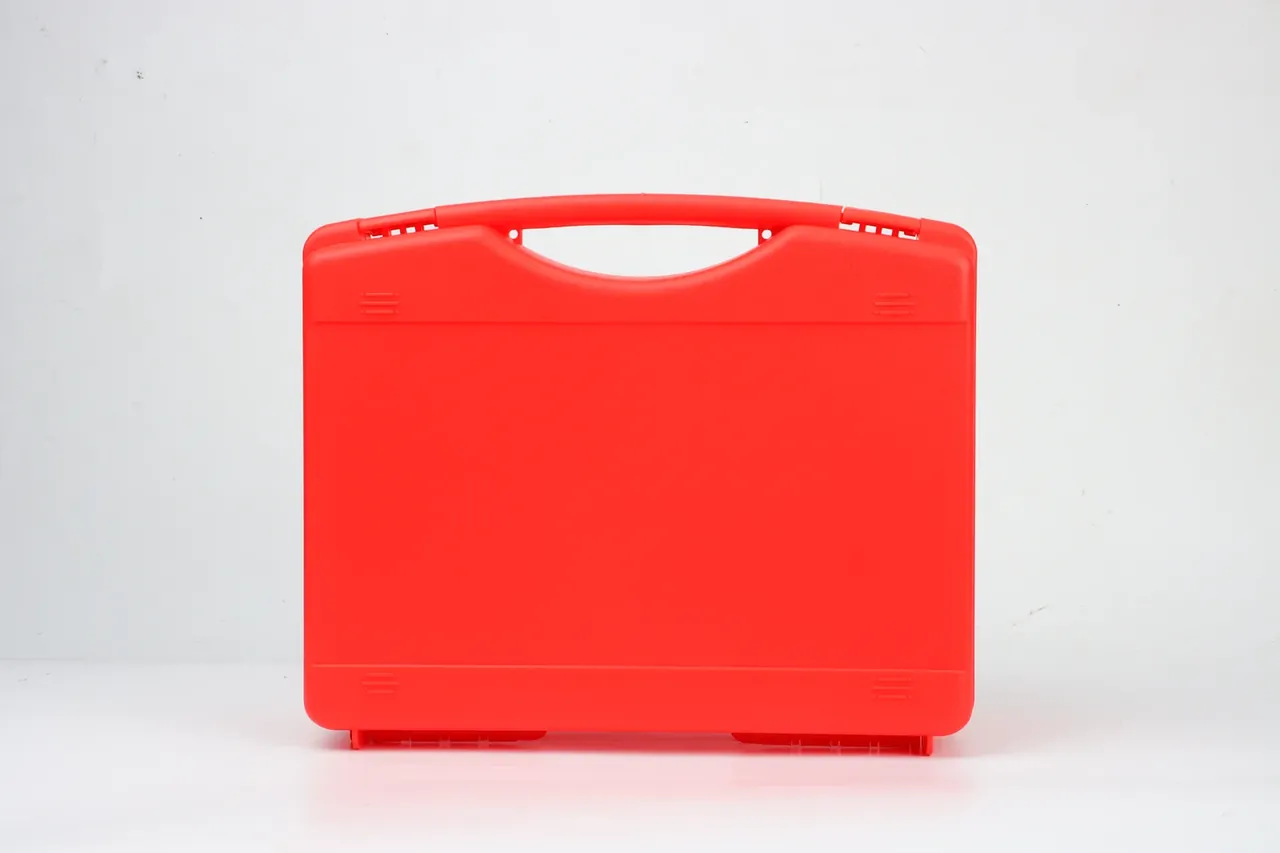
Quick answer: Antimicrobial cases in PP rely on silver carriers rated above 300 °C or on quaternary ammonium that acts within 1 h but degrades near 200 °C.
Table of contents
- Two additive routes inside a PP shell
- Silver ions: carriers and release rate
- Quaternary ammonium: fast start, two hard limits
- Measuring inhibition: the 24 hour contact test
- What washing and ageing leave behind
- FAQ
1. Two additive routes inside a PP shell
PP has a surface energy near 30 mN/m. A water film on the lid interior lets bacteria climb from 200 CFU/cm² to 1×10⁵ CFU/cm² in 24 h, and it is the curve antimicrobial cases must flatten.
Antimicrobial cases follow two mature routes. Inorganic silver locks Ag⁺ inside a carrier lattice and releases it by ion exchange. Organic quaternary ammonium disperses at molecular level and uses a positive charge to attach to the cell wall.
The moulding window decides between them. Injection runs at 210–230 °C melt with 3–5 min residence; rotomoulding runs at 260–290 °C oven temperature and 18–25 min per cycle. Silver carriers tolerate 300 °C and above. Quaternary compounds break down between 200 and 240 °C, which rules rotomoulding out.
| Item | Silver inorganic | Quaternary organic |
|---|---|---|
| Heat ceiling | above 300 °C | 200–240 °C |
| Typical load | 0.3–1.0 % | 0.5–2.0 % |
| Onset | 24–48 h, slow release | under 1 h |
| Activity life | over 3 years | 12–18 months |
| Migration risk | low | high, surface bloom |
| Cost index | 100 | 60 |
2. Silver ions: carriers and release rate
Silver zirconium phosphate, the commonest carrier in antimicrobial cases, holds Ag⁺ between layers 0.76 nm apart at 2–3 mmol/g. Silver glass swaps sodium in the SiO₂ network for silver at 3–5 % loading and releases more evenly. Silver zeolite is the cheapest at 2–3 %, but its framework collapses below pH 5.
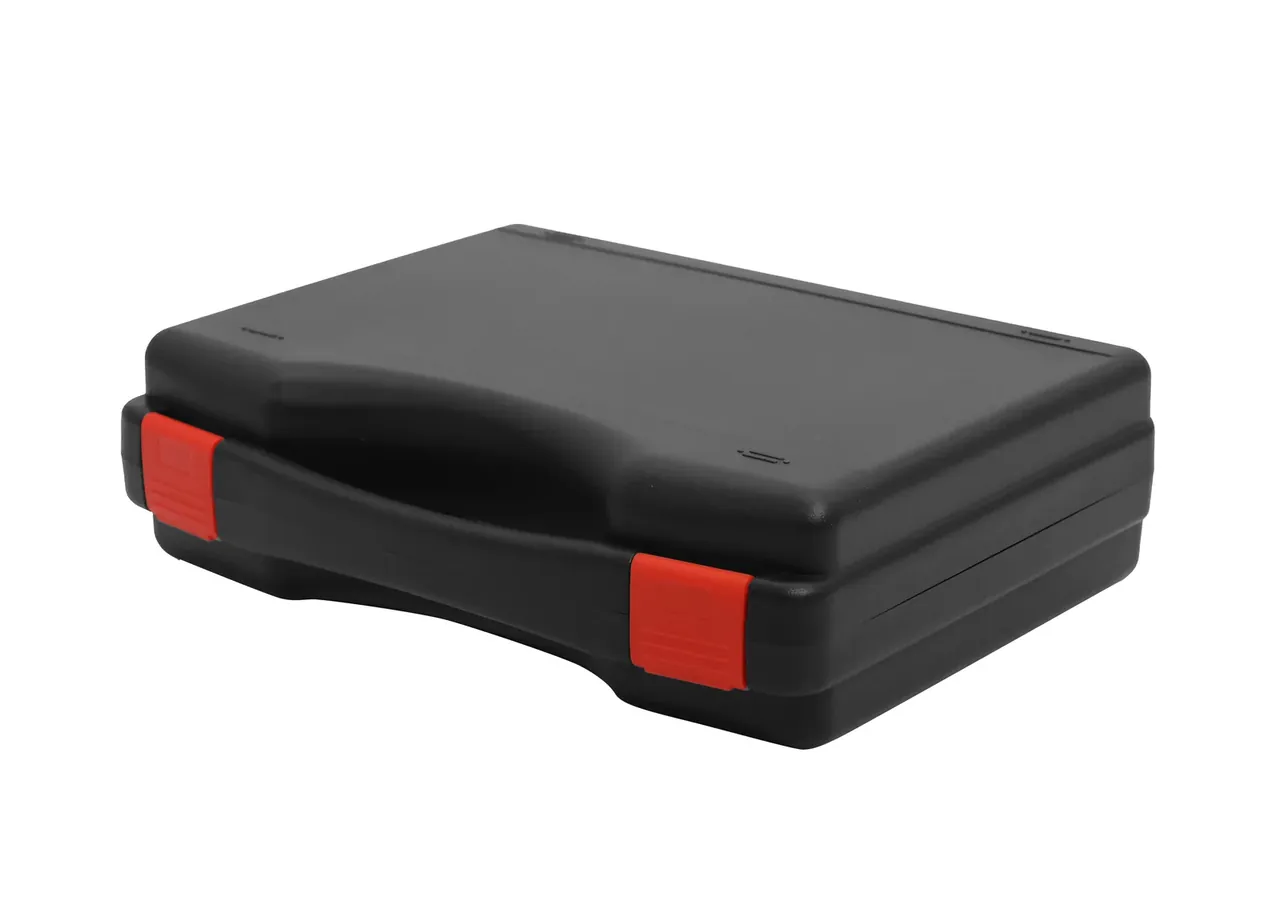
Release rate sets service life. A 24 h soak at 25 °C liberates 0.02–0.05 mg/L, below the 0.05 mg/L drinking water limit, and the same sample still delivers 0.03 mg/L at day 30.
Ag⁺ binds thiol groups on bacterial enzymes and blocks the respiratory chain. At 0.5 % loading with a D50 of 2–5 μm, a 50×50 mm plaque reaches 99 % inhibition in 24 h. At 0.2 % the figure falls to about 85 %, so the value knee sits near 0.4 %.
Dispersion decides whether that number holds. An L/D of 40, a barrel at 190–210 °C and side fed masterbatch keep residence under 8 min. Feeding at the throat collapses the particle size, doubles surface area and lets the release rate run away. Colour shift follows: heat and light reduce Ag⁺ to metallic silver, reaching ΔE 4 after 1000 h on a natural white part.
3. Quaternary ammonium: fast start, two hard limits
The molecule carries a quaternary nitrogen at one end and a C12–C18 alkyl chain at the other. The cation head adsorbs onto the phospholipid bilayer, the chain pushes in and the cell leaks. Inhibition reaches 99.9 % at 24 h and begins within 1 h of contact, an order of magnitude faster than silver.
Heat is the first limit. Five percent weight loss falls between 220 and 240 °C. At 230 °C melt and 5 min residence the active content drops 8–12 %; in a rotomoulding oven at 280 °C for 20 min it carbonises and leaves yellow patches.
Migration is the harder one. The compound acts like a small plasticiser: after 30 days a bloom appears and contact angle falls from 85° to 55°. A 72 h soak at 50 °C costs 40–60 % of activity, against 5 % for silver.
That fits thin wall antimicrobial cases with fast onset needs and low wash frequency. Cost runs about 60 % of a silver system, and service life roughly halves.
4. Measuring inhibition: the 24 hour contact test
ISO 22196 and JIS Z 2801 share one method. A 50×50 mm specimen takes 0.4 mL of inoculum at 2.5×10⁵ to 1×10⁶ CFU/mL, a 40×40 mm film spreads it flat, and the assembly incubates at 35 °C and 90 % RH for 24 h before survivors are eluted and counted.
The result is control count minus specimen count, divided by control count. JIS Z 2801 asks for 99 %, a log reduction of 2.0. A sample reporting 90 % is inside the scatter of the blank and does not pass.
Strains follow the end use. E. coli ATCC 8739 and S. aureus ATCC 6538 form the standard pair; mould resistance runs under ASTM G21 for 28 days.
| Test | Method | Limit | Sample |
|---|---|---|---|
| Initial inhibition | ISO 22196 | ≥99.0 % | 3 pcs |
| After scrubbing | 500 cycles at 1 kg | ≥95 % | 2 pcs |
| After ageing | xenon 500 h | ≥90 % | 2 pcs |
| Mould rating | ASTM G21, 28 days | grade 0 | 2 pcs |
| After migration | 72 h soak at 50 °C | loss ≤50 % | 2 pcs |
Inhibition in antimicrobial cases is not disinfection. The test counts survivors after 24 h of contact, says nothing about kill rate and cannot be extended to enveloped viruses. A sterilising claim on a box that only passed ISO 22196 will not survive a label review.
5. What washing and ageing leave behind
Five hundred scrubbing cycles under 1 kg with a non woven pad remove about 20 μm of surface. Silver in the compound falls from 99.5 % to 96 %; a coated sample falls from 99 % to 78 %.
Antimicrobial cases age differently by chemistry. After 500 h of xenon exposure silver loses 8–12 % of activity and quaternary ammonium loses 45 %. Another 100 h at 100 °C takes 15 % more from the quaternary system and 3 % from silver.
Thermal cycling fits the same picture. Fifty cycles between −20 °C and 60 °C move the lid to body gap by 0.15 mm only. Above 30 % regrind the inhibition drops under 90 %, so either 0.2 % fresh masterbatch goes back in or the regrind share comes down to 20 %.
Conclusion
For antimicrobial cases the choice follows moulding temperature and wash frequency. A rotomoulded shell at 260–290 °C leaves only silver carriers rated above 300 °C, dosed at 0.3–1.0 % with the knee near 0.4 %. Thin wall injection parts can use quaternary ammonium, which starts within 1 h at 60 % of the cost but loses 40–60 % of activity in a 72 h soak at 50 °C. Food contact starts with migration data, and the report should quote the ISO 22196 record, three specimens, 24 h contact, a 2.0 log reduction, and nothing more.
This article covers only the specification and design meaning of the case side, and does not address any handling, loading or use of the contents.
Related Reading
- Raw material and additive sequence for PP cases
- How a rotomoulded protective case is formed
- PP cases against ABS cases
- Waterproof ratings and how they are tested
Related Products
- 8 Series — Gun Cases; Military Equipment Cases; Camera Equipment Cases; Drone Cases; Watch Cases; Knife Cases; First Aid Cases; Electronics Equipment Cases
- WL8-2812 PP Gun Case — model WL8-2812
- All protective cases and toolboxes: 7 series, 158 models