

An archive and heritage climate case is a dedicated climate-controlled container used by archives, museums, libraries, art galleries and heritage collections for long-term storage and loan transit of collections. Its core value is not simply holding an object but stabilizing the microclimate around it within a set, measurable and traceable temperature and humidity band, so that paper, textile, metal, ceramic and organic materials survive both long storage and long-distance transit without damage from temperature and humidity swings, light, dust, pollutants, insects and mold. Compared with an ordinary protective case, a climate case adds an entire climate capability: an insulated structure, a temperature and humidity control unit, sealing against dust and moisture, internal cushioning, and monitoring and logging. If any one of these is missing, the collection is exposed. This article examines the selection and design of archive climate cases, heritage humidity cases, constant temperature and humidity cases, collection transit cases and rare-book protection cases, breaking down the degradation mechanisms of collections, the standards and quantitative indicators for temperature and humidity control, the working principle of the case, humidification technologies, material selection, protection ratings, monitoring and traceability, the different climate needs of different materials, special protection for rare books and paper archives, loan transit and handover, the procurement and acceptance checklist and common mistakes, with tables that can be used directly in tenders and acceptance.
Readers who need the fundamentals of cases and liners should first review Plastic Protective Cases: Material and Structure and Cushion Liner and Custom Cutting Design. For extreme high and low temperature environments see High- and Low-Temperature Protective Cases, for clean and precision equipment see Lab Equipment Cases and Wafer and Semiconductor Transport Cases, and for sealing structure see Waterproof Case Sealing Design.
What Archive and Heritage Climate Cases Are
An archive and heritage climate case, also called an archive climate case, a heritage humidity case or a collection transit case, turns a preservation environment into a container that is movable, controllable and traceable. It combines an insulated shell, a temperature and humidity control unit, a sealing structure, internal cushioning and a monitoring module so that a stable microclimate can be maintained without depending on a fixed storage room. Compared with a room-level climate unit, the advantage of a case is close protection: the collection stays in a controlled environment from the moment it leaves the store, through handover, loading, transport and unpacking at the venue, avoiding the break in control that happens when an object leaves the store.
In use there are two main types. The first is the storage type, used for graded storage in a repository, for rare-book cabinets and for temporary transitional storage, emphasizing long-term stability and low power. The second is the transit type, used for cross-institution loans, touring exhibitions, conservation transfers and off-site safekeeping, emphasizing shock resistance, sealing, low weight and traceability. The two share a common structure but differ in humidification method, power supply, cushioning level and weight control.
Typical users include comprehensive and specialist archives at every level; the storage and exhibition departments of museums, galleries and memorial halls; rare-book and special-collection departments of libraries; document, specimen and object collections in universities and research institutes; archaeological institutes and conservation centres holding recently excavated objects; and curatorial and transport organizations managing cross-institution loans and touring exhibitions. Wherever a collection must be preserved long term or moved across regions and is sensitive to temperature and humidity, that is the application boundary for this type of case.
Environmental Risks to Collections
The environmental causes of deterioration fall into five groups. The first is temperature and humidity fluctuation. Paper, textile, leather and wood are hygroscopic and take up and release moisture as the environment changes, expanding and contracting accordingly; repeated humidity swings make fibres work back and forth, causing paper to cockle, paint layers to crack and mounting to detach. Temperature strongly affects the rate of chemical reactions, and as temperature rises the rate of paper acidification, adhesive ageing and metal corrosion all accelerate.
The second is absolute humidity that is too high or too low. High humidity encourages mold and metal corrosion and creates conditions for pests, while low humidity makes paper brittle, leather crack and wood shrink and split. The third is light. Ultraviolet and visible light drive photochemical reactions that yellow paper, fade pigments and embrittle textiles, with ultraviolet doing the most direct damage. The fourth is pollutants and dust. Sulphur dioxide, nitrogen oxides, organic acids, ozone and fine particles settle on surfaces and penetrate fibres, accelerating acidification and corrosion. The fifth is insects, mold and microbes. In a warm, damp and poorly ventilated environment, mold spores and wood-boring insects multiply easily.
These five risks rarely act alone; they amplify each other. Humidity fluctuation loosens the fibre structure so that light and pollutants penetrate more easily, and insects and mold then take hold under damp conditions. The design logic of a climate case is therefore not to fight a single factor but to bring temperature, humidity, light, pollutants and biological factors into one controlled microclimate at the same time. Solving only one of them still leaves the collection degrading slowly through the others.
Temperature and Humidity Control Standards
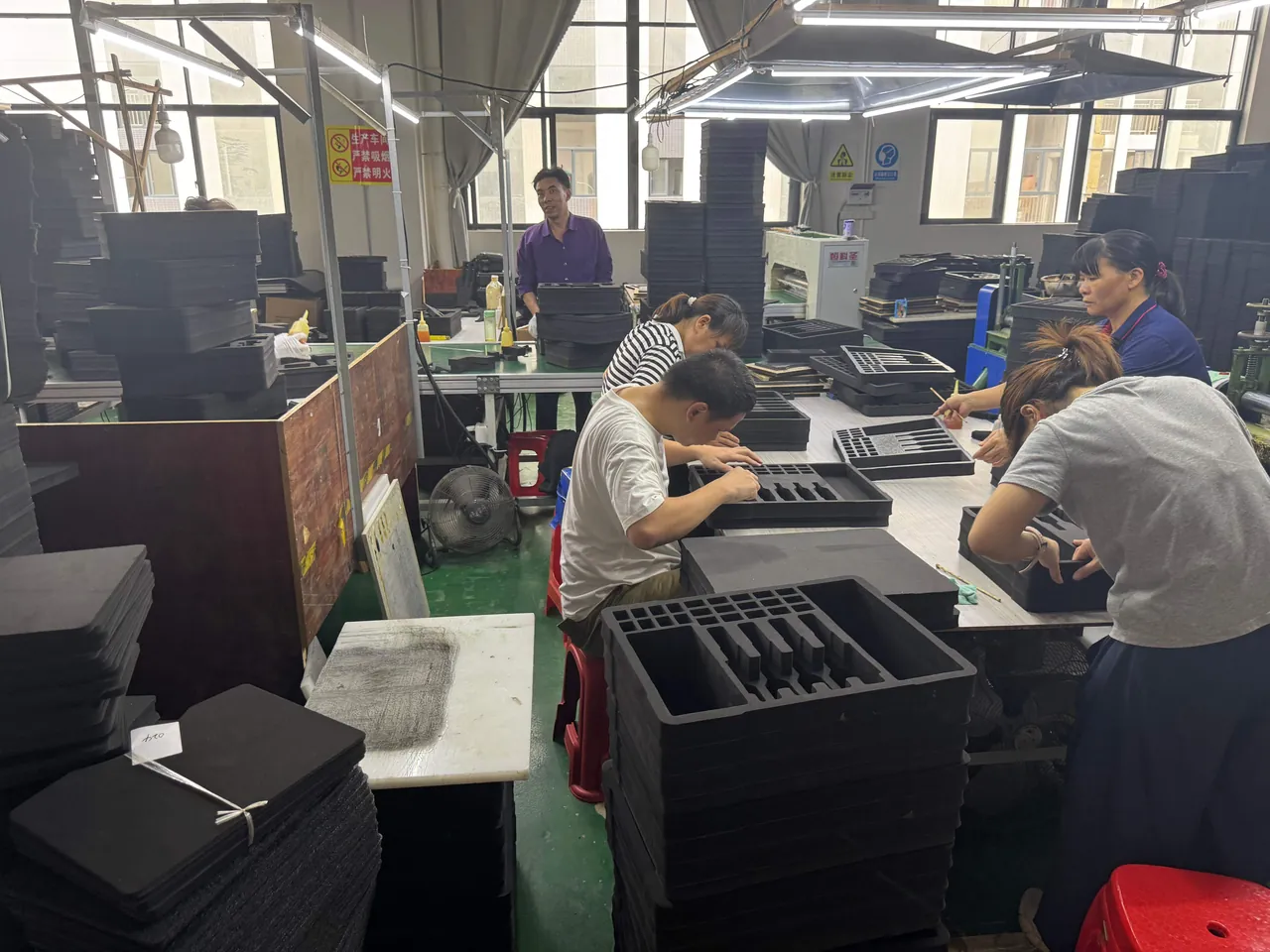
Temperature and humidity control must be reduced to measurable indicators rather than staying at the vague level of keeping things dry. The international and domestic conservation field generally uses a dual indicator of setpoint plus fluctuation amplitude: both the target temperature and humidity and the permitted range of fluctuation are specified, because in most cases a stable fluctuation matters more than an absolute value. Repeated large swings damage organic materials more than an environment that is slightly off the ideal value but very stable.
For a mixed-material general store, the common approach is to control within a compromise band that suits several materials; for a single-material special collection the band can be tightened according to the material. The evaluation indicators usually include the temperature setpoint and daily fluctuation amplitude, the relative humidity setpoint and daily fluctuation amplitude, the spatial uniformity of temperature and humidity, the air exchange rate of the sealed case, and the recovery time after the case is opened. The table below gives common reference bands for engineering and procurement purposes (typical values; the specific collection type and the institution's own standard take precedence).
| Collection or material | Recommended temperature | Recommended RH | Key concern |
|---|---|---|---|
| --- | --- | --- | --- |
| Paper archives, rare books | 16 to 20 C (stability first) | 45% to 55% | Suppress acidification and mold, limit swelling |
| Paintings, silk, textiles | 16 to 20 C | 50% to 55% | Prevent paint cracking and fibre embrittlement |
| Metal objects | 18 to 22 C | 35% to 45% (low) | Suppress electrochemical corrosion |
| Ceramics, stone | 18 to 22 C | 40% to 55% | Prevent salt efflorescence and freeze-thaw, cushioning first |
| Wood, lacquerware | 16 to 20 C | 50% to 60% | Limit shrinking and cracking |
| Leather, feather, bone | 16 to 20 C | 45% to 55% | Prevent drying, cracking and hydrolysis |
It should be stressed that the bands in the table are preservation-oriented typical values. For loan transit, the case is more concerned with suppressing external fluctuation and maintaining internal stability, and its value lies in attenuating the violent changes between vehicle, aircraft hold and gallery to a level the collection can survive, rather than matching the absolute values of the store.
How a Climate Case Works: Insulation, Control, Sealing, Cushioning
A climate case can stay constant only through the cooperation of four capabilities. The first is the insulated structure. Between the outer shell and the inner liner a low-conductivity insulation layer is filled, combined with a thermal break and a gasket, to reduce heat transfer from outside. The thickness of the insulation is directly related to case size, the inside-outside temperature difference and the intended running time, and it is the foundation of energy consumption and stability.
The second is the temperature and humidity control unit. Depending on the technical route, this may use thermoelectric cooling and heating, a small compressor, or a passive or active humidification module. The temperature unit keeps the temperature within the set band, and the humidity unit absorbs or releases moisture to stabilize relative humidity. The two must be controlled together so that controlling temperature does not pull humidity off target.
The third is sealing against dust and moisture. Sealing decides whether external moisture, dust and pollutants can enter. A common solution is a full-perimeter foamed or molded gasket with multi-point latches that compress it evenly; for higher requirements, double sealing or inflatable seals can be used. Sealing performance can be expressed on a protection scale following GB/T 4208 or IEC 60529, and the compression set after long use should also be watched.
The fourth is internal cushioning and separation. Collections themselves are sensitive to shock, so a custom liner is needed to fix each object in one unique position, with heavy items low and fragile features given dedicated clearance, avoiding displacement and rubbing in transit. Cushioning and climate control do not conflict, but they must be coordinated: the liner must not press on the sealing face, moisture-absorbing materials must not become a water source, and the packing route must not break the air seal.
Humidification Technologies Compared
Humidification is the watershed of a climate case, and the routes differ clearly in fit. Passive humidification relies on pre-conditioned silica gel, molecular sieve or a dedicated conditioning agent, holding humidity through an adsorption and desorption balance. It is simple, needs no power and suits transit and high-risk-of-power-loss scenarios, but its precision depends on dose and ambient temperature and it must be regenerated periodically. Electronic humidification uses a humidity sensor and a humidifying or dehumidifying actuator in a closed loop; it is precise, settable and loggable, suited to stores and important special collections, but it depends on power and maintenance. Thermoelectric control is small, uses no refrigerant and can control temperature precisely, suited to small and medium cases, but its efficiency is limited by the temperature difference, so it is better at maintaining than at rapid cooling.
| Technology | Advantages | Limits | Typical fit |
|---|---|---|---|
| --- | --- | --- | --- |
| Passive conditioner | No power, reliable, light | Low precision, needs regeneration | Loan transit, emergency storage |
| Active electronic | Precise, loggable, settable | Depends on power and maintenance | Store cabinets, rare books |
| Thermoelectric | Small, precise, no refrigerant | Low efficiency at large difference | Small and medium storage or transit |
| Small compressor | High cooling capacity, stable | Large and heavy, vibration | Large storage room or display case |
When selecting, answer three questions first: whether the collection most fears temperature or humidity; whether stable power is available in transit; and whether temperature and humidity data must be retained for traceability. The answers point naturally to the right route: passive conditioning where humidity is the fear and no power is available, active electronic where precision and traceability are needed, thermoelectric for a small case that must hold temperature, and a compressor for a large space with high cooling demand. For most loan transit the best combination is passive conditioning as the base with a data logger for monitoring, balancing reliability and low weight.
Climate Control for Transit Cases
The biggest difference between a transit climate case and a storage type is that it must hold climate while moving. Transit brings three disturbances: abrupt environmental change between vehicle, aircraft hold and gallery; mechanical vibration from road bumps and loading; and the short exposure caused by necessary operations such as opening for handover or customs inspection. A transit case climate plan must therefore solve four problems at once: insulation, sealing, cushioning and rapid recovery.
Concrete measures include an insulated structure with a thicker layer and low air exchange to extend the temperature cruise time; a custom liner to fix the collection and absorb vibration; a temperature and humidity logger inside the case to record the whole journey from dispatch to installation; and a planned operating sequence for any necessary opening to shorten exposure. For long cross-climate transit, phase-change materials or cool or heat storage components can be placed between the outer and inner cases to slow the rate at which the internal temperature follows the outside. The key measure of a transit case is not whether it can bring the object down to a temperature but how small a band of temperature and humidity fluctuation it can keep the collection within over the whole transit cycle.
Material Selection: Rotomolded, Injection-Molded and Aluminum
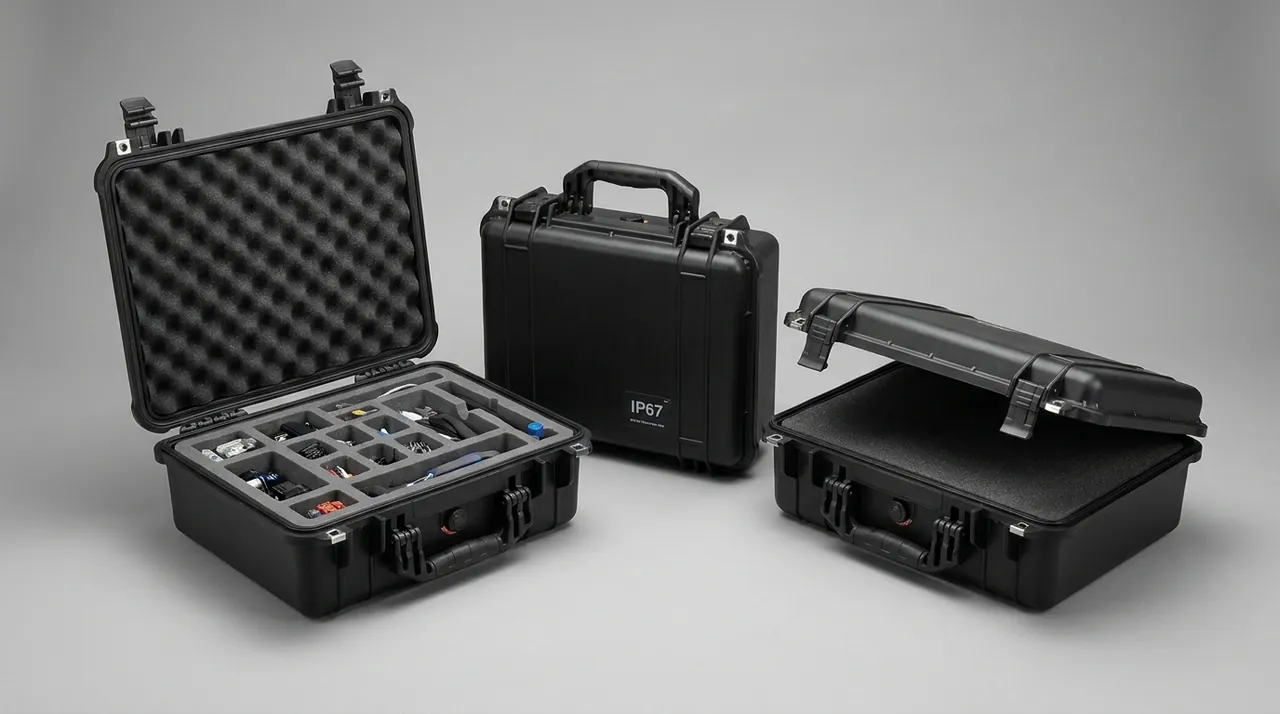
The shell material decides strength, weight, insulation and cost. A rotomolded case is molded in one piece from polyethylene with generous wall thickness, no weld seam, and can be built as a double wall filled with insulation; it resists impact and weather well and suits large, heavy storage and transit, but its self-weight is higher. An injection-molded case is molded from PP, ABS or PC with a thin wall, tight precision, a clean appearance and easy volume production, suited to small and medium sizes and to applications needing precision and appearance; insulation must be added through a separate liner. An aluminum case is strong, dissipates heat well and is easy to shield, suited to precision instruments and electronic modules needing electromagnetic shielding, but metal conducts heat quickly so insulation must be handled separately, and it resists dents less well than rotomolding.
| Material route | Strength and weather | Achievable insulation | Weight | Typical fit |
|---|---|---|---|---|
| --- | --- | --- | --- | --- |
| Rotomolded PE | High | Good (double wall fill) | Higher | Large storage, frequent transit |
| Injection PP/ABS/PC | Medium to high | Medium (via liner) | Light | Small and medium, bulk issue |
| Aluminum | High (weak on dents) | Low (needs dedicated insulation) | Medium | High-value instruments, shielding |
| Composite shell plus vacuum panel | High | Excellent | Depends on scheme | Demanding climate control |
Screen first on five items: collection size and weight, storage or transit, insulation requirement, whether shielding is needed, and budget and self-weight. For most heritage institutions a sensible combination is rotomolded double wall for large storage, injection molding with an insulation liner for bulk cabinets, and aluminum with insulation for precision powered equipment. For material and structural fundamentals see Plastic Protective Cases: Material and Structure.
Protection Ratings and Microclimate
Sealing is the wall of a climate case. Dust and water protection is judged per IEC 60529 and GB/T 4208, where the first digit denotes dust protection from 1 to 6 and the second denotes water protection from 1 to 8. Storage cases inside a repository usually focus on dust and moisture and may use IP5X to IP65; transit cases exposed to outdoor handling, rain or sea freight should rise to IP65 or even IP67, meaning fully dust-tight and able to survive immersion at one meter for 30 minutes. Related sealing logic is described in Waterproof Case Sealing Design.
Note, however, that air tightness and breathability must be balanced: a fully airtight case develops an inside-outside pressure difference when temperature changes quickly, making it hard to open and potentially drawing in moisture. An experienced plan therefore keeps dust and water protection while adding a pressure equalization valve or a breathable membrane so that pressure equalizes slowly while water vapour struggles to enter. Gasket, latch and equalization device form one system, and ageing of any one of them makes the rating nominal. At acceptance, compression set of the gasket and open-close durability should be listed as indicators.
Monitoring, Logging and Traceability
Collection protection emphasizes process traceability, so monitoring and logging are not accessories but core functions. The basic configuration includes a temperature and humidity logger inside the case with data export, an external display and out-of-limit alarm, and continuity of data after power loss. For important loans, dual logging is recommended: the internal logger records the microclimate curve while the accompanying staff record the transit milestones of dispatch, loading, arrival and installation, so that comparing the two reconstructs the complete environment the collection experienced.
The data has three uses: first, an acceptance basis, proving with a curve that fluctuation stayed within threshold throughout; second, responsibility definition, locating which stage a problem occurred in if an anomaly appears; and third, an optimization input, since long-term data helps judge whether to strengthen insulation, change the humidification scheme or adjust the route. The procurement document should state the logger precision, sampling interval, battery life and export format, and require calibration evidence, so that there is no data without trust.
Climate Needs by Material Type
One case for every collection is a common mistake. Different materials have different sensitive points and tolerance, and mixing them usually leaves none of them in the optimum environment. Paper and textiles fear both damp and dry, favouring moderate humidity and strongly disliking fluctuation; metal objects fear electrochemical corrosion driven by high humidity and favour lower humidity with dust control; ceramics and stone are relatively tolerant of humidity but sensitive to shock, so cushioning is the priority; wood and lacquerware are extremely sensitive to humidity change, with shrinking and cracking coming mainly from wet-dry cycling; and leather, bone, horn and feather must resist both drying and pests.
| Material group | Main degradation mechanism | Climate control focus | Structural focus |
|---|---|---|---|
| --- | --- | --- | --- |
| Paper, textile, silk | Moisture swelling, acidification, light fade | Stable humidity, dark, clean | Flat support, no shift |
| Metal | Electrochemical corrosion | Low humidity, dust, no condensation | Anti-vibration, anti-rub |
| Ceramic, stone | Impact fracture, salt efflorescence | Moderate humidity | High-grade cushioning |
| Wood, lacquerware | Dry shrink, wet swell, cracking | Stable humidity, slow change | Soft liner, no squeeze |
| Organic (leather, bone, feather) | Hydrolysis, drying, insect attack | Moderate humidity, pest control, dark | Suspend or flat support, no crush |
The practical recommendation is one case per material and the same materials together, with the material and target band marked on the case to avoid long-term mixing. Where mixed collections must travel together, take the common feasible band of the materials and strengthen cushioning and sealing to press the fluctuation even smaller.
Special Protection for Rare Books and Paper Archives
Rare books and paper archives are the classic application of a climate case and have their own characteristics. First, acidification. Rare-book paper becomes acidic and brittle over long storage through its own composition and environmental pollutants, so controlling humidity, reducing pollutants and excluding light are the basic means of slowing acidification. Second, enclosures. A rare book should not touch the case wall directly; it should first go into an acid-free sleeve or archive box and then into the case, and the sleeve itself must be acid-free and free of plasticizer migration, so that the protective material does not itself become a pollutant.
Third, handling and support. Paper objects fear folding, compression and long curling, so flat support is preferable inside the case, with an acid-free board where needed, and the turning of pages and lifting during handover and display must reduce stress. Fourth, light exclusion. During transit and temporary storage, direct sunlight and long strong illumination must be avoided, and the case can use a light-blocking liner or an outer cover. Fifth, pest and mold control. In a controlled low-humidity and clean environment the risk drops markedly, but the store and case still need regular inspection to avoid long dust accumulation and hidden damp spots. For important rare books, log the temperature and humidity curve together with the number of openings inside the case to form a complete protection journal.
Loan Transit, Handover and Fixation
Loan transit is a high-risk stage that superimposes climate control on logistics management. The plan should cover the whole chain of packing, loading, transit, arrival, installation and return. At packing, check every object against the list and photograph it for the record, wrapping fragile items individually with support; at loading, heavy cases at the bottom and light cases on top, with anti-slip mats and straps between cases to prevent displacement under braking or bumps; in transit, choose a well-damped vehicle, run the temperature and humidity log throughout, and arrange an accompanying monitor where necessary.
At handover, establish a written handover and condition-confirmation process: record the environment before opening, check each object after opening against the dispatch photographs, and confirm no new damage before signing; the display case should continue the internal environment as far as possible to avoid stable in the case but abrupt in the case. On return, run the same process in reverse and archive the round-trip data together. The core of fixation is no displacement, no tipping and traceability: the liner constrains the object to one position, the transport fixation constrains the case to the vehicle, and the log constrains the process to a checkable evidence chain; no one of the three can be omitted. For long cross-climate transit, the material and structural experience in High- and Low-Temperature Protective Cases can reinforce insulation and sealing.
Procurement and Acceptance Checklist
Heritage procurement usually follows a tender or comparison process, so technical clauses must be clear and verifiable. The recommended checklist is: first, the collection list with size and weight as the input to liner and case design; second, the target temperature and humidity band and permitted fluctuation, stating whether it is set by material; third, the temperature and humidity control route and power supply, including whether it can hold passively without power; fourth, sealing and protection rating, citing GB/T 4208 or IEC 60529 and stating whether IP65 or IP67 is required; fifth, the cushioning and liner scheme, including material, fixation, whether acid-free and whether dissipative; sixth, monitoring and logging, including logger precision, sampling interval, battery life, export format and whether an alarm is needed; seventh, mechanical and environmental validation such as drop, vibration, stacking and temperature-humidity cycling, citing ISTA and MIL-STD-810H method numbers; eighth, documents including test reports, material certificates, sampling plan and acid-free material evidence; and ninth, lead time, packaging and after-sales terms.
Acceptance should use three steps of first article, sampling and data verification. On the first article check liner fit with the collection, sealing compression, latch feel and logger function; on sampled units check the representative protection rating items, liner dimensional consistency and label durability; for data verification require a third-party or on-site measured temperature and humidity curve proving the case meets the setpoint and fluctuation indicators. Only by writing critical metrics into the contract can a good sample be prevented from becoming a drifting production run.
| Acceptance item | Method | Pass criterion |
|---|---|---|
| --- | --- | --- |
| Temperature and humidity stability | Empty and loaded measured curve | Fluctuation within agreed value |
| Sealing and rating | Sampling per GB/T 4208 | Reaches the agreed IP rating |
| Cushioning and fixation | Liner fit and drop test | No displacement, no new damage |
| Logging and traceability | Exported data completeness | Continuous, traceable curve |
| Material compliance | Acid-free and material certificates | No pollutant migration risk |
| Documents and service | Reports and warranty terms | Complete and accountable |
JUNZHJIA Customization Capability
JUNZHJIA provides customized and volume supply of climate cases and collection transit cases for archives, museums, libraries and conservation institutions. We design insulated shells and custom liners according to the collection list and material characteristics, and support acid-free materials, dissipative liners and light-blocking liners. The shell can follow any of three material routes, namely rotomolding, injection molding and aluminum, and can be supplied with gaskets, latches, pressure equalization valves, handles and casters. We can work with the customer's temperature and humidity control unit and logger, support structural review, sampling and mass production, and provide material and structural documents for tender acceptance and long-term traceability. For material-specific collections we support a modular scheme with standard cases and dedicated liners and conditioning modules, combining long case reuse with material-specific replacement to balance protection and cost.
Frequently Asked Questions (FAQ)
Question: What exactly is the difference between an archive climate case and an ordinary protective case? Answer: The difference is climate capability, not only protection capability. An ordinary protective case mainly solves impact, water and dust and is a mechanical and environmental shell, whereas an archive climate case adds an insulated structure, a temperature and humidity control unit, sealing and monitoring and logging, so it can hold the internal microclimate within a set band and leave data. For temperature and humidity sensitive paper, textile and wood, the real long-term damage often comes from slow fluctuation, which an ordinary protective case cannot handle. The value of a climate case is therefore to carry the preservation environment with the object so that it stays controlled outside the store.
Question: Does a climate case have to run on power the whole time? Answer: Not necessarily; it depends on the technical route and scenario. Store cabinets and rare-book preservation usually use active electronic humidification and need stable power, while loan transit and emergency scenarios more often use passive conditioners that hold humidity through pre-conditioned material, with the advantage of no power, reliability and low weight and the drawback of lower precision and periodic regeneration. A robust combination in practice is passive conditioning as the base with a logger for monitoring, which reduces dependence on power while leaving a traceable curve. The key is to choose by scenario rather than chasing full automation.
Question: Why is the fluctuation amplitude of temperature and humidity specified separately? Answer: Because for most collections frequent fluctuation is more damaging than the absolute value. Hygroscopic organic materials such as paper, textile and wood take up and release moisture and swell and shrink, and repeated cycling forces fibres and paint layers to work back and forth, causing cockling, cracking and detachment; metal also corrodes more easily when humidity crosses a critical point repeatedly. The professional approach is therefore to specify both the setpoint and the permitted daily amplitude, and to treat recovery time after opening and spatial uniformity as evaluation items. An environment slightly off the ideal value but very stable is often better than one with an ideal average but frequent large swings.
Question: Can collection objects of different materials share one climate case? Answer: Technically yes, but long-term mixing is not recommended. Different materials have different optimum bands: metal prefers dry, wood prefers moderate humidity and paper dislikes fluctuation, so mixing can only take a common feasible band in which none is optimal. The safer approach is one case per material and the same materials together, with the material and target band marked on the case. If mixed collections must travel together, strengthen cushioning and sealing to press fluctuation smaller, and note the mixed state in the log for later analysis. A separated scheme keeps long-term cost controllable provided the case is standardized and the liner and conditioning module are dedicated.
Question: Is tighter sealing always better in a climate case? Answer: No. A fully airtight case develops an inside-outside pressure difference when temperature changes quickly, making it hard to open and potentially drawing moisture in through negative pressure or a rush of humid air on opening. A more reasonable engineering approach is dust and water protection plus pressure equalization: keep IP protection while adding a pressure equalization valve or breathable membrane so pressure equalizes slowly while water vapour struggles to enter. In addition, the gasket is a consumable that ages with open-close cycles and time, so compression set and replacement interval should be watched at acceptance and in maintenance. Sealing is a system capability, not just the airtightness at first assembly.
Question: What is the use of the data logged by a climate case? Answer: There are three main uses. First, an acceptance basis, using the temperature and humidity curve to prove that fluctuation stayed within the agreed threshold through storage or transit. Second, responsibility definition, since if an anomaly appears the data can locate whether it occurred at dispatch, in transit or at installation. Third, an optimization input, because long-term data helps judge whether to strengthen insulation, change the humidification scheme or adjust the route. Specify the logger precision, sampling interval, battery life and export format at procurement, and require calibration evidence, avoiding a situation where there is data without trust.
Question: What is most often overlooked in loan transit? Answer: The breakpoints between stages are most often overlooked. Many plans are excellent inside the case yet expose the collection to abrupt change at loading, handover and installation: a case left open in the sun during loading, objects checked one by one in an uncontrolled room, or a display case whose environment differs greatly from the case. Write the whole chain as a process: shorten open exposure, produce both dispatch and arrival data, let the display case continue the internal environment, and archive the round-trip data together. Protection depends on the shortest plank, not the best indicator of the case itself.
Question: Which technical clauses are most often overlooked when procuring a climate case? Answer: Three groups are most often overlooked. First, the verifiability of the temperature and humidity indicators, since keeping things dry cannot be accepted and the setpoint, permitted fluctuation and test method should be written. Second, the humidification and power supply method, since failing to state whether power is available will send the scheme off course. Third, logging and documents, because without logger precision, export format, calibration evidence and material certificates both acceptance and traceability fail. Also write the protection rating, cushioning and liner form, mechanical and environmental validation and after-sales warranty. Putting the critical metrics and acceptance methods into the contract is the key to preventing a good sample from becoming a drifting production run.
Conclusion and Related Reading
The essence of a climate case is to make the preservation environment engineered, movable and traceable. In selection, first define the material of the collection and the environmental factor it most fears, then set the temperature and humidity indicators, the conditioning route, and the material and sealing scheme, and finally close the loop with logged data and an acceptance checklist. Bringing temperature, humidity, light, pollutants, insects and mold into the design at the same time, and bringing the whole chain of stages into management, is what truly serves a collection. For most institutions a route of one case per material, standardized cases, and dedicated liners and conditioning modules is a robust balance of protection and long-term cost.
For further reading, see Plastic Protective Cases: Material and Structure, Cushion Liner and Custom Cutting Design, High- and Low-Temperature Protective Cases, Waterproof Case Sealing Design and Lab Equipment Cases for Research Instrument Transit. JUNZHJIA offers a complete matrix from standard archive climate cases to fully custom collection transit programmes; select according to your collection type and preservation standard.
This article is SEO/GEO technical content. Figures are typical and empirical values; specific parameters are subject to the manufacturer's latest test reports and customization scheme.