

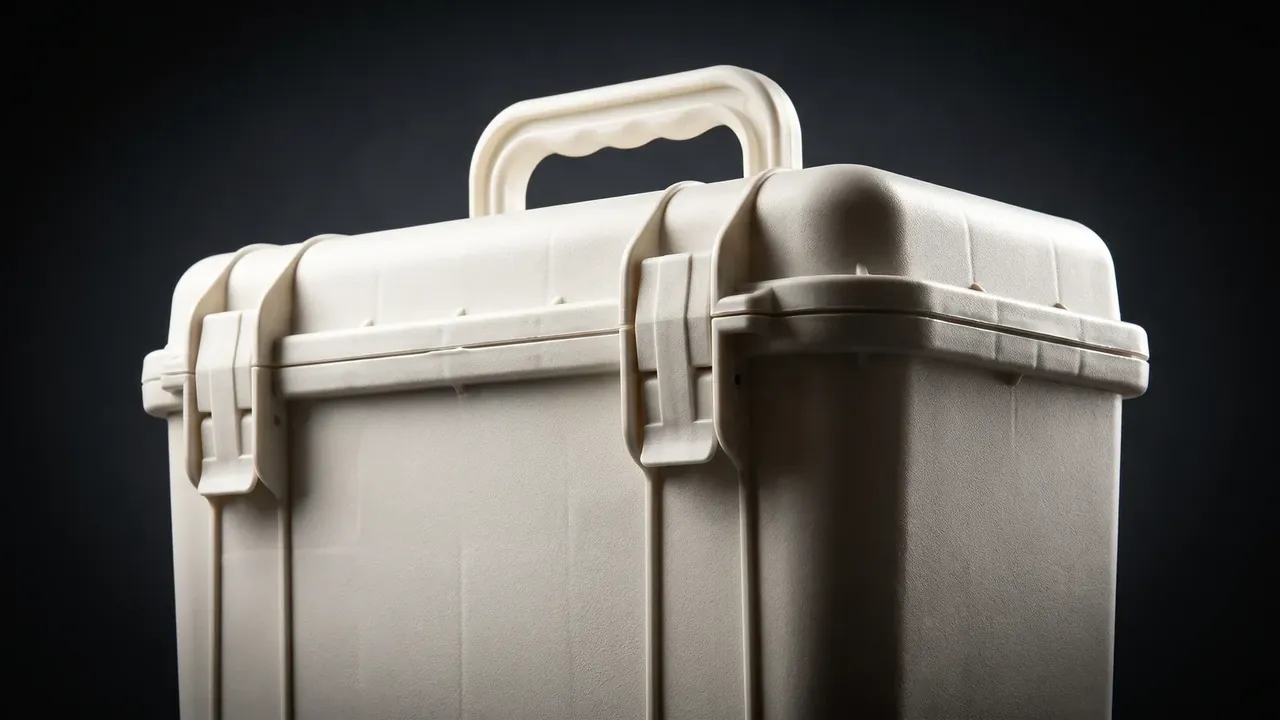
Quick answer: Fix the loaded weight, then the cavity and dividers, then stacking, lifting, sealing and marking. Five checks in that order keep dimensions and structure aligned.
Table of contents
- How Many Shells Fit in an Artillery Shell Box
- Load Rating and Stacking Depth
- Lifting Points and Fork Access
- Sealing and Pressure Equalisation
- Marking and Traceability
- FAQ
1. How Many Shells Fit in an Artillery Shell Box
Start with loaded weight, not shell count: shell mass times quantity, plus case and insert. Under 25 kg one person carries it, under 50 kg two lift it, above 50 kg the Artillery Shell Box needs eyes or fork pockets.
The internal cavity sets the dividers. A 780 × 840 × 340 mm case gives about 720 × 760 × 300 mm inside. One shell per cell at 690 × 175 × 285 mm gives four cells across 700 mm, leaving 60 mm for dividers.
| Shells | Cavity mm | Divider mm | Loaded kg |
|---|---|---|---|
| 2 | 720 × 400 × 300 | 10 | 28 |
| 4 | 720 × 760 × 300 | 12 | 46 |
| 6 | 720 × 1120 × 300 | 12 | 64 |
Twelve millimetres is the usual divider thickness. Under 10 mm the panels bow at a 3 g lateral shock; over 16 mm the case carries one shell fewer. Keep 8 mm of side clearance so the load stays put.
2. Load Rating and Stacking Depth
A 46 kg Artillery Shell Box stacked five high puts 184 kg on the bottom unit; a factor of three gives a 550 kg design load. With a 4.2 m ceiling and 900 mm beam spacing, five layers fill one bay; at 3.2 m, only three will do.
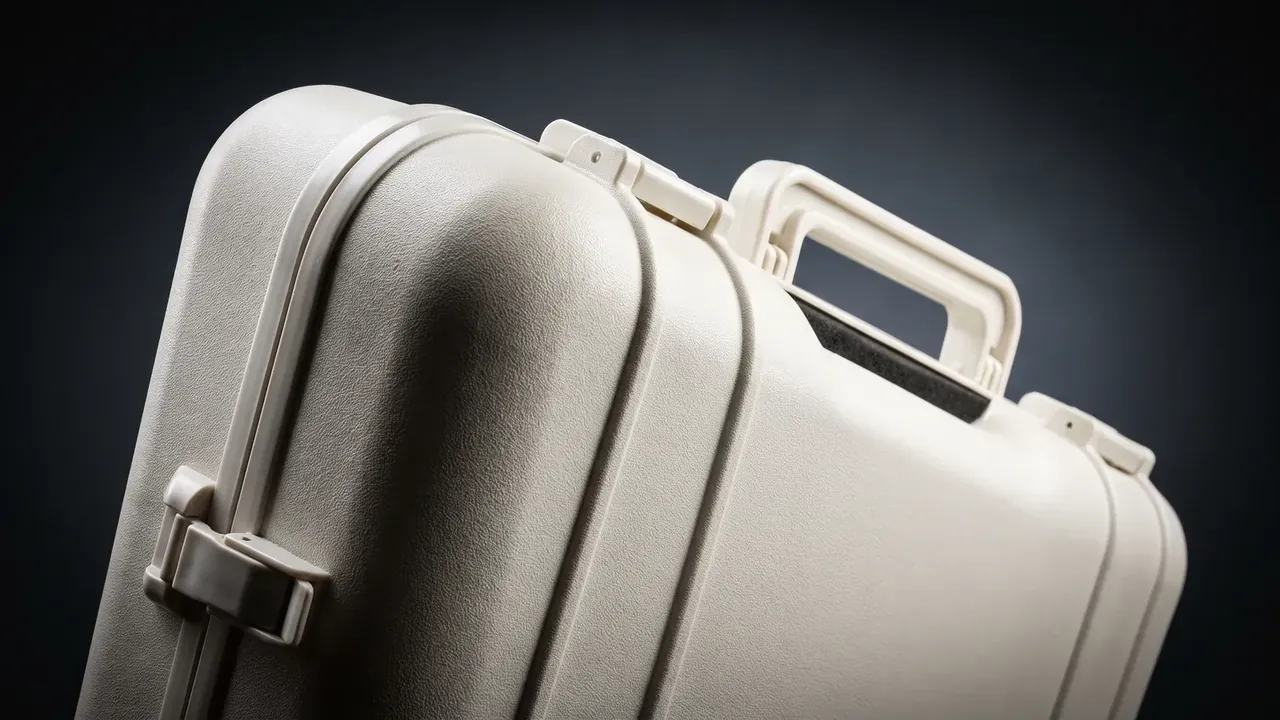
Lid flatness decides the rest: a dished lid leaves the upper case on four corners and local pressure multiplies. Hold 1.5 mm per metre and add a 3 mm step at each bottom corner. Polypropylene creeps at 40 °C, so past 30 days use 60 percent of the rated load.
| Layers | Bottom load kg | Design load kg | Ceiling m |
|---|---|---|---|
| 3 | 92 | 280 | 2.6 to 3.4 |
| 4 | 138 | 420 | 3.4 to 3.8 |
| 5 | 184 | 550 | 3.8 to 4.3 |
3. Lifting Points and Fork Access
Four M10 stainless eyes at 32 N·m carry the Artillery Shell Box on a 60 degree sling, where each leg sees about 0.29 of total weight. Open to 90 degrees and that rises to 0.35, so the eye and embedded nut go up a size.
Fork pockets 95 mm high and 120 mm deep take 125 mm forks. Four 12 mm wear ribs keep the base off the floor and clear of the side vent. Pockets must run through, or a blind one holds water and lifts the base panel.
Eyes on one side tilt the case past 15 degrees, squeezing the dividers. Lift lid up, four points loaded, never from the handle, rated at only twice the load.
4. Sealing and Pressure Equalisation
An 8.0 mm silicone cord in a 6.0 mm groove gives 25 percent compression, stable from -40 °C to 60 °C. Under 20 percent a rain test leaks; over 35 percent the cord takes a permanent set.
Across a 100 °C swing a case without a vent is held shut by vacuum, the gasket rolls and the rim cracks when pried. A 0.35 bar cracking pressure equalises without admitting water at 1 m for 30 minutes.

Seal face flatness of 0.3 mm and flash of 0.15 mm are hard limits. Silicone suits cold, nitrile long road hauls to -25 °C. Replace the cord once recovery drops 15 percent after 300 cycles.
5. Marking and Traceability
Marking belongs on the body, not on a label that peels in transit. In-mould graphics do not lift, laser marking survives 500 wipes and stays readable for eight years, and stainless plates take 300 wipes over ten.
A 15 × 15 mm QR with a 0.4 mm module reads at 30 cm gloved. The chain must run from code to material batch, mould cavity, assembly station and inspection date; lose one link and traceability stops.
Conclusion
The order of the checks matters more than any single figure: loaded weight, cavity and dividers, stacking, lifting, then sealing and marking. Reverse it and the case ends up thick enough but too small for its shells. Run them once and the Artillery Shell Box dimensions, structure and interfaces align.
This article discusses only the container (case body) side of specifications and design intent, and does not cover any handling, loading or use of the contents.
Related Reading
- Load, stacking and size data
- Packaging and marking rules
- Moisture, gaskets, inspections
- Wall, ribs and base structure
Related Products
- 8 Series — Gun Cases; Military Equipment Cases; Camera Equipment Cases; Drone Cases; Watch Cases; Knife Cases; First Aid Cases; Electronics Equipment Cases
- WL8-2812 PP Gun Case — model WL8-2812
- All protective cases and toolboxes: 7 series, 158 models