

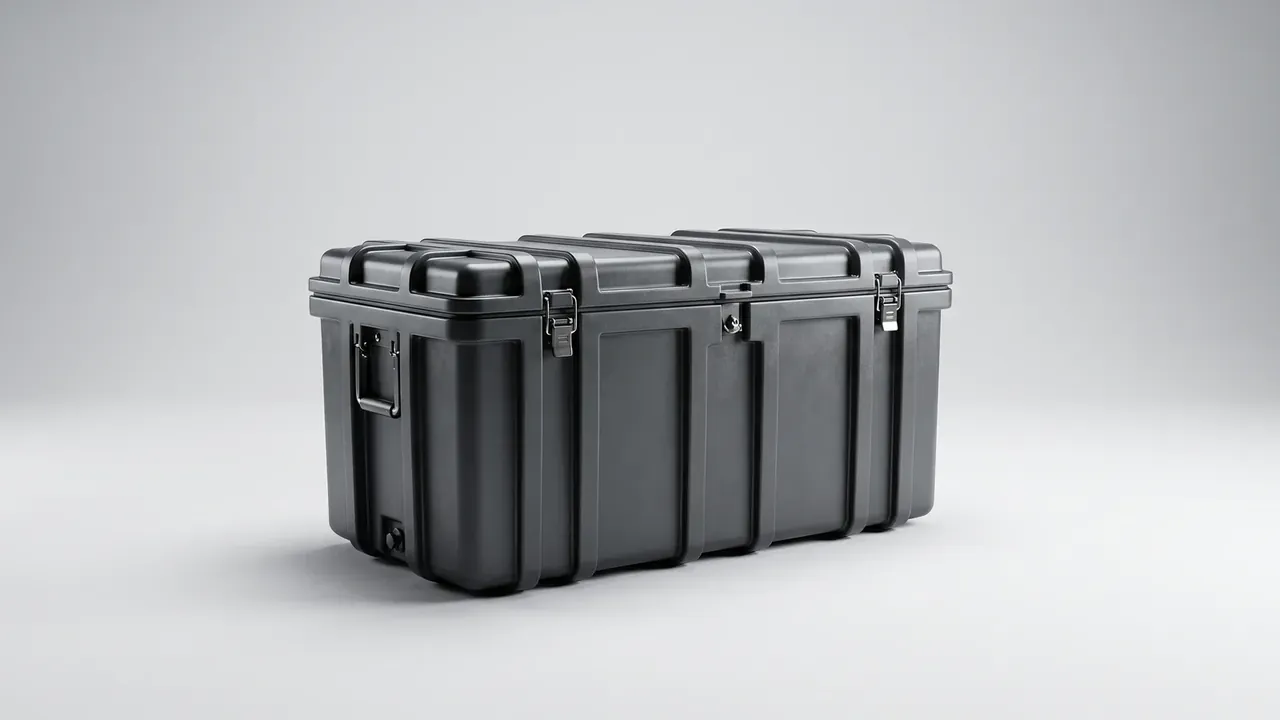
Quick answer: The scenario sets the configuration. Forward positions need fast opening, warehouses need stack height and readable labels, road and rail need lashing points, sea freight needs salt resistance, exercise yards need durable latches.
Table of contents
- The Five Scenarios and How Configuration Differs
- Forward Positions: Short Holds, Fast Opening
- Rear Warehouses: Long Holds and Stack Heights
- Rail and Road: Vibration and Lashing
- Sea Freight and Exercise Turns: Salt and Cycles
- FAQ
1. The Five Scenarios and How Configuration Differs
One body, five places. A forward position needs the lid open in thirty seconds; a warehouse wants five tiers and a label readable from the aisle; a truck wants the load to stay put over three hours of road; a ship wants no rust.
| Scenario | Typical hold | Key configuration | Main risk |
|---|---|---|---|
| Forward position | Hours to 3 days | Fast latches, wide handles | Wet ground |
| Rear warehouse | Over 6 months | Stackable lid, front label | Stack collapse |
| Rail and road | 1 to 7 days | Lashing points, corner guards | Chipped corners |
| Sea freight | 20 to 45 days | Salt-resistant hardware | Corrosion |
| Exercise yard | All year | Wear-resistant latches | Latch fatigue |
Fix the scenario before arguing parameters: once hold time and handling are known, insert and hardware choose themselves. Handling also sets orientation, from handles on the long side to lashing points either side of the centre of gravity.
2. Forward Positions: Short Holds, Fast Opening
Forward storage means short dwell, fast action, high frequency. Loaded at 22 kg, an Artillery Shell Storage Container should go from set-down to first shell out in under thirty seconds, or the job takes two people.
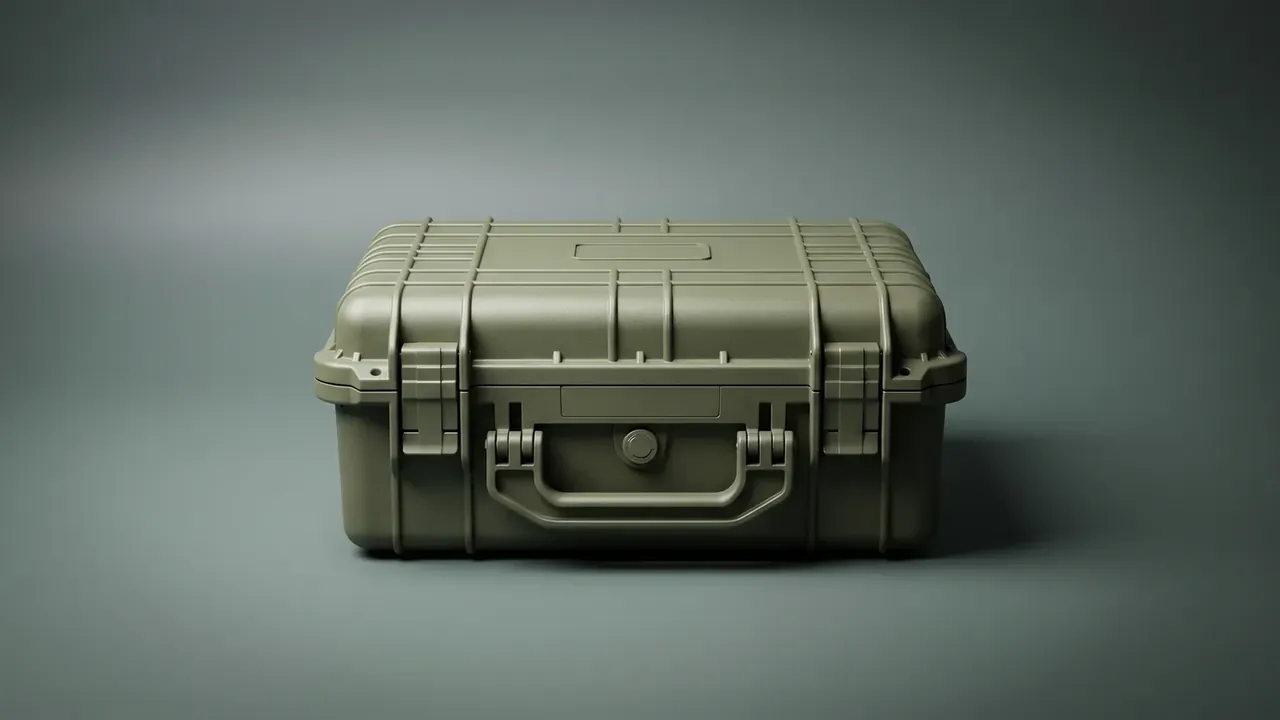
Fast opening comes from three details. The latch opens one-handed and its keeper has a lead-in chamfer, so a gloved thumb closes it first time. The lid stops at 105 degrees and stays there, leaving both hands free, while an inner lip keeps rain out.
Configuration leans light: a removable divider set with thin foam, handles wide enough for a thick glove, short feet at the base corners.
3. Rear Warehouses: Long Holds and Stack Heights
A warehouse runs on different logic: holds measured in half-years, movement measured in pallets, and an Artillery Shell Storage Container that sits still most of the year.
| Warehouse type | Tiers | Aisle | Retrieval |
|---|---|---|---|
| Floor stack | 3 to 5 | 1.2 m | Pallet truck |
| Racking | 2 per level | 1.5 m | Reach truck |
| Open shed | 2 | 1.0 m | Hand carry |
At five tiers the lid of an Artillery Shell Storage Container needs a load-bearing face and locating steps at the corners, so the upper base sits inside the step and the stack cannot walk. Pallets run 1200 by 1000 mm, four or six cases each, long side along the pallet.
Label orientation gets missed: in a stack only the aisle-facing column can be read, so the recess belongs on the long face. Sheds need a dust cover too.
4. Rail and Road: Vibration and Lashing
Three hours of road plus rail shunting shifts an Artillery Shell Storage Container across a wagon floor, and poor lashing chips a corner before it loosens a latch.
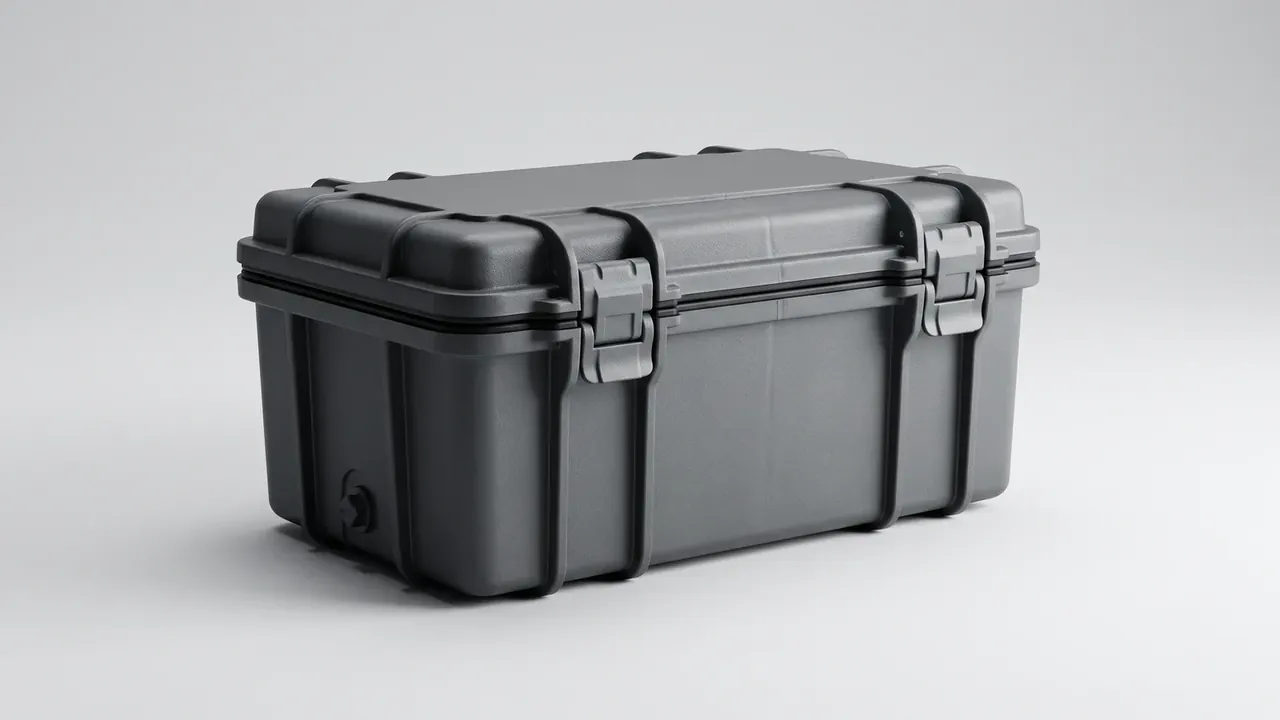
Start with the anchors. Each corner carries a reinforced pad, the strap passes inside it, and the load lands on the corner rather than the flat panel. Straps rated at 2.5 tonnes should show no hand deflection once tensioned, with wedges at 45 degrees.
Cut stack height for transit: two tiers on road, two on rail with an interlayer board, upper cases offset so corners do not line up. Check against 1.5 g; if the insert holds, the Artillery Shell Storage Container passes.
5. Sea Freight and Exercise Turns: Salt and Cycles
Sea freight adds humidity to a long hold. Cabin air sits near 85%, salt spray works continuously, and hardware corrodes far faster than inland. A 20 ft container holds about forty cases for thirty days; the first failure is usually a latch or rivet.
Specify stainless or zinc-flake hardware tested to 720 hours of salt spray, a hydrolysis-resistant gasket, anti-slip ribs in the base, and desiccant away from the valve port.
Exercise yards are the opposite extreme: hours of storage, sixty openings a year. Rate the latch on an Artillery Shell Storage Container for 5,000 cycles, thicken the tongue, bush the pivot, make the insert replaceable. Opening at -25 °C is the hidden test, where toughness decides whether the tongue snaps.
Conclusion
The scenario sets the configuration, and the configuration decides whether the case draws easily, stays put and survives a voyage. Forward positions read opening speed, warehouses read stack height, transport reads lashing, sea freight reads salt, exercise yards read cycles. Write the scenario down first, then specify the Artillery Shell Storage Container around it.
This article discusses only the container (case body) side of specifications and design intent, and does not cover any handling, loading or use of the contents.
Related Reading
- Moisture control and periodic checks
- Artillery Shell Box vs Alternatives: Where the Gap Is
- Artillery Shell Box Procurement: Price, MOQ and Lead Time
- How shell boxes are used in the field
Related Products
- 8 Series — Gun Cases; Military Equipment Cases; Camera Equipment Cases; Drone Cases; Watch Cases; Knife Cases; First Aid Cases; Electronics Equipment Cases
- WL8-2812 PP Gun Case — model WL8-2812
- All protective cases and toolboxes: 7 series, 158 models