

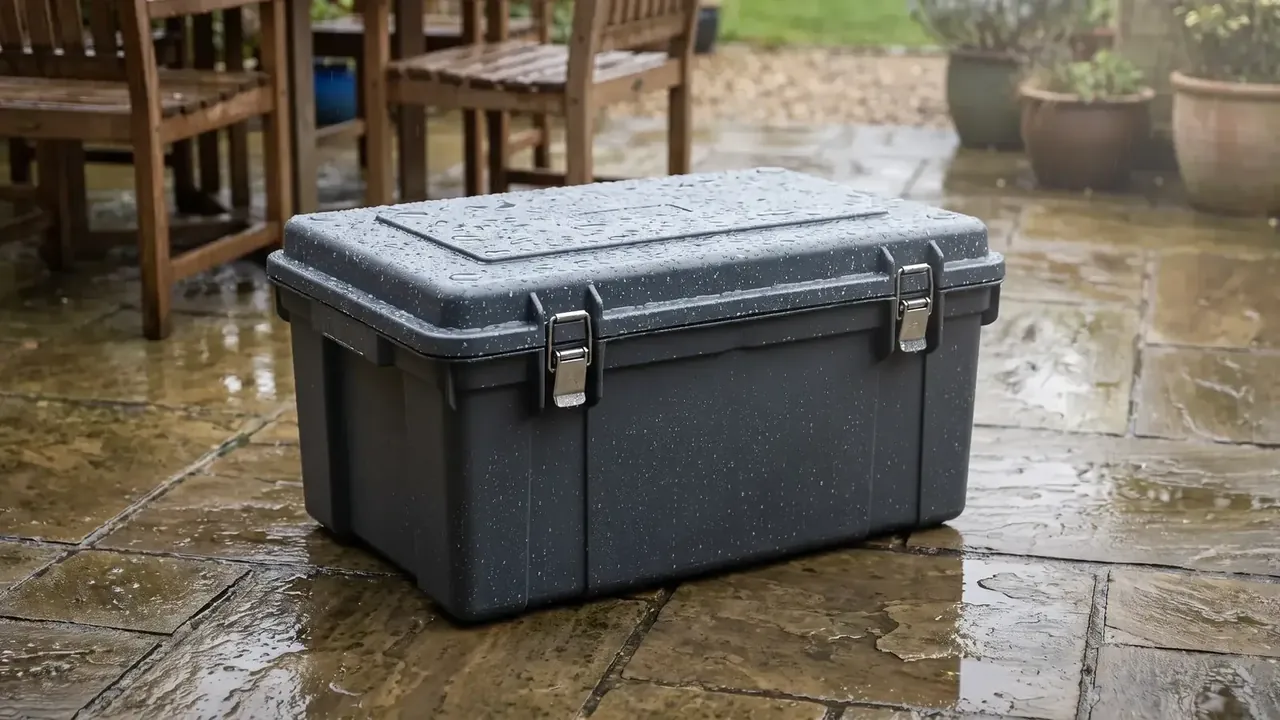
Quick answer: Buying an Artillery Shell Storage Container is not one price negotiation. Split the quote into six cost lines, tie unit price to a volume ladder, and cut lead time into nodes, so three quotes become comparable.
Table of contents
- Six Lines Every Artillery Shell Storage Container Quote Needs
- How to Negotiate the MOQ Ladder
- Sequencing the Lead Time
- Incoming Checks on Arrival
- What the Handover Sheet Must Carry
- FAQ
1. Six Lines Every Artillery Shell Storage Container Quote Needs
Three suppliers quote one drawing and return three prices; the gap sits in the basis, not the capability. Six cost lines expose which one moved.
| Line | Basis | Where it hides |
|---|---|---|
| Resin | Net weight plus sprue and trial loss | Loss billed later |
| Moulding | Cycle or machine hour | Small lots at full rate |
| Hardware | Latches, handle, valve per set | Assembly extra |
| Insert | Foam volume, cutting, bonding | Density dropped a grade |
| Packing | Carton, divider, pallet | Export crate added later |
| Tooling | Tool cost divided by quantity | Charged on repeat |
On 1,000 units a 32,000 RMB tool adds 32 RMB per case, 6 to 9 percent of price; at 3,000 units, 11 RMB. Resin runs near 40 percent of price, moulding a quarter, hardware and insert a tenth each, so the low bid shows which line it cut.
Resin moves with the market: lock price 15 days, index beyond, and confirm in writing any move above 5 percent.
2. How to Negotiate the MOQ Ladder
MOQ is a curve, not a number. The forming route sets the start for an Artillery Shell Storage Container order: rotomoulded tools at 300 units, injection near 1,000, welded frames at 50.
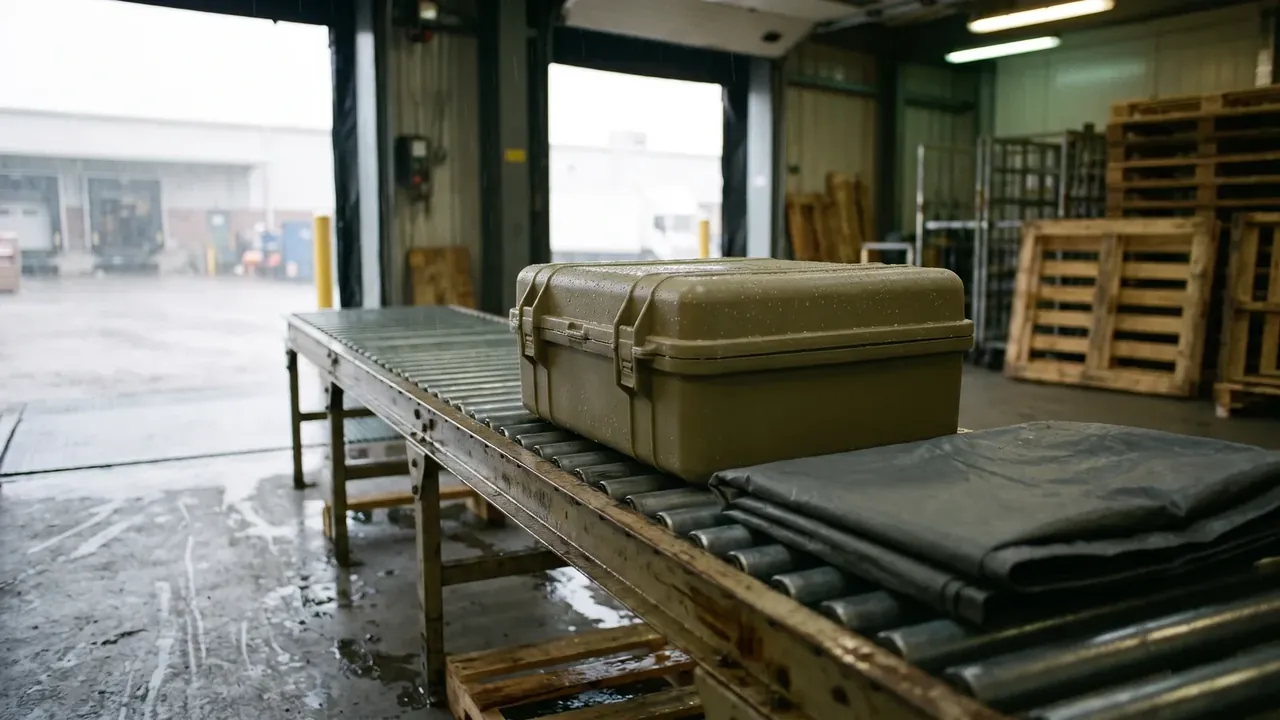
Ladders step at 500, 1,000, 3,000 and 5,000; each step settles price, tooling in the first order, repeat charges.
| Volume | Tooling | Price index |
|---|---|---|
| 300 to 500 | Separate, instalments | 130 |
| 501 to 1,000 | Inside first order | 100 |
| 1,001 to 3,000 | Free on repeat | 88 |
| 3,001 and up | Amortised, rebate open | 82 |
Payment moves price too: 30 percent deposit with 70 on dispatch is standard, while 30, 60 against the bill of lading and 10 after acceptance costs 2 to 3 percent in financing.
3. Sequencing the Lead Time
Lead time is a set of nodes, not one total. An Artillery Shell Storage Container order passes drawing sign-off, tool build, first-off, production, inspection and packing; a 45 day contract cannot show which node slipped.
| Node | Days | Deliverable |
|---|---|---|
| Drawing, seal sample | 3 to 5 | Signed drawing, colour chip |
| Tool build, trial | 18 to 25 | Three units, dimension sheet |
| First-off approval | 3 to 5 | Report, sealed sample |
| Volume production | 12 to 18 | Progress sheet |
| Inspection | 2 to 3 | Record, release note |
| Packing, dispatch | 2 to 4 | Packing list, tracking |
The tool decides every later node, so penalise that node rather than the total, where a delay penalty is worth cents per unit. Peak-season booking slips 7 to 10 days, so lock space two weeks early.
4. Incoming Checks on Arrival
Incoming inspection confirms the shipment is the sealed version. For an Artillery Shell Storage Container delivery, check colour against the seal sample, latch model against the drawing and insert cut-outs against the cavity.
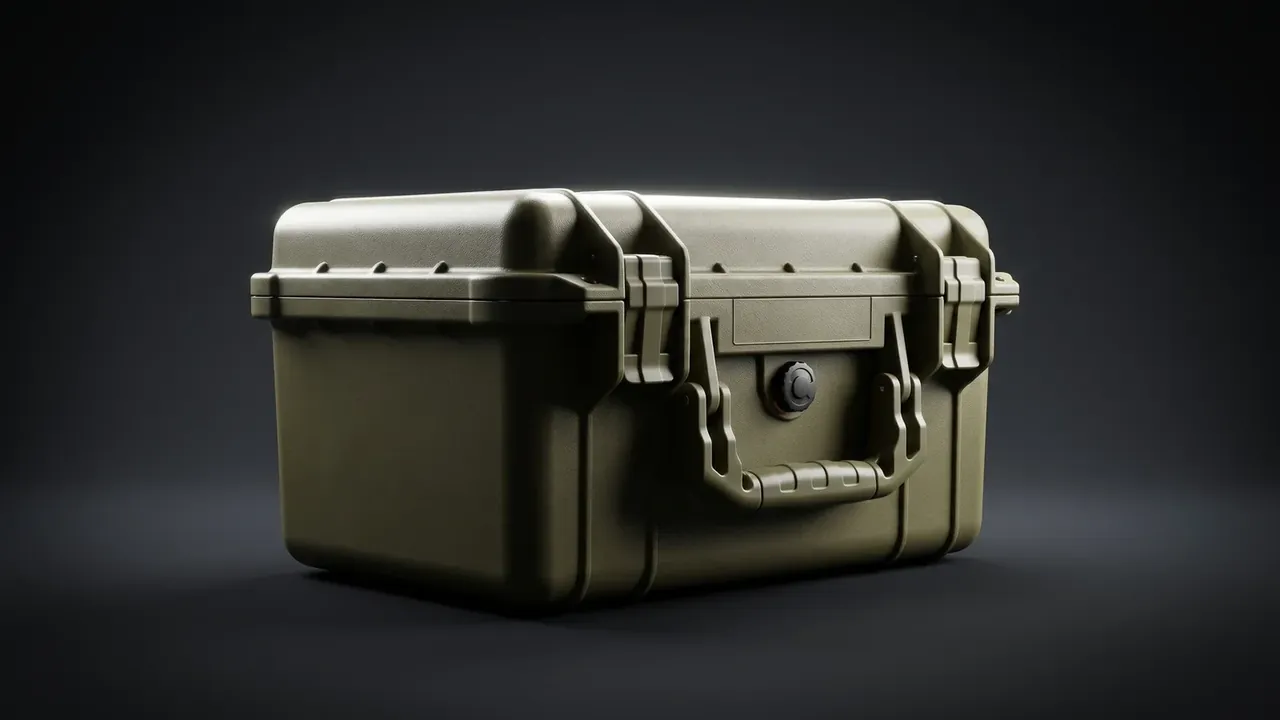
Open eight cases per batch: three for cavity dimensions, three for weight within 3 percent of the sample, two for twenty latch cycles. One failure doubles the sample; a second holds the batch. Keep the mill certificate, inspection report and packing list with the goods.
5. What the Handover Sheet Must Carry
The handover sheet splits liability: product, specification, batch number, quantity, seal sample number, sampling verdict, loading method, document list, and both signatures with time. Miss one field and there is nothing to argue from.
Seal sample number is skipped most often; without it a supplier can swap a similar unit and the dispute has no reference, so keep two numbered units. Loading matters too: full pallet or loose, wrap layers, two-high stacking. Two-high needs a divider, or transport marks become defects.
Conclusion
Sourcing discipline shows in three places: a quote split into cost lines, a volume ladder with tooling ownership written down, and lead time cut into nodes. Do that, and an Artillery Shell Storage Container order is managed on cost rather than argued on price.
This article discusses only the container (case body) side of specifications and design intent, and does not cover any handling, loading or use of the contents.
Related Reading
- How to Choose an Artillery Shell Box: Five Decision Points
- How it compares with alternatives
- Where an Artillery Shell Box Is Used: Five Operating Scena…
- Acceptance items and verdicts
Related Products
- 8 Series — Gun Cases; Military Equipment Cases; Camera Equipment Cases; Drone Cases; Watch Cases; Knife Cases; First Aid Cases; Electronics Equipment Cases
- WL8-2812 PP Gun Case — model WL8-2812
- All protective cases and toolboxes: 7 series, 158 models