

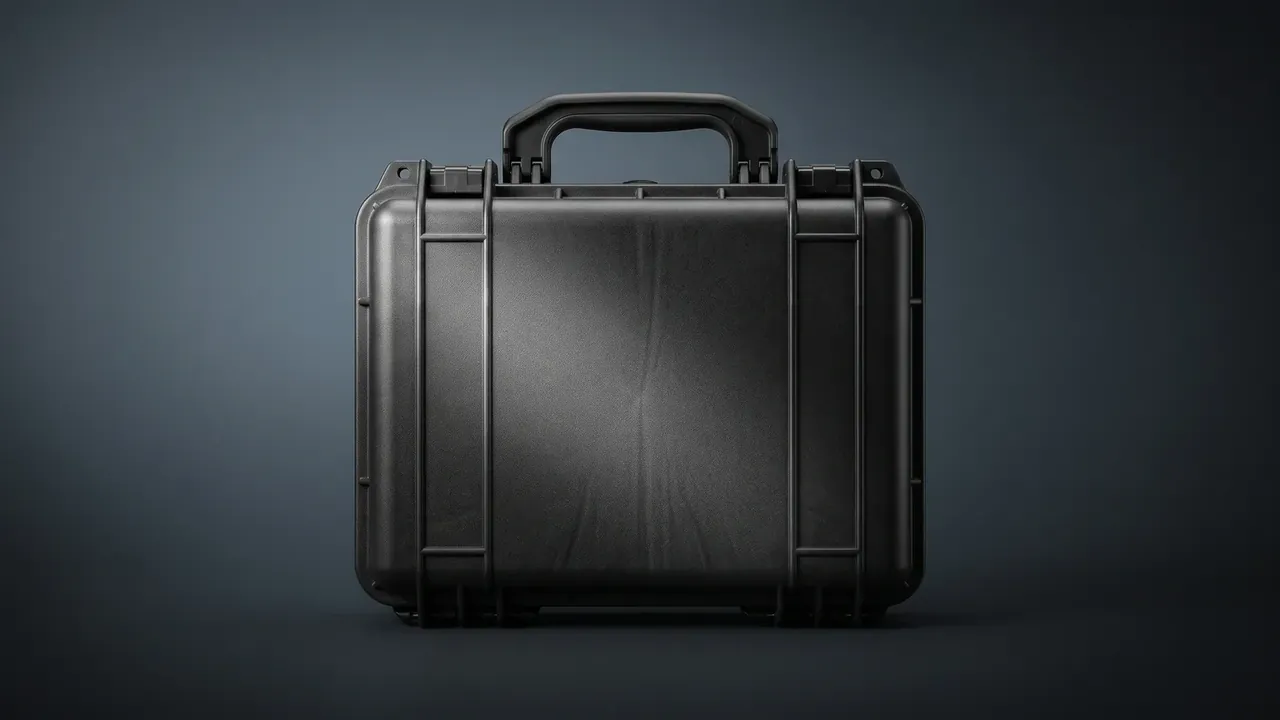
Quick answer: An Artillery Shell Box works in five settings: warehouse storage, rail and road transfer, field holding, range support and issue counting. The case barely changes; fixtures and opening frequency do.
Table of contents
- Warehouse Storage Configuration for an Artillery Shell Box
- Rail and Road Securing Methods
- Temporary Field Storage
- Range and Training Support
- Counting and Issue Flow
- FAQ
1. Warehouse Storage Configuration for an Artillery Shell Box
Warehouse time dominates the life of the case, so the goal is steady air and findable positions, not impact resistance. Hold 5 °C to 30 °C, humidity below 70 percent and a day-night swing under 8 °C; above 75 percent humidity, 500 g of desiccant beats dehumidifying 800 m².
Stack to the racking, not to the case rating. Beams rated at 800 kg per level with 700 mm between levels take four layers of a 33 kg Artillery Shell Box with margin; six would still be within the rating, but the forklift then reaches 2.6 m. Keep 200 mm of dunnage under the base and 300 mm off the wall.
| Zone | Layers | Off floor mm | Fixing | Inspection |
|---|---|---|---|---|
| Ambient full-case | 4 | 200 | Pallet, stretch film | 30 days |
| Awaiting inspection | 2 | 150 | Floor standing | 7 days |
| Empty return | 6 | 100 | Post stops | 15 days |
A 1.2 m aisle lets a 1.5 t forklift turn with forks loaded, and on that layout 1,200 full cases fit into 800 m².
2. Rail and Road Securing Methods
In a boxcar, leave a 100 mm gap to the wall and tie the case with four crossed 50 mm polyester straps, 5 t breaking, 300 N tension, 5 mm rubber pads at the edges.
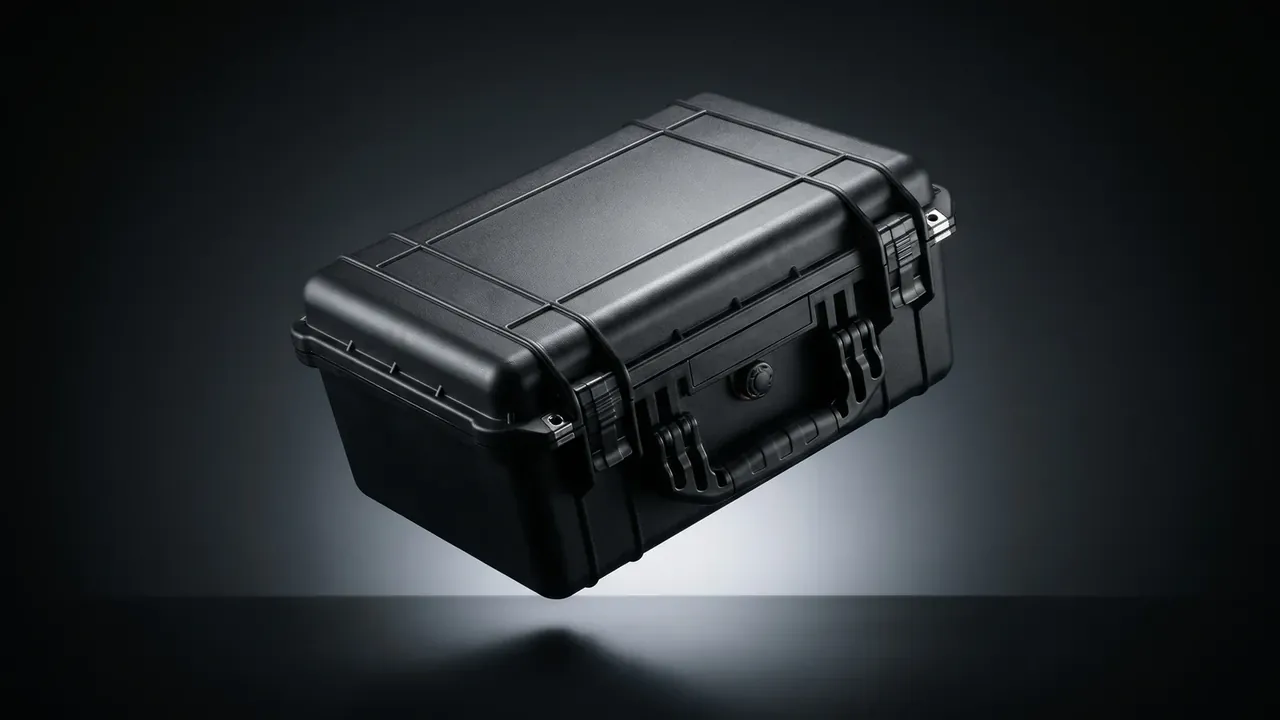
Road haulage of the Artillery Shell Box is judged by acceleration: 3 g longitudinal, 2 g lateral and 4.5 g vertical. At that level 40 × 60 mm timber chocks nailed to the deck matter more than straps, since webbing only restrains vertically. Re-tension every 200 km on a new set, because webbing stretches on its first loaded trip.
| Mode | Fixing | Strap | Tension N |
|---|---|---|---|
| Boxcar | 4 crossed | 50 mm polyester, 5 t | 300 |
| Road truck | 4 plus chocks | 50 mm polyester, 5 t | 350 |
| Air cargo | 2 plus net | 25 mm webbing | 200 |
Air freight differs: the pallet net carries the restraint, straps stop creep. On all three, the lid faces up and no strap crosses the pressure vent.
3. Temporary Field Storage
Raise the case 150 mm on sleepers so the base ribs clear standing water, verify ground bearing at 80 kPa (wet mud falls below 40), and cut a 200 mm drainage ditch.
Shade matters: the surface runs about 15 °C cooler than the 65 °C reached in direct sun, so keep the canopy 300 mm above the lid to stop run-off reaching the seal. No site holds the same cases beyond 72 hours, and in sandy ground the vent knob turns inward.
4. Range and Training Support
A range is the highest-frequency opening scenario, so logic shifts from protection to access. One case per firing point, lid opening to 100 degrees so one hand holds it while the other takes a round, keeps a cycle under six seconds; a 3 mm soft strip along the rim prevents pinched fingers.
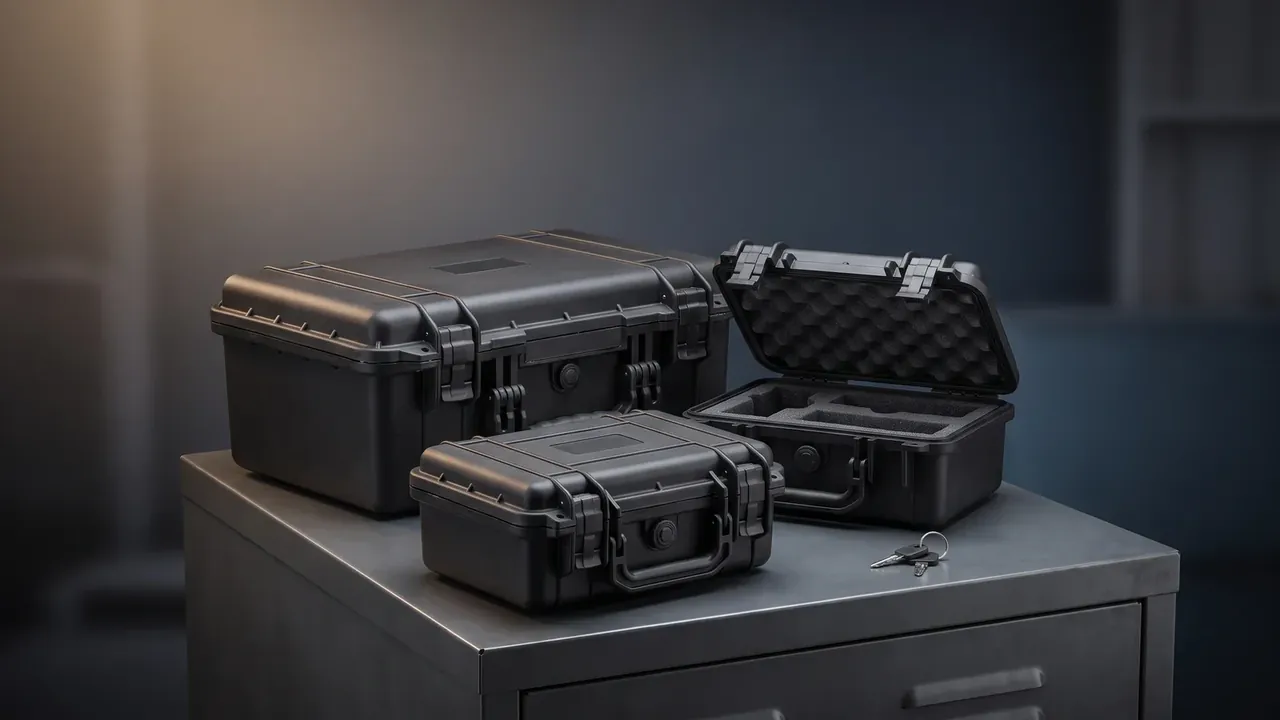
A 200-round day at 12 rounds per case needs six in rotation, four on the line and two at resupply. A 750 mm bench matches a case on its side, and a 0.6 mm PVC cover goes over the lid only, or the vent is sealed with it.
5. Counting and Issue Flow
Counting rewards flow design. A scanned case takes about four seconds and a 40-case pallet three minutes, against twelve minutes by hand, with more chance of a digit error. Two windows on a one-way path, holding area to check bench to door, keep a 60-case day moving.
Keep empty returns 3 m from full cases, and pull any case with a missing divider the same day.
Conclusion
The same Artillery Shell Box lives by zones and rack height indoors, by straps and chocks on rail and road, by dunnage and shade in the field, by lid angle on the range, and by scanning at issue. Each arrangement removes one stress the case would otherwise absorb. Fit these five sets of parameters and the Artillery Shell Box gains a repeatable pattern of use.
This article discusses only the container (case body) side of specifications and design intent, and does not cover any handling, loading or use of the contents.
Related Reading
- Load, stacking and size data
- Packaging and marking rules
- Moisture, gaskets, inspections
- Wall, ribs and base structure
Related Products
- 8 Series — Gun Cases; Military Equipment Cases; Camera Equipment Cases; Drone Cases; Watch Cases; Knife Cases; First Aid Cases; Electronics Equipment Cases
- WL8-2812 PP Gun Case — model WL8-2812
- All protective cases and toolboxes: 7 series, 158 models