

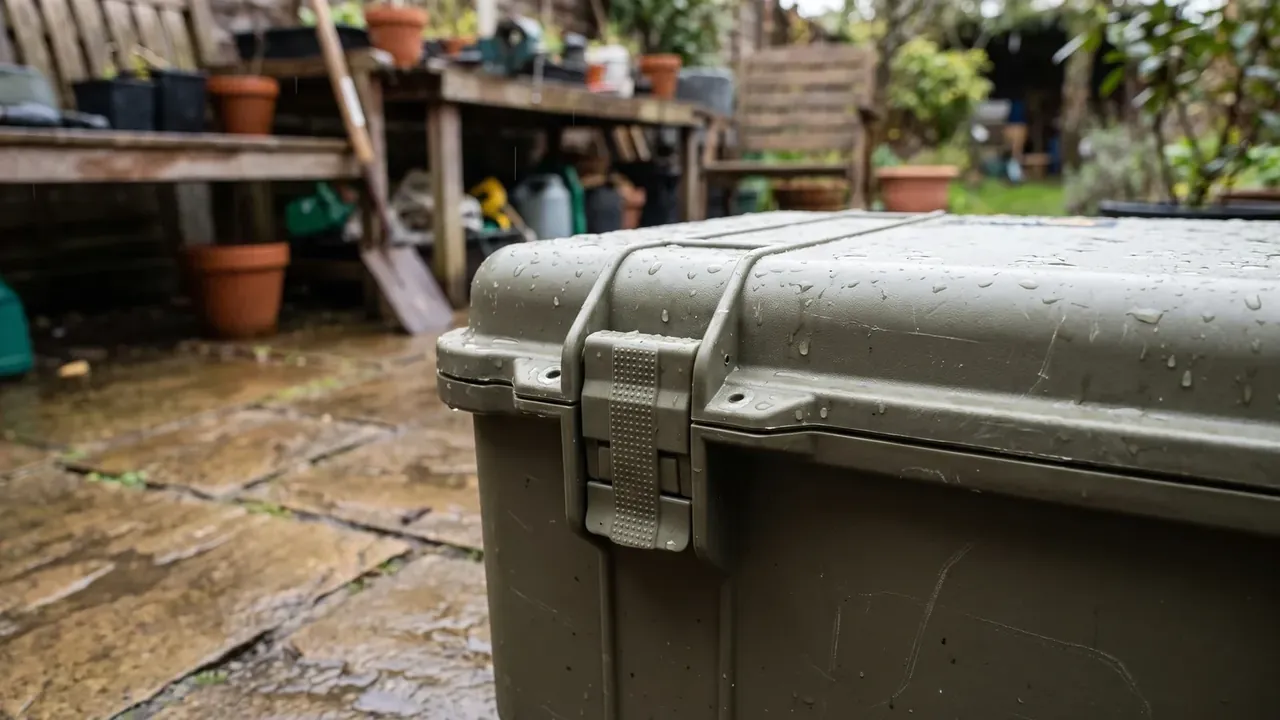
Quick answer: Artillery Shell Storage Container specs come from turning each requirement into a measured value: cavity and tolerance chain, wall and rib pitch, stack load, sealing class, temperature band.
Table of contents
- Turning Requirements Into an Artillery Shell Storage Container Spec
- Inside Dimensions and the Tolerance Chain
- Wall Thickness and Rib Pitch
- Converting Stack Load to the Base
- Sealing Class and Temperature Range
- FAQ
1. Turning Requirements Into an Artillery Shell Storage Container Spec
Specification starts before the drawing. Twelve rounds, a four-person carry, three months outdoors without damp becomes three parameter groups: cavity division, full-load weight and sealing class. The first page of an Artillery Shell Storage Container spec should be a mapping table, not an assembly view.
Set boundary conditions first: body diameter, length, stowage orientation, foam thickness. A 122 mm body laid flat with 10 mm of foam each side needs a 132 mm cell; upright, add 15 mm above the nose.
| Stated need | Parameter | Example value |
|---|---|---|
| Twelve rounds | Cavity and dividers | 132 by 132 by 372 mm |
| Four-person carry | Full-load weight | 96 kg maximum |
| Three months outdoors | Sealing class | IP65 plus decay test |
| Five-tier stack | Base load | 384 kg at 2.5x |
Load and sealing stay fixed; colour is open.
2. Inside Dimensions and the Tolerance Chain
The cavity is three numbers plus the divided cell: 604 by 468 by 372 mm, a 4 mm divider, cells of 132 by 132 by 372 mm. Each needs a tolerance, or a box that will not accept a round still passes inspection.
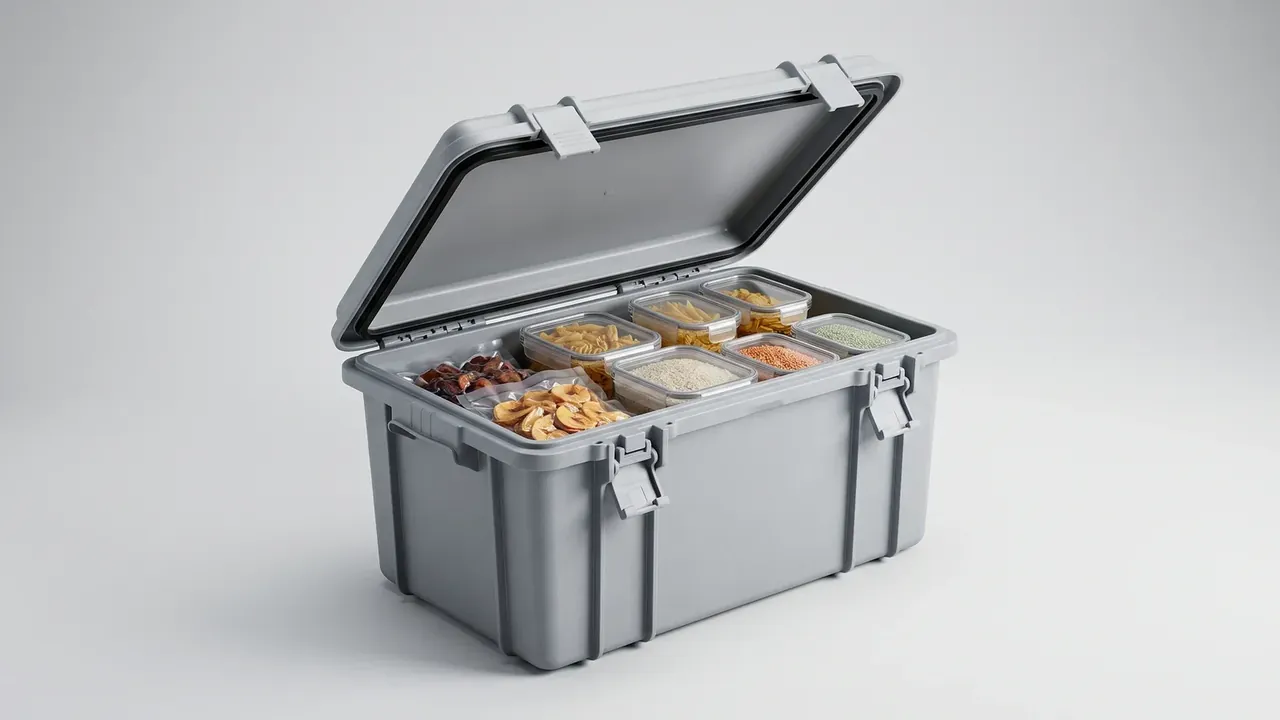
The chain runs backward from the cell: 1.2 mm at the cell, 0.4 mm at the divider, 0.8 mm at the inner wall, 0.5 mm at lid depth, 2.8 mm accumulated. More links loosen the end, so mold the divider with the body.
Datums belong on the drawing: outer base plane as A, rim as B, every dimension driven from those two. Shrinkage is compensated at 1.6 percent, so the 604 mm side is cut 10 mm oversize. At 2.8 mm accumulated, size the gap on the worst case; foam holds 15 percent reserve.
3. Wall Thickness and Rib Pitch
Thicker is not stronger. A 3.2 mm side wall, 4.5 mm base and 3.0 mm lid is the usual split: the base takes stacking, the lid stays light. Oversized sides stretch cooling, and in a 210-second cycle each extra millimetre costs 12 seconds.
Rib pitch sets stiffness: 120 mm pitch, 8 mm height, R3 root, 100 mm under the base. Tighter ribs fight ejection, wider ones bulge under vacuum. Draft goes on the drawing at 1.2 degrees and mold temperature at 38 C, or trial molding depends on the operator.
4. Converting Stack Load to the Base
Stack load is calculated from the bottom up. At 96 kg full and five tiers, the bottom case carries 384 kg; a 2.5x factor gives a 960 kg test held 24 hours, residual set under 1.5 mm an hour after release.
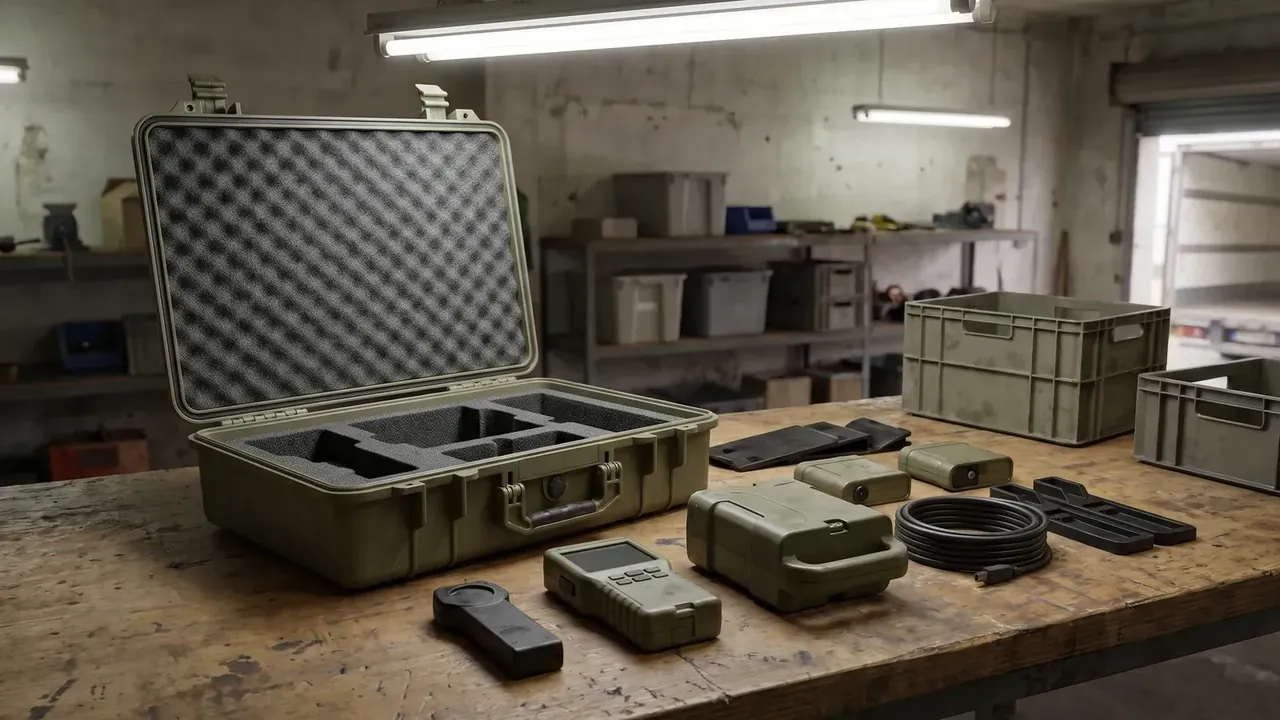
The base follows: grid ribs plus four corner bosses 12 mm high, 65 mm fork clearance. Bosses push load into the corners, the grid shortens the centre span. Side stability needs a number: no tip-over at 25 mm offset, and 6 mm of engagement between lid recess and boss holds it inside 3 mm.
5. Sealing Class and Temperature Range
Sealing is written by scenario. Outdoor storage means IP65, dust class 6 and jet class 5, plus a 20 kPa hold for 60 seconds with decay under 1.5 kPa. Gasket compression sits at 25 to 30 percent, a 6.5 mm channel for an 8 mm cord, so an Artillery Shell Storage Container relies on depth, not latch force.
| Item | Value | Method |
|---|---|---|
| Dust and water | IP65 | 12.5 litres per minute, 3 minutes |
| Air tightness | 20 kPa, 60 seconds | Decay under 1.5 kPa |
| Gasket compression | 25 to 30 percent | Channel and cord |
| Cold drop | minus 40 C, 0.8 m | Six faces, three corners |
Temperature takes two bands: minus 30 to plus 60 C in service, minus 40 to plus 70 C in transport; HDPE nears embrittlement at the low end, so the drop height falls from 1.2 m to 0.8 m. Thermal growth belongs on the drawing too: a 604 mm cavity grows 2.9 mm over 40 K, so the long slot needs 3 mm of slip.
Conclusion
A specification is only as good as its numbers: cavity and tolerance chain, wall thickness and rib pitch, stack load, sealing class, temperature band. Each needs a test, or the drawing is a sketch. Put the table and its methods in the contract annex, and the Artillery Shell Storage Container spec becomes enforceable.
This article discusses only the container (case body) side of specifications and design intent, and does not cover any handling, loading or use of the contents.
Related Reading
- Acceptance criteria for an Artillery Shell Storage Container
- Load-bearing structure: thickness, ribs and base
- Procurement: quotes, minimum order and lead time
- artillery-shell-storage-container-comparison
Related Products
- 8 Series — Gun Cases; Military Equipment Cases; Camera Equipment Cases; Drone Cases; Watch Cases; Knife Cases; First Aid Cases; Electronics Equipment Cases
- WL8-2812 PP Gun Case — model WL8-2812
- All protective cases and toolboxes: 7 series, 158 models