

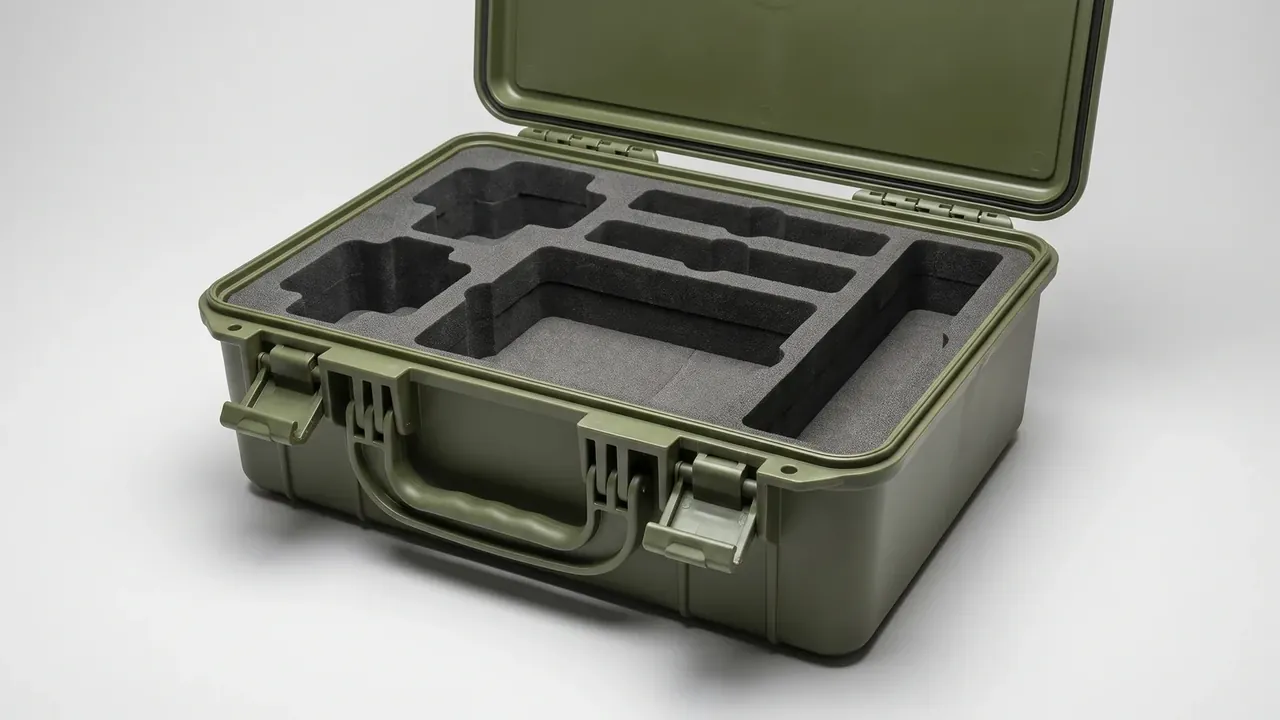
Quick answer: An aviation equipment case supplier has to fix the ATA Spec 300 category before quoting anything. Category drives the tests, not the price.
Table of contents
- Five Gates an Aviation Supplier Clears
- Matching Three ATA Spec 300 Families
- 300 Units and 45 Days
- Traceability: Batch, Part and Three-Year Retain
- Three Things an Audit Looks At
- FAQ
1. Five Gates an Aviation Supplier Clears
The first question for an aviation equipment case supplier is which of the three ATA Spec 300 families you match, not the price. A wrong category charges you on every round trip; price charges you once.
Gate one, envelope. You hold a part outline; the supplier owes three drawings back: net cavity, corner radii, rib placement. Anyone who cannot return them is guessing, because usable space is only what survives walls, radii and ribs.
Gate two, material. Isotactic polypropylene turns glassy near minus 10 C and can lose half its notched impact strength; random copolymer pushes the floor toward minus 20 C. A part that spends a night on a northern apron belongs at the lowest service temperature.
Gate three, pressure. A pressurised cabin settles near 75 kPa against 101 kPa on the ground, so the wall carries roughly 26 kPa of differential. Squeeze the gasket harder and the lid fights whoever opens it after landing; a pressure equalisation port beats a perfect seal.
Gate four, trace. Part number, batch code and category mark must point at each other, so any shell picked at random leads back to a mould, a press and a shift.
Gate five, reports. Category I needs stacking, drop or impact and water resistance, plus vibration and penetration, which only that category demands. The report must cover a prototype and a first-run sample; an aviation equipment case supplier offering only the first has skipped the harder half.
| Gate | Ask for | Usual gap |
|---|---|---|
| Envelope | Cavity drawing, radii, ribs | Outline only |
| Material | Grade, copolymer, cold impact data | PP named, grade not |
| Seal | Gasket section, vent detail | Seal pushed to the limit |
| Trace | Batch code rule, mould to press list | Stops at year and month |
| Report | Prototype and production reports | One report, wrong category |
2. Matching Three ATA Spec 300 Families
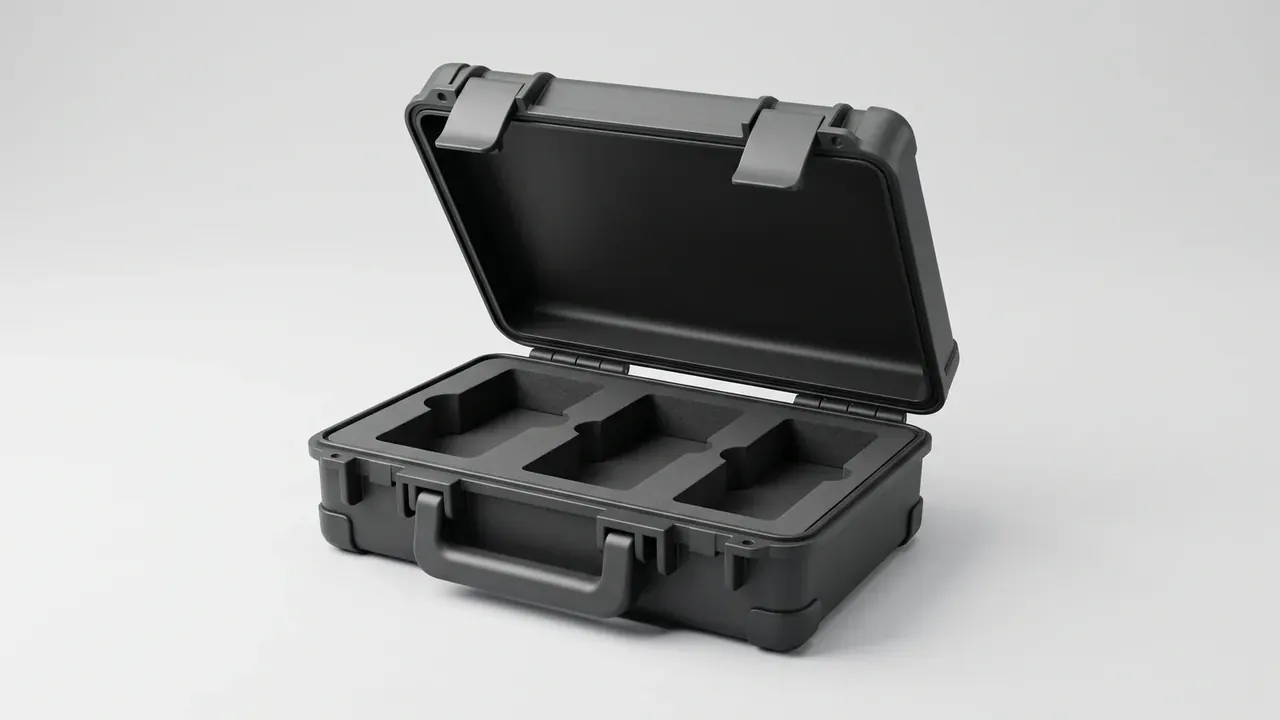
ATA Spec 300 dates from 1960 and covers the design, testing, marking and identification of aircraft supply packaging. It sorts reusable packaging into three categories, which the trade calls three families.
| Category | Reuse | Tests unique to it | Typical shell |
|---|---|---|---|
| Category I | 100+ round trips | Vibration, penetration | Engineering plastic, GRP or metal |
| Category II | 10+ round trips | None of those | Reinforced medium-life case |
| Category III | Single trip | None | High-strength corrugated |
The standard separates service life and testing from external dimensions. Two Category I cases can sit at 600 mm square and 1.6 m long. Trips decide the category, the family number your customer issues plus the part envelope decides size, and only after that do wall thickness and hardware come up.
When a customer says only to follow ATA without a family number, ask for the category in writing. An aviation equipment case supplier quoting Category I margins and flagging the assumption beats one quoting Category III and re-tooling four weeks later.
3. 300 Units and 45 Days
The 300-unit line is arithmetic, not habit. A colour change costs about 40 minutes of barrel cleaning, first-article hardware sign-off takes two days, and the insert die with its first sample takes three. Across 300 units those fixed costs stay tolerable; across 100 the unit price jumps a step and cheaper hardware appears instead.
The stages run 5 days for the envelope, 18 for the tool, 7 for T1 and rework, 12 for production, 3 for packing: 45 days. The fragile one is the third, because a failed T1 costs another 7 days of tool work. An aviation equipment case supplier should hand over a dated plan starting at the signed golden sample, never at the deposit.
4. Traceability: Batch, Part and Three-Year Retain
A twelve-character batch code works well: year and month in four, press in two, shift in one, cavity in one, the last four digits of the part number. The cavity digit traces a defect to one cavity instead of scrapping a batch, and the code still prints inside 40 mm on the ribbed base.
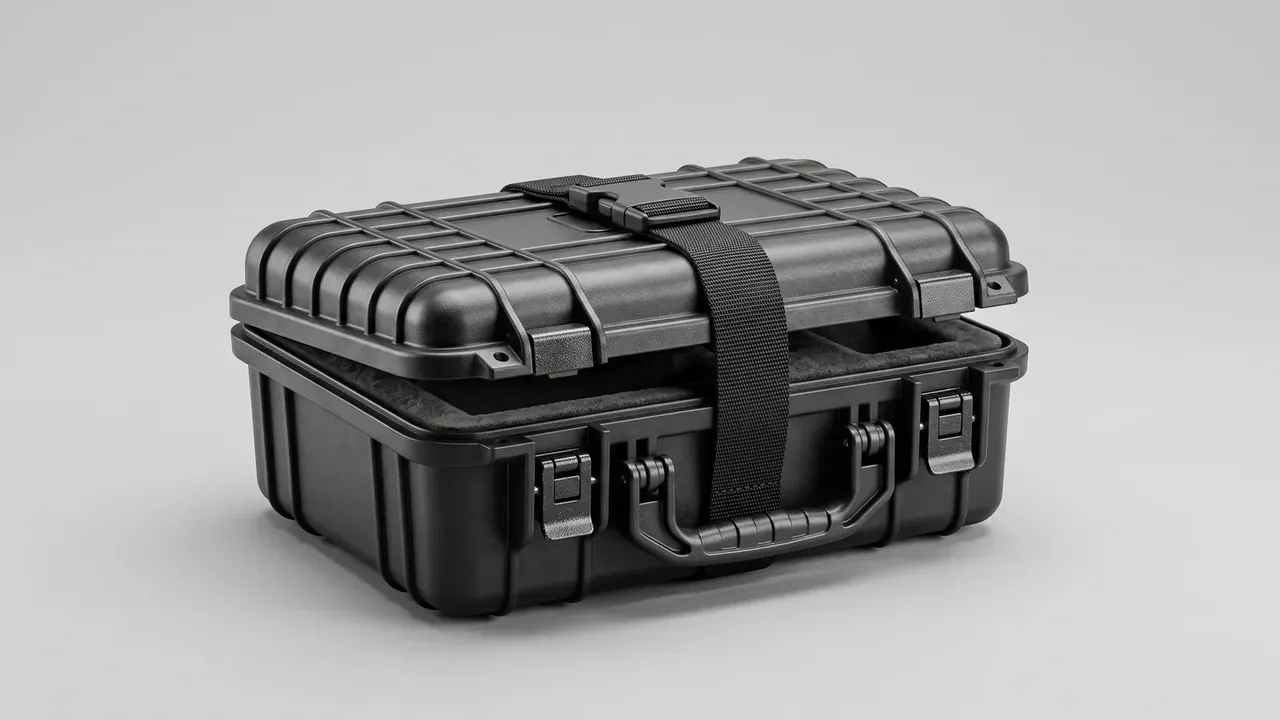
Retain samples follow a plain rule: three years, four batches a year, three shells each, 36 in all, at 15 to 30 C and 45% to 65% relative humidity, flat and out of sunlight. The purpose is not display but re-testing compression set when a seal complaint arrives in year three.
A part number should read like a structure: series in two digits, cavity height class in two, hardware configuration in two, category in the last. Every aviation equipment case supplier printing that rule on the quotation manages by batch, not by memory.
5. Three Things an Audit Looks At
Start with the mould register: number, cavity count, cumulative shots, repair history. Then ask what changed on this tool last time; a supplier answering in detail keeps a live register, not a printout.
Second, the seal test station. Look for a fixed clamping fixture and a per-unit record sheet, not a thumb press that finds gross leaks and nothing else. An aviation equipment case supplier without fixed clamp force cannot show two identical readings on one shell.
Third, the retain room. Call out a batch from three years ago and see whether the shells appear. If they do not, traceability lives in a folder, not a rack.
An aviation equipment case supplier that walks you to the clamping fixture first and the showroom second has usually shipped aviation work before.
Conclusion
Vetting an aviation equipment case supplier ends in three documents: a category cross-reference, a batch trace table and a retain log. When they agree, 45 days means something; when they disagree, a low unit price still fails on the first round trip. Fix the family number first, then negotiate.
This article deals only with the specification and design meaning on the container (case body) side, not with any handling, loading or use of the contents.
Related Reading
- Plastic cases against wooden crates
- Cartons and cases in packing
- Ground support equipment cases
- Tool control in aviation
JUNZHIJIA
Related Products
- 8 Series — Gun Cases; Military Equipment Cases; Camera Equipment Cases; Drone Cases; Watch Cases; Knife Cases; First Aid Cases; Electronics Equipment Cases
- WL8-2812 PP Gun Case — model WL8-2812
- All protective cases and toolboxes: 7 series, 158 models