

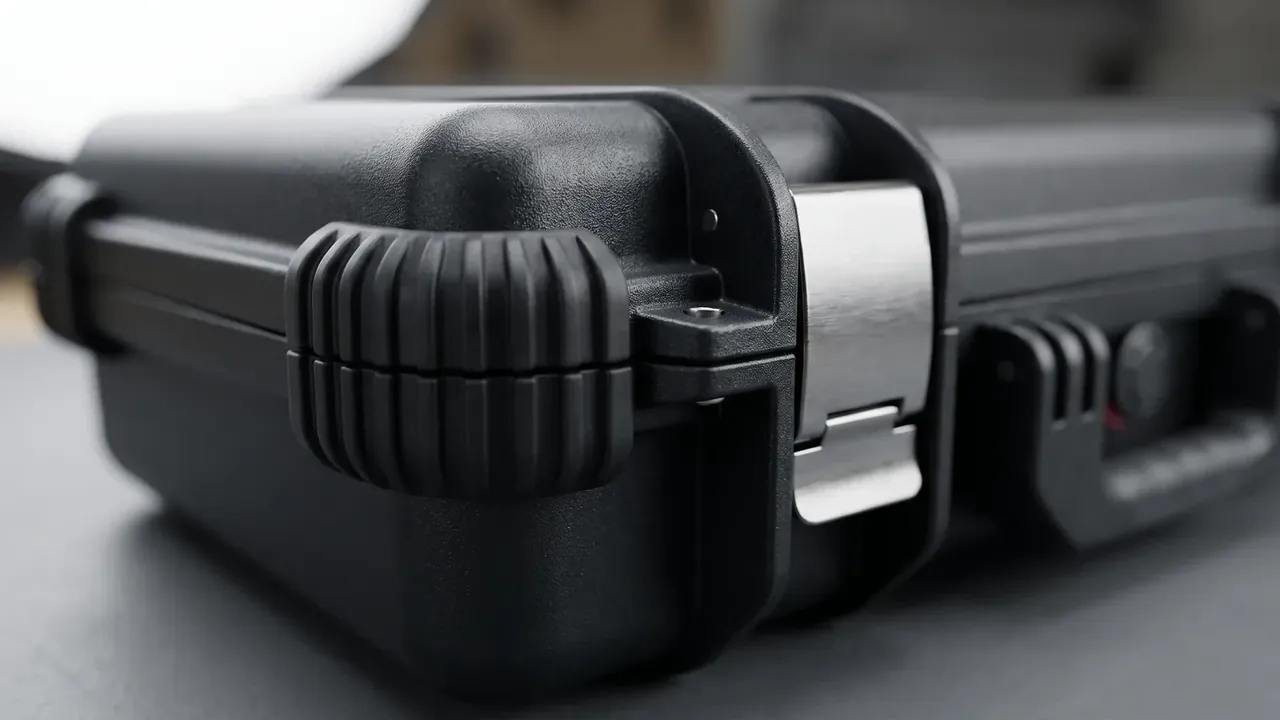
Quick answer: Aviation Ground Support Equipment Case takes rain, towing and drops at once: 50 mm/h rain, pH 9 cleaner, 5 km/h towing and a 40 kg load.
Table of contents
- Rain and Cleaner on the Apron
- Tow and Lift: Which Load Points Matter
- Tool Presence and the Count Route
- Apron Temperature Swing and Condensation
- Case Colour and Night Visibility
- FAQ
1. Rain and Cleaner on the Apron
A ground support case on the apron takes three things at once: rain, towing and drops. Rain at 50 mm/h lands as a continuous film that does not leave on its own; it follows the latch recess, the hinge pin and the lid step until it finds a gap.
Aviation Ground Support Equipment Case waterproofing is not one grade. IP67 means immersion to 1 m for 30 min, while apron rain arrives at an angle like spray, so the raised lip and the compressed gasket work first. A TPE gasket at Shore A 50–60 sits between the limits: too hard and it will not follow the step, too soft and it recovers slowly in the cold.
Cleaner does more damage than rain. A wash at pH 9 is alkaline, and left on the wall it bleaches the grain and lifts labels. Rotomoulded PE and moulded PP hold up at that pH; the gasket and the label go first.
| Apron duty | How it arrives | What the case has to do |
|---|---|---|
| 50 mm/h rain | continuous film, angled spray | raised lip, gasket compression |
| pH 9 cleaner | wash, foam dwell | alkaline-safe grain, label adhesive |
| Pressure washer | direct jet at seams | recessed latch seat, hinge shroud |
Latch retention of 200–400 N is the force that compresses the gasket at the lid. Below it the lid creeps open and water seeps; above it a gloved hand cannot flip the latch. Hinges rated at 20,000 cycles last years.
2. Tow and Lift: Which Load Points Matter
Aviation Ground Support Equipment Case towing is rated at 5 km/h, a walking pace on wheels, and every apron joint sends impact into the wheel mounts. A bolt-on mount cracks at its holes; a moulded one spreads the load across the base, at the cost of tooling and weight.
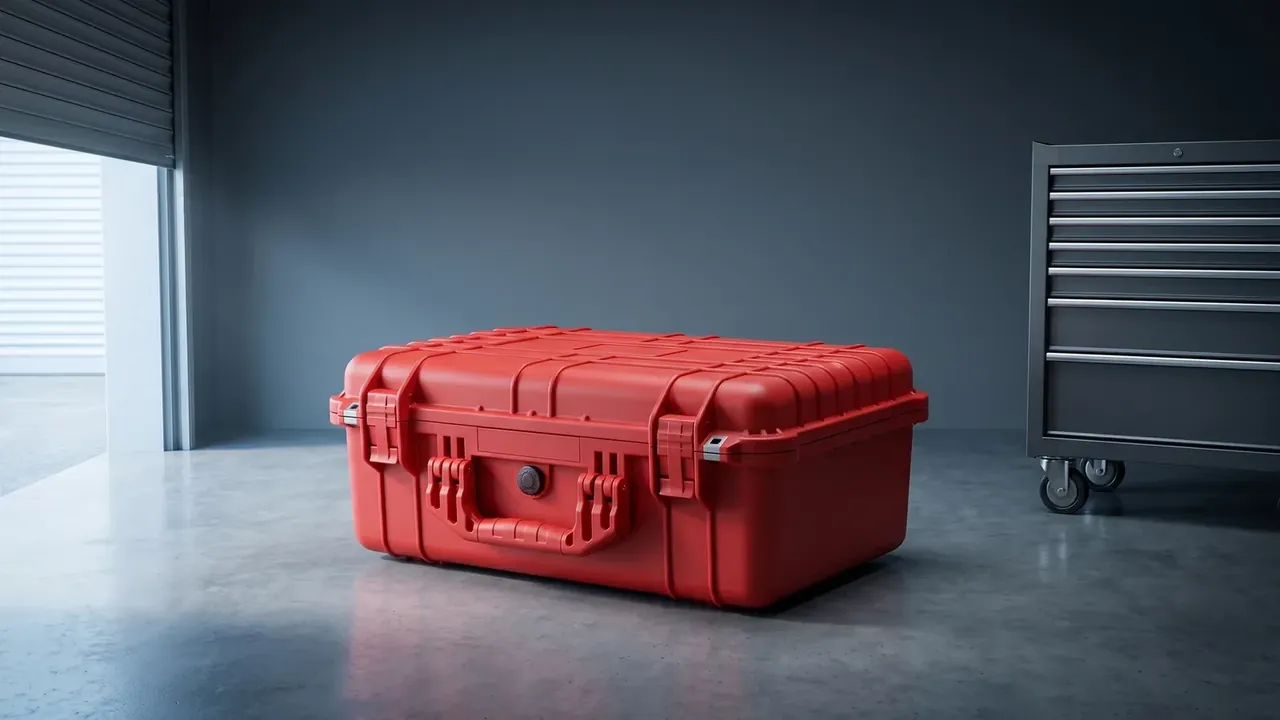
Lifting uses 2 points only: the handles or dedicated lugs. Slings over the lid are the common mistake, since the force bends the lid and shifts the gasket. A lug belongs where the side ribs cross, on a wall of 3–6 mm.
The base is the third point. At 40 kg per case, ribs should run both ways; deeper, closer ribs cut deflection in tow. Once the floor flexes, the foam moves and the tool slots loosen until an edge chips.
| Load point | Where it sits | How it is built |
|---|---|---|
| Wheel mount | base corners or one side | moulded with the base, no bolt holes |
| Lift point | where side ribs cross | 2 in total, clear of lid and latches |
| Handle | middle of a long side | same material, thickened in the pull |
| Corner | all eight | larger radius, extra wall |
Turning adds a hidden load: the handle pushes the side wall and the middle bulges, which one longitudinal rib controls where the lug lands.
3. Tool Presence and the Count Route
Tool presence means every tool has one place, and putting it back needs no thought. Foam in an Aviation Ground Support Equipment Case is cut to the outline and slightly under size, so a tool presses in and stays when the case is tipped, while a finger hole lifts it out. EVA at 25–45 kg/m³ with 10%–20% compression set keeps the grip.
The count route decides how long a handover takes. Tools follow the order of use, left to right and top to bottom with the work card, and 30 s covers the set; laid out at random, one missing tool means emptying the case.
A tool list inside the lid, in large type with outlines, keeps list and cavities in one order, so a gap shows what is missing.
Ground call: a case with more than 2 tool slots missing, or a latch that springs open after towing at 5 km/h, does not go onto the apron. A missing slot means a loose tool inside; a sprung latch means the lid opens under tow.
4. Apron Temperature Swing and Condensation
Apron temperature runs from -30 to 55 ℃. A case is cold at dawn and wheeled into sun, the air inside warms faster than the shell, and moisture settles on the tools. Condensation in an Aviation Ground Support Equipment Case is not leakage but trapped water meeting a cold surface.
Two routes out exist: keep moisture out, or let it escape. The first depends on gasket and latches closing the seam hard, the second on a breather valve that passes vapour but not water. Aviation Ground Support Equipment Case design should not push either route to an extreme, since a sealed body draws damp air in when it opens.
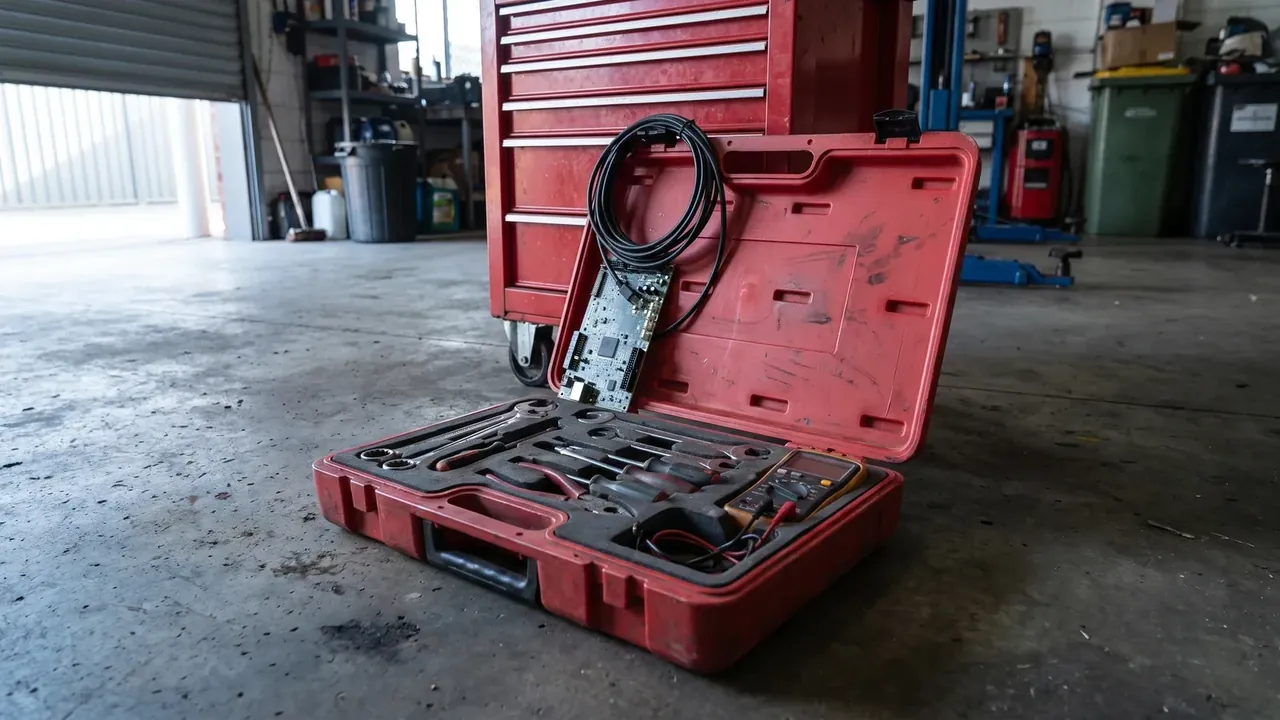
Foam stores water too. EVA is closed cell, but a cut cavity exposes an open face; drain holes in the base, or a barrier film, keep it away.
Cold also stiffens plastic and raises the flip force, so a thick glove stops at the detent. Extra travel past it is what makes the latch work at -30 ℃.
5. Case Colour and Night Visibility
At night the first job of an Aviation Ground Support Equipment Case is to be seen. Vehicles, tow bars and hoses move around the apron, and a dark case under a wing is invisible at 50 m. Orange, yellow or red gives a contrast that grey and olive do not.
A 50 m figure is often quoted and depends on colour, reflectance and a reflective strip. Grain scatters headlights into a patch rather than a point, and a strip at half height returns light as a vehicle comes round.
| Colour | Night visibility | Day-to-day upkeep |
|---|---|---|
| Orange red | strong return under headlights | shows dirt, needs wiping |
| Bright yellow | high contrast with concrete | scratches read clearly |
| Dark grey | lost in shadow | hides grime and age |
| Olive green | close to equipment tones | not suited to an apron |
Colour masterbatch in rotomoulded PE differs widely in UV stability, and an apron is sun all day. Aviation Ground Support Equipment Case marking follows the same rule: crew and tool category in reflective film, clear of latches, on a flat patch that can be replaced.
Related Reading
- Where aviation equipment cases are used
- Laying out foam for an aviation tool case
- Tool control inside aviation cases
- Moving from a flight case to a plastic case
JUNZHIJIA
Related Products
- 8 Series — Gun Cases; Military Equipment Cases; Camera Equipment Cases; Drone Cases; Watch Cases; Knife Cases; First Aid Cases; Electronics Equipment Cases
- WL8-2812 PP Gun Case — model WL8-2812
- All protective cases and toolboxes: 7 series, 158 models