

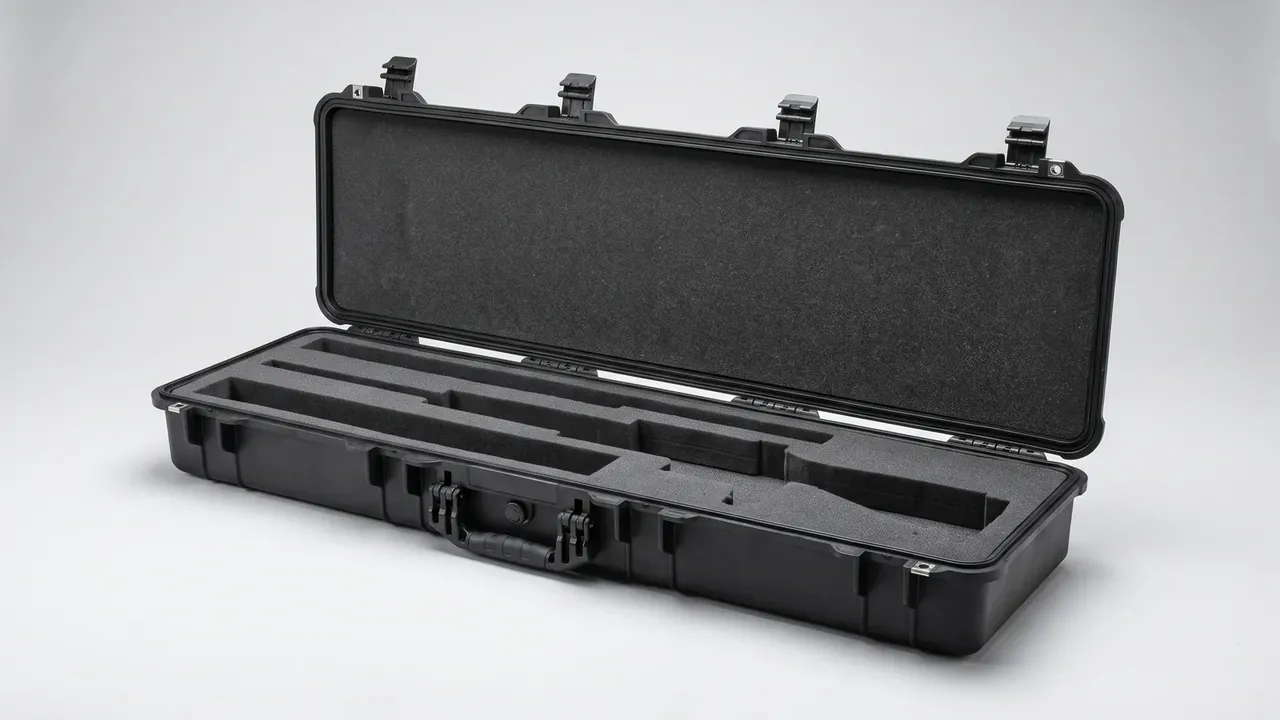
Quick answer: Acceptance ranks three sources of authority first, then converts each clause into a reading that can be repeated on the bench, and sorts failures into rework, downgrade or return.
Table of contents
- Acceptance Clauses Come Before Bench Tests
- Five Field Measurements and Their Limits
- Three Disposition Routes for Non-Conforming Units
- Sampling and Traceable Records
- Writing Limits into the Purchase Document
- FAQ
1. Acceptance Clauses Come Before Bench Tests
Most factory disputes start with two documents on one table. The buyer points at the contract, the supplier at a national standard, the lab report says something else. None is wrong; nobody ranked them before the crate opened. Every Box, Ammunition Stowage batch then gets judged by whoever speaks loudest.
| Source | What it settles | Evidence form | Usual gap |
|---|---|---|---|
| Contract clauses | Size, wall, load, latch count | Drawing and clause numbers | Names no item |
| Third-party report | Salt spray, drop, stacking, leak | Report with accreditation mark | Model differs from goods shipped |
| In-house procedure | Sampling, limits, authority | Signed procedure and forms | Procedure exists, limits do not |
For a Box, Ammunition Stowage order, only the third source is used at every delivery; the other two sit upstream. The contract names items, the report proves capability, the procedure decides what gets measured. Reverse that order and the meeting becomes an argument about vocabulary. One misreading survives every audit: a report covers the sample, not the batch, since samples come off another line.
2. Five Field Measurements and Their Limits
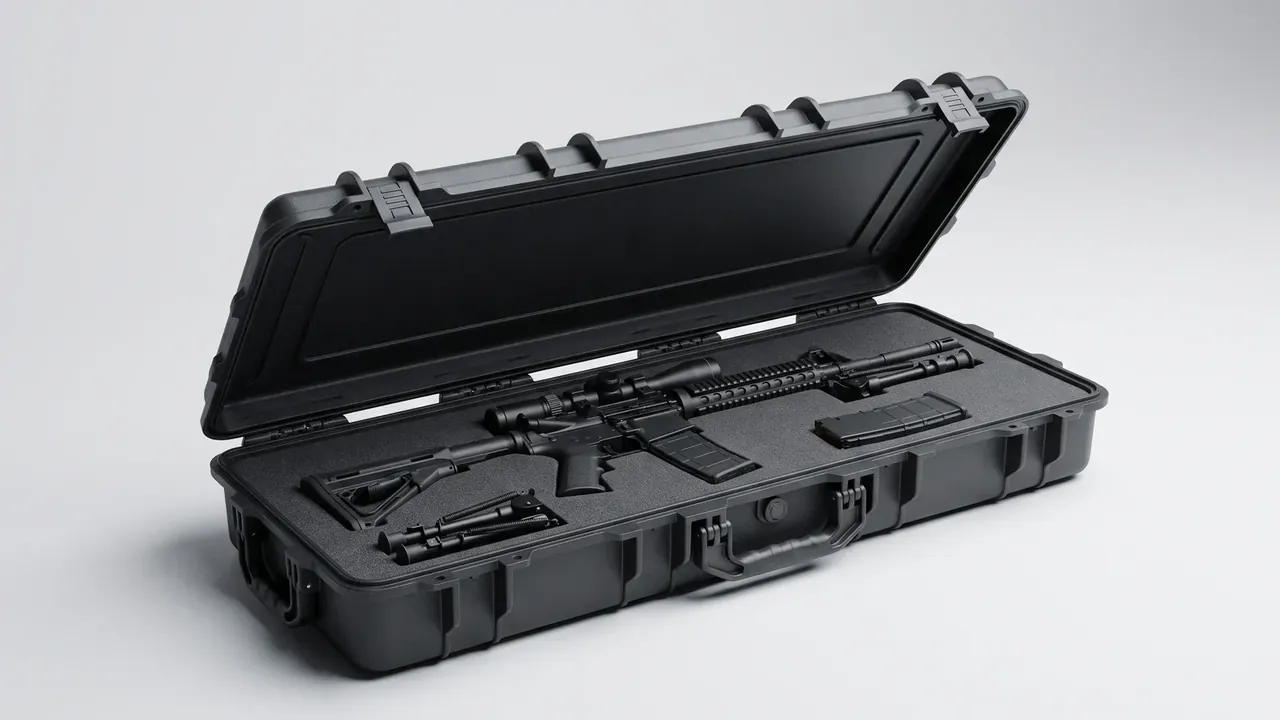
Five items can be settled on site without a climate chamber, using a bench and a gauge.
| Item | Method | Limit | Record |
|---|---|---|---|
| Wall thickness | Ultrasonic gauge, five points per face | Minimum 4.5 mm | Lowest of five |
| Latch torque | Torque wrench | 3.2 N·m, plus or minus ten percent | Once per latch |
| Leak | Charge to 3 kPa, hold five minutes | Drop under 0.3 kPa | Start and end values |
| Stacking | Five loaded layers, 24 hours | Sink under 2 mm | Four-corner average |
| Drop | 1.2 m onto concrete, one corner, three edges, six faces | No crack, latches closed | Photo per face |
A reading earns its place through repeatability, not precision. A second inspector may differ by 0.1 mm on thickness or 0.2 N·m on torque; anything wider means the tool or the technique needs checking before the unit is judged.
Drop order matters: corner, then three edges, then six faces. Reversing it lets a hairline crack from an early fall grow later, with no way to name the cause.
3. Three Disposition Routes for Non-Conforming Units
Two exits never suffice for a Box, Ammunition Stowage batch; without a middle route the bench drifts toward leniency.
- Rework: swappable parts such as a loose latch or shifted gasket, with the item re-tested.
- Downgrade: a crack not through the wall, marked yellow, for internal moves.
- Return: wall under 4.5 mm, a cracked latch seat, or a leak that cannot be sealed.
- Concession: non-functional items only, signed with a correction deadline.
- Hold: readings within five percent of the limit, quarantined for a lab re-test.
Concession escapes control most easily: one signature invites a second, and after the second the limits live only on paper. A yearly quota, spent and closed, keeps it honest.
4. Sampling and Traceable Records
The sample size for a Box, Ammunition Stowage delivery follows the batch, never the relationship with the supplier.
| Batch | Units sampled | Tightening rule |
|---|---|---|
| Up to 50 | 5 | One failure, full inspection |
| 51 to 200 | 8 | Two failing batches double the sample |
| Over 200 | 12 | First delivery at eighty percent inspection |
Each sampled unit carries a tag with batch number, sample index, five readings and inspector code. Because the tag travels with the case, a later fault in one Box, Ammunition Stowage unit points straight to its batch mates.
5. Writing Limits into the Purchase Document
A Box, Ammunition Stowage limit that never reaches the contract is left to whoever stands at the bench. The order of writing matters: items first, methods second, numbers last. Items follow the use case: a unit on trucks and one moving indoors need not share a drop height. Methods must name the instrument and the measuring point, or one sentence yields two results. Numbers belong in ranges, because a single value cannot survive gauge error. Beyond numbers, the document needs a re-test rule: which item may be measured again, how often, and what a second failure means. Finally comes authority, naming who may downgrade a unit and who may sign a concession; without it, decisions drift to someone not in the room. Written this way, the clause becomes executable rather than decorative.
The document grows longer and talks slow, which is cheaper than finding the gap afterwards.
Conclusion
The hard part of acceptance is not measuring; it is settling the order of authority, the numeric limits and the right to decide before the crate opens. Once fixed, five bench checks are only execution. An enforceable clause protects the buyer better than a polished lab report and gives the supplier a defensible line. A conforming Box, Ammunition Stowage unit is never inspected into existence; it is built against limits written clearly enough to be checked.
This article discusses only the container (case body) side of specifications and design intent, and does not cover any handling, loading or use of the contents.
Related Reading
- Packing and securing requirements for ammunition shipments
- Specifications and acceptance items for small arms boxes
- Inspection checklists for specialty ordnance boxes
- Common stowage box faults and how to handle them
Related Products
- 8 Series — Gun Cases; Military Equipment Cases; Camera Equipment Cases; Drone Cases; Watch Cases; Knife Cases; First Aid Cases; Electronics Equipment Cases
- WL8-2812 PP Gun Case — model WL8-2812
- All protective cases and toolboxes: 7 series, 158 models