

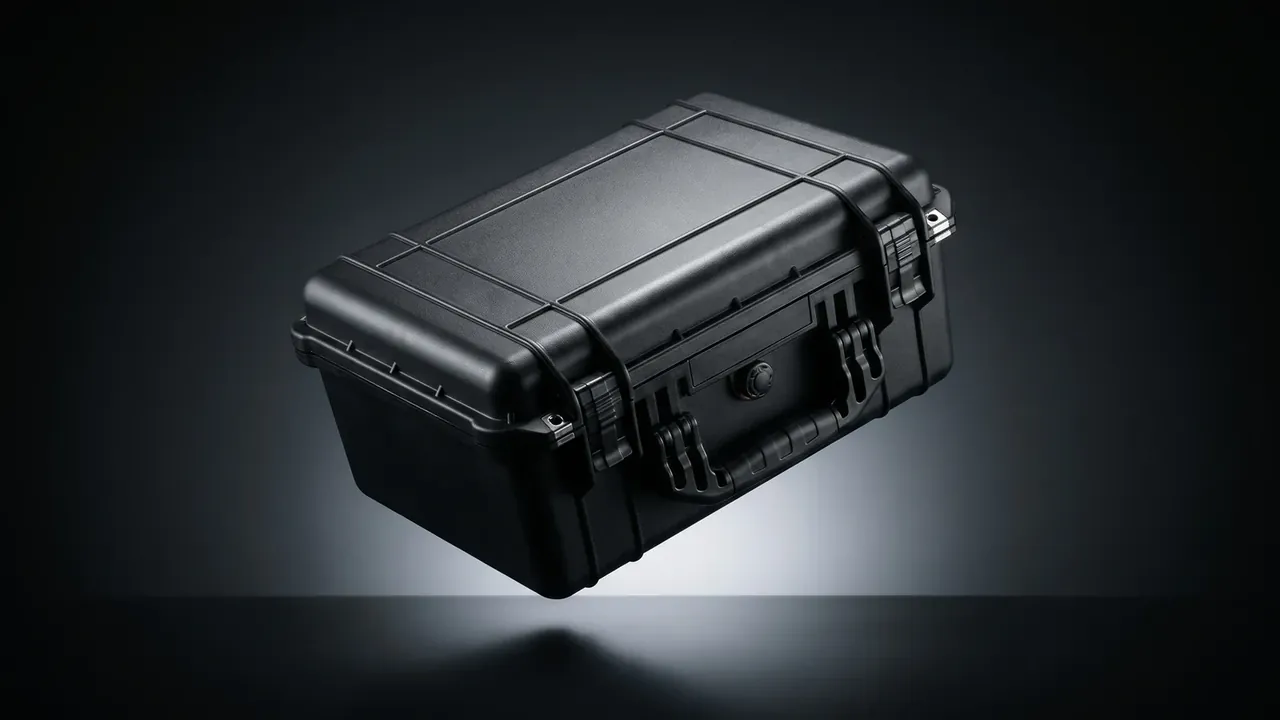
Quick answer: In a minus 30 °C yard at 25 kg per unit, a Box, Packing, Ammunition design keeps two strengths: a perimeter seal and a base interlock. Latch effort, opening time and return volume lose to an aluminium case. Three thresholds decide the swap: 1.6 per cycle, ten seconds to open, 2.4 m of clear height.
Table of contents
- Where the Comparison Starts at Low Temperature
- Latches and Seals: What Fails First Below Zero
- Weight and Stacking Under a Low Roof
- Return Freight and Cost per Cycle
- When the Box Is the Wrong Choice
- FAQ
1. Where the Comparison Starts at Low Temperature
Four in the morning, minus 30 °C, sixty cases outdoors for four hours, frost along the lid. The question is not which case is strongest but which one a gloved hand can open.
| Format | Empty | Latch | Lid open | Layers |
|---|---|---|---|---|
| Box, Packing, Ammunition, rotomoulded | 7.2 kg | 62 N | 8 s | 4 |
| Aluminium transit case | 5.4 kg | 48 N | 11 s | 3 |
| Steel ammunition case | 12.6 kg | 90 N | 14 s | 5 |
| Corrugated shipper, one trip | 2.8 kg | none | 25 s | 2 |
The duty cycle is fixed: 1800 km rail, 600 km road, two transshipments, a 150 mm pallet. Effort above 55 N forces both hands.
2. Latches and Seals: What Fails First Below Zero
The latch closes at 42 N at plus 20 °C and needs 62 N at minus 30 °C, a 48% rise from the stiffening handle.
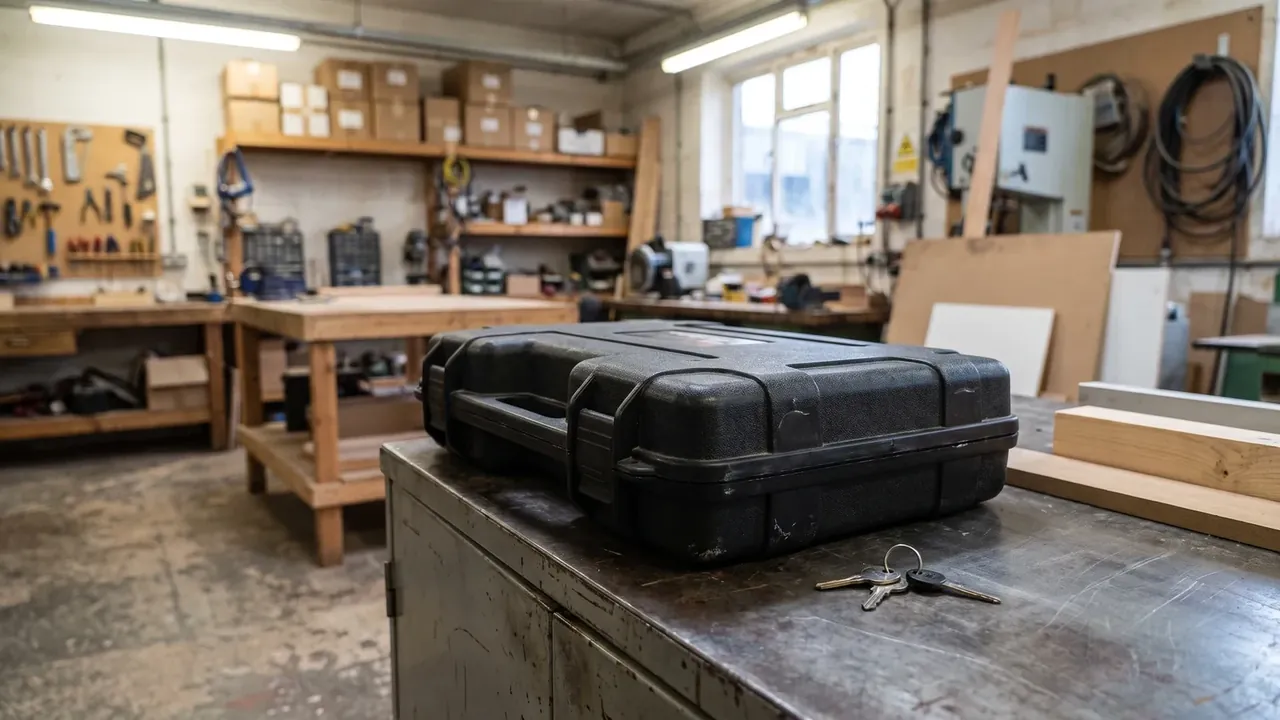
A cold-weather glove gives 55 N from one finger, so 62 N forces both hands and turns a six-second lid into eight. Aluminium wins at 48 N but adds four catches and two straps.
The gasket fails next: EPDM at minus 30 °C moves from 12% to 21% compression set and from 0.6 s to 2.1 s of rebound, so the lid waits two seconds before the latches bite.
Silicone holds rebound below minus 40 °C at three times the price, repaid past four hundred openings a year.
3. Weight and Stacking Under a Low Roof
Layer count is a division, not a strength claim.
- 2.4 m minus a 150 mm pallet and 100 mm of fork clearance leaves 2.15 m.
- A 320 mm case makes 1.28 m at four layers, 1.92 m at six.
- Four layers put 75 kg on the bottom lid against a 120 kg rating.
- The 1.2 mm aluminium wall bows 3 mm and bears on its frame alone, so it stops at three.
- Steel stacks five high, but 63 kg of stack sways two metres up.
The four-versus-three gap sits in storage, not in the case. Over 600 units, four layers take 150 pallet positions and three take 200. Fifty extra positions cost 13,200 a year, more than the 440 price gap across sixty cases. Under 1.8 m of clearance four layers never happen, so aluminium tops out at three and its 1.8 kg finally pays. Handling follows: 108 kg more per truck, six minutes a load, twenty hours a year. Cost weight and layers together, or the answer inverts.
4. Return Freight and Cost per Cycle
Empty backhaul is the line most comparisons drop. The split lid lets empties nest, so sixty collapse into the volume of twenty-one, while aluminium stacks flat.
| Option | Price | Upkeep a year | Cycles | Per cycle |
|---|---|---|---|---|
| Box, Packing, Ammunition | 420 | 30 | 400 | 1.65 |
| Aluminium transit case | 860 | 90 | 400 | 3.95 |
| Steel ammunition case | 560 | 160 | 600 | 4.13 |
| Corrugated shipper | 48 | 0 | 1 | 48 |
Price plus eight years of upkeep, divided by cycles run. Steel lasts longest and lands highest at 4.13, beaten by 160 a year in derusting labour. The shipper looks worst until backhaul leaves the sum.
5. When the Box Is the Wrong Choice
Three duty cycles should not use it at all.
A shuttle line running three turns a day needs no perimeter seal, and 7.2 kg of empty weight travels 400 m further per shift; a 5.4 kg aluminium case opens three seconds slower and carries easier.
A one-way export lane has no backhaul, so nesting is worthless, and a lined shipper lands at 48 against 420.
A warehouse stacking two high under 1.8 m wastes the four-layer margin, and steel at 12.6 kg stops being a liability, trading it for a flat lid.
Three cycles leave almost no substitute: a humid store needing a perimeter seal, a sea-and-road chain with two transshipments, and pallet handling that relies on a base boss locking into the recessed lid. Neither alternative interlocks, and a stack on either splits on the first turn.
Conclusion
No format wins across the board here. The Box, Packing, Ammunition design takes the perimeter seal, the base interlock and empty nesting, and gives up latch effort and opening speed.
Its place is set by the duty cycle, not the material. Clearance, turns a year and transshipments decide whether it is the cheapest unit in the yard or the dearest. Measure the height, count the turns, then choose a Box, Packing, Ammunition design.
This article discusses only the container (case body) side of specifications and design intent, and does not cover any handling, loading or use of the contents.
Related Reading
- Metal versus rotomoulded ammunition cases
- Four military packing case materials under test
- Inspection items and pass lines for packing boxes
- Material comparison for ammunition storage cases
Related Products
- 8 Series — Gun Cases; Military Equipment Cases; Camera Equipment Cases; Drone Cases; Watch Cases; Knife Cases; First Aid Cases; Electronics Equipment Cases
- WL8-2812 PP Gun Case — model WL8-2812
- All protective cases and toolboxes: 7 series, 158 models