

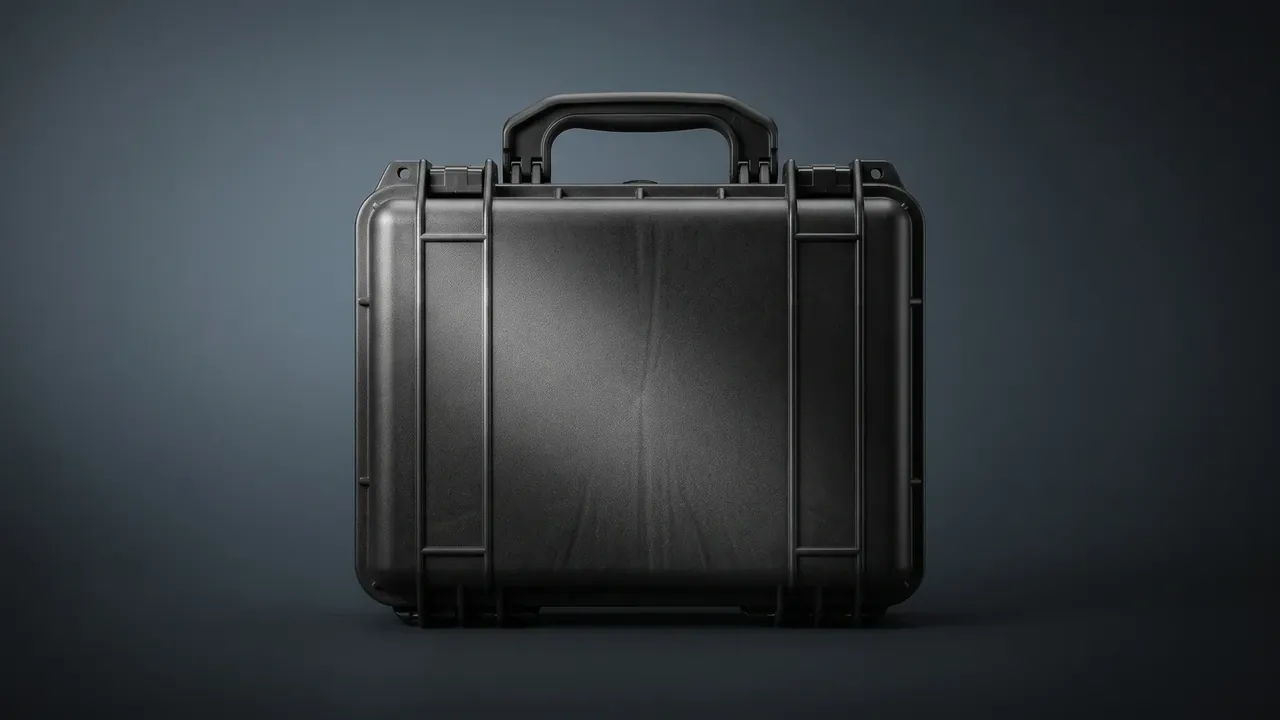
Quick answer: Judge a Box, Packing, Ammunition case on the floor, not in the quotation. Measure the cavity, weigh the empty case, press one wall and read the rebound, then cross-check tiers and salt-spray hours. Two numbers outside their band disqualify it.
Table of contents
- Order of Judgement: Cavity First, Weight Second
- Five Measurable Indicators and Their Pass Lines
- Two Mismatches: Oversized Cavity, Thin Walls
- Three Conversions That Put Every Quote on One Basis
- Turning the Checks Into a Field Card
- FAQ
1. Order of Judgement: Cavity First, Weight Second
The commonest ordering mistake is asking the price before the cavity. Price is an outcome; cavity is the cause. With a tape, a 30 kg spring scale and a marker, forty minutes settle most of what a Box, Packing, Ammunition case is.
The order for a Box, Packing, Ammunition case is fixed: look, measure, weigh, press. Latch count and hinge width, cavity and wall gauge, empty weight, then a side-wall press read after sixty seconds.
| Step | Tool | Number | Reject signal |
|---|---|---|---|
| Look | Eyes, phone | 2 latches or more | One latch only |
| Measure | Tape, caliper | 480×320×240 mm, 3.2 mm wall | Taper above 3 mm |
| Weigh | 30 kg scale | 5.8 kg empty | 0.6 kg spread per batch |
| Press | Palm, 20 kg weight | Rebound at 60 s | Above 0.4 mm |
Do these first because a quote sheet lists outer size and cases per pallet, never cavity, wall or latch spacing.
Cavity sets payload, wall sets tiers, weight decides who carries it. When all three sit inside their bands, price starts to mean something.
2. Five Measurable Indicators and Their Pass Lines
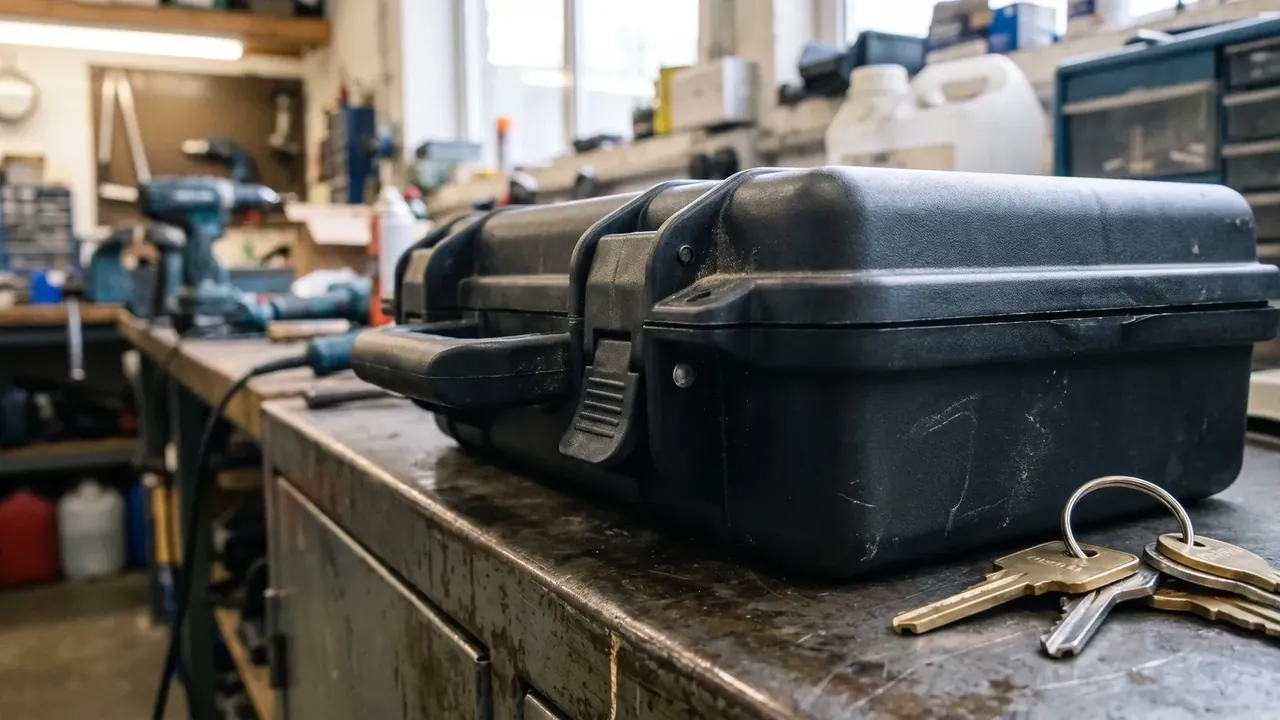
- Cavity: 480×320×240 mm as one class, 3 mm clearance per side, wider rattles.
- Wall: 3.2 mm sides, 4.0 mm base, brittle below 2.6 mm at minus 25 °C.
- Weight: 5.8 kg is normal, under 4.5 kg means thinner walls.
- Tiers: 1.2 t static across four, 70 % of it for dynamic loads.
- Salt spray: no red rust after 96 hours, with rebound under 0.4 mm.
Salt spray is the one waved through, because nothing shows on delivery day. A latch in a damp store for one rainy season is where rust starts.
3. Two Mismatches: Oversized Cavity, Thin Walls
A mismatch is a selection fault, not a manufacturing one: friction, rarely breakage.
An oversized cavity is the common one. When the cavity runs a ring wider than the load, the load shifts, impact lands on a corner, and that corner cracks first. Shake the closed case: continuous knocking means too much clearance, a single dull shift is normal. The thin wall is the other pattern, where the case keeps its shape but the lid centre dips at the third tier. Both surface on delivery day, months before a breakage report. Past 5 mm of dip, the divider already carries load it was never meant to.
| Mismatch | Field sign | Gap | At three months |
|---|---|---|---|
| Oversized cavity | Knocking on a shake | Over 8 mm per side | Corner cracks |
| Thin walls | Lid dips at tier three | Sag beyond 5 mm | Stacking drops to two |
Two actions settle it: one shake, one press.
4. Three Conversions That Put Every Quote on One Basis
A unit price hurts in comparison: two cases quoted 18 apart can invert over three years.
Three conversions before signing.
| Conversion | Method | Example | Three-year delta |
|---|---|---|---|
| Cost per trip | Price over trips | 96 over 40 trips is 2.4 | 0.45 against a 78 case |
| Seals | 12 each, by swap count | Annual against biennial | One swap saved is 12 |
| Floor area | A tier halves footprint | Four tiers save 25 % | Convert at rent per square metre |
Tier count and seal interval separate suppliers, and neither is on the quote.
One item belongs in the file: whether three batches hold cavity within 1 mm. Where stability matches, take the cheaper case; twice the variance kills any price gap.
5. Turning the Checks Into a Field Card
A Box, Packing, Ammunition judgement without a trace restarts at the next delivery.
- Cavity and date
- Empty weight and scale
- Tier count and bottom sag
- Salt-spray hours
- Latch count and spacing
- Supplier batch number
The card travels with the batch and outlasts a verbal promise. On the next delivery, a drift beyond 5 % in cavity, wall or weight sends the batch back.
Conclusion
Judging a Box, Packing, Ammunition case comes down to five repeatable numbers: cavity, wall thickness, empty weight, tier count and salt-spray hours. The tools are a tape, a scale and a pen, and the check fits in forty minutes. On a field card, comparison moves from impression to arithmetic. Check it before the next delivery, and that Box, Packing, Ammunition case becomes traceable.
This article discusses only the container (case body) side of specifications and design intent, and does not cover any handling, loading or use of the contents.
Related Reading
- Inspection items and pass lines for box packing ammunition
- Material comparison: timber, corrugated board and plastic
- Capacity and locking order when choosing an ammunition chest
- How ammunition boxes differ from the alternatives
Related Products
- 8 Series — Gun Cases; Military Equipment Cases; Camera Equipment Cases; Drone Cases; Watch Cases; Knife Cases; First Aid Cases; Electronics Equipment Cases
- WL8-2812 PP Gun Case — model WL8-2812
- All protective cases and toolboxes: 7 series, 158 models