

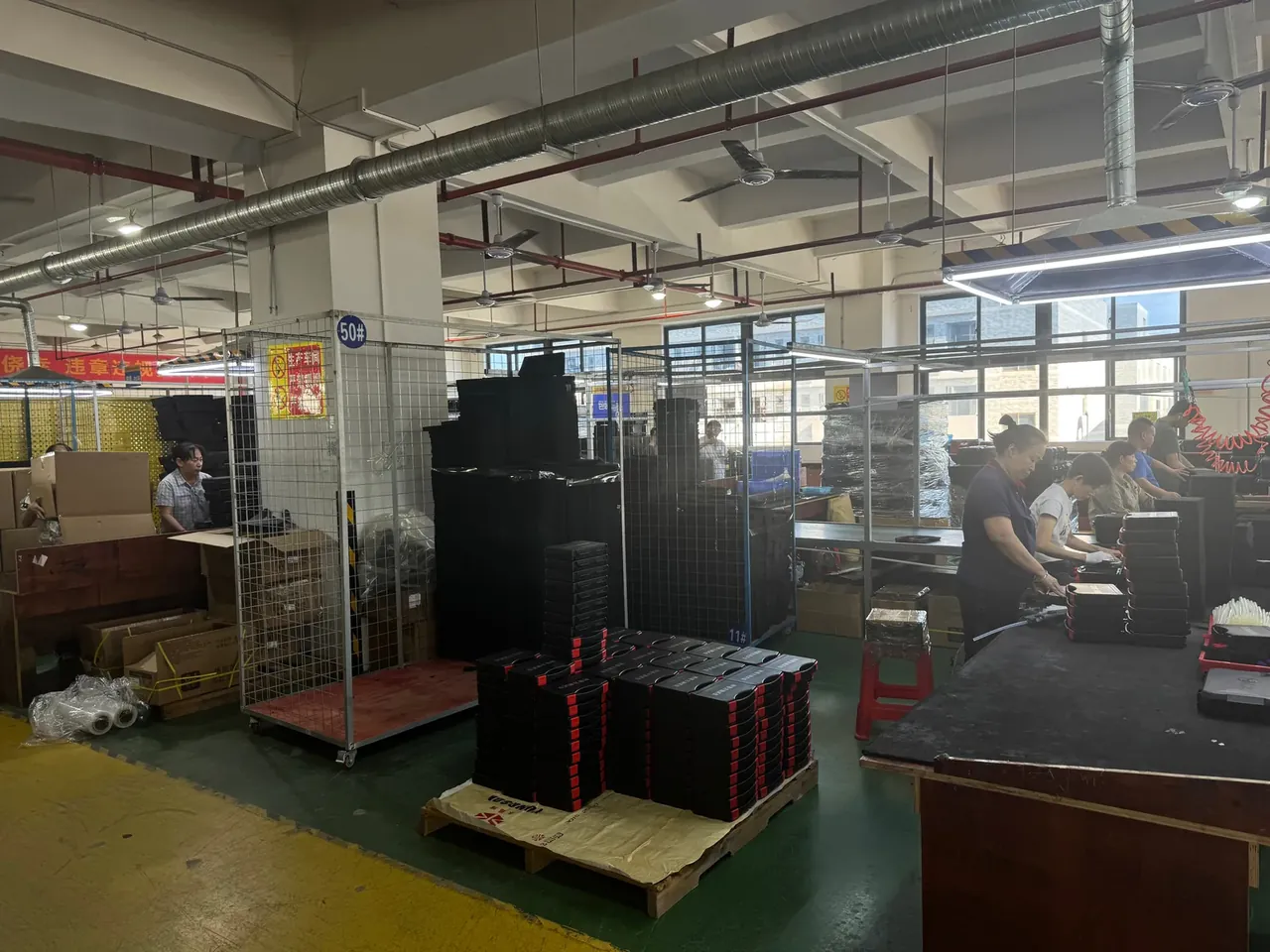
Quick answer: Broadcast interview mic shockproof box foam at 30 kg/m³ keeps over 91% of 10 mm thickness after 72 h of 8 kg offset load, with cell wall tilt under 0.7°.
Table of contents
- Foam density grades for the Broadcast interview mic shockproof box
- Cell divider thickness
- Thickness recovery after 72 hours of offset load
- Cell wall tilt after unloading and remeasurement
- Density setpoint for the hand-carry batch
- FAQ
1. Foam density grades for the Broadcast interview mic shockproof box
A 72-hour offset load is the test: rebound thickness and cell-wall lean are read after unloading. That is the liner side of a Broadcast interview mic shockproof box, apart from shell moulding and latches. The case is 450×320×155 mm outside, 395×270×110 mm inside, 3.7 mm wall; bays come from one foam block, so roll density shows in the rebound figure.
Harder foam is not always right. A 28 kg/m³ roll rebounds too little after 72 h and the cell wall tips; 34 kg/m³ stays steady but lifts the 3.4 kg empty weight; 30 kg/m³ is checked first. Density, divider thickness and recovery are printed together on the liner drawing, ticked off during inspection of the Broadcast interview mic shockproof box.
Three bay sets are cut, one per roll grade, pressed on one jig under the same 8 kg mass.
| Density grade | Roll and divider | After 72 h load |
|---|---|---|
| Low | 28 kg/m³, 10 mm | Rebound short; wall over limit |
| Medium | 30 kg/m³, 10 mm | Recovery above 91%; tilt under 0.7° |
| High | 34 kg/m³, 10 mm | Steady rebound; heavier empty case |
The Broadcast interview mic shockproof box takes the grade holding rebound and weight at once; softness alone decides nothing.
2. Cell divider thickness
Divider thickness and roll density are settled apart: one holds the bay up, the other springs it back. At 10 mm the bays in a Broadcast interview mic shockproof box still fit the 395×270×110 mm cavity under 8 kg.
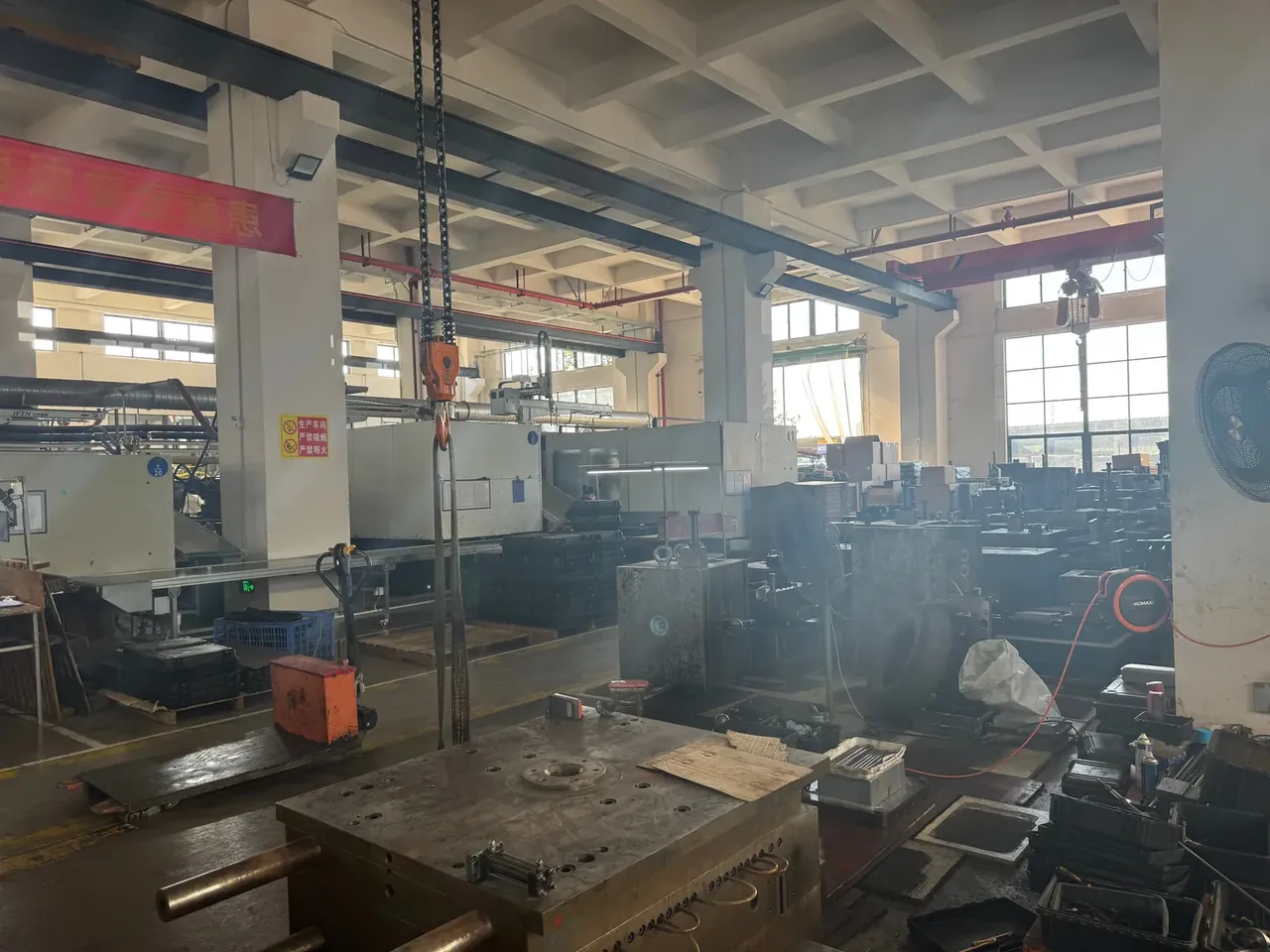
Below 8 mm the bay mouth flares on unloading; above 12 mm the bay count drops. A calliper takes the wall at three heights, logged to 0.1 mm beside the divider tolerance. The Broadcast interview mic shockproof box files this liner card apart from the shell card, so a divider swap touches one booklet.
The three dividers are not read together. The first comes out at hour 24, measured, then returns under the mass. The second waits until hour 48. The third stays the full 72 h. Their calliper figures land on three rows, so each hour is clear. The rest hour after unloading is not load time; tilt is read once rebound stops. The Broadcast interview mic shockproof box wants all three rows filled, or a fresh divider is cut.
3. Thickness recovery after 72 hours of offset load
The 8 kg mass sits on one side for 72 h without a lift, and only the liner is under test: lid open, latches released. The Broadcast interview mic shockproof box defines recovery as rebound thickness over the free 10 mm, taken only after unloading.
| Offset hour | Pull and rest | Recovery |
|---|---|---|
| Hour 24 | First out, returned | 96% |
| Hour 48 | Second out, one hour rest | 93% |
| Hour 72 | Third at full term | 91% |
At hour 72 the mass comes off, the divider rests an hour, and a calliper gives rebound thickness against 10 mm. 91% is the floor; a roll below it skips remeasurement for a density recheck, which is where the Broadcast interview mic shockproof box holds a new batch.
4. Cell wall tilt after unloading and remeasurement
Remeasurement turns to the cell wall, a square against the side reading its lean from the case floor. The Broadcast interview mic shockproof box places this after the rest hour, since an angle taken mid-rebound does not count.
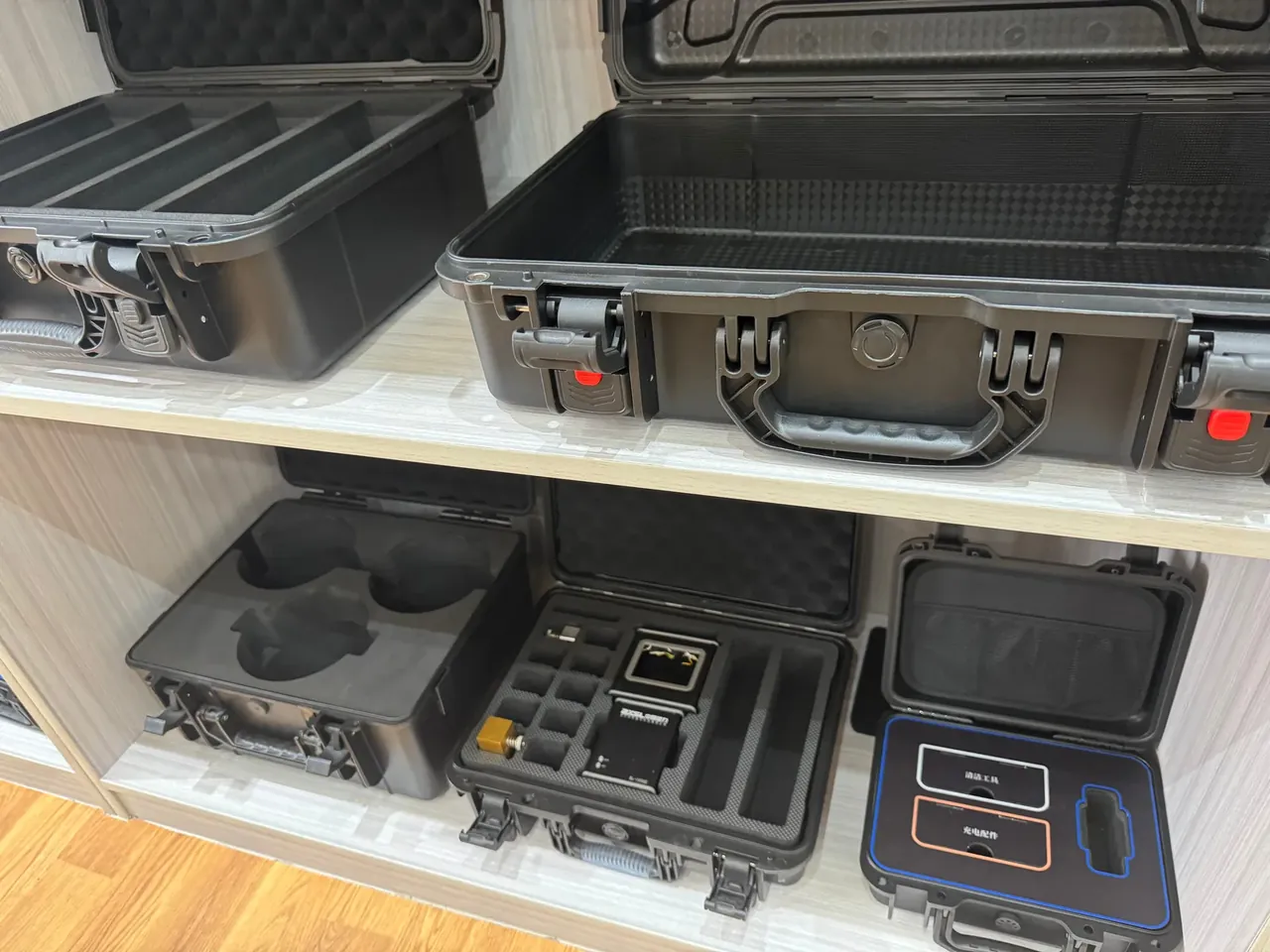
0.7° caps that lean; recovery measures spring-back, tilt measures how far the bay was pushed over, two tools reading two things. The 3.4 kg empty and 7 kg loaded case are each measured, both closed out at 0.7°. The Broadcast interview mic shockproof box allows no flared bay mouth; once one shows, the 24 h and 48 h figures are pulled back.
5. Density setpoint for the hand-carry batch
Fix the lowest foam grade whose 72-hour recovery stays above 91%; lower density goes to cushioning stock. The cutting sheet reads 30 kg/m³: 28 kg/m³ rebounds too little and is diverted, 34 kg/m³ stays steady but keeps the empty weight high.
| Recovery reading | Roll density | Cutting action |
|---|---|---|
| Above 91%, weight fine | 30 kg/m³ | Fixed as the batch density |
| Below 91%, low density | 28 kg/m³ | Diverted to cushioning |
| Above 91% but heavy | 34 kg/m³ | Kept for heavy bays |
With 30 kg/m³ on the drawing, rolls, divider dies and callipers for the Broadcast interview mic shockproof box are stocked to that grade; a new batch checks the roll certificate instead of recutting three bay sets. A 4700-cycle open-close run is booked separately, with the two 315 N latches and the 17% gasket rechecked, IP65 left for the last column.
Conclusion
The 30 kg/m³ of the Broadcast interview mic shockproof box comes out of a 72-hour offset load, not from squeezing foam by hand. Recovery above 91%, tilt inside 0.7° and a 10 mm divider each carry their own reading, and only together fix the grade. A new roll or bay layout sends all three back to the jig. The IP65 mouth-seal check is the closing column, filed apart from liner rebound.
Related Reading
- Audio recordist professional equipment case
- Camera Equipment Case Guide: Hard Case Sizing, Foam Buffer and Moisture Control
- Broadcast and Film Equipment Cases: Large Payloads, Flight Schedules and Fast Turnarounds
- Broadcast portable OB equipment trolley case
Related Products
- 8 Series — Gun Cases; Military Equipment Cases; Camera Equipment Cases; Drone Cases; Watch Cases; Knife Cases; First Aid Cases; Electronics Equipment Cases
- WL8-2812 PP Gun Case — model WL8-2812
- All protective cases and toolboxes: 7 series, 158 models