

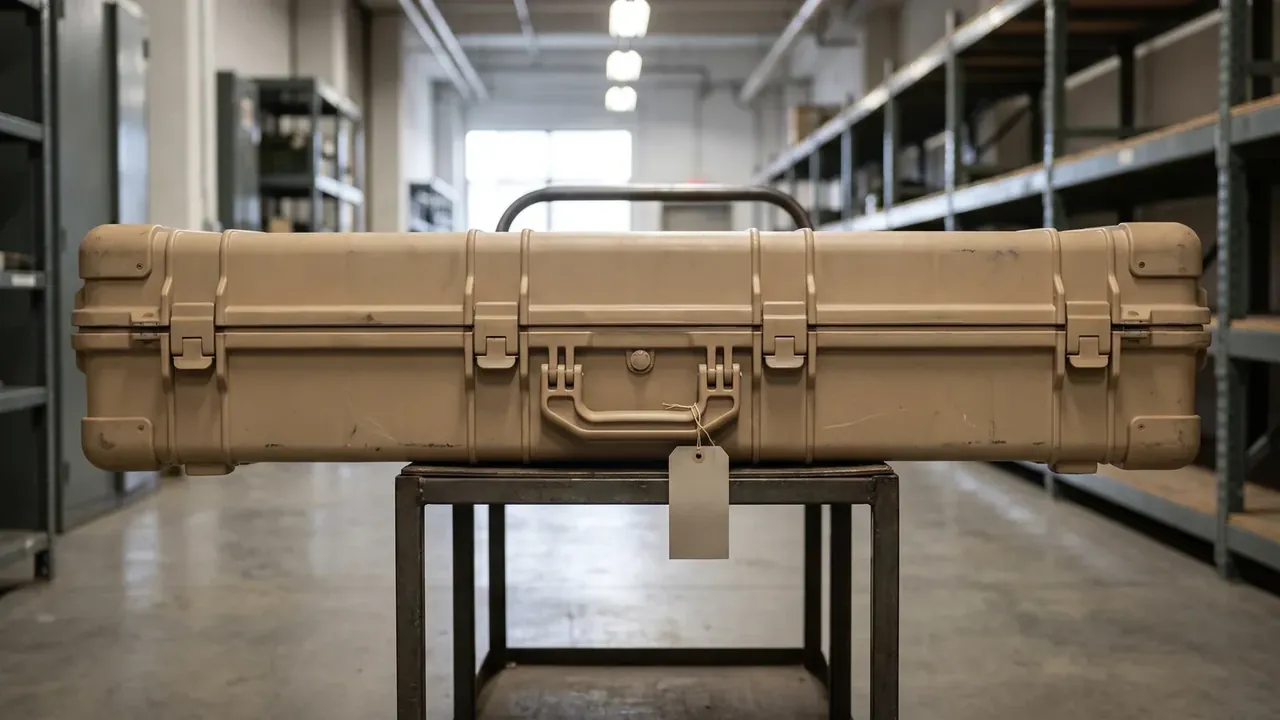
Quick answer: Camera slider & motor shockproof trolley case holds ≤0.8 mm mouth offset after 15000 tows over an 80 mm threshold, set by 2.4 mm sleeve walls.
Table of contents
- Sleeve-wall thickness of the Camera slider & motor shockproof trolley case
- Lateral wheel-base spacing
- Mouth offset readings after threshold towing
- Wheel-seat runout under full-load retest
- Wall-thickness gate for slider batches
- FAQ
1. Sleeve-wall thickness of the Camera slider & motor shockproof trolley case
Crossing a threshold puts the impact on the wheel seats, and sleeve-wall thickness decides whether that force travels along the wall or stays at the mouth. The Camera slider & motor shockproof trolley case uses a 2.4 mm sleeve in a 4.0 mm wall. Its 1120×330×180 mm outer size and 1040×265×125 mm cavity leave a long edge that sends the shock out through the sleeve.
The sleeve is the only load path between the pull handle and the shell. A 2.4 mm wall spreads the shock into the base through its root collar instead of stacking offset at one corner. The bench tows 7.4 kg empty and 17 kg loaded over an 80 mm threshold and reads the offset both times. Any sleeve that shows a crease at its root collar is pulled from the sample set at once.
| Wall grade | Sleeve value | After an 80 mm threshold tow | Offset reading |
|---|---|---|---|
| Thinned | 2.0 mm | Force stays at the mouth | Over 0.8 mm, rejected |
| Reference | 2.4 mm | Force travels along the wall | Inside 0.8 mm |
| Thickened | 2.8 mm | Wheel-seat joint loads up | Full-load retest needed |
2. Lateral wheel-base spacing
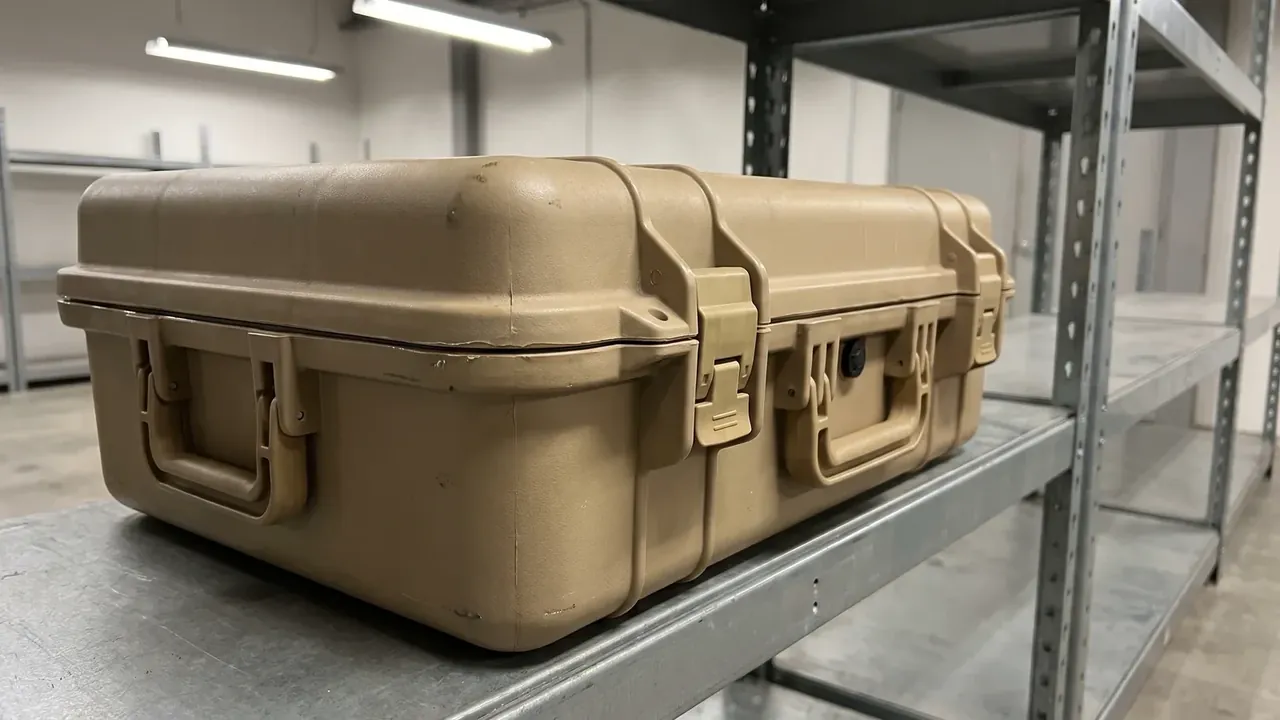
A 285 mm wheel-base spacing sets how the two seats share the shock. The Camera slider & motor shockproof trolley case spreads its seats 285 mm apart with a roller set at each end. When the 80 mm threshold lifts one side first, that seat drives the shock into the base while the other is still coming up.
Wheel spacing and sleeve thickness go onto one grading table. The bench prepares three sample sets at 285 mm with a 2.4 mm sleeve and tows each at 7.4 kg empty and 17 kg loaded. Moving spacing to 240 mm or 330 mm shifts the offset curve, so both values share one column. All three sample sets are numbered by spacing so a shifted curve is never mixed with the reference.
| Tow cycle | Cumulative count | Threshold height | Offset reading point |
|---|---|---|---|
| Early cycles | 1–5000 | 80 mm | Offset rises slowly |
| Mid cycles | 5001–10000 | 80 mm | Near the 0.8 mm limit |
| Late cycles | 10001–15000 | 80 mm | Converges inside 0.8 mm |
3. Mouth offset readings after threshold towing
Mouth offset is read only after 15000 tows over an 80 mm threshold. The Camera slider & motor shockproof trolley case is shut with four latches at 390 N before each tow and kept closed afterward. At tow 15000 one gauge follows the lid seam and the largest gap must hold at ≤0.8 mm.
Offset builds over the tow count and flattens late, separate from wheel-seat runout. The bench stops at tow 5000, 10000 and 15000 and takes the last cell as the criterion rather than an early average. Two gasket rings at 19% compression are benchmarked against IP66 for the mouth, with 3600 cycles and a 0.9 m drop on the drawing. The gauge returns to one datum face at each stop. The threshold block is clamped to one marked line; a tilted shell loads a single seat early.
4. Wheel-seat runout under full-load retest
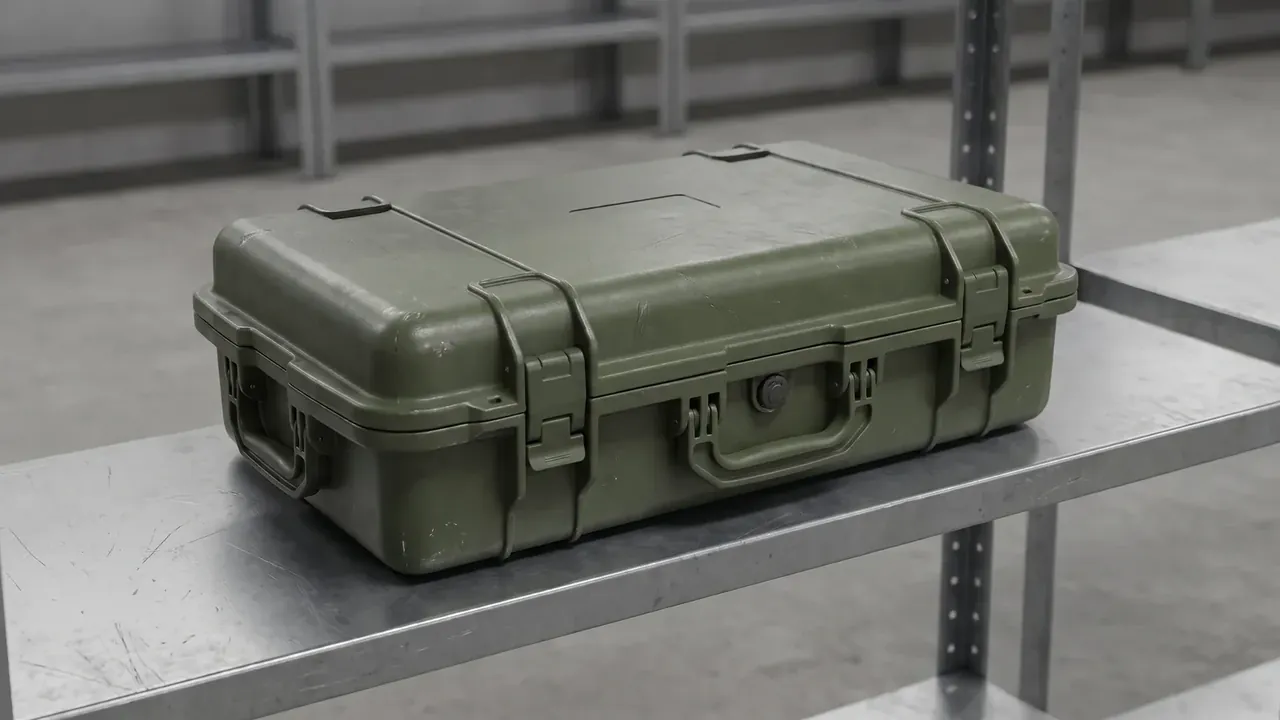
Whether the wheel seats stay true after unloading is the second half of the criterion. The Camera slider & motor shockproof trolley case drops the 17 kg load, sets the shell flat, and reads runout and offset again. Radial runout must hold at ≤0.5 mm for the offset reading to mean anything. The 0.9 m drop is run on the closed shell, never on an open lid.
At 7.4 kg empty the seats look aligned, but 17 kg over 15000 tows leaves a little bearing drift that does not recover when flattened. The bench tags the two states in separate columns and returns to room temperature before the drop leg. Four latches at 390 N and two rings at 19% compression hold the lid through 3600 cycles.
| Offset value | Matched wall | Tow cycle | Retest verdict |
|---|---|---|---|
| 0.5 mm | 2.8 mm | 15000 | Runout clears, keep sample |
| 0.7 mm | 2.4 mm | 15000 | Reference, released |
| 1.0 mm | 2.0 mm | 15000 | Over line, back to tooling |
5. Wall-thickness gate for slider batches
The wall-thickness gate locks at the thinnest grade holding 0.8 mm after tow 15000; thinner sleeves never enter the long-shell table. The Camera slider & motor shockproof trolley case drops the 2.0 mm grade at 1.0 mm of offset. The 2.4 mm reference holds 0.7 mm and goes onto the table.
The table lists a 2.4 mm sleeve, 285 mm spacing, 17 kg load and 15000 tows over 80 mm on one line. The 1120×330×180 mm outer size and 1040×265×125 mm cavity are checked on the drawing, while the bench watches only offset and runout. The 3600 cycles, 390 N latches, 19% compression and a 0.9 m drop stay fixed, and JUNZHIJIA builds to drawing. A thinner sleeve is noted as a trend only and never added to the long-shell table.
Conclusion
Whether the Camera slider & motor shockproof trolley case passes comes down to a 2.4 mm sleeve with 285 mm spacing holding ≤0.8 mm offset and ≤0.5 mm runout after 15000 tows over an 80 mm threshold. Wall grade, tow cycle and offset value each take one table. A slider batch of the Camera slider & motor shockproof trolley case is released only when all three agree.
Related Reading
- How to choose a photography equipment protective case
- Camera equipment case versus camera body case
- Film production equipment cases: lighting gear in transit
- Outdoor photography gear moisture-proof hard trolley case
Related Products
- 8 Series — Gun Cases; Military Equipment Cases; Camera Equipment Cases; Drone Cases; Watch Cases; Knife Cases; First Aid Cases; Electronics Equipment Cases
- WL8-2812 PP Gun Case — model WL8-2812
- All protective cases and toolboxes: 7 series, 158 models