

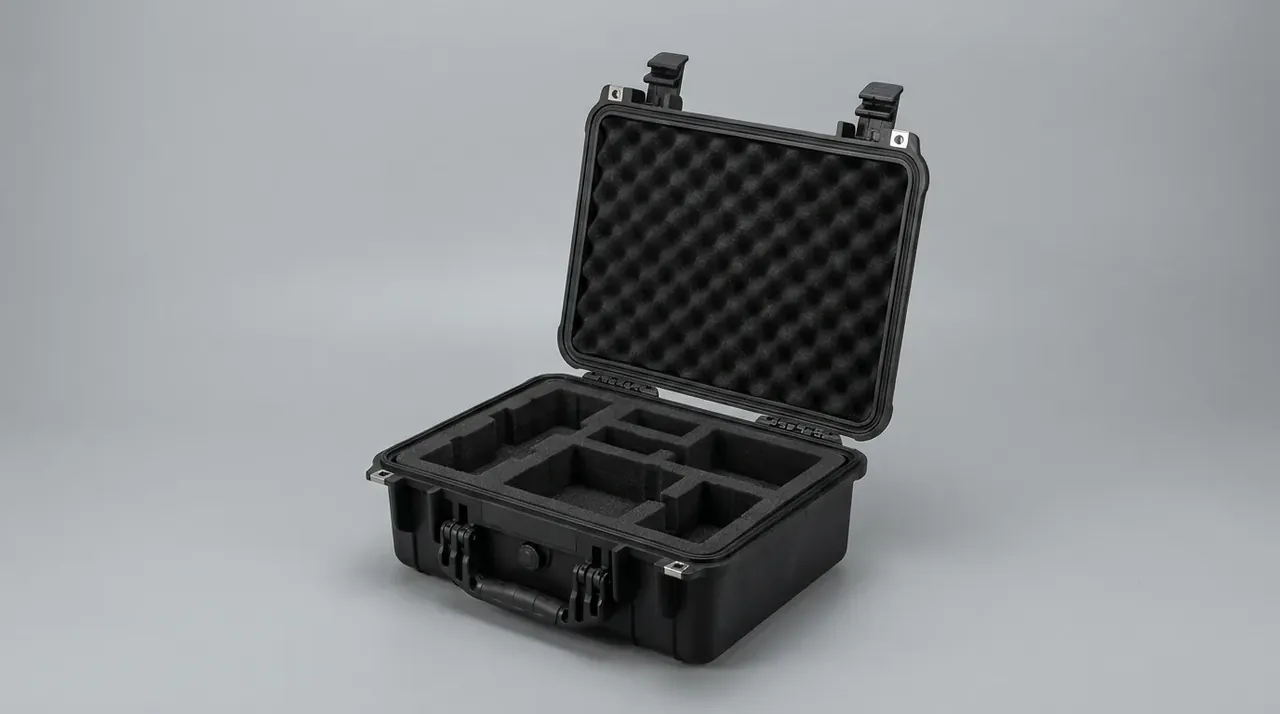
Quick answer: A capacity assessment separates nominal, effective and committed output, so 752,000 cases a month on paper become 521,000 a buyer can contract for.
Table of contents
- Nominal, effective and committed are three different numbers
- Turning a 62-second cycle into a monthly figure
- When trimming, not moulding, sets the ceiling
- Reading 8, 12 and 18 machines
- FAQ
1. Nominal, effective and committed are three different numbers
A quote arrives claiming 260,000 cases a month. The buyer builds a launch plan on it, then loses the argument at the first 50,000-case order. Nothing in the factory changed between the two calls. The number was the top of a three-storey stack, quoted as the ground floor.
Nominal output answers one question only: how many cases if nothing ever stops. Presses × 30 days × 24 hours ÷ cycle. At 62 s a shot, single cavity, one press yields 41,800 cases a month, and 18 presses yield 752,000.
Effective output discounts the calendar. An availability factor of 0.78 means 561.6 of the 720 hours actually mould cases; the rest goes to mould changes, resin waiting, first-off checks, preventive maintenance and breakdowns. Eighteen presses drop to 587,000.
Committed output takes two more deductions. Yield at 0.965 removes start-up scrap and debug rejects, and an 8% reserve covers rush orders and tooling incidents. What remains is 521,000 cases, or 69.2% of nominal.
The 30.8% gap is not caution versus optimism. It is the same presses counted three times, and only the last count can be written into a supply contract.
| Caliber | Base | Factor | Of nominal | What it is good for |
|---|---|---|---|---|
| Nominal | Presses × 30 days × 24 h ÷ cycle | 1.000 | 100% | Asset register, plant size |
| Effective | Nominal × availability | 0.780 | 78.0% | Scheduling, resin and WIP planning |
| Committed, gross | Effective × yield | 0.753 | 75.3% | Internal review, cross-team alignment |
| Committed, quoted | Gross × (1 − 8%) | 0.692 | 69.2% | Contract and delivery dates |
One plant in eastern China quoted 260,000 cases from a six-press line at a 60 s cycle. The arithmetic checked out. Discounted at 0.78, 0.965 and 8%, the line fell to 180,000; a 0.86 correction for downstream trimming took it to 155,000. The quote said 156,000, the extra thousand coming from rounding at each step.
2. Turning a 62-second cycle into a monthly figure
A cycle is not one stopwatch reading. Ten consecutive shots, averaged and split into seven segments: clamp 2.6 s, injection 3.8 s, hold 9.5 s, cooling 38 s, opening 2.1 s, ejection 4.2 s, handling 1.8 s. The segments add to 62.0 s, and cooling alone is 61.3% of it.
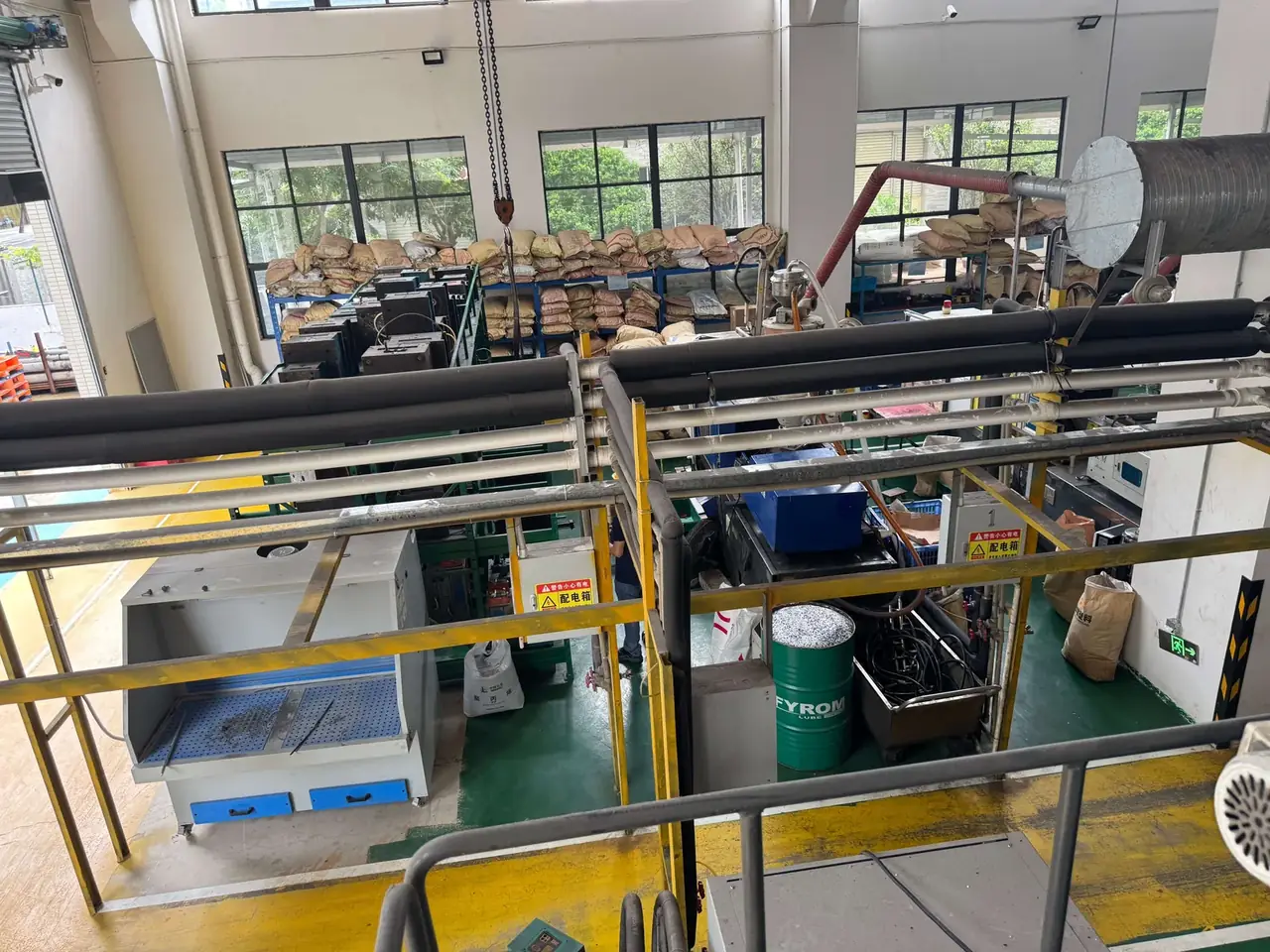
Single cavity, that is 58 cases an hour, 1,393 in 24 hours, 41,800 a month. Two cavities stretch the cycle to about 78 s and lift hourly output to 92 cases, a 59% gain that demands double the clamp force and a bigger machine. Cavity count is not a free variable.
Shift pattern is where most quotes quietly inflate. Three continuous shifts give 720 hours; two 10-hour shifts over 22 days give 440, which is 61% of it. Same press, same cycle, nominal output falls from 41,800 to 25,500 a month and committed output to 17,700.
A quote that states a cycle but not a shift pattern has fitted a 720-hour capacity into a 440-hour plant. Ask how many hours the shop actually runs.
3. When trimming, not moulding, sets the ceiling
Moulding arithmetic can be perfect and still not describe the plant. Eighteen presses at 62 s nominally produce 752,000 cases, while the trimming cell has 12 stations at 45 s a case and 0.94 availability, or 649,700 cases a month.
Divide one by the other and the correction is 0.86. It is the figure most often missing, because it sits one process downstream of the machine everyone counts.
Adding two stations takes trimming to 758,000 and pushes the correction back to 1.00, at which point moulding becomes the constraint again. Labour is cheaper than a press, so this is the step to cost before any equipment discussion.
The correction lands directly on delivery. Committed output of 521,000 multiplied by 0.86 is 448,000 cases, and a 300,000-case annual volume stretches from seven months to a little over eight.
4. Reading 8, 12 and 18 machines
Machine count is the most misread number in the file. Eighteen presses is what the plant owns, not what is available to one case. A single-cavity tool runs on one press, and if that model has one tool, the usable count is one.
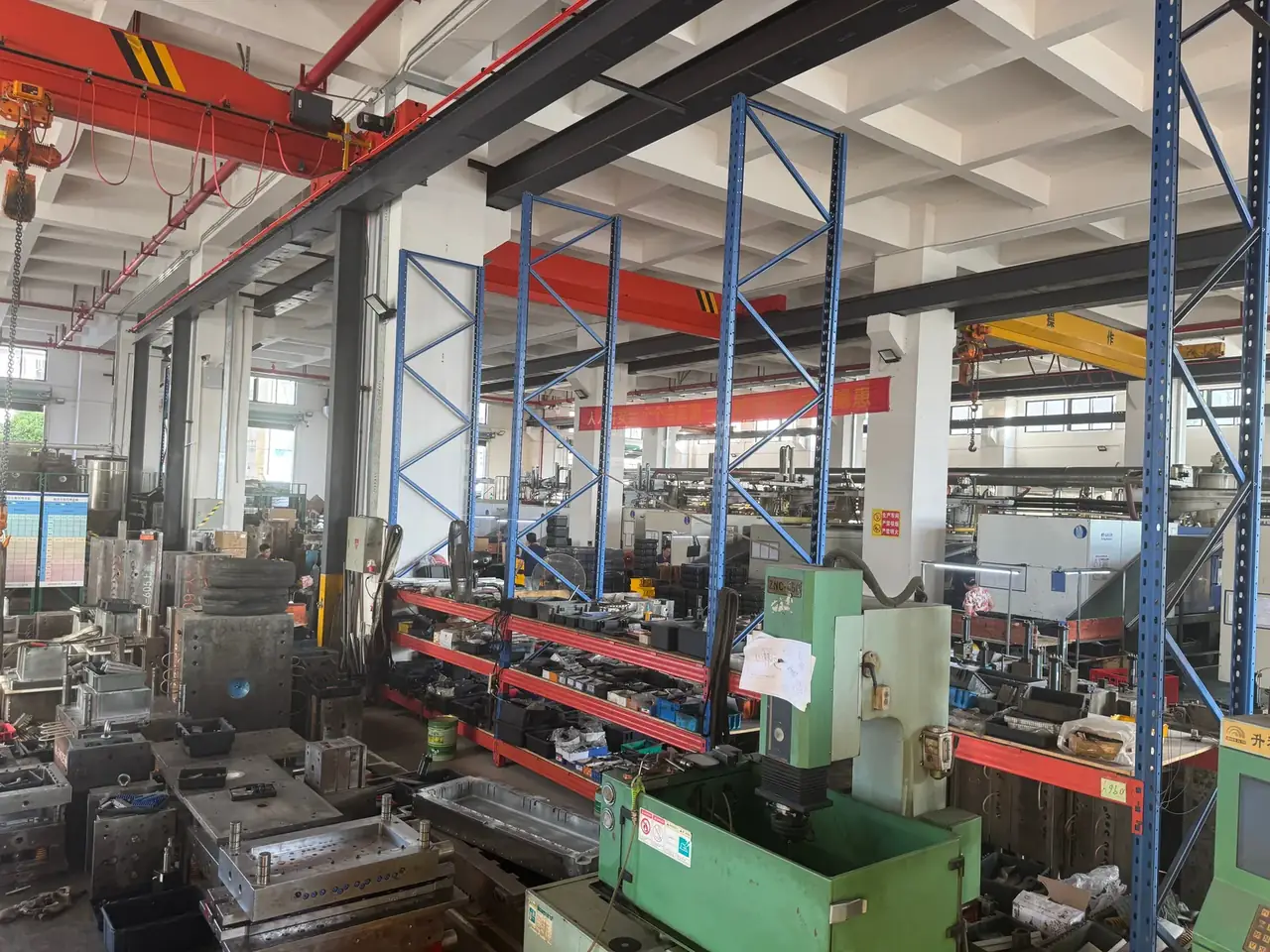
The table applies 62 s, one cavity and the three factors above. Read the total first, then ask how many of those presses carry the tool for this case. Two out of eighteen is 58,000 committed cases, nine times below the quoted 521,000.
| Presses | Nominal | Effective | Committed | Marginal per press |
|---|---|---|---|---|
| 6 | 251,000 | 196,000 | 174,000 | 29,000 |
| 8 | 334,000 | 261,000 | 232,000 | 29,000 |
| 12 | 502,000 | 391,000 | 347,000 | 29,000 |
| 18 | 752,000 | 587,000 | 521,000 | 29,000 |
The marginal figure is constant at 29,000 cases, which makes rush-order costing simple: one extra press for one month buys 29,000 committed cases at the price of a mould change, about 3.5 hours of downtime and one crane lift.
Count tools alongside presses. Eighteen presses with one tool cap the line at one press worth of output; with three tools the same line can deliver 87,000 committed cases.
Conclusion
The argument over capacity is rarely about owning more presses. It is about whether nominal, effective and committed figures are kept apart. A 30.8% spread decides delivery dates more often than two extra machines, and writing the chain down, from a 62 s cycle through 0.78 availability, 0.965 yield, an 8% reserve and a 0.86 correction, turns a capacity assessment into a list of items that can be negotiated one by one.
This article covers case-side specifications only and does not address any handling, loading or use of the contents.
Related Reading
- Estimating line capacity from presses, cavities and changeovers
- Converting tonnage into monthly case output
- Checking a supplier's capacity claim
- Mould life measured in shots
Related Products
- 8 Series — Gun Cases; Military Equipment Cases; Camera Equipment Cases; Drone Cases; Watch Cases; Knife Cases; First Aid Cases; Electronics Equipment Cases
- WL8-2812 PP Gun Case — model WL8-2812
- All protective cases and toolboxes: 7 series, 158 models