

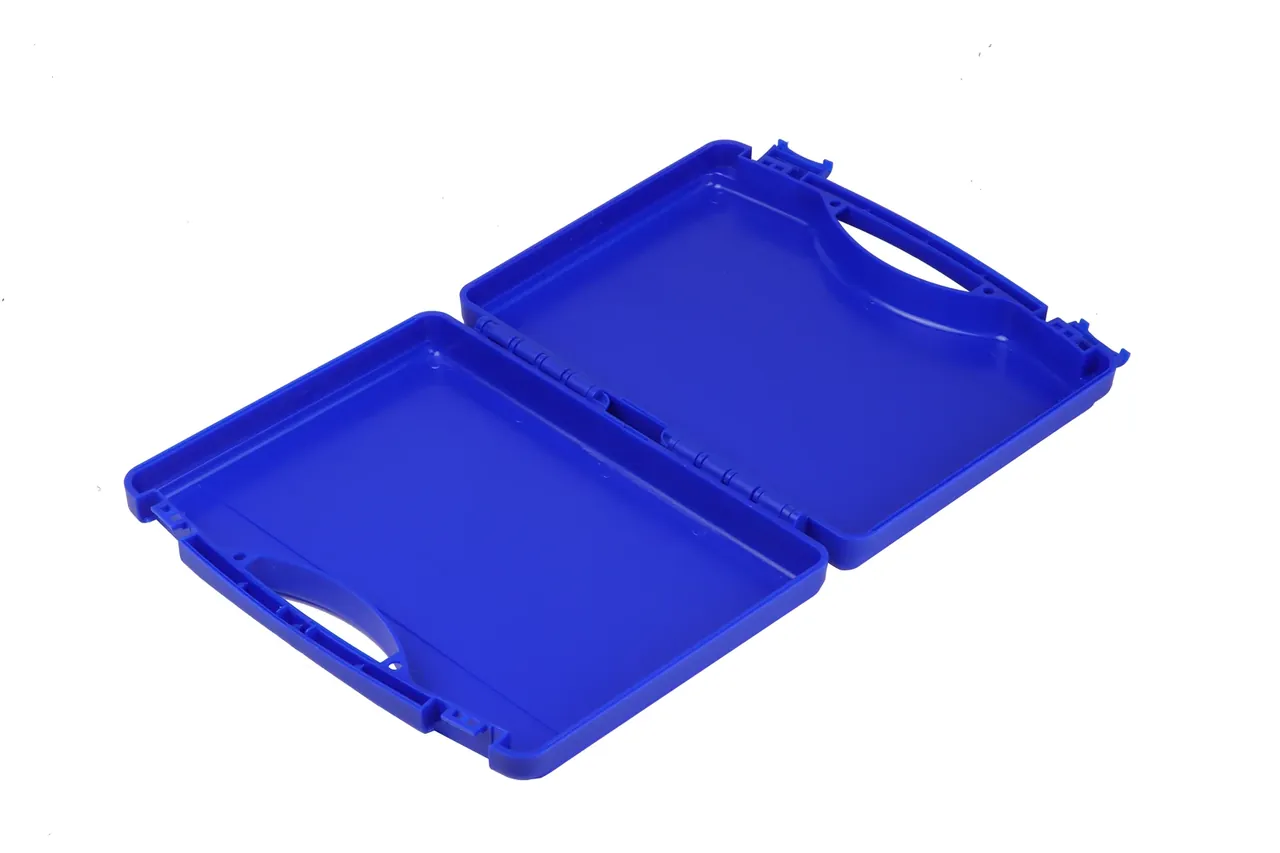
Quick answer: Tonnage sets the clamp ceiling, not the output. Monthly capacity runs through projected area, cavity count, cooling time, shifts, OEE and yield: a 250 t press with one cavity at 48 s makes about 35,000 cases in 26 days.
Table of contents
- Tonnage Is Clamp Force, Not Capacity
- Cavities, Cycle Time and Hourly Output
- Shifts, OEE and Mould Changes
- Tonnage to Monthly Output in One Table
- FAQ
1. Tonnage Is Clamp Force, Not Capacity
Tonnage describes clamp force, not machine mass. A 250 t press closes at 2450 kN, an 800 t at 7850 kN, a 1300 t at 12750 kN, and quotations still quote the tonnage out of habit. What matters is projected area times cavity pressure, with a 1.15 safety factor on top.
Take a 320 mm × 240 mm case: 480 cm² of projected area including the runner. PP at 38 MPa cavity pressure needs 388 kg per square centimetre, so one cavity asks for 186 t. Two cavities reach 372 t, past the limit of a 250 t press, which leaves one cavity or a move to 400 t.
Treating tonnage as output is the usual error. On one 400 t press, a single cavity at 48 s yields 75 parts an hour and two cavities at 70 s yield 103, a 37% gap with an unchanged nameplate.
| Machine (t) | Clamp (kN) | Max projected area (cm²) | Case size | Typical cavities |
|---|---|---|---|---|
| 250 | 2450 | 560 | 320×240 | 1 |
| 400 | 3920 | 900 | 420×320 | 1 to 2 |
| 800 | 7850 | 1800 | 560×400 | 1 |
| 1300 | 12750 | 2950 | 700×480 | 1 to 2 |
The areas above are back-calculated at 38 MPa; discount 20% for PA6 or glass-filled grades. When a supplier quotes capacity with a tonnage only, ask for cavities and cycle time beside it, or the number means nothing.
2. Cavities, Cycle Time and Hourly Output
More cavities is not automatically cheaper. Doubling cavities doubles clamp force, pushes platens and tie-bar spacing up a frame, lifts tool cost from 380,000 to 620,000 CNY and stretches sampling from 6 to 14 hours. Under 50,000 pieces, the extra cavities never pay back.
Break the cycle into stages. A 560 mm case at 58 s spends 6 s filling, 12 s packing, 28 s cooling, 8 s opening and closing, 4 s demoulding, so cooling is 48% of the clock. Cutting cooling from 28 s to 24 s drops the cycle to 54 s and adds 7% output, far cheaper than another machine.
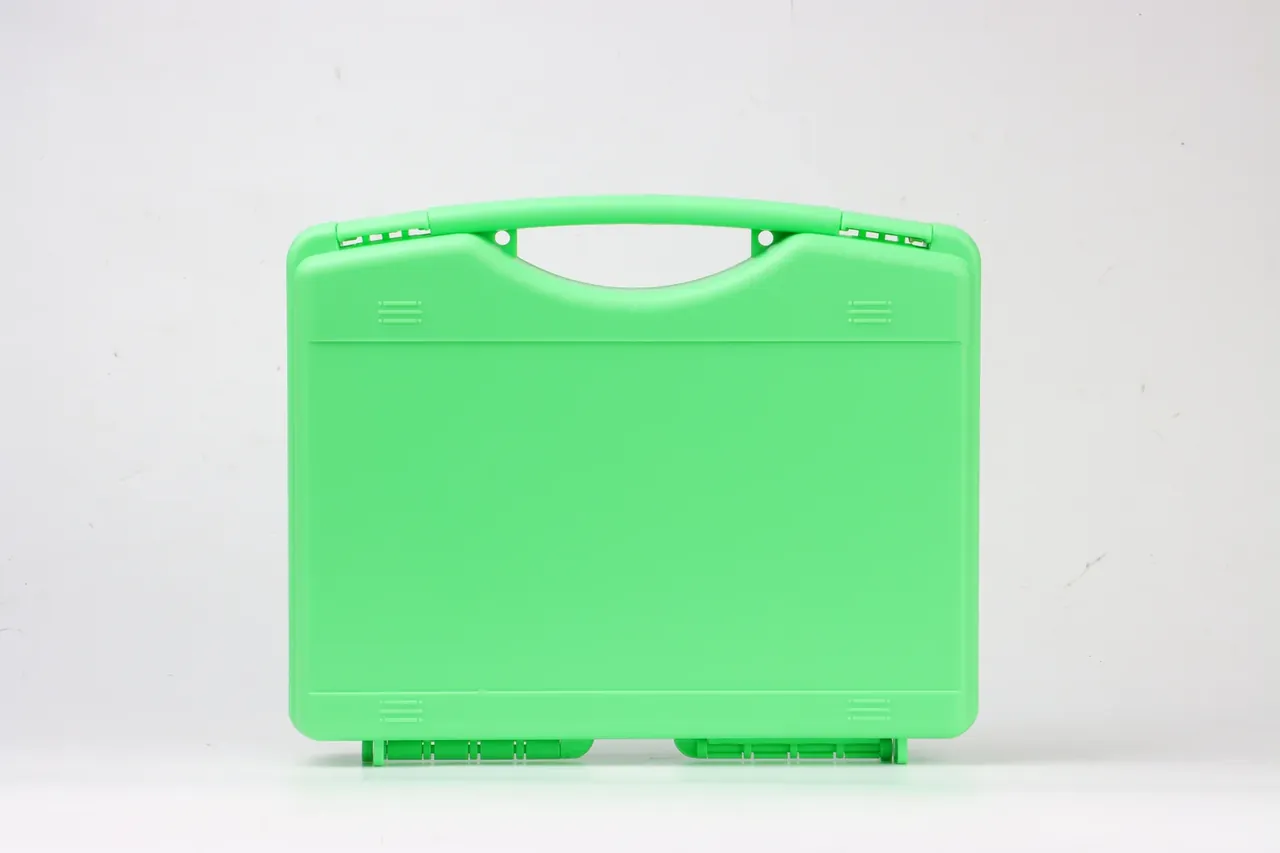
Hourly output is 3600 divided by cycle time, multiplied by cavities. At 58 s one cavity gives 62 parts an hour, two cavities give 124, and a 54 s cycle with two cavities gives 133. Those are the figures to schedule against; tonnage only decides whether the mould stays shut.
Wall thickness drives cooling, and cooling drives the cycle. A 2.8 mm wall and a 1.8 mm wall differ by 12 s of cooling, so a thin-wall tool adds 15 parts an hour on the same press.
3. Shifts, OEE and Mould Changes
Monthly output cannot be booked at 24 hours flat. Twenty-six days of three eight-hour shifts gives 624 gross hours; after mould changes, breakdowns, setup and minor stops, effective time usually lands between 430 and 470 hours.
Mould changes are the largest single block. A 45-minute change on an 800 t press, twice a day, costs 90 minutes a day and 39 hours a month. Quick couplings, preheated tools and a prepared trolley cut 45 minutes to 22 and return about 5% of capacity.
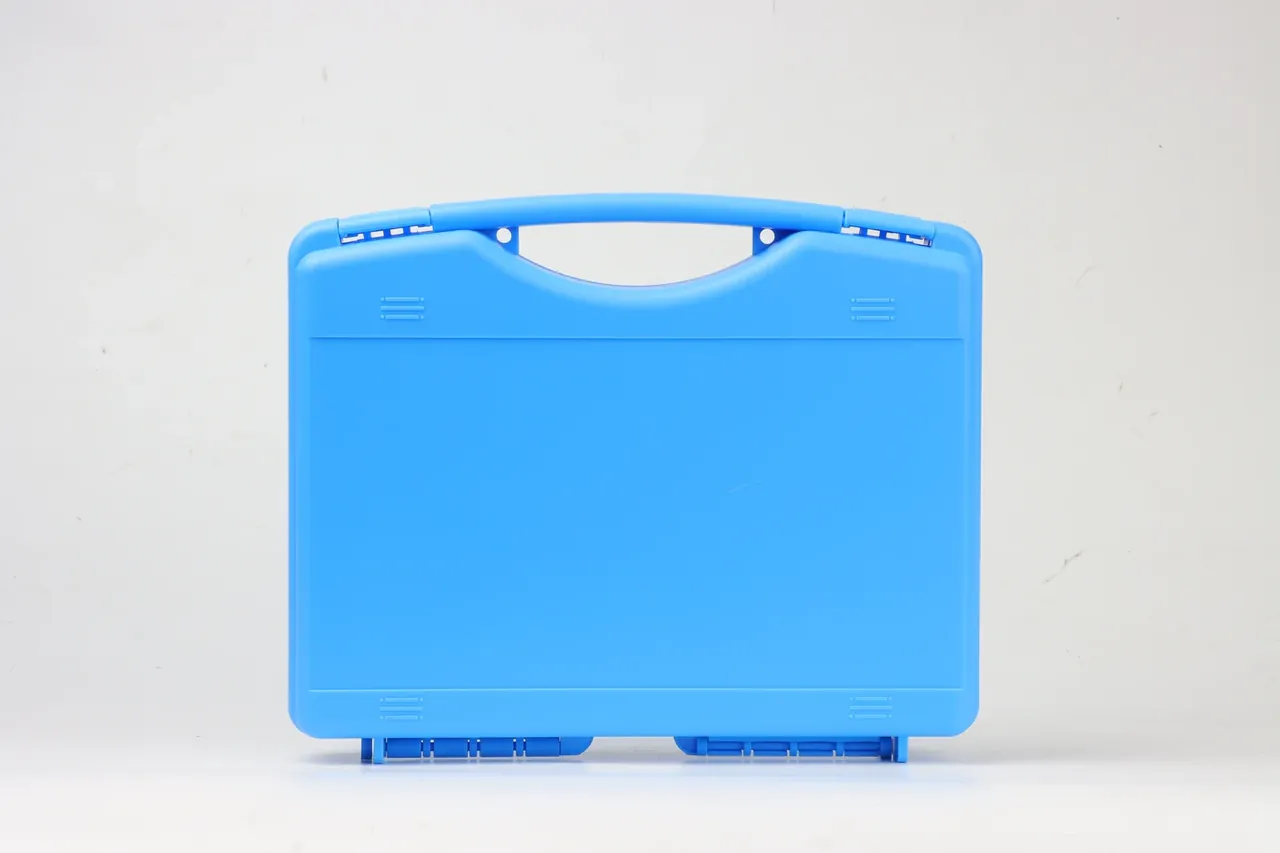
Keep the three OEE factors apart: availability covers stoppages, performance covers speed loss, quality covers scrap.
| Loss | Minutes per shift | Factor |
|---|---|---|
| Planned mould change | 45 | Availability |
| Breakdown | 25 | Availability |
| Setup and sampling | 18 | Availability |
| Minor stops and purging | 32 | Performance |
| Speed loss | 40 | Performance |
| Scrap and start-up | 22 | Quality |
Run that table and a 480-minute shift yields roughly 300 productive minutes, an OEE near 0.62 to 0.65. A supplier claiming 0.85 either runs new presses or parks mould changes outside the plan.
4. Tonnage to Monthly Output in One Table
Chained together, the steps make a table that can be copied straight into a sourcing sheet. Daily output is 86400 divided by cycle time, times cavities, times the effective-hour factor; multiply by 26 days, then by OEE and yield.
| Machine (t) | Cavities | Cycle (s) | Daily (pcs) | Monthly (pcs) | After OEE (pcs) | After 97% yield (pcs) |
|---|---|---|---|---|---|---|
| 250 | 1 | 48 | 1800 | 46800 | 36500 | 35400 |
| 400 | 2 | 70 | 2470 | 64200 | 48100 | 46700 |
| 800 | 1 | 95 | 909 | 23600 | 17000 | 16500 |
| 1300 | 2 | 110 | 1570 | 40800 | 26500 | 25700 |
Hold a quotation against this table. Within 15% is normal; a factor of two means asking which cavities, which cycle and which OEE were assumed. The same 1300 t press with one cavity instead of two halves its output while its price moves 8%.
Leave room for changeovers. Six SKUs a month with two changes each takes 9 hours off an 800 t press, about 3,800 parts. Build that into the lead time and the second half of the month stops waiting on a mould.
Conclusion
Tonnage is where a capacity review starts, not where it ends. Four checks settle it: projected area times cavity pressure times 1.15, landing between 70% and 85% of clamp force; cavities matched to batch size, with no multi-cavity tool under 50,000 pieces; cooling at half the cycle, trimmed before any machine change; monthly output at 26 days, OEE 0.65 and 97% yield. Meet all four and the quoted number is safe to sign.
Related Reading
- How a case production line is scheduled
- Reading injection machine specifications
- Choosing and accepting an injection machine
- How protective case lead time is built
Related Products
- 8 Series — Gun Cases; Military Equipment Cases; Camera Equipment Cases; Drone Cases; Watch Cases; Knife Cases; First Aid Cases; Electronics Equipment Cases
- WL8-2812 PP Gun Case — model WL8-2812
- All protective cases and toolboxes: 7 series, 158 models