

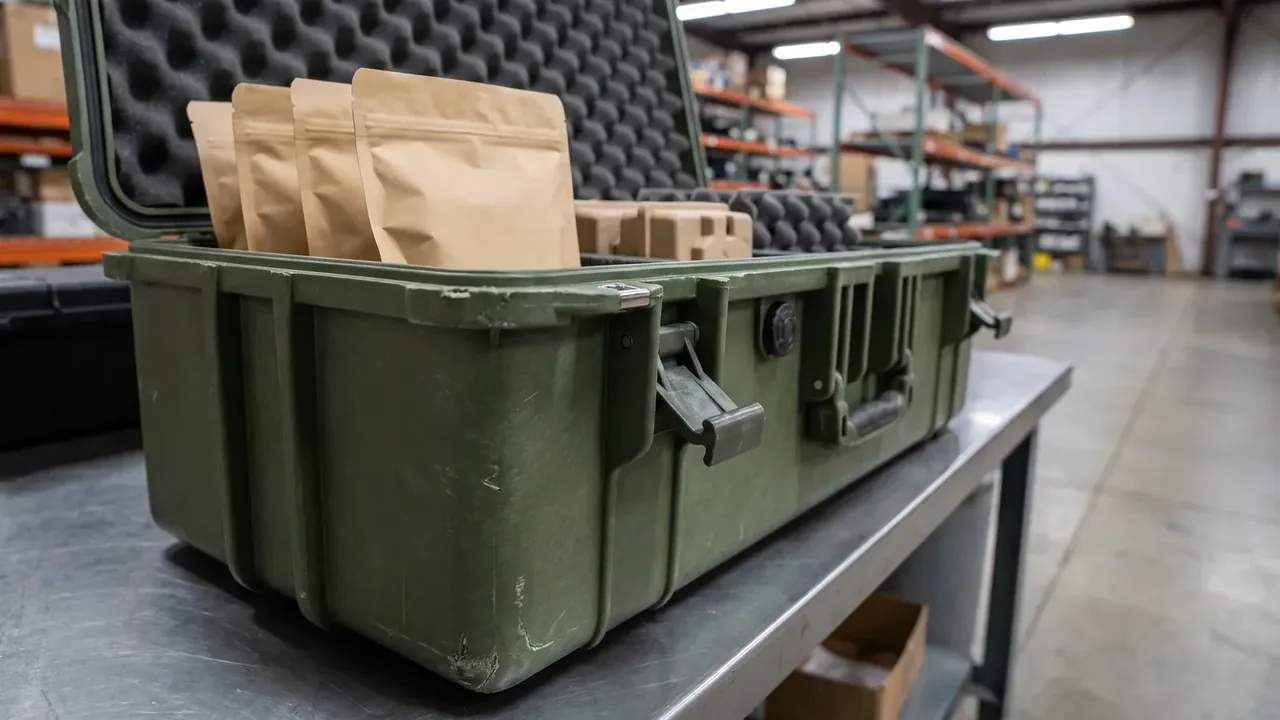
Quick answer: Run the cycle maths and 8 presses rated 250 t still yield 24,000 cases a month, not the 30,000 promised, because one tool sits on one press.
Table of contents
- The arithmetic starting point
- Turning 85 seconds into a month
- OEE and availability
- Cross-checking the schedule
- The three-batch ramp
- FAQ
1. The arithmetic starting point
Multiply the cycle across 8 machines and a promised 30,000 cases a month collapses to 24,000. The chain is short: 3600 divided by 85 seconds gives 42 shots an hour, times 22 working hours gives 924 cases a day, times 26 days gives 24,024 a month.
The 5,976-case gap comes from two assumptions, not from the shop floor. The first is machine ownership: 8 presses rated 250 t is the plant total, not the number assigned to this case, because one single-cavity tool hangs on one press.
The second is hours. Reaching 30,000 needs 1.25 presses at full load, or one press running 25 hours a day, which no shift pattern delivers.
A case capacity check fixes the denominator first, presses assigned times effective hours, then the numerator.
Three documents settle it: the asset register proves the press exists, the schedule proves who holds it, the order list proves what is left. A supplier sending the register but not the schedule has not decided what is available.
2. Turning 85 seconds into a month
The 85 s shot splits into 3.1 s clamp close, 4.4 s injection, 9.2 s packing, 52.7 s cooling, 2.5 s opening, 9.4 s removal and 3.7 s waiting. Cooling takes 62% and removal 11%, and those two stages decide whether 85 s falls at all.
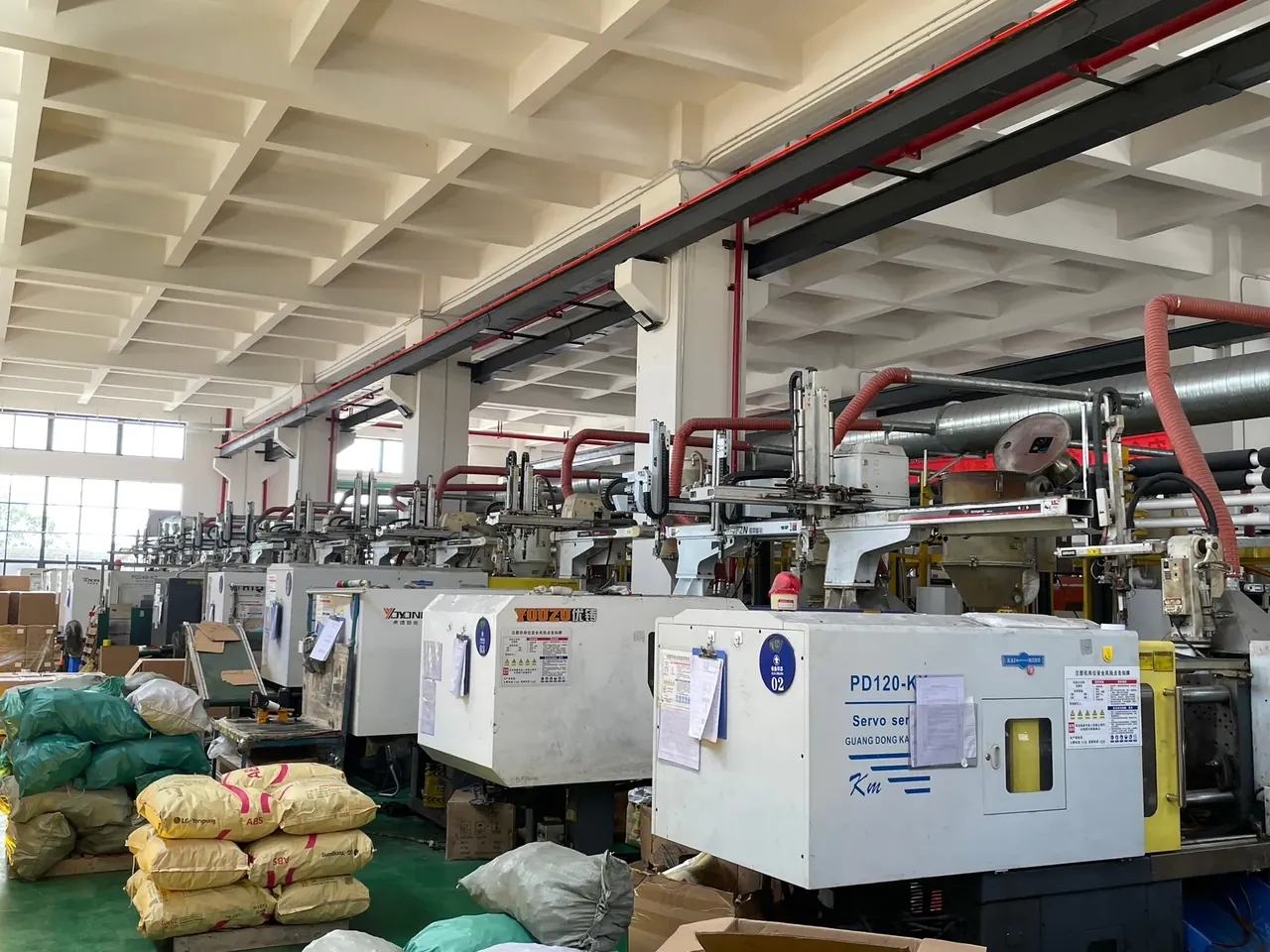
Twenty-four hours is not 22 hours. Deduct 1.0 h for handover, 0.5 h for checks and first-off approval, and 0.5 h for purging, leaving 22 h for cases. None of that appears on a quotation, yet all of it sits in the schedule.
| Step | Value | Sum | Result |
|---|---|---|---|
| Presses | 1 unit, 250 t | — | 1 |
| Shots/h | 85 s | 3600 ÷ 85 | 42 |
| Cases/day | 22 h | 42 × 22 | 924 |
| Cases/month | 26 days | 924 × 26 | 24,024 |
| After OEE | 72% | 24,024 × 0.72 | 17,297 |
| Promise | Contract | — | 30,000 |
| Shortfall | — | 30,000 − 24,024 | 5,976 |
Only cooling and removal move quickly. Cutting removal from 9.4 s to 6.0 s with a chute saves 3.4 s a shot, lifting output from 924 to 962 cases a day.
Cycle also follows case size. A 480 mm × 380 mm × 210 mm case runs 85 s on a 250 t press; a 560 mm × 440 mm × 250 mm case adds 34% projected area, pushes the shot to 94 s and output to 843 a day, the layer a case capacity check most often skips.
3. OEE and availability
OEE is three numbers multiplied, not one quoted: 88% availability × 90% performance × 91% quality gives 72.1%. A supplier offering only 72% has merged three checkable measurements into one that cannot be checked.
Availability of 88% means 2.6 h of stoppage inside 22 h: three mould changes a month at 2.5 h each add 0.29 h a day, and breakdowns plus resin waiting cover the rest.
Performance of 90% means the press runs a 94 s shot. The 85 s figure assumes an empty-mould dry cycle plus a full shot, while real shots carry removal waiting and clamp cushioning.
Quality at 91% comes from start-up scrap: with 3.0 mm walls the first 40 shots swing widest and usually count as rejects.
Split the three and improvements become arguable: quality from 91% to 96% moves OEE to 76% and monthly output to 18,265, an extra 968 cases from start-up control alone.
Shifts matter too. One fewer operator at night loses 2 s per removal, drops performance to 86% and lands OEE at 68.8%, so 24-hour claims need a night-shift line.
4. Cross-checking the schedule
Read three files together: the six-month schedule, the open order list and the load sheet. They rarely agree, since one plans on ideal cycles, one on customer dates, one on maintenance.
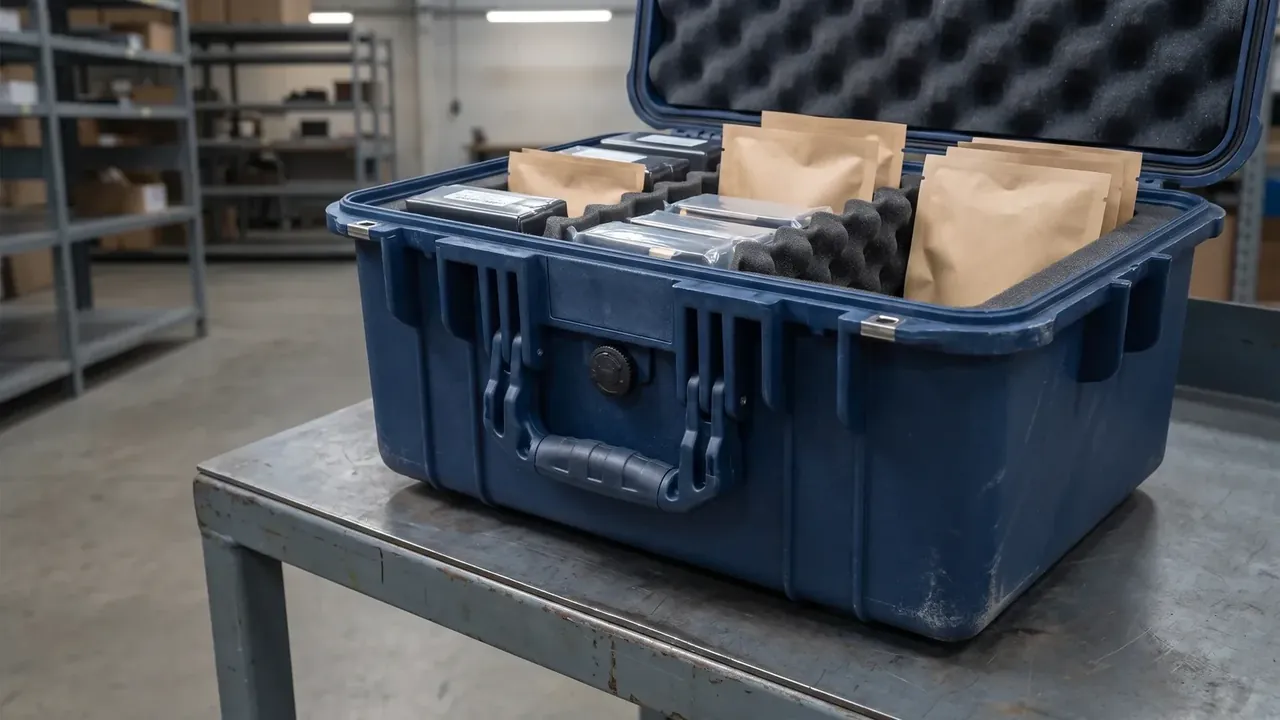
Divide the remaining order quantity by daily output per press to get occupied days, then compare that with the promised date. Walk all 8 presses and the number free for new work rarely exceeds 2.
| Press | t | Order | Left | Days | Free |
|---|---|---|---|---|---|
| 01 | 250 | Cabinets | 9,600 | 11 | No |
| 02 | 250 | Cabinets | 7,400 | 8 | No |
| 03 | 250 | Duty cases | 18,000 | 20 | No |
| 04 | 250 | Totes | 4,200 | 5 | No |
| 05 | 250 | Idle | 0 | 0 | Yes |
| 06 | 250 | Repair | 0 | 0 | No |
| 07 | 160 | Fittings | 12,000 | 15 | Tonnage |
| 08 | 400 | Large cases | 6,800 | 9 | No |
Six run at 250 t, one is idle, one under repair, four locked by long orders: capacity reduces to one.
Tooling decides the rest. One tool, one press, and a second press needs a second tool. Ask how many tools exist and the answer explains the capacity claim faster than any machine count.
Cross-checking catches two errors: an order counted on two sheets, inflating remaining quantity by 30%, and a press under repair listed as free. One makes capacity look tight, the other loose.
5. The three-batch ramp
Split a trial into three batches. The first 400 cases prove the tool, the second 900 show whether the cycle holds, the third 2,000 is close enough to series production to trust.
| Batch | Qty | Output | OEE | Rejects | Note |
|---|---|---|---|---|---|
| 1 | 400 | 471 | 51% | 6.8% | Setting, 3 days |
| 2 | 900 | 582 | 63% | 4.1% | One mould change |
| 3 | 2,000 | 656 | 71% | 2.3% | 5 days, no stop |
The curve is steepest between batches two and three, OEE from 63% to 71% and output from 582 to 656 cases a day, a 12.7% gain, then it flattens.
Batch one output of 471 belongs to setting, never to a contract. Writing 51% into an agreement leaves a 10,000-case hole; writing 71% from batch three gives an executable baseline.
Close the case capacity check by multiplying batch-three output by 26 days: 17,056 cases a month against 17,297 from the arithmetic route, two paths within 1.4%.
Record three things daily: seconds per shot, good parts per shift and stoppage minutes. The cycle settles first and stoppage last.
Conclusion
A case capacity check ends on arithmetic, and a promise that never reaches arithmetic becomes a delivery failure. Of 8 presses rated 250 t, only one can carry a single-cavity tool: 3600 ÷ 85 s gives 42 shots an hour, times 22 h gives 924 cases a day, times 26 days gives 24,024, and 72% OEE brings it to 17,297. The promised 30,000 needs 1.25 presses at full load, and the extra 5,976 has neither press nor tool behind it, which must be settled before signature. Four moves finish the job: take the schedule and order list and compute occupied days for all 8 presses; demand the three OEE components with actuals; run three trial batches and keep the third; multiply its output by 26 days and write it into the contract with a remedy clause below 68% OEE.
This article discusses container-side specifications and design implications only, and does not cover any handling, loading or use of the contents.
Related Reading
- Matching injection tonnage to output
- Why case deliveries slip
- Planning a protective case lead time
- Calculating case volume and load
Related Products
- 8 Series — Gun Cases; Military Equipment Cases; Camera Equipment Cases; Drone Cases; Watch Cases; Knife Cases; First Aid Cases; Electronics Equipment Cases
- WL8-2812 PP Gun Case — model WL8-2812
- All protective cases and toolboxes: 7 series, 158 models