

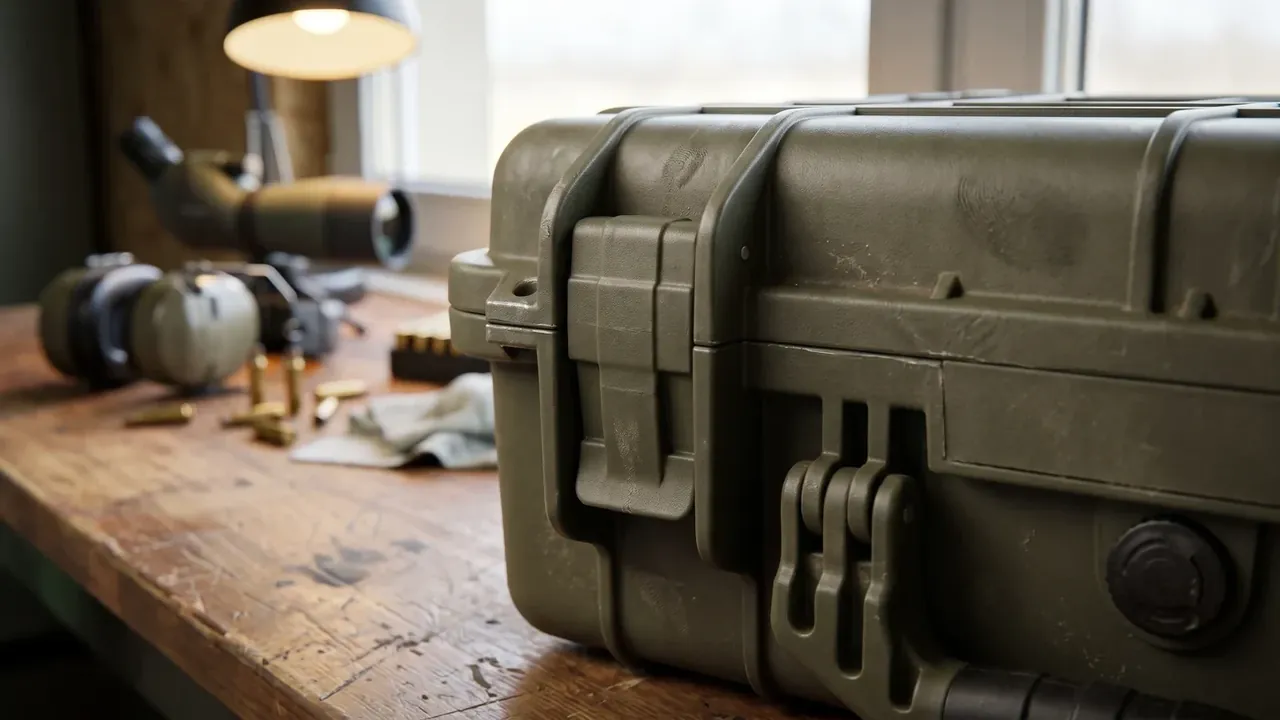
Quick answer: A cartridge box works in five settings: warehouse storage, internal transfer, range use, field training and issue counters. The setting decides the configuration, not the other way round. Count how often the case is lifted, opened and left outdoors, then set stacking, fork pockets, latches and insert.
Table of contents
- Five Settings for a Cartridge Box
- Warehouse and Counting: Cells and Labels Set the Pace
- Transfer and Handling: Latches, Fork Pockets and Stacking
- Range and Field Training: Carrying and Temporary Staging
- Issue and Receipt: Window Time and Configuration Trade-offs
- FAQ
1. Five Settings for a Cartridge Box
One cartridge box cannot cover every setting. Storage means shelving and stacking, so base ribs and a flat lid count. Transfer means trucks, so pockets and corner guards count. Range use means repeated opening, so latches and lid angle count. Mismatches show fast: a storage case hauled to the field weighs over twenty kilograms and needs two people for four hundred metres.
| Setting | Main action | Key configuration | Common mismatch |
|---|---|---|---|
| Warehouse storage | Shelving, stacking | Base ribs, flat lid | Domed lid, stacks slide |
| Internal transfer | Forklift, trolley | Fork pockets, corner guards | No pockets, pallet only |
| Range use | Frequent opening | Quick latches, seal | Two-hand latch, gloves fail |
| Field training | One-person carry | Side handles, low weight | Thin handle, cuts the hand |
| Issue counter | Opening, counting | Cell count, labels | Cells too deep, counting by feel |
2. Warehouse and Counting: Cells and Labels Set the Pace
In storage the first metric is counting time, not capacity. On four shelves at 1.6 m spacing, a twelve-cell cartridge box takes sixty seconds to check cell by cell; rim labels cut that to twenty.
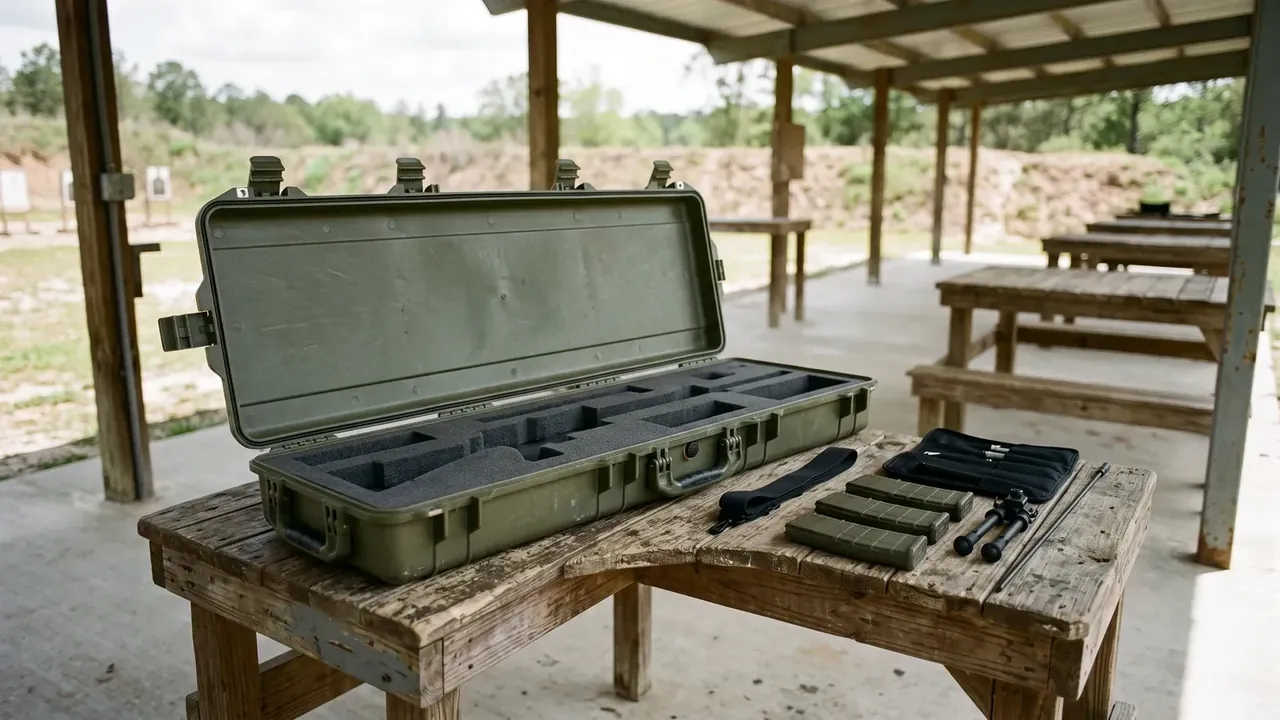
Rim labels sit ten millimetres inside the lid line; batch labels go on the short side, visible after stacking. At 15 to 25 °C and below 60% humidity a gasket lasts three years. Shelf boards are rated at 300 kg per level and loaded cases stay under 20 kg.
3. Transfer and Handling: Latches, Fork Pockets and Stacking
In transfer, a cartridge box must stay put on a pallet. A standard pallet holds twenty-four units at 480 kg; two straps at 200 N keep lateral movement under ten millimetres.
Latches cause most failures. Four latches, two per long side, keep three engaged when one corner is hit; a two-latch case lifts its whole lid.
Docks stand 1.2 m high and forks run 1.2 m, so 200 mm of engagement is enough. Make corner guards replaceable and a worn corner costs a part, not a case.
4. Range and Field Training: Carrying and Temporary Staging
Range use demands speed: eight to twelve openings a day needs a latch that works one-handed through a glove and a lid that opens to 105°, past the tipping point.
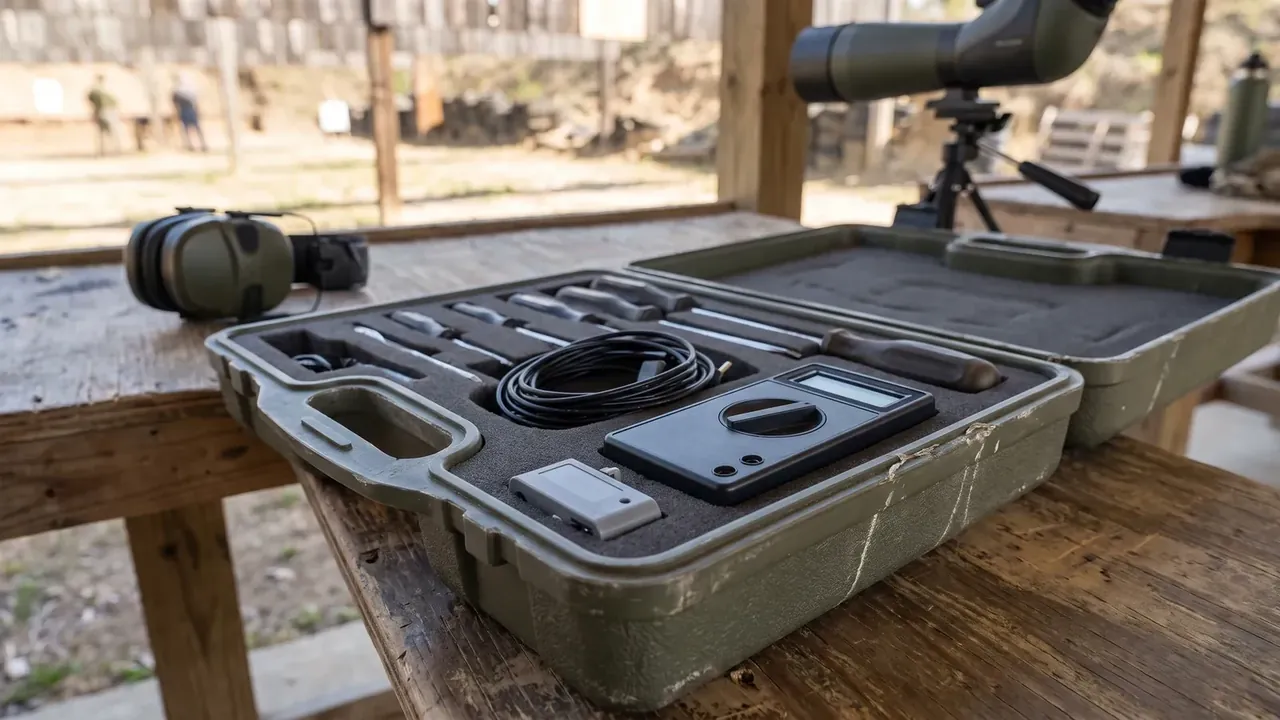
Open storage is normal. Two hours of sun takes the shell to 55 °C and the interior to 40 °C; back indoors, moisture condenses on the insert unless a valve equalises pressure.
Field training puts weight first: four hundred metres on foot, under 15 kg loaded, eight trips a year. Wall thickness can come down; the handle root cannot.
5. Issue and Receipt: Window Time and Configuration Trade-offs
The issue window is a hard limit. Three minutes covers opening, checking, signing and closing; cell count and lid angle decide whether that is enough.
No case is optimal everywhere. Storage wants a flat lid, the range a fast latch, field training light weight. Pick one primary setting and let it score full marks.
| Primary setting | Focus | Acceptable compromise | Never compromise |
|---|---|---|---|
| Warehouse | Stacking, capacity | Handle style | Base ribs, flat lid |
| Transfer | Fork pockets, latches | Insert refinement | Stack stops |
| Range | Opening, sealing | Cell count | Latch life |
| Field training | Weight, handles | Sealing class | Handle root |
Spending follows the same split: if most of the year is indoors, buy stacking first, pockets second, portability last.
Conclusion
The setting decides the configuration, and the configuration decides where the money goes. Storage reads base ribs, transfer reads pockets, the range reads sealing, field training reads weight. Rank those actions by annual frequency and the primary setting surfaces on its own. Matched to its setting, a cartridge box stacks indoors and still carries outdoors.
This article discusses only the container (case body) side of specifications and design intent, and does not cover any handling, loading or use of the contents.
Related Reading
- Cartridge box applications in the field
- Cartridge transport box standards in outline
- Cartridge storage box problems and fixes
- How a cartridge safety case is built
Related Products
- 8 Series — Gun Cases; Military Equipment Cases; Camera Equipment Cases; Drone Cases; Watch Cases; Knife Cases; First Aid Cases; Electronics Equipment Cases
- WL8-2812 PP Gun Case — model WL8-2812
- All protective cases and toolboxes: 7 series, 158 models