

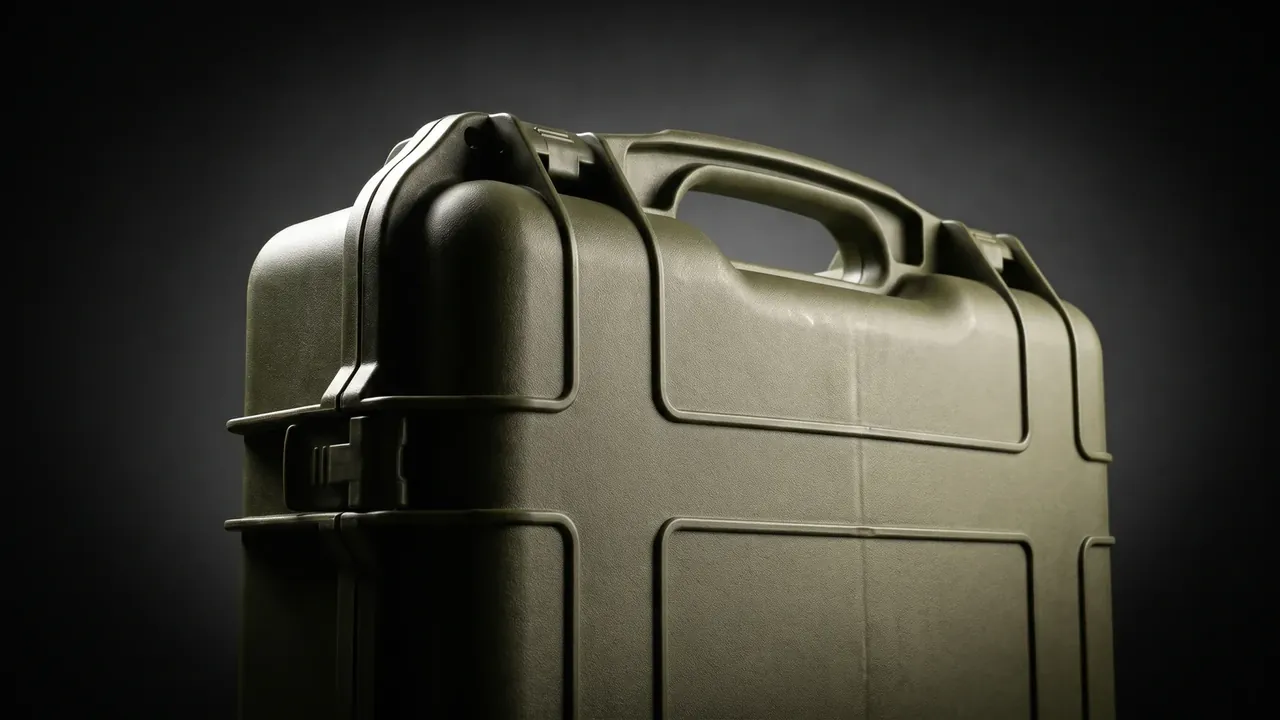
Quick answer: Maintenance on a cartridge box is not a wipe-down. Six checks carry numbers: gasket compression set under 30 percent, latch force above 18 N, hinge clearance under 0.8 mm. Check on schedule, replace on threshold, and a ten-year rating stretches to twelve.
Table of contents
- Where the cartridge box checks start
- Cleaning and the gasket
- Latches and hinges: how wear is measured
- Insert ageing and label renewal
- Replacement lines and scrapping
- FAQ
1. Where the cartridge box checks start
Six points fail in six ways: shell cracks, gasket flattens, latch claw wears, hinge pin opens clearance, insert chalks, label lifts. Five healthy points do not cover the sixth.
The checks need tools: feeler gauge, spring scale, durometer, stopwatch, under five hundred yuan.
| Check | Method | Pass | Interval |
|---|---|---|---|
| Shell and corners | visual | no crack, no whitening | monthly |
| Gasket | pull 30 mm | no flat spot, hardness near 65 | quarterly |
| Latch | spring scale | 35 to 50 N, no bind | monthly |
| Hinge | feeler gauge | under 0.5 mm | quarterly |
| Insert | press 10 s | back in 3 s, no chalk | half-yearly |
| Label | read tag | legible, no lifting | every move |
2. Cleaning and the gasket
Neutral detergent at pH 7 to 8, soft brush, no solvent and no steel wool: solvent strips the UV layer, steel wool leaves stress raisers where the next drop cracks. Dry, then blow water out of the groove.
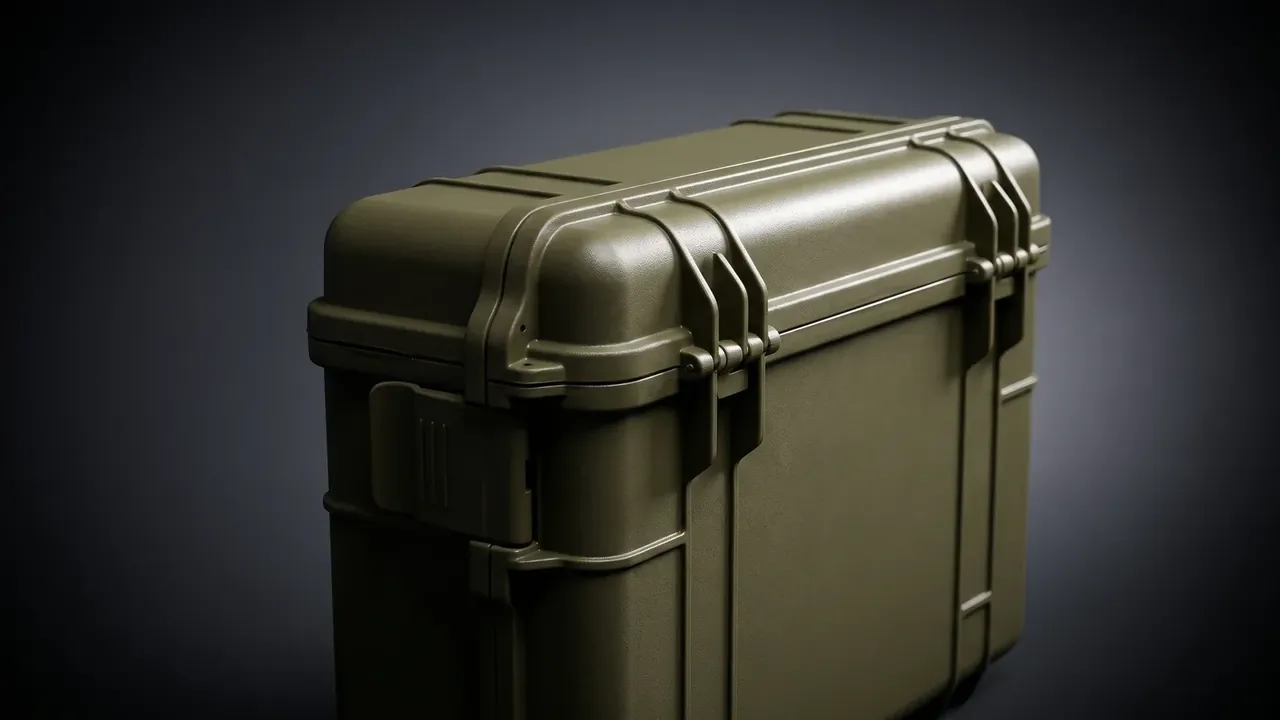
The gasket is the cheapest part on a cartridge box and the most often skipped. Pull thirty millimetres: rounded corners, no flat spot, no notch. Hardness climbing from 65 to 75 shore means it no longer compresses; past 30 percent set it sits on the replacement line.
Wipe a thin film of silicone grease into the groove, enough that the finger comes away clean; it reduces twist, not friction. Joint at the middle of a long side, cut diagonally, bevel up.
3. Latches and hinges: how wear is measured
Latch failure starts at the claw. New 45 N, warning 28 N, change below 18 N, where it pops open on a drop. Claw wear past 1.2 mm goes too: a worn claw pulls the latch off-centre and compresses the gasket unevenly.
Hinges stay in place. Feeler gauge: 0.2 mm new, 0.5 mm rocking, 0.8 mm the line. Clearance lets the lid shift and pinches the gasket on one side, where leaks begin. Change in pairs.
| Part | New | Warning | Replace |
|---|---|---|---|
| Latch force | 45 N | 28 N | 18 N |
| Claw wear | 0 | 0.5 mm | 1.2 mm |
| Hinge clearance | 0.2 mm | 0.5 mm | 0.8 mm |
| Gasket hardness | 65 shore | 72 shore | 78 shore |
| Handle root | no crack | surface whitening | any visible crack |
4. Insert ageing and label renewal
The insert ages before the shell. EVA is rated five years and shows it as slower rebound, chalk and slumped edges. Press a thumb for ten seconds: back within three passes, past five or with a dent fails.
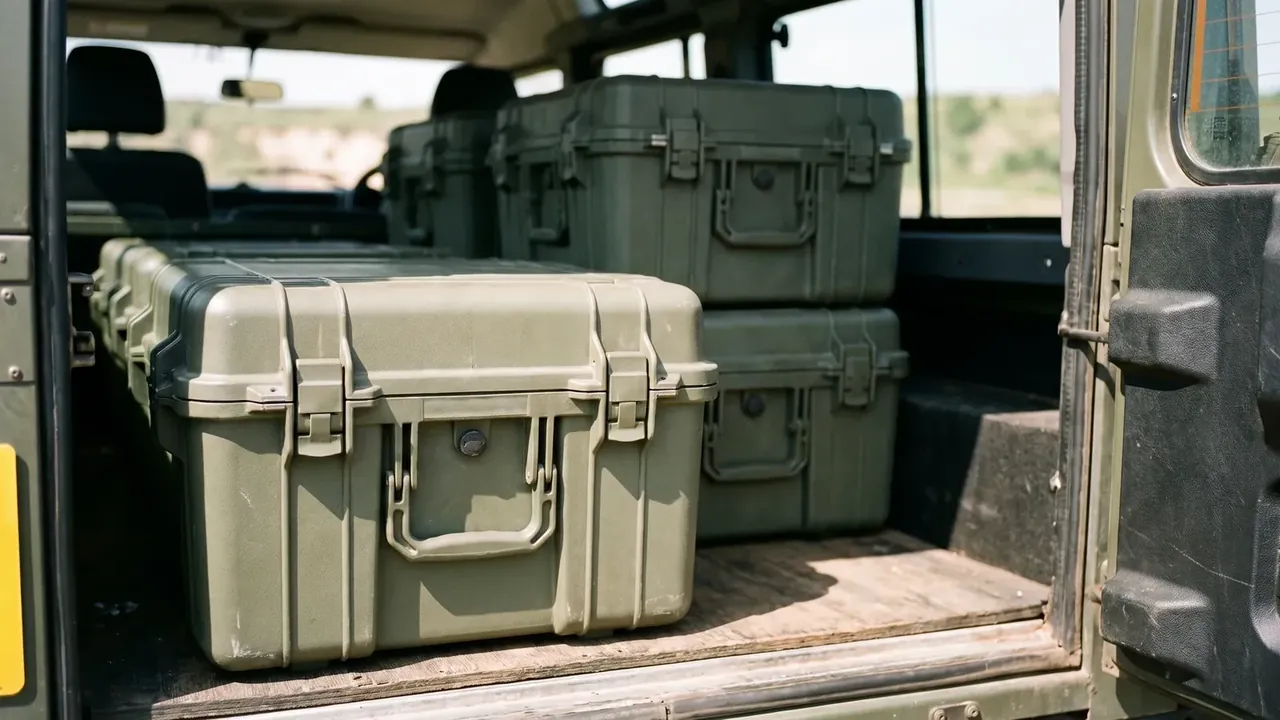
Moulded data stays with the shell; the wear tag is renewed when it fades or lifts. Clean with ethanol, wait thirty seconds, press the edges. Fifty acetone rubs is the specification.
Order inserts by box model; generic foam varies in density and runs two millimetres over tolerance, so the load shifts.
5. Replacement lines and scrapping
A latch is a twenty-minute swap, a gasket ten, an insert one order. The shell cannot be repaired: a through-crack or distorted groove leaks again next wet season.
Past three repairs on the same cartridge box, or one repair over sixty percent of a new unit, stop; otherwise it cycles through the workshop at more labour than it is worth.
| Item | Repairable | Scrap |
|---|---|---|
| Latch | swap, 20 minutes | cracked seat |
| Gasket | swap, 10 minutes | distorted groove |
| Shell crack | weld under 30 mm | through-crack |
| Insert | replace by model | shell distortion |
| Repair count | up to three | beyond three |
Remove the markings before an obsolete box leaves the store, so numbered units do not enter the second-hand channel; a stray marking is harder to trace than a box.
Conclusion
The point is thresholds, not diligence: 65 shore, 18 N, 0.8 mm, three seconds. Those four numbers turn six checks into decisions anyone can make, which is the value of a cartridge box maintenance schedule.
This article discusses only the container (case body) side of specifications and design intent, and does not cover any handling, loading or use of the contents.
Related Reading
- Common cartridge box problems and fixes
- Cartridge storage box faults and countermeasures
- Maintaining a war reserve case
- Care points for metal ammunition boxes
Related Products
- 8 Series — Gun Cases; Military Equipment Cases; Camera Equipment Cases; Drone Cases; Watch Cases; Knife Cases; First Aid Cases; Electronics Equipment Cases
- WL8-2812 PP Gun Case — model WL8-2812
- All protective cases and toolboxes: 7 series, 158 models