

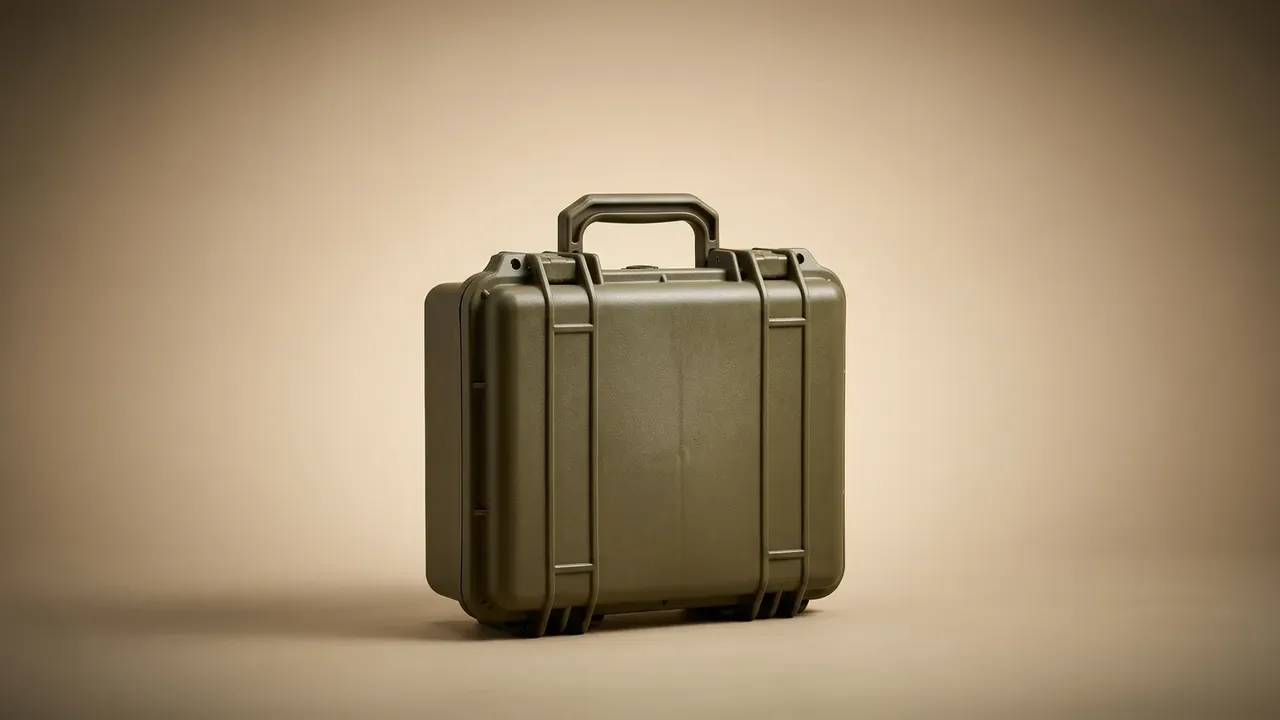
Quick answer: Work through five criteria in order: capacity and compartments, insert, stacking and forklift handling, sealing class, then batch size and budget. Each one fixes the numbers the next needs, and two quotations become comparable only then.
Table of contents
- Five Criteria for Choosing a Cartridge Box
- Capacity and Compartments: Count Cells Before Volume
- Inserts: Locating, Cushioning and Access
- Stacking and Forklift Handling: Load Paths Through Base and Lid
- Sealing Class, Batch Size and Budget
- FAQ
1. Five Criteria for Choosing a Cartridge Box
Most buyers describe a cartridge box in two sentences: it must hold the load and survive the trip. At quotation stage those sentences become five checkable numbers, each answering a different question: daily use, movement inside, the journey, dryness, and price. Order matters too, since capacity comes before the die and the stack pattern before lid ribs.
| Criterion | Number to confirm | Typical range | Cost of a mismatch |
|---|---|---|---|
| Capacity and compartments | Internal size, cell count | 400×300×150 mm, 12 cells | Cells too deep, gloves catch |
| Insert | Foam density, compression | 30 kg/m³, 25% compression | Loose fit, chipped corners |
| Stacking and handling | Layers, fork pocket height | 5 layers, 100 mm pocket | Base collapse, forks through floor |
| Sealing | IP class, gasket compression | IP67, 25% to 30% | Damp interior, valve failure |
| Batch and budget | MOQ, tooling split | 300 units, tooling separate | Low price, tooling unpaid |
2. Capacity and Compartments: Count Cells Before Volume
Capacity in a cartridge box is counted in cells, not litres. A 400×300×150 mm interior is sold as 18 litres, but walls and dividers leave about 13 litres usable. Twelve cells of 60×90 mm fill one layer; depth above them is dead space.
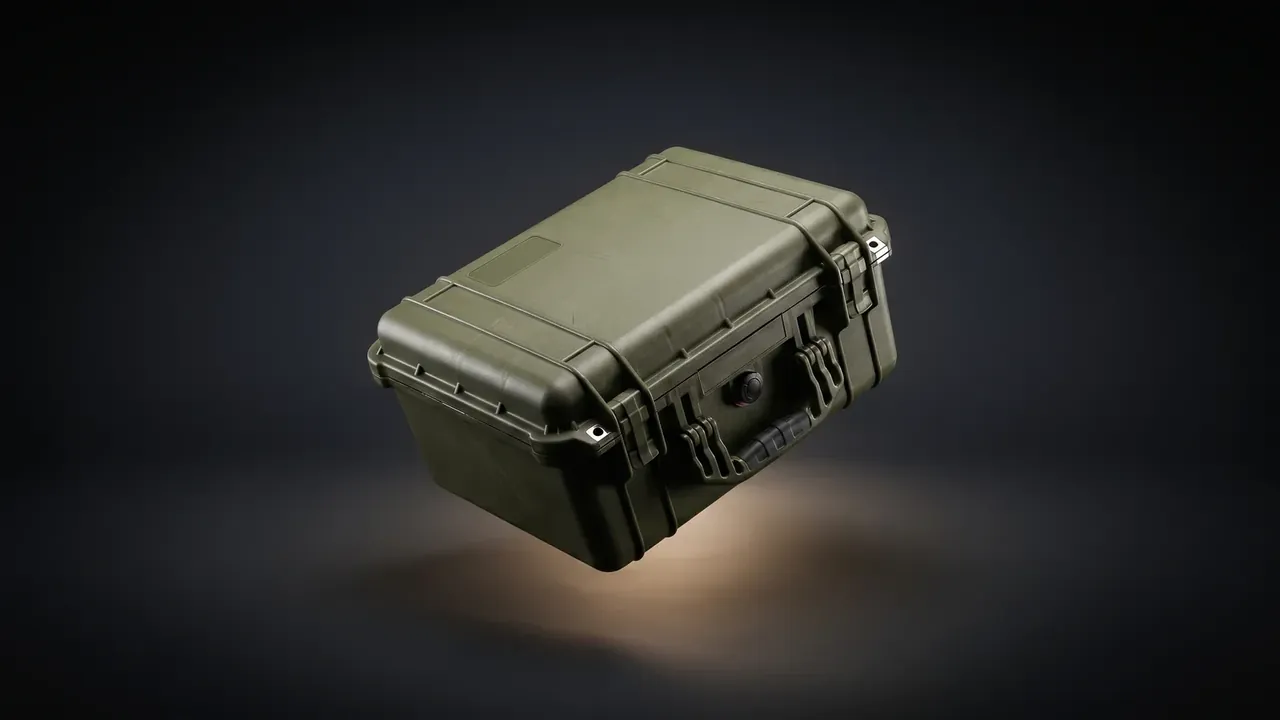
Cell depth drives the handling motion. A cell 20 mm deeper than the carton forces gloves to the bottom; a shallower one lets the lid press on the carton. Five to eight millimetres of clearance over a thin pad is the workable band.
3. Inserts: Locating, Cushioning and Access
An insert does three jobs at once: locating, cushioning and access, all drawing on the same thickness. Locating wants density and low rebound, cushioning wants closed cells, access wants finger relief cut into the pocket rather than a wider pocket.
EVA at 30 kg/m³ rebounds to about 95% after 25% compression and cuts cleanly; PE at 25 kg/m³ costs roughly 20% less. Both laminate a dense skin onto a soft base at around 110 °C, with die-cut pockets 0.5 mm over the item.
4. Stacking and Forklift Handling: Load Paths Through Base and Lid
Stacking is not a claim about column height but about whether base and lid can pass load into the ground. A case of 18 kg with 12 kg inside puts about 120 kg on the bottom of a five-high stack.
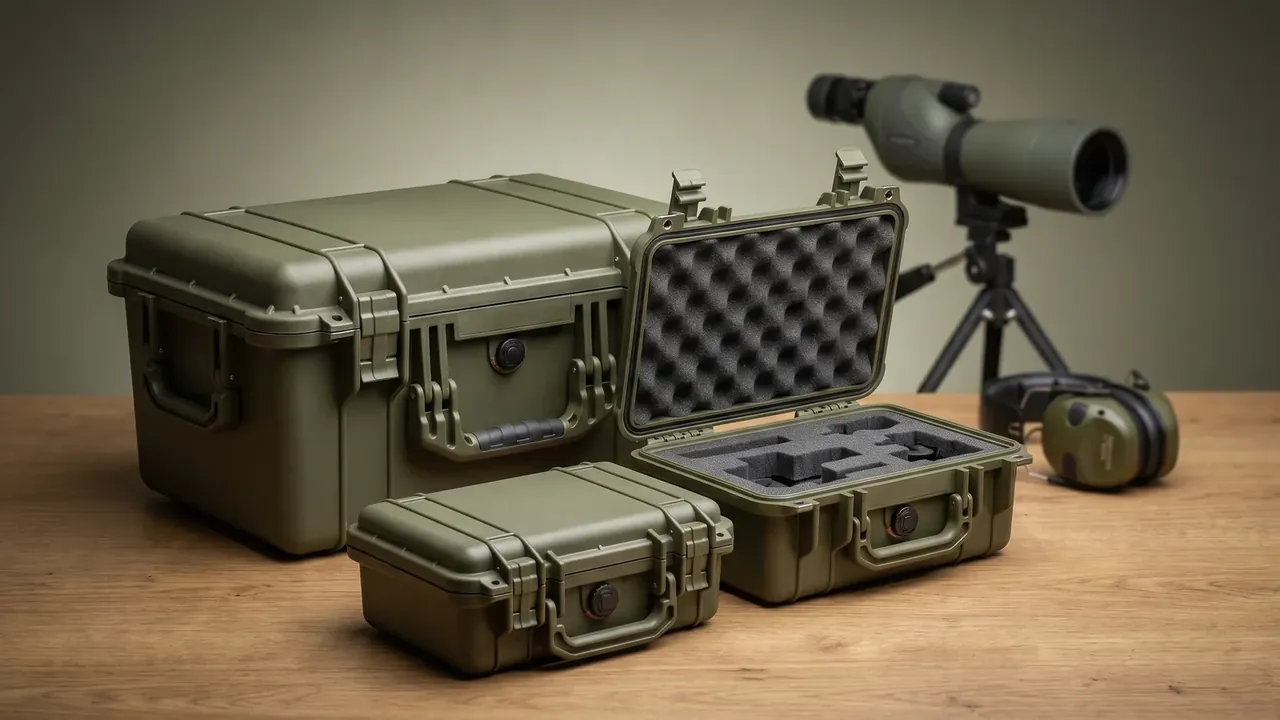
Load travels through base ribs, lid ribs and corners. Ribs that land in the lid channels below send force through structure rather than a plastic wall; misalignment leaves white marks in the lid centre. A 72-hour static test should keep deflection under 3 mm.
Fork pockets 100 mm high and 200 mm deep let forks enter without touching the floor; without them a pallet adds 120 mm and costs two layers per load.
5. Sealing Class, Batch Size and Budget
Sealing follows the environment. A dry warehouse needs IP54; an open yard or ship's hold needs IP67, thirty minutes at one metre. The gasket is silicone at 50 Shore A, compressed 25% to 30%; less leaks, more takes a set. A valve opening between 0.02 and 0.05 bar keeps the lid usable.
Batch and budget decide whether the first four survive. Tooling is quoted separately from 300 units; above 1,000 the unit price falls 12% to 18%, and again at 3,000. At low volume it is cheaper to change the insert than the case.
| Batch | Tooling treatment | Price index | Typical use |
|---|---|---|---|
| 300 units | Fully charged | 100 | Trial fit, small issue |
| 1,000 units | Spread over three years | 86 | Annual replenishment |
| 3,000 units | Spread over ten years | 74 | Multi-unit standard issue |
Conclusion
The difficulty is not the number of criteria but their order. Capacity gives the insert its dimensions, stacking gives the ribs their depth, sealing and batch size close the quotation. Chosen that way, a cartridge box rarely comes back for rework.
This article discusses only the container (case body) side of specifications and design intent, and does not cover any handling, loading or use of the contents.
Related Reading
- Cartridge box materials compared across five shells
- Common cartridge box problems and how to read them
- Reading a cartridge transport box data sheet
- Cartridge safety case versus the alternatives
Related Products
- 8 Series — Gun Cases; Military Equipment Cases; Camera Equipment Cases; Drone Cases; Watch Cases; Knife Cases; First Aid Cases; Electronics Equipment Cases
- WL8-2812 PP Gun Case — model WL8-2812
- All protective cases and toolboxes: 7 series, 158 models