

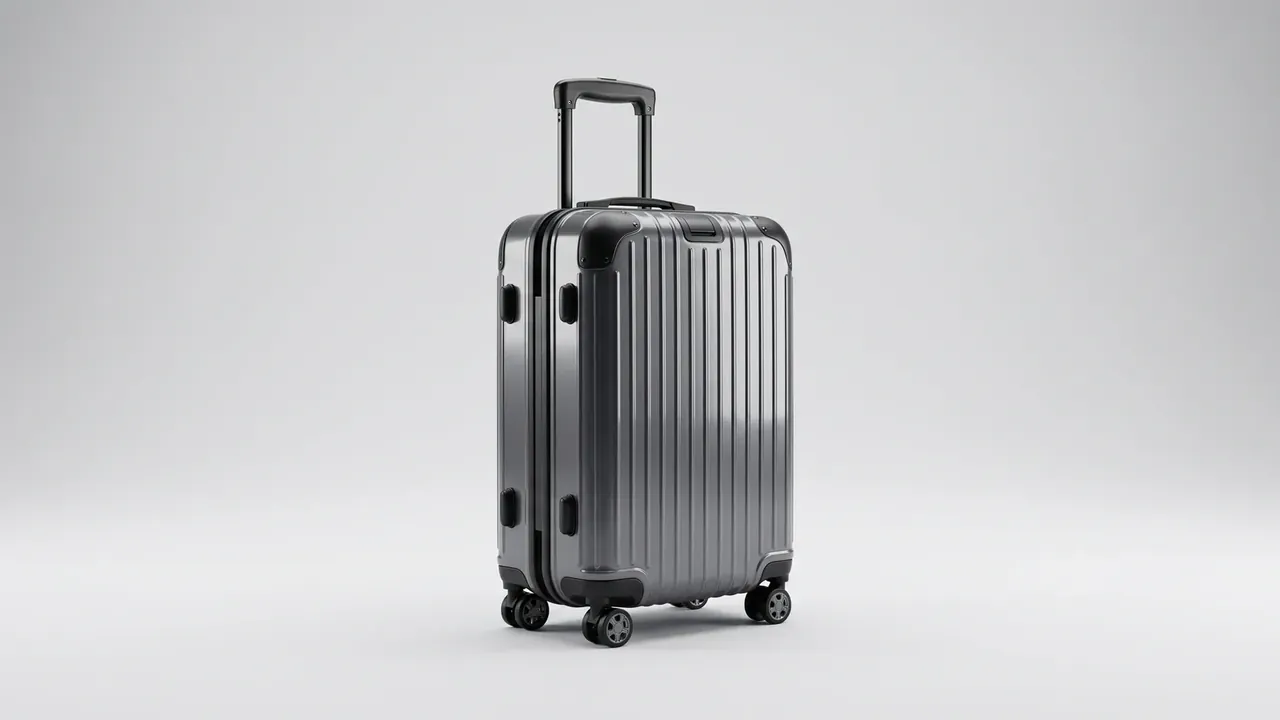
Quick answer: Build a cartridge box specification from the inside out: 1.5 to 2 mm per side, walls of 2.5 to 3.5 mm, a loaded unit under 25 kg, and no more than 2 mm of set after a five-high stack sits for 72 hours.
Table of contents
- Sizing a Cartridge Box from the Inside Out
- Dividers and Insert Fit
- Wall Thickness and Rib Geometry
- Load Rating, Stacking and Unit Weight
- Seal Class and Temperature Window
- FAQ
1. Sizing a Cartridge Box from the Inside Out
Enquiry sheets usually list outside length, width and height. The supplier copies them, the mould is cut, and then the cavity turns out not to hold the layout. A cartridge box specification starts at the cavity; the outside is cavity plus wall.
Draw the layout to scale first, item by item. Allow 1.5 to 2 mm per side on the largest diameter, 3 mm between neighbours, 5 mm of cushion. Shrinkage and warpage take 0.3 to 0.5 mm off a moulded cavity.
| Item | Value | Basis |
|---|---|---|
| Cavity length | Layout length + 4 mm | 2 mm per side |
| Cavity depth | Tallest item + 6 mm | Lid foam pre-load |
| Wall thickness | 2.5 / 3.0 / 3.5 mm | Tiered by loaded weight |
| Outside footprint | 600 × 400 mm | Pallet module |
2. Dividers and Insert Fit
How finely a cartridge box is divided follows the changeover rate, not the catalogue photo. Long runs get individual pockets; a mixed programme gets a through-channel plus swappable inserts, so a changeover swaps foam, not the body.
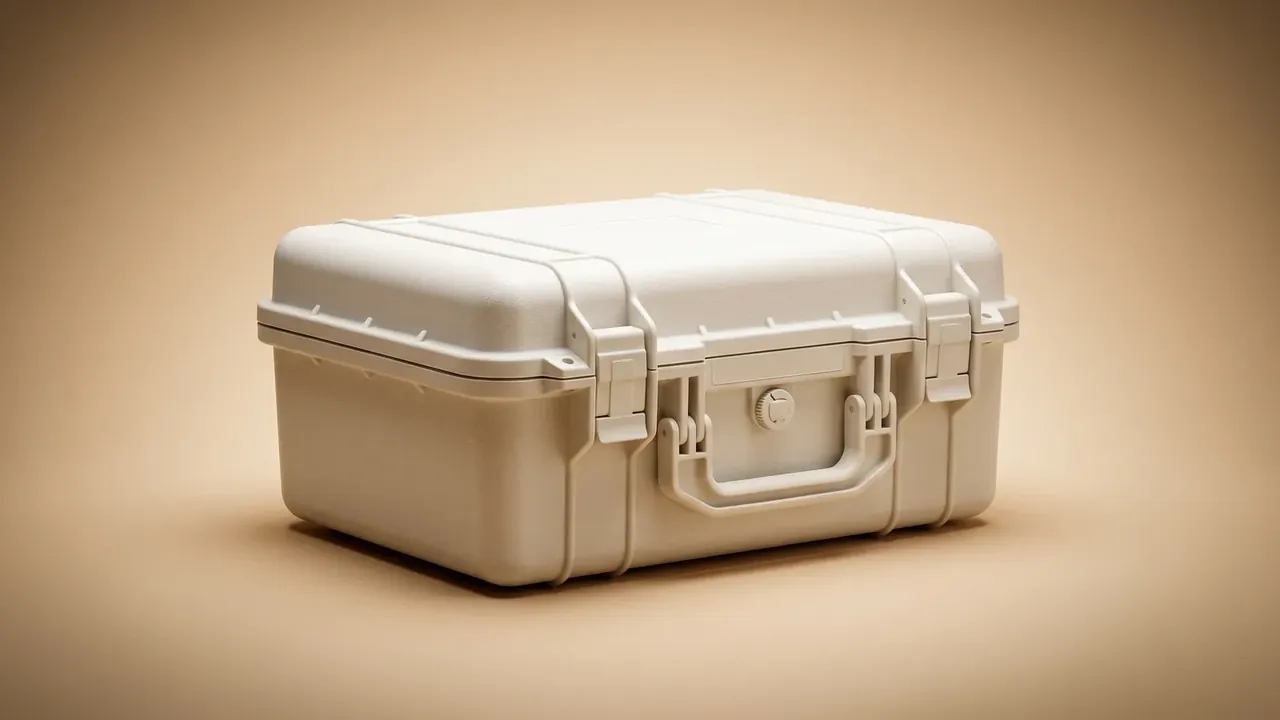
PP honeycomb board is commonly 8 mm, EVA runs at 38 kg/m³ and PE at 30. Cut pockets 2 mm deeper than the item and give the wall a 2 degree draft.
An insert sits 1 mm inside the cavity on a 5 mm pad, with the handle within 20 mm of the loaded centre of gravity.
3. Wall Thickness and Rib Geometry
Wall thickness on a cartridge box falls into three tiers: 2.5 mm below 15 kg loaded, 3.0 mm up to 25 kg, and 3.5 mm beyond that or past five-high stacking.
Ribs do more than thickness: height at twice the wall, pitch at 90 mm, root radius R2, 1.5 degree draft. Ribs meeting at the corners close a ring, lifting torsional stiffness about forty percent for six percent more weight.
Injection moulding holds wall variation inside 0.15 mm; rotomoulding runs 4 to 6 mm at 0.8 mm. Past 3.5 mm, sink marks gather at the bosses and 0.4 mm shows daylight through the lid line.
4. Load Rating, Stacking and Unit Weight
Load splits into two tests. Static: five-high stack, 400 kg on top, 72 hours, 24 hours of recovery, set under 2 mm. Dynamic: three drops from 1.2 m on a corner, an edge and a face, latches still closing.
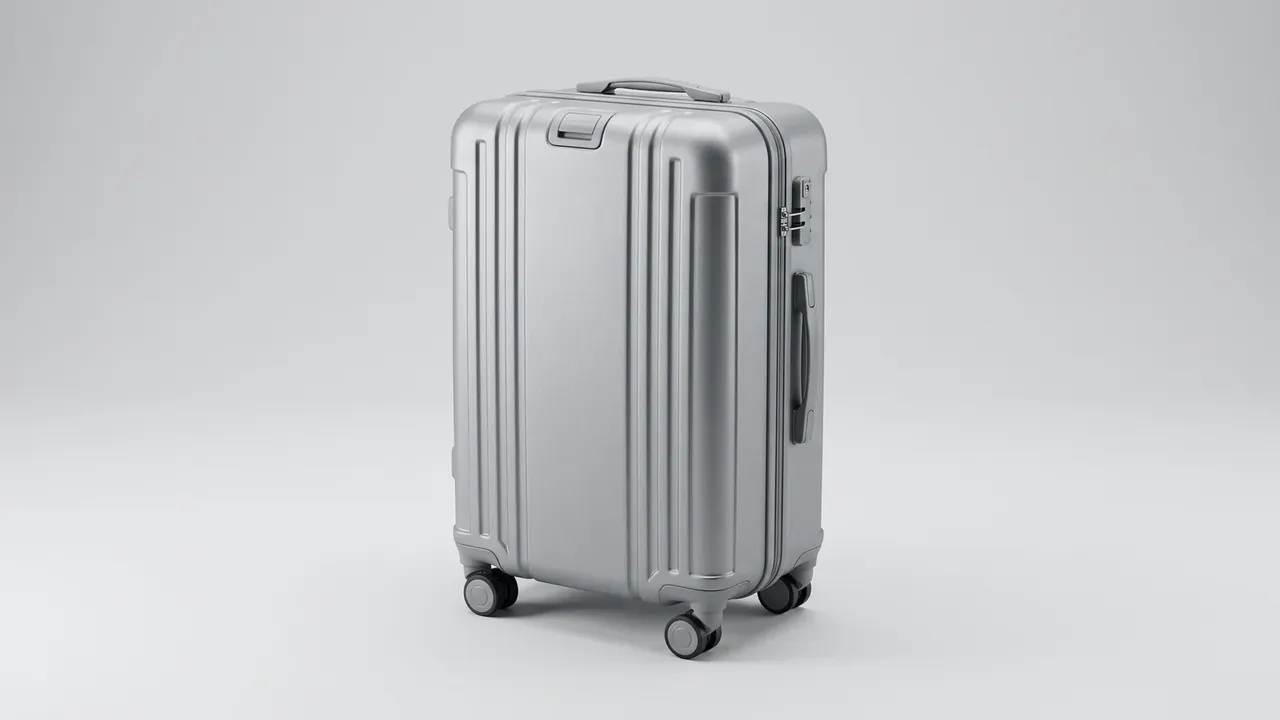
Stacking height on a cartridge box is set by the bottom side wall: five layers unribbed, seven at 90 mm rib pitch, a pallet board beyond seven.
Unit weight is ergonomics, not materials: above 25 kg the drop rate climbs, so a heavier build wants casters or a two-person lift, and at least seventy percent of the base should sit on the pallet.
5. Seal Class and Temperature Window
Sealing runs in two steps, water then pressure. IP65 covers jets from any direction; IP67 covers 30 minutes at 1 m. Most cartridge box programmes take IP67, since standing water and brief immersion both occur.
Three things deliver IP67: a continuous gasket, even latch clamping and a relief valve. Compression belongs at 25 to 30 percent; the valve opens at 0.35 bar, so a temperature swing cannot pull the lid down under vacuum.
The window follows the route, usually -40 to +71 °C. Impact strength at -40 °C is about a third of room temperature, so cold drop is its own test: four hours of soak, then 1.2 m, no cracking and no latch release.
| Test | Condition | Pass criterion |
|---|---|---|
| Water ingress | IP67, 1 m for 30 min | Dry interior |
| Cold drop | -40 °C soak, 1.2 m drop | No cracks |
| Salt spray | 96 h neutral | No red rust |
Conclusion
The hard part of a specification is sequence, not arithmetic: layout, cavity, wall, outside. Dimension chain, stacking and seal class pull against each other, so a change in one sends you back to the other two. With a test method against each line, they make a cartridge box drawing a tool shop and a line can both hold to.
This article discusses only the container (case body) side of specifications and design intent, and does not cover any handling, loading or use of the contents.
Related Reading
- Cartridge box materials compared: metal, plastic and fibre
- Specification limits and dimension chains for cartridge protective cases
- How to state dimensions and load for cartridge transport cases
- How a cartridge safety case is built and how it protects
Related Products
- 8 Series — Gun Cases; Military Equipment Cases; Camera Equipment Cases; Drone Cases; Watch Cases; Knife Cases; First Aid Cases; Electronics Equipment Cases
- WL8-2812 PP Gun Case — model WL8-2812
- All protective cases and toolboxes: 7 series, 158 models