

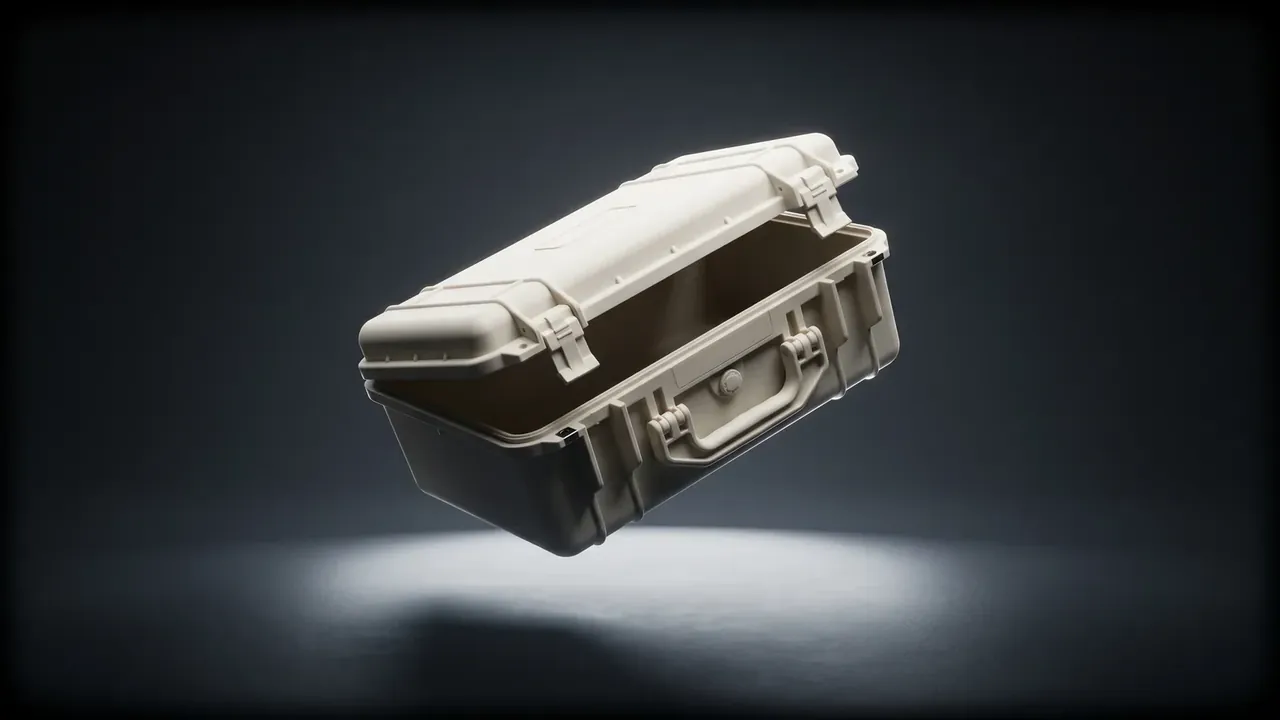
Quick answer: Criteria for a cartridge box must be judgeable, checkable and reviewable: three defect grades, 100 percent inspection on critical items, sampling by lot size, decisions against Ac and Re, and a 12-digit code that chains the records.
Table of contents
- Grading Defects Before Anything Else
- Inspection Items and Gauges
- Sampling by Lot Size
- Decision Rules and Failed Lots
- Records, Marking and Traceability
- FAQ
1. Grading Defects Before Anything Else
Acceptance sheets fail predictably: every line can be ticked, none judged. A 0.4 mm depression on a sealing face is critical; the same depression mid-base is minor. Without that split, the call goes to whoever has been on the line longest.
| Grade | Consequence | Typical example | Action |
|---|---|---|---|
| Critical | Seal or latch failure | Depression on sealing face | Reject unit, hold lot |
| Major | Assembly blocked | Uneven lid line, colour shift | Rework unit |
| Minor | Slight cosmetic | Faint flow mark off the seal | Record and pass |
Critical covers a broken seal, latch retention or structural strength. Major covers assembly and appearance consistency without touching function. Minor covers appearance alone; only the last two are sampled.
2. Inspection Items and Gauges
Items sit in four groups: dimensional, visual, functional, packaging. Dimensional covers cavity length, width, depth and lid line; visual covers colour shift, flow marks, sink and flash; functional covers latch effort and sealing.
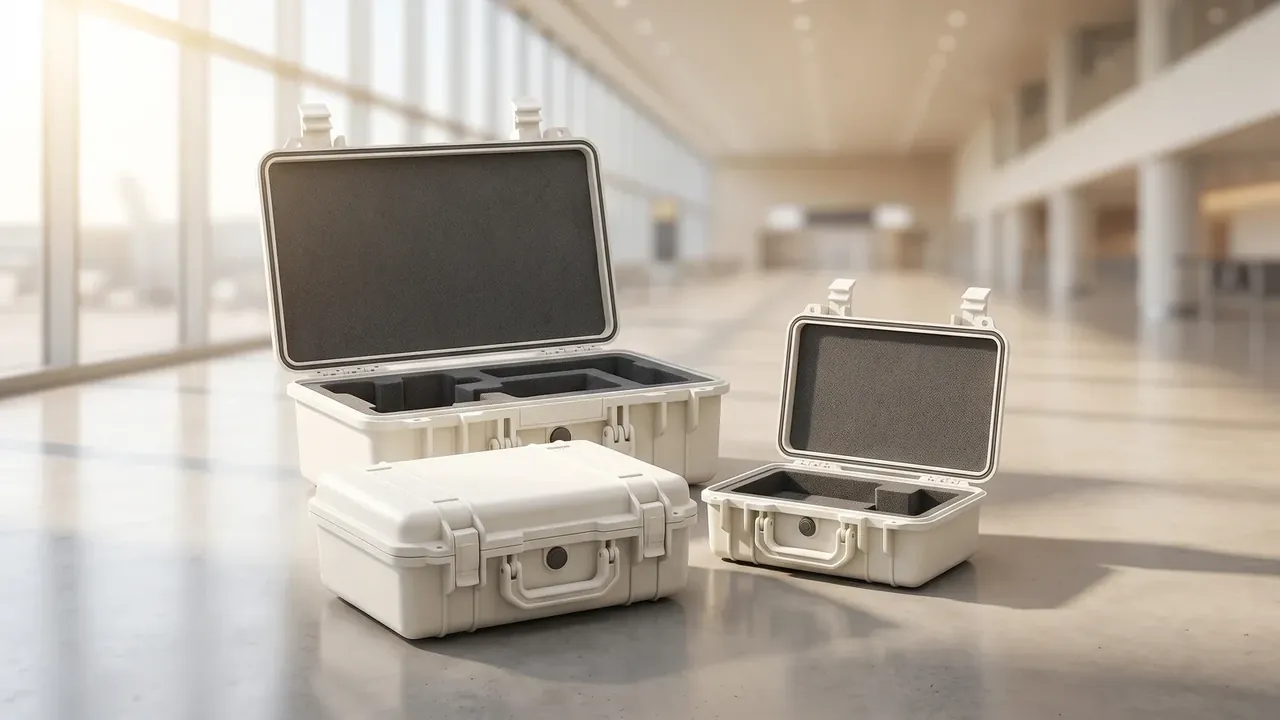
Gauges must match the tolerance. Cavity readings to 0.02 mm, the lid line with a 0.2 mm feeler every 100 mm, latch effort on a 200 N gauge read to 1 N. Visual work needs 1000 lux, 500 mm and ten seconds a unit, or the call drifts by shift.
Write cartridge box items so they can be judged. Flat and clean cannot be judged; no depression deeper than 0.2 mm on the sealing face can.
3. Sampling by Lot Size
Sampling follows lot size at general inspection level II, single normal sampling, and a cartridge box lot is no exception.
| Lot size | Sample | Major Ac | Re | Minor Ac | Re |
|---|---|---|---|---|---|
| 151 to 500 | 50 | 3 | 4 | 7 | 8 |
| 501 to 1200 | 80 | 5 | 6 | 10 | 11 |
| 1201 to 3200 | 125 | 7 | 8 | 14 | 15 |
Critical defects never enter this table: piece by piece, and one critical find sends the whole lot back.
Two gates sit outside sampling: a first article of three units runs the full list, then five units every two hours for latch effort and lid line, the line stopped on any shift.
Draw samples from top, middle and bottom of the pallet, or the units most likely damaged in transit stay excluded.
4. Decision Rules and Failed Lots
Count first, compare second. A cartridge box lot is accepted at or below Ac and rejected at or above Re, with major and minor counts kept apart and never offset.

A rejected lot has three routes: screen, rework, return. Screened lots return under tightened sampling at double the sample size; reworked lots repeat the first article and carry the operation and operator in the record.
Three consecutive rejections move a supplier to tightened inspection; five consecutive acceptances bring it back. The rule is not punishment but an early view of drift.
5. Records, Marking and Traceability
Records are the other half. Without them a decision is one sentence; with them a lot traces back to machine, mould and shift two years later.
A 12-digit code works: four for date, four for mould and machine, four for shift and serial. Laser or in-mould on the non-sealing base, never a sticker, which lifts first in humid air.
| Record | Carrier | Retention | Owner |
|---|---|---|---|
| First article | Paper and file | 3 years | Inspector |
| Gauge calibration | Digital | 5 years | Metrology |
| Retained samples, 2 per lot | Physical | 6 months | Warehouse |
Retained samples settle arguments: two units a lot, marked and kept six months, answer a complaint on the spot. Records must chain too, from one code up to material lot and down to shipment.
Conclusion
What matters is not how many rows a table carries but whether each row can be judged. Grades squeeze opinion out of the call, sampling and full inspection draw a hard line, decision rules give a route out of a failed lot, and records make one inspection reviewable. With all four, a cartridge box standard survives an audit.
This article discusses only the container (case body) side of specifications and design intent, and does not cover any handling, loading or use of the contents.
Related Reading
- Acceptance and shipping inspection for cartridge transport cases
- Tracing seal and latch faults on a cartridge box
- How to read the specification figures on a cartridge protective case
- Weighing a cartridge box against alternative packaging
Related Products
- 8 Series — Gun Cases; Military Equipment Cases; Camera Equipment Cases; Drone Cases; Watch Cases; Knife Cases; First Aid Cases; Electronics Equipment Cases
- WL8-2812 PP Gun Case — model WL8-2812
- All protective cases and toolboxes: 7 series, 158 models