

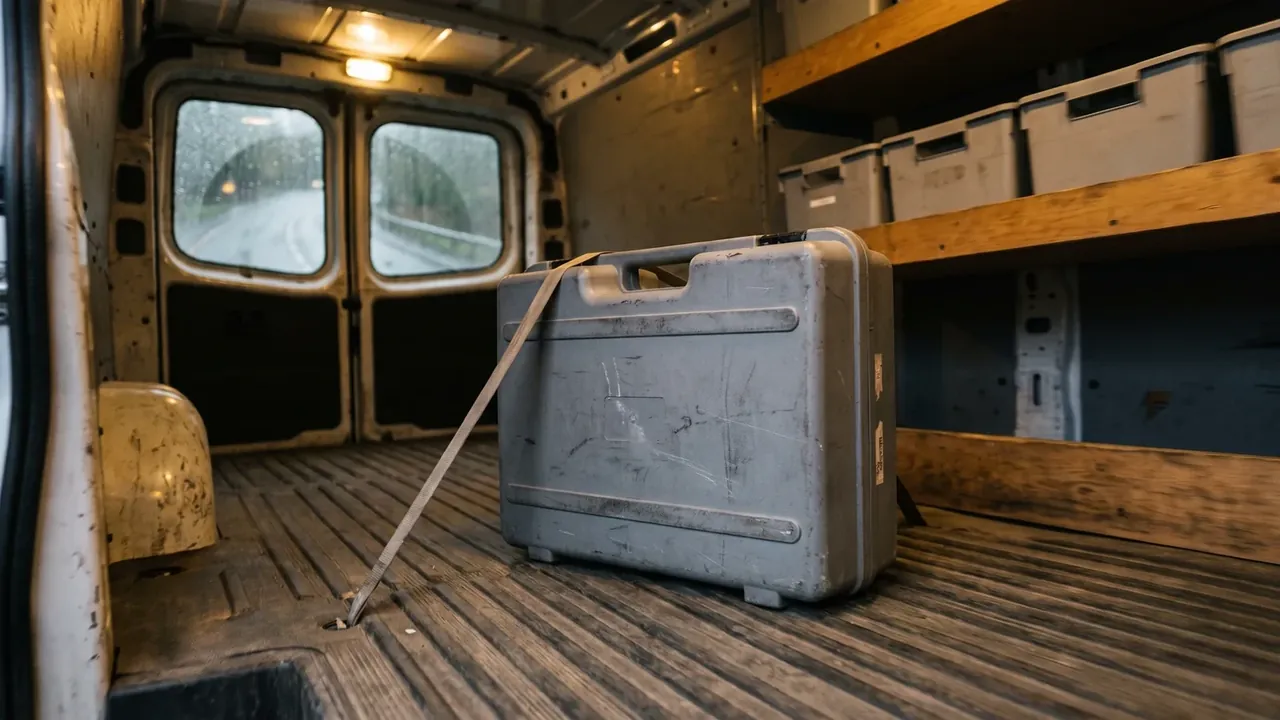
Quick answer: The lane decides the fittings: fork pockets in the plant, straps and corner guards on the road, pallet modules and salt spray at sea, low mass by air, handle span on foot.
Table of contents
- Six Scenarios and How the Setup Changes
- Short Van Runs and Warehouse Moves
- Rail and Ocean Freight Setups
- Air Legs and Manual Carry
- Trading Off When One Box Serves Several Lanes
- FAQ
1. Six Scenarios and How the Setup Changes
One mould can build a cartridge transport box for a factory floor and another for an ocean crossing: 40 openings a shift on one side, thirty days at 95 percent humidity on the other. Batch per trip, handling, transit hours and stack height settle wall, ribs, latches and inserts.
| Scenario | Dominant condition | Design lands on |
|---|---|---|
| In-plant transfer | 40 forklift moves a shift | Fork pockets, wear feet |
| Regional road | 3 to 5 Hz for 6 hours | Straps, corner guards |
| Rail, full car | 4 high, 180 kg bottom unit | Flat crush on the lid |
| Sea freight | 95 percent humidity, 480 h salt spray | Plated hardware, desiccant |
| Air transfer | 75 kPa cabin pressure | Vent, light shell |
| Manual carry | 2 km on foot | Handle span, unit mass |
2. Short Van Runs and Warehouse Moves
Van decks are ribbed steel with 4 mm crowns, so a plain rim scuffs white within 200 km. A cartridge transport box for this lane needs four 12 mm ribs dropping between the crowns.
Lashing follows the vehicle: two 25 mm straps rated 1200 kg, floor rings within 600 mm, and feet that lift the base 15 mm off a wet deck.
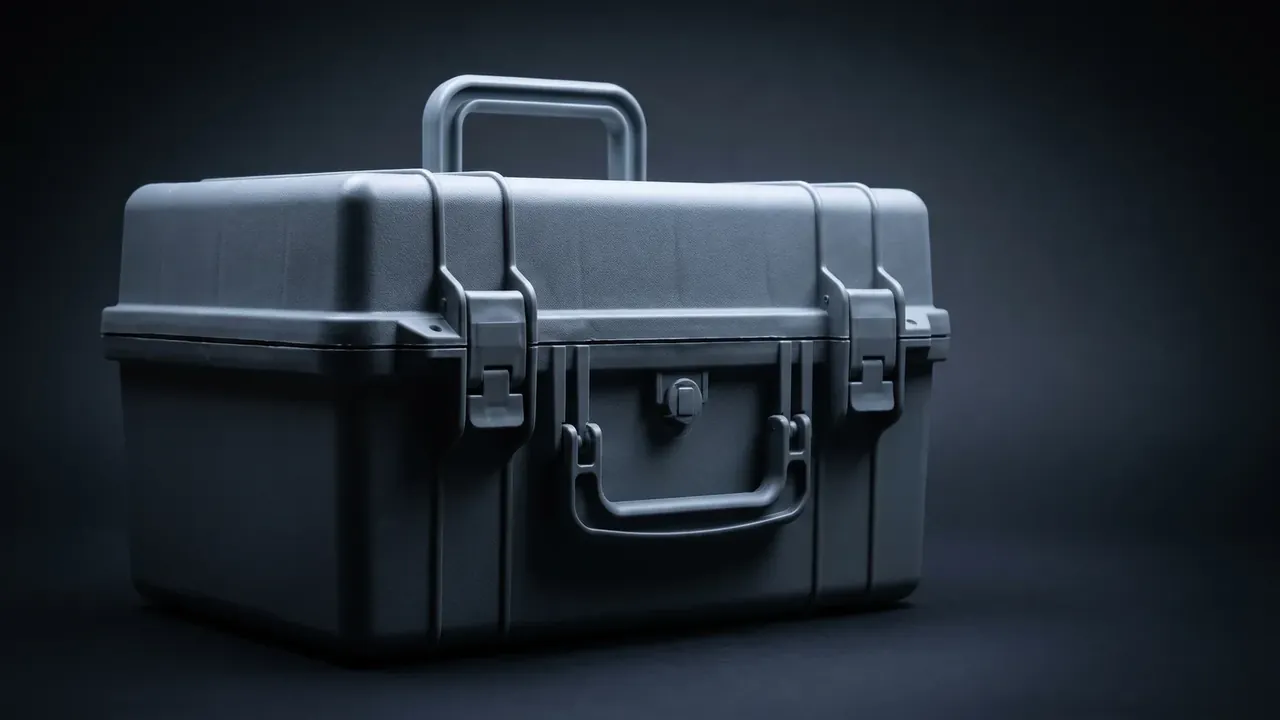
Warehouse work is a pallet problem: a 1200 by 1000 mm pallet takes 12 units two high, 96 kg on the lower box, on 100 mm fork pockets with 900 mm of fork depth. IP54 and a 2.8 mm wall cover dust and washdown, and the latch keeper is a metal insert, because plastic loosens in three months at 40 cycles a shift.
3. Rail and Ocean Freight Setups
Bulk freight treats a cartridge transport box as cargo: a 40 ft sea box takes 20 pallets of 12, 240 units, and a 60 tonne railcar takes 180 with 30 mm between them. At this volume 0.5 kg per unit becomes 120 kg.
Flat crush drives the lid. At four high with 180 kg below, ribs 8 mm tall at 90 mm centres hold the face within 2 mm after 24 hours; at 140 mm pitch the same load leaves 5 mm of sag.
Sea freight adds 480 hours of salt spray, 8 micron plating and a 50 g desiccant pocket. Rail adds minus 25 Celsius, where the gasket stiffens and opening force rises about 40 percent.
4. Air Legs and Manual Carry
Cabin pressure near 75 kPa leaves about 25 kPa across a sealed cartridge transport box. A 0.3 mm vent behind a one-way membrane equalises without letting liquid in, and shell weight stays under one to four of payload.
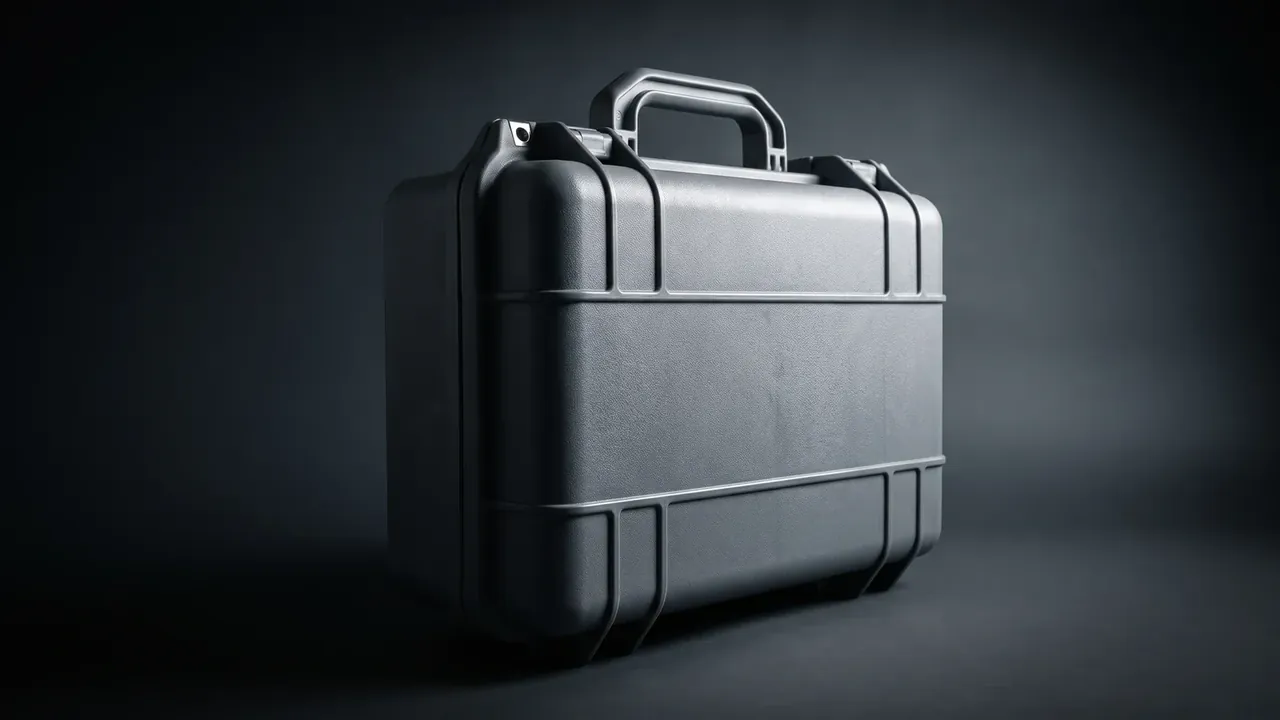
Manual carry: under 12 kg loaded, a 110 mm handle span and a 28 mm grip so a gloved hand does not jam, plus a 40 mm strap for 2 km on foot. The shell can drop to 2.2 mm, but corners need a double layer.
Two latch points beat one; a single latch lets the whole lid spring. Keep the pull tab under 8 mm so it does not catch on webbing.
5. Trading Off When One Box Serves Several Lanes
Most buyers run one cartridge transport box across a mix: in-plant daily, road weekly, sea freight once a year. Take the strictest level only for stack crush, sealing class and latch retention. Everything else follows the everyday lane.
| Item | Road bias | Freight bias | Carry bias | Mixed |
|---|---|---|---|---|
| Wall | 2.8 mm | 3.5 mm | 2.2 mm | 3.0 mm, double corners |
| Unit mass | 4.6 kg | 6.1 kg | 3.2 kg | 5.2 kg |
| Latch | Single stage | Two stage, metal insert | Two point | Two stage |
| Base | Wear feet | Pockets plus locating | No feet | Removable feet |
Price it: 2.8 to 3.5 mm adds 18 kg per pallet and 360 kg per sea box, one pallet lost on a weight-limited wagon. At 3.0 mm with doubled corners, crush falls under 8 percent and 0.6 kg comes off.
Conclusion
A lane is an input, not scenery. Settle batch, handling, transit hours and stack height, then apply the strictest level only to crush, sealing and latch retention. Weigh the unit on a real pallet before cutting the tool. Sized that way, a cartridge transport box fits every leg it travels.
This article discusses only the container (case body) side of specifications and design intent, and does not cover any handling, loading or use of the contents.
Related Reading
- Cartridge Box Structure and Craft: Five Key Points
- How to Choose a Cartridge Box: Five Criteria
- Capacity and loading efficiency
- Transport packaging requirements
Related Products
- 8 Series — Gun Cases; Military Equipment Cases; Camera Equipment Cases; Drone Cases; Watch Cases; Knife Cases; First Aid Cases; Electronics Equipment Cases
- WL8-2812 PP Gun Case — model WL8-2812
- All protective cases and toolboxes: 7 series, 158 models