

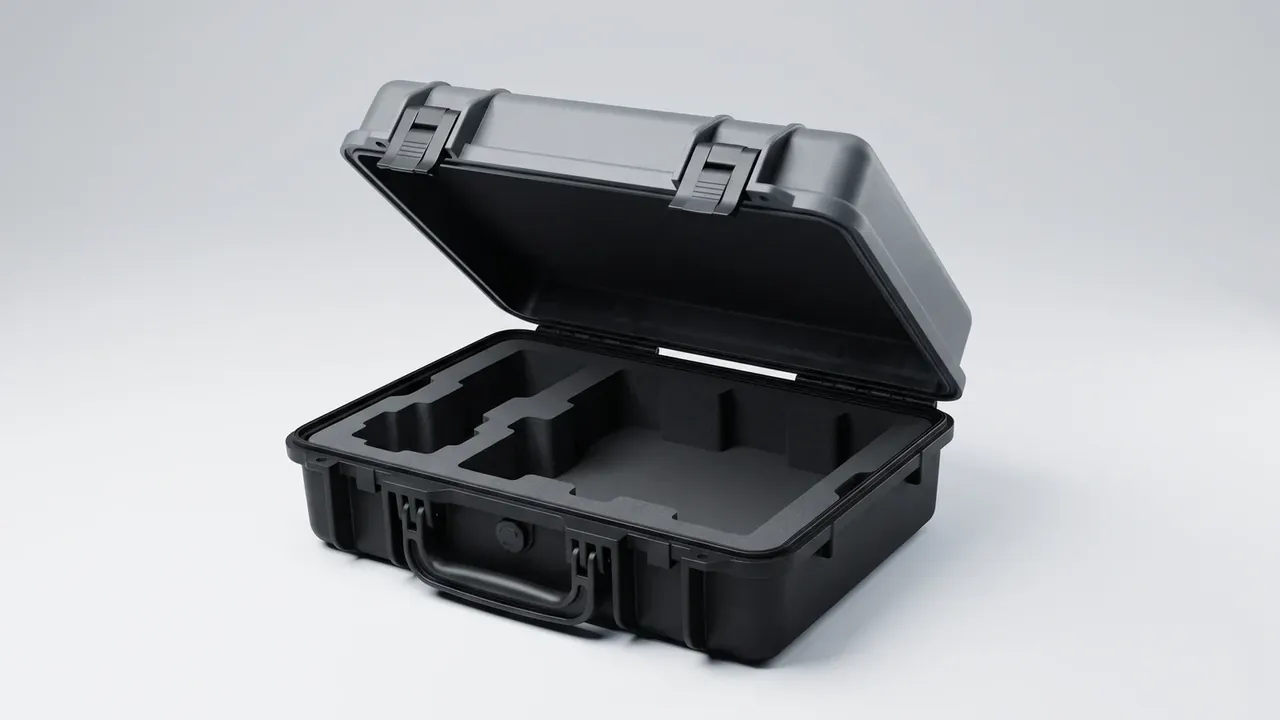
Quick answer: A Cartridge Transport Box stays serviceable when "still usable" becomes a reading: a 90 day walk-round for cracks and seals, a 180 day re-test of latch retention and gasket compression, and a hard stop at the replacement limit.
Table of contents
- What a Cartridge Transport Box Check Covers
- Setting the Interval: 90 and 180 Days
- Gasket Compression and Rebound
- Measuring Latch Retention Loss
- Replacement Limits: Repair or Retire
- FAQ
1. What a Cartridge Transport Box Check Covers
Cleaning is not maintenance. UV embrittles the polymer, shocks open clearance at latches and hinges, moisture hardens the gasket, and none of it shows on the surface.
| Check | Component | Method | Record |
|---|---|---|---|
| Cracks, distortion | Body, lid, corners | Visual and hand pressure | Length |
| Gasket | Full rim | 0.05 mm feeler | Eight-point compression |
| Latches | Catches, keepers | Tensile gauge | Peak force |
| Hinges | Rear hinge, pin | Feel, pin clearance | Clearance value |
| Foam insert | Pockets | Visual sag, rebound | Sag depth |
Log the room with the reading: 15 to 25 degrees Celsius below 60% RH keeps a moulding stable; 45 degrees softens the lid enough to spoil a compression figure.
2. Setting the Interval: 90 and 180 Days
Interval follows exposure: a stored case opens under 20 times a year, a field case 100 times a month, so one shared Cartridge Transport Box interval fails both.
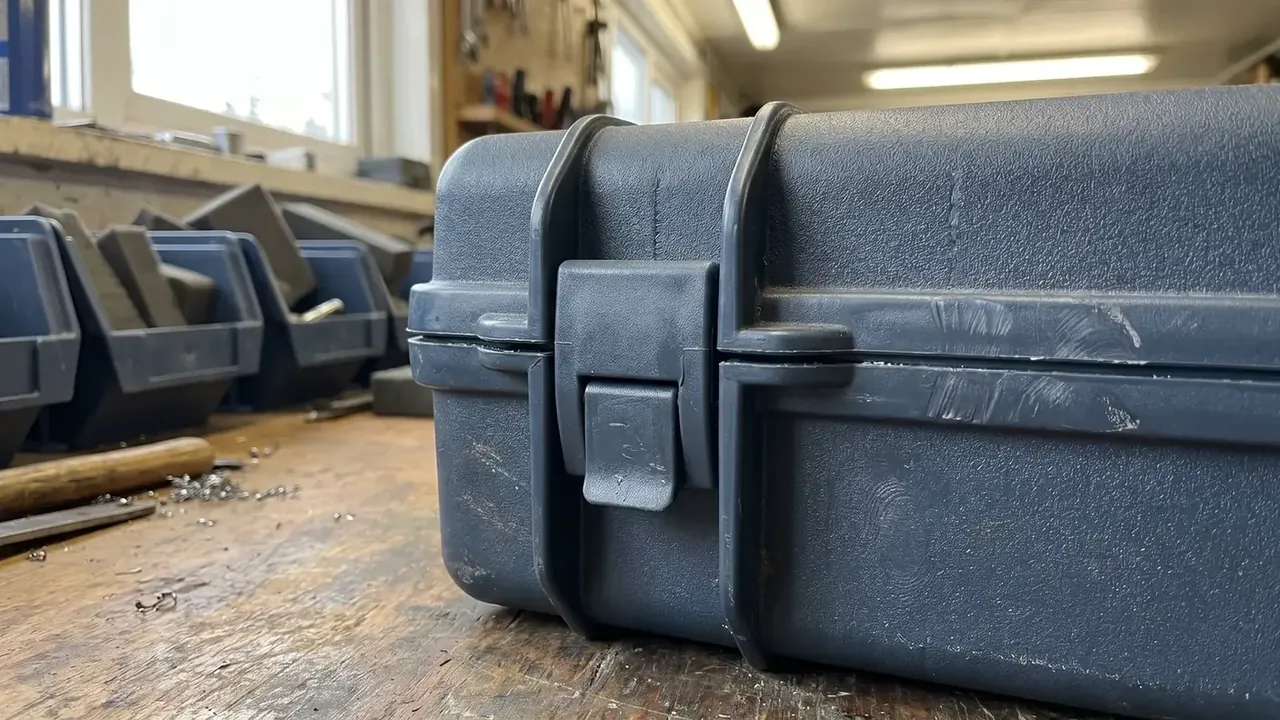
The 90 day walk-round covers failures that arrive without warning: cracks, gasket indentation, latch rebound, whitening at the handle. The 180 day re-test adds instruments and records a figure for each.
| Level | Interval | Scope | Limit |
|---|---|---|---|
| Walk-round | 90 days | Cracks, dents, rebound | Crack under 20 mm |
| Re-test | 180 days | Retention, compression | Above 1.0 kN |
| Full check | 360 days | Adds wall thickness | Wall above 3.2 mm |
Past 200 cycles the walk-round tightens to 45 days, since latch pins reach 0.2 mm clearance and wear speeds up. Humidity climbs from 60% to 90% RH in a wet week, and a gasket loses its spring in 30 days.
3. Gasket Compression and Rebound
Two numbers decide a gasket: how far it compresses, how much it returns. A new 8 mm strip closes to 5.2 to 6.0 mm, 25% to 35%; under 20% the seal never loads, over 40% the keepers crack.
Hold 50% compression for 24 hours, release for 30 minutes: above 85% recovery passes, below 80% the strip is aged. Scarf a 50 mm offcut, press the joint 2 hours, then run a 0.05 mm feeler at eight points; where it enters, set the latch first.
Cold distorts readings: four hours at minus 30 degrees slows silicone rebound, so re-test at 20 degrees after 24 hours.
4. Measuring Latch Retention Loss
A latch that closes is not a latch that holds. Pull along the opening direction at 50 mm/min: a new Cartridge Transport Box reads at least 1.2 kN; at 0.8 kN, or 30% below its own first figure, it leaves service.
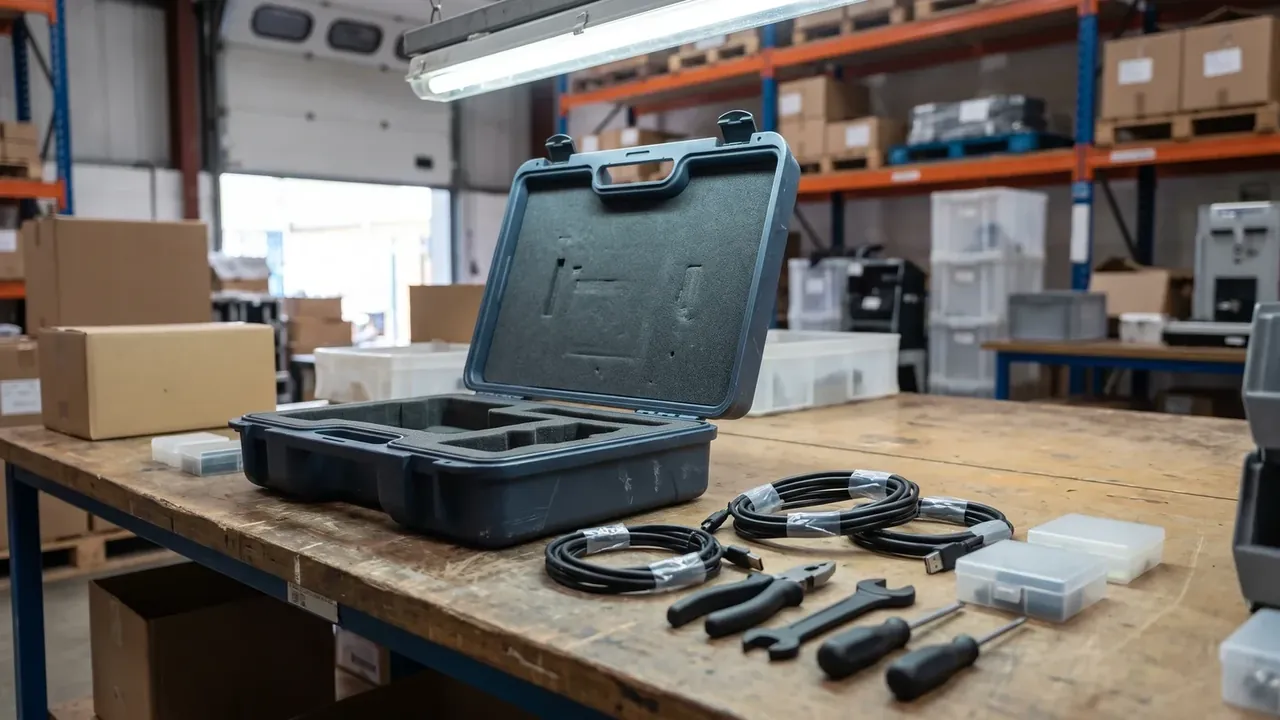
Loss comes from claw wear past 0.8 mm, pin clearance past 0.5 mm, and stress relaxation. The pin hides inside the catch and gets missed.
Test at rated load, since an empty case reads high. After 5,000 cycles hinge clearance reaches 0.3 mm and the curve grows a second peak, so the lid sits off square; set the hinge first. M6 bolts take 4 N·m, past which the insert seat cracks.
5. Replacement Limits: Repair or Retire
Limits go on paper. A latch sits under 8% of case cost and takes 15 minutes to swap; a gasket run takes 40 minutes and buys three months.
Wall thickness is the hard line: outdoor exposure drops 4.0 mm to 3.2 mm in five years, and below 3.0 mm corner cracking climbs. Cracks past 80 mm are not patched, since a patch tears the parent material; foam with 8 mm of sag is replaced whole.
Retired Cartridge Transport Box units get a red tag and a register line; a repaired one returns only after retention clears 1.0 kN and sealing passes.
Conclusion
Maintenance becomes a system when the list names a component, the schedule an exposure level, and the card the limit. A feeler gauge, a tensile gauge and the habit of writing numbers down are enough. Then a fleet is judged by readings, not looks, which is how a Cartridge Transport Box programme survives a change of staff.
This article discusses only the container (case body) side of specifications and design intent, and does not cover any handling, loading or use of the contents.
Related Reading
- Capacity and loading efficiency
- Transport packaging requirements
- How it compares with other options
- Cartridge Box Structure and Craft: Five Key Points
Related Products
- 8 Series — Gun Cases; Military Equipment Cases; Camera Equipment Cases; Drone Cases; Watch Cases; Knife Cases; First Aid Cases; Electronics Equipment Cases
- WL8-2812 PP Gun Case — model WL8-2812
- All protective cases and toolboxes: 7 series, 158 models