

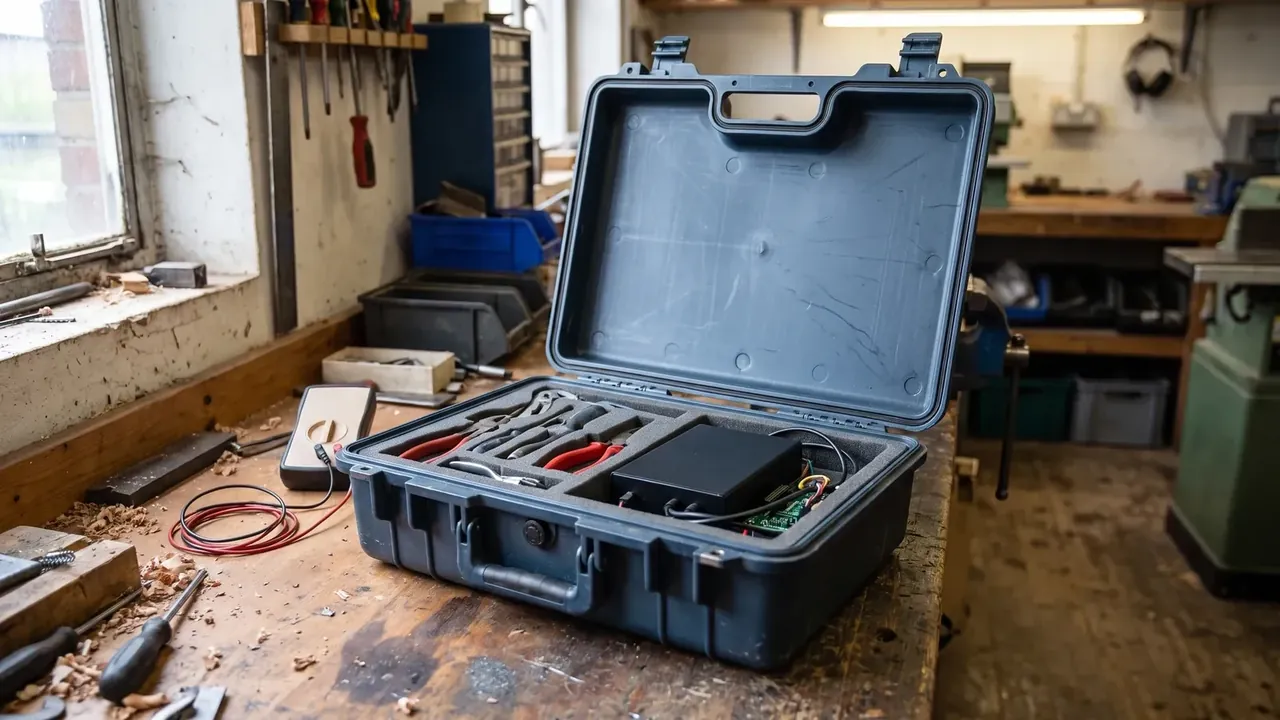
Quick answer: A Cartridge Transport Box order is settled before the deposit: a quote split into its parts, tooling amortised over a stated quantity, and lead time written as dated milestones rather than one number.
Table of contents
- How to Break Down a Cartridge Transport Box Quote
- MOQ and Tooling Amortisation
- Lead Time in Six Dates
- Incoming Inspection and the Handover Sheet
- Repeat Orders, Revisions and Annual Agreements
- FAQ
1. How to Break Down a Cartridge Transport Box Quote
A single total cannot be compared: two suppliers both quote 180, one includes the insert and test report, and the gap reaches 30. Split the Cartridge Transport Box quote into eight lines and the comparison becomes arithmetic.
| Line | Unit | Covers |
|---|---|---|
| Moulding | Per case | Resin, cycle, deflashing |
| Tooling | Per set | One-off charge |
| Foam insert | Per set | Grade, cavity cutting |
| Latches | Per set | Hardware, assembly |
| Assembly, inspection | Per case | Seal test |
| Packaging | Per carton | Carton, corners, pallet |
| Test report | Per report | Third-party, itemised |
Ask how each line is counted: moulding by case or by shot, insert by set or by square metre, freight to the gate or to the door. Then fix validity, because resin swings 5% inside a month; 30 days, reconfirmed after, beats a price subject to market.
2. MOQ and Tooling Amortisation
A case mould at 38,000 adds 127 per unit over 300, 38 over 1,000 and 13 over 3,000. Draw that curve before talking price.
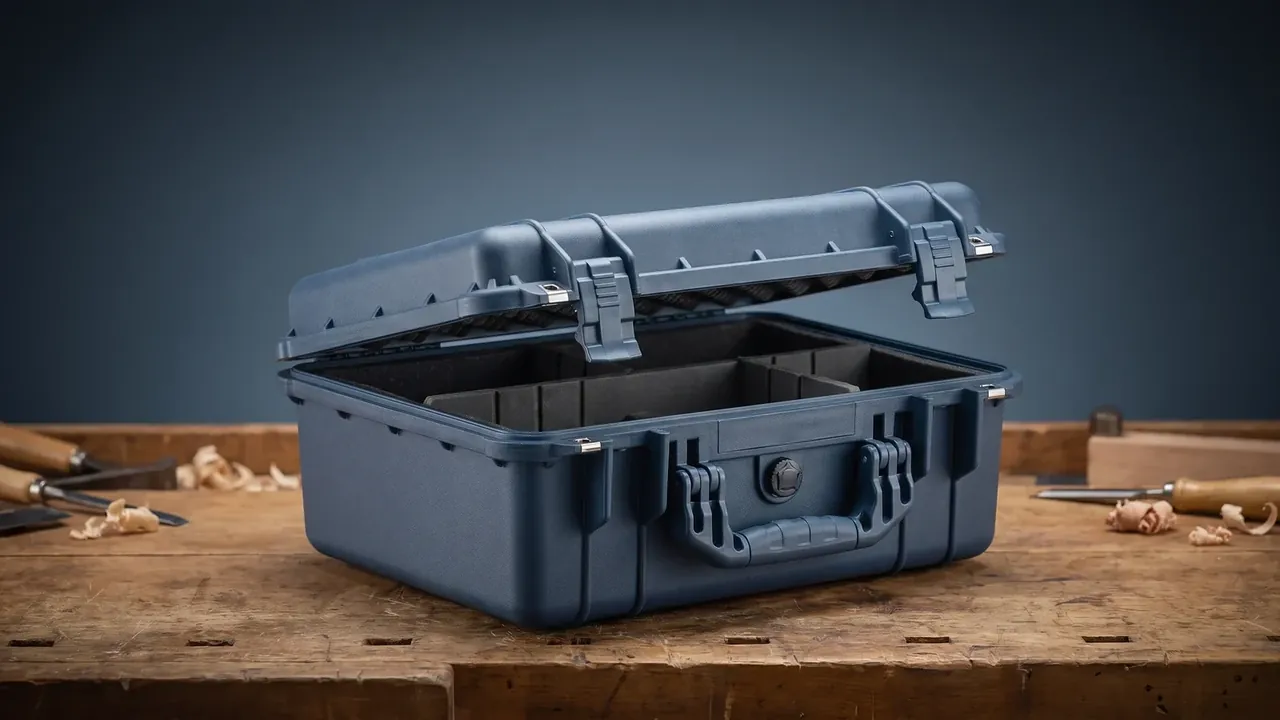
A lower minimum is not automatically better. At 300 the multiplier is typically 1.25, since changeover and setup hours do not shrink; without a trial run or a brand deadline, 500 is the steadier entry.
| Quantity | Multiplier | Tooling per unit | Lead time |
|---|---|---|---|
| 300 | 1.25 | 127 | 30 days |
| 500 | 1.10 | 76 | 25 days |
| 1,000 | 1.00 | 38 | 25 days |
| 3,000 | 0.92 | 13 | 35 days |
Tooling is either paid outright with title passing to the buyer, or carried by the supplier and recovered per unit. Either way the contract names where recovery stops, or a repeat order pays for the mould twice, and lets the buyer inspect the tool once a year.
3. Lead Time in Six Dates
Lead time is six dates, not one: order confirmed at T+0 with a stamped drawing, samples at T+7 with a colour chip, first article at T+12 with its report, production complete at T+25, pre-shipment check at T+28, receipt at T+32 on the handover sheet.
Write the disruption rules too. A rush order may push the original by 5 days at most; lateness beyond 3 days costs 0.5% of contract value a day, capped at 5%. September to November is the tightest moulding window, so the same Cartridge Transport Box order needs 7 more days there.
4. Incoming Inspection and the Handover Sheet
Below 500 units pull 10; above that, take 5% with a floor of 10, checking appearance, dimensions, latches and sealing. Two appearance defects return the batch, one bad dimension means 20 more units, and a latch or seal failure rejects it outright.
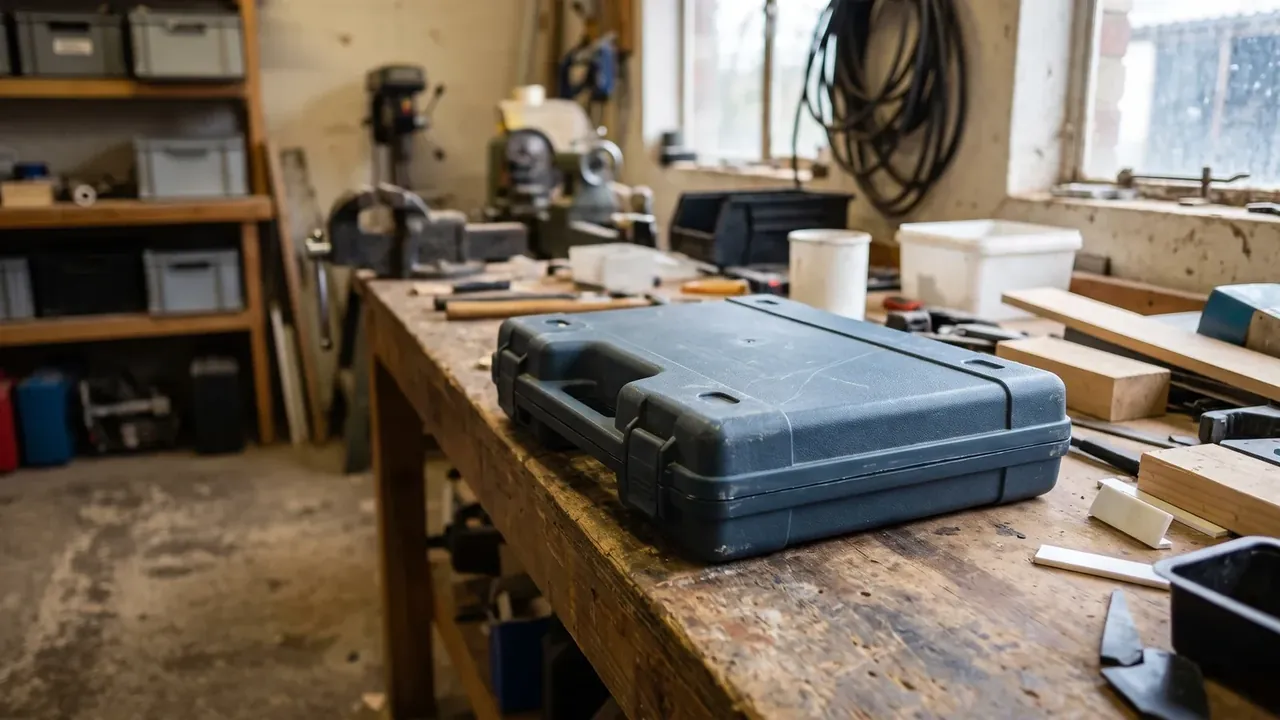
The handover sheet carries nine fields: contract, batch, quantity, colour, insert specification, sampling result, damaged count, signatory and date, exception. Photograph damage on the spot; past 2% transit damage, add corner protectors on four sides, or drop the pallet from 12 cases a layer to 10.
5. Repeat Orders, Revisions and Annual Agreements
A repeat order should cost less: the first run carried tooling and debugging, so 92% to 95% of the original is fair, and the minimum can fall to 200 units at a 10% multiplier.
Revisions are quoted apart: a colour change is 3% to 5%, a new insert cavity means a new die priced by hours, and a body change is a mould modification with the clock restarted. An annual commitment of 5,000 units drawn quarterly can buy 5% off and 15 days of priority scheduling, with a clawback for short quarters.
Every Cartridge Transport Box negotiation lands on three numbers: price, minimum, lead time. Concede one and recover the other two, or it is only a discount.
Conclusion
Procurement is won before the signature. Eight quote lines, a tooling curve on paper, six dated milestones and a handover sheet filled field by field leave little room for dispute. Fix that structure into the annex and a Cartridge Transport Box programme becomes predictable.
This article discusses only the container (case body) side of specifications and design intent, and does not cover any handling, loading or use of the contents.
Related Reading
- Cartridge Box Structure and Craft: Five Key Points
- How to Choose a Cartridge Box: Five Criteria
- Where the case is used
- Transport packaging requirements
Related Products
- 8 Series — Gun Cases; Military Equipment Cases; Camera Equipment Cases; Drone Cases; Watch Cases; Knife Cases; First Aid Cases; Electronics Equipment Cases
- WL8-2812 PP Gun Case — model WL8-2812
- All protective cases and toolboxes: 7 series, 158 models