

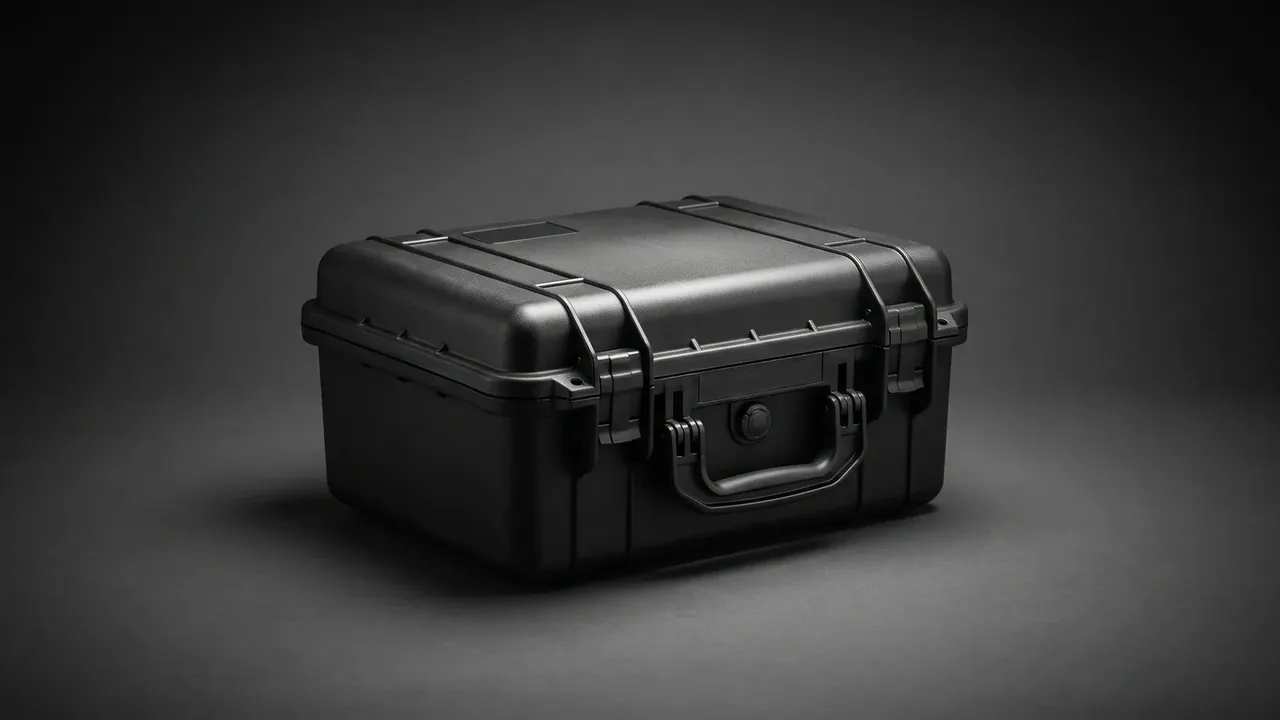
Quick answer: Air Freight Cases carrying lithium cells or gas cylinders are cleared on documents first, and all three files must agree before terminal inspection.
Table of contents
- Three Documents for Lithium Batteries
- Watt-hours and 30% State of Charge
- PI 965, 966 and 967
- Cylinders and the Declaration
- FAQ
1. Three Documents for Lithium Batteries
Air Freight Cases carrying lithium cells are cleared on paper before anyone opens the lid. Three documents travel with the shipment: the UN38.3 test summary, the MSDS, and an air transport conditions report. The first two qualify the cell; the third qualifies the packaging and routing of this shipment.
UN38.3 covers eight tests: altitude at 11.6 kPa for 6 h, thermal cycling from -40 °C to 75 °C ten times, vibration from 7 Hz to 200 Hz for 3 h, 150 g shock, external short at 57 °C, impact at 13 kN, overcharge and forced discharge. A summary is not a certificate, but the counter reads the cell model on it, and a wrong model voids the file.
The MSDS runs to 16 GHS sections, with section 14 carrying transport data. The UN number and packing group there must match the report line for line; two wordings are a standard rejection.
The report comes from a civil aviation approved body and expires after 1 year, with no carry-over into January. Routine turnaround is 5 to 7 working days, 48 h expedited, at CNY 1,200 to 2,500 per model. Where cell maker and pack builder differ, the report covers the cell only, and the pack needs a second.
Send case drawings too, material spec and liner. The body checks that the shell sheds no sharp edge in a 1.2 m drop, and without it the report stops at cell level for Air Freight Cases.
2. Watt-hours and 30% State of Charge
| Band | Watt-hours | Allowed | Quantity | Charge state |
|---|---|---|---|---|
| One | 100 Wh or less | Cabin or hold | 20 spares | 30% or less |
| Two | 100 to 160 Wh | Carrier approval | 2 packs | 30% or less |
| Three | Above 160 Wh | Forbidden | — | — |
Watt-hours are nominal voltage times amp-hours: 21.6 V × 4 Ah is 86.4 Wh, 25.2 V × 5 Ah is 126 Wh, 50.4 V × 4 Ah is 201.6 Wh. Mixed loads are banded on the highest pack, never on the average.
Under 100 Wh travels in the cabin or the hold with 20 spares. Between 100 and 160 Wh needs written carrier approval, two packs at most, and the letter rides with the airway bill. Above 160 Wh is forbidden with no waiver. The usual Air Freight Cases error is declaring a 126 Wh pack as sub-100 Wh, which one meter at the counter settles.
Charge stays at or under 30%, reached by a 0.1 C discharge and verified against voltage: a 6S pack at 21.6 V nominal reads about 22.3 V at 30%. Shipping at full charge is the second most common rejection.
Net weight per package is fixed by the instruction: 10 kg under PI 965 Section II, 5 kg under 966 and 967. For Air Freight Cases, four 86.4 Wh packs weigh 3.2 kg net inside one case; eight break the limit.
3. PI 965, 966 and 967
| Instruction | Battery state | Net per package | Outer packaging | Mark |
|---|---|---|---|---|
| PI 965 | Packs alone | 10 kg | UN packaging | Lithium mark |
| PI 966 | With equipment, loose | 5 kg | UN packaging | Lithium mark |
| PI 967 | Inside equipment | 5 kg | Equivalent protection | Lithium mark |
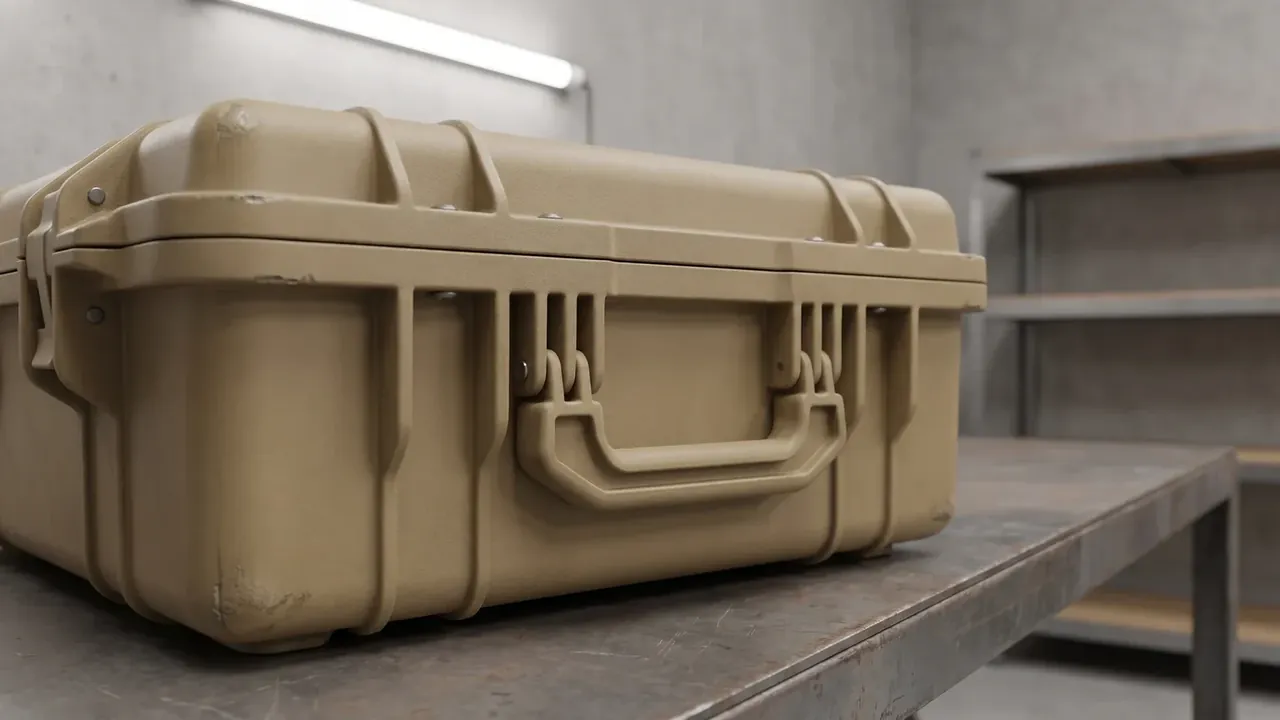
The difference is how pack and equipment relate. PI 965 ships bare packs and is the strictest; PI 966 puts packs and equipment in one box without assembly; PI 967 hides the pack inside the equipment and is the loosest. Most Air Freight Cases orders take 967 because equipment and shell form one unit, while pure pack replenishment takes 965.
PI 965 leaves no room: UN packaging, and a UN mark on the shell itself, since a sticker applied at the warehouse does not count. PI 967 accepts a rigid outer box where equivalent protection is proven, but the file then needs a 1.2 m drop and a 3 m stack for 24 h on record. Without the record the job reverts to UN packaging at 30% more cost.
Liner drawings carry three numbers: pack displacement under 10 mm, no shell crack after the 1.2 m drop, latches engaged, no liner springing back. Miss one and the correct packing instruction still fails the drop.
4. Cylinders and the Declaration
Cylinders move as Class 2.2 non-flammable non-toxic gas: UN 1002 compressed air, UN 1066 nitrogen, UN 1956 compressed gas. The cylinder is a pressure vessel and needs a UN mark, a 2.2 label and a valve cap rated to 1.5 times working pressure.
On Air Freight Cases the hydrostatic test interval is 5 years. Read the shoulder stamp before packing; under 6 months remaining and the cylinder is swapped, because a transit point may refuse it.
Carrier limits decide the schedule. Several airlines carry 2.2 cylinders on freighter aircraft only, code CAO, and refuse them on passenger frames, so ask the forwarder before booking; the two differ by 1 to 2 days.
For Air Freight Cases the declaration carries five elements: proper shipping name, UN number, packing group, gross weight and net weight. Class 2.2 has no packing group, so the field takes a dash; left blank, the entry comes back. Weights must sit within 0.5 kg of the report or it is reissued.
Name, customs entry and airway bill must read identically. About 1 in 10 Air Freight Cases shipments bounces on a name mismatch, costing 3 to 5 days and CNY 200 to amend. X-ray opens 30% to 60% of packages, the upper end for cells and cylinders, so the one-time seal number goes on the airway bill, with a photo after resealing; a new seal without a photo invites refusal at destination. Allow 20 to 40 min for a reseal when booking.
Conclusion
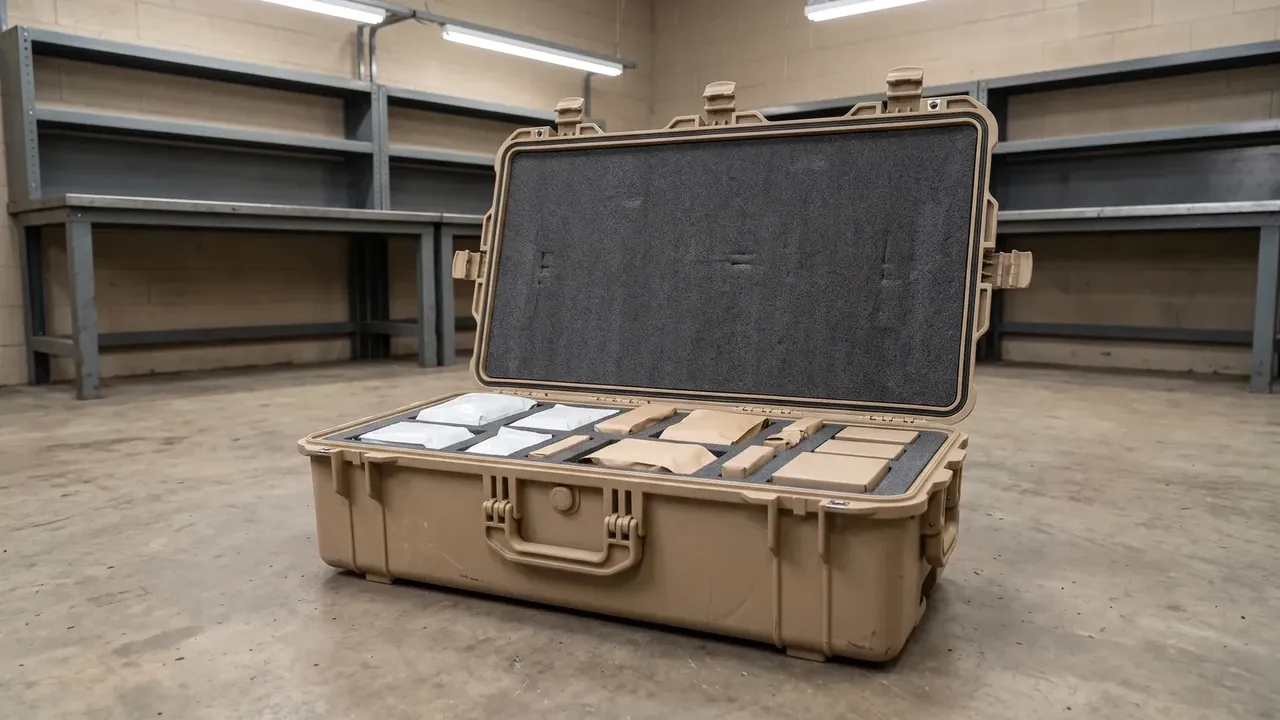
Air Freight Cases are gated by documents and banding, not by shell strength. Get the UN38.3 summary, MSDS and test report aligned on model, band the load on the highest pack, hold charge at 30%, choose 965, 966 or 967 by how pack and equipment relate, verify the 5-year cylinder stamp and the freighter approval, and make the five declaration fields match word for word. Done properly a shipment runs 7 to 10 days from test to wheels-up; miss one item and the rework outlasts the preparation.
Related Reading
- ADR and IMDG frameworks for hazmat cases
- Case requirements for dangerous goods packaging
- Choosing a case for air transport
Related Products
- 8 Series — Gun Cases; Military Equipment Cases; Camera Equipment Cases; Drone Cases; Watch Cases; Knife Cases; First Aid Cases; Electronics Equipment Cases
- WL8-2812 PP Gun Case — model WL8-2812
- All protective cases and toolboxes: 7 series, 158 models