

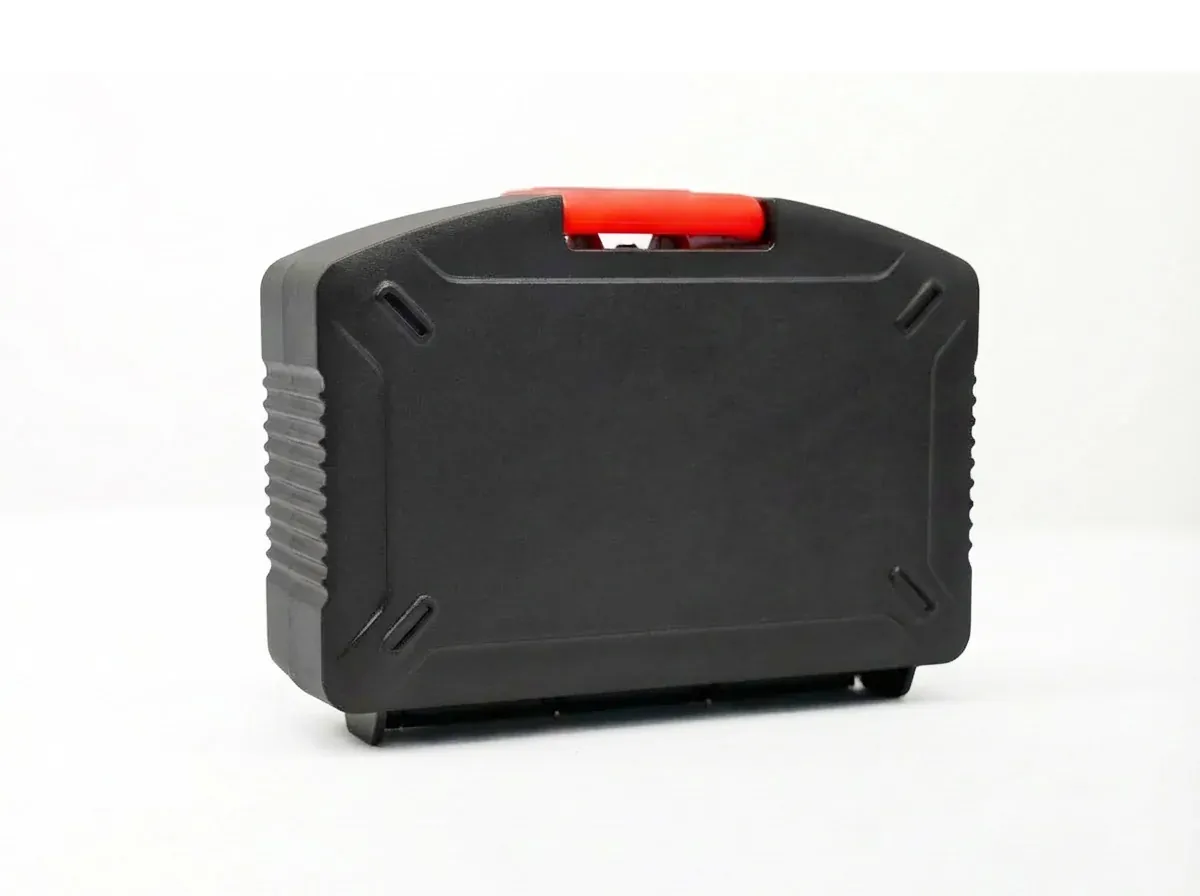
Quick answer: Compare case assembly on tool amortisation and rework hours, not unit price. At 300 units the four common routes differ by roughly 2x in landed cost, and one wrong choice takes three rework rounds to recover.
Table of contents
- What the six lines on a case assembly quote mean
- Why small batches keep the unit price high
- Rework cost: what one misaligned rim costs
- When case assembly is the wrong choice
- Putting purchase price and rework price in one ledger
- FAQ
1. What the six lines on a case assembly quote mean
Four suppliers quoted the same 600 x 400 x 230 mm box at 62, 89, 140 and 210 yuan. The gap is not margin; it is the forming route.
Once stripped, six lines remain: resin, moulding time, hardware, assembly time, packing, tool amortisation. The first five fall with volume; the sixth climbs.
| Route | Tooling | Unit forming | Economic batch | Wall |
|---|---|---|---|---|
| Injection | 80,000 yuan | 62 yuan | 3,000+ | 2.8 mm |
| Blow moulding | 18,000 yuan | 89 yuan | 500+ | 4 mm |
| Rotomoulding | 12,000 yuan | 140 yuan | 200+ | 8 mm |
| Sheet metal | 3,000 yuan | 210 yuan | 50+ | 1.5 mm |
Tooling is the line most often misread. Eighty thousand yuan over 3,000 units is 27 yuan each; over 300 it becomes 267, and the unit price jumps from 62 to 329.
That 27 yuan is the difference in the title. It buys tighter tolerance and a faster takt, not a thicker wall.
2. Why small batches keep the unit price high
Injection cost is pinned by three things: tool, press, changeover. All three move inversely with batch size.
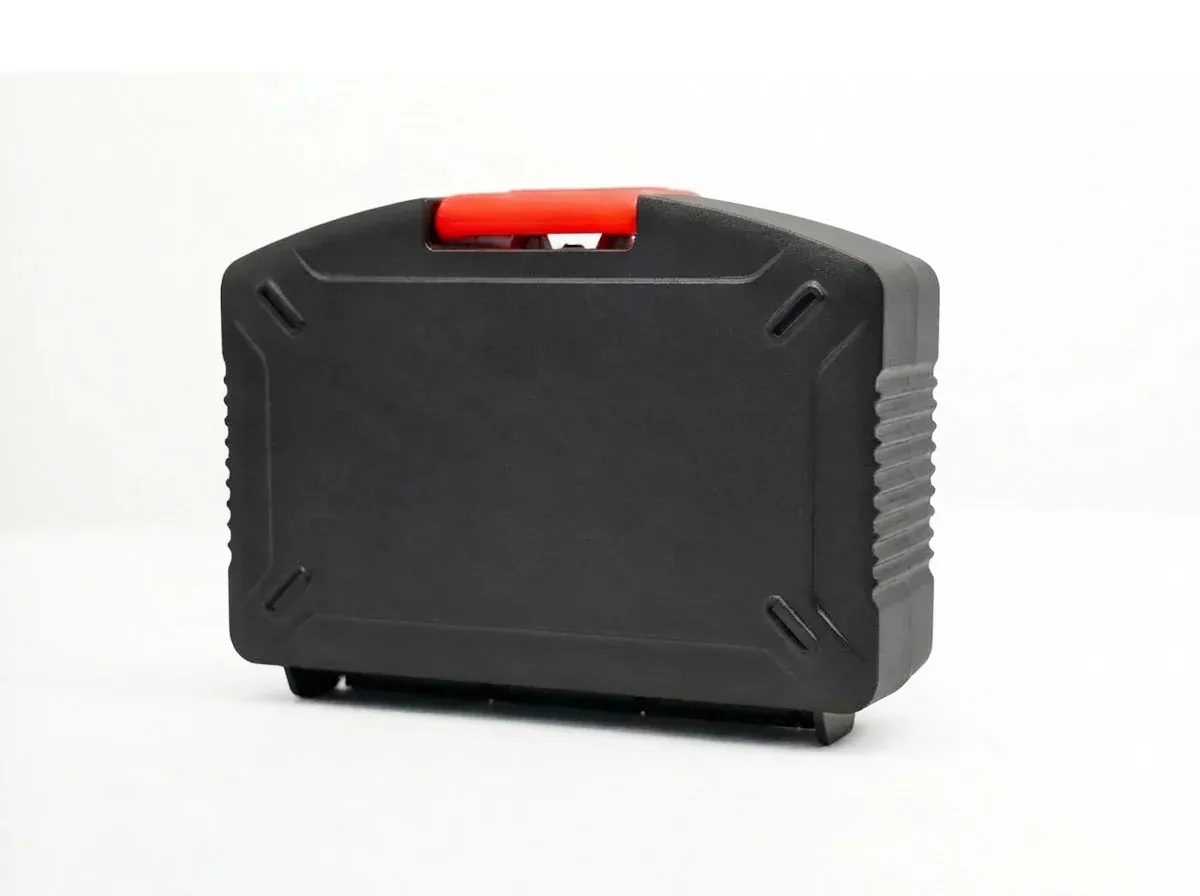
A 250-tonne press turns out 40 boxes an hour; a tool change costs 4 hours of downtime. A 300-unit order does not fill half a shift, so changeover eats nearly half the available time.
Blow moulding brings cheaper tooling and worse wall control: one mould runs 3.2 mm at the thinnest point and 5.1 mm at the thickest, so hardware is sized against the thin wall and 5 mm of material does the work of 3 mm.
Rotomoulding's 8 mm wall wins under heavy load, at 140 yuan a unit and a 40-minute cycle.
The small-batch penalty is not a few percent; it is a route mismatch. Insist on injection below 300 units and you pay for a tool, not a box.
3. Rework cost: what one misaligned rim costs
Rework is the line least often priced in. Rim misalignment is the commonest item in case assembly: after closing, the halves sit 0.6 mm off, the gasket cannot seal, and the leak test fails. Repair takes 6.5 minutes against a 90-second takt, so one rework blocks four stations.
| Rework item | Time | Cost | Trigger |
|---|---|---|---|
| Rim dressing | 6.5 min | 11 yuan | Poor venting, mould shift |
| Hinge bore ream | 9 min | 16 yuan | Coaxiality out of tolerance |
| Gasket replacement | 4 min | 7 yuan | Over-compressed, split profile |
| Rivet re-set | 3 min | 5 yuan | Mandrel pull-through |
| Scrap whole box | — | 62 yuan | Distortion beyond 0.8 mm |
At 1.8%, a 3,000-unit order puts about 54 boxes through the bench, some 600 yuan before line stoppage. None of it shows on the quote; it shows in the third shipment the customer returns.
4. When case assembly is the wrong choice
Case assembly is not the default answer. Four situations favour another route:
- Under 20 units: buy an off-the-shelf rotomoulded case and re-line it, at a tenth the tooling cost.
- Internal length over 1,200 mm: the injection tool gets too heavy; folded sheet metal holds shape.
- Walls over 8 mm with impact resistance: rotomoulding, optionally over a steel frame.
- Field repairability: sheet metal straightens and welds; a cracked injection box is scrap.
Reverse those conditions and injection wins clearly: over 3,000 units a year, external size under 800 mm, light and fast.
The test is one line of arithmetic. Put the batch into the amortisation, read the rework rate, multiply.
5. Putting purchase price and rework price in one ledger
Unit price is the numerator. Service life is the denominator.
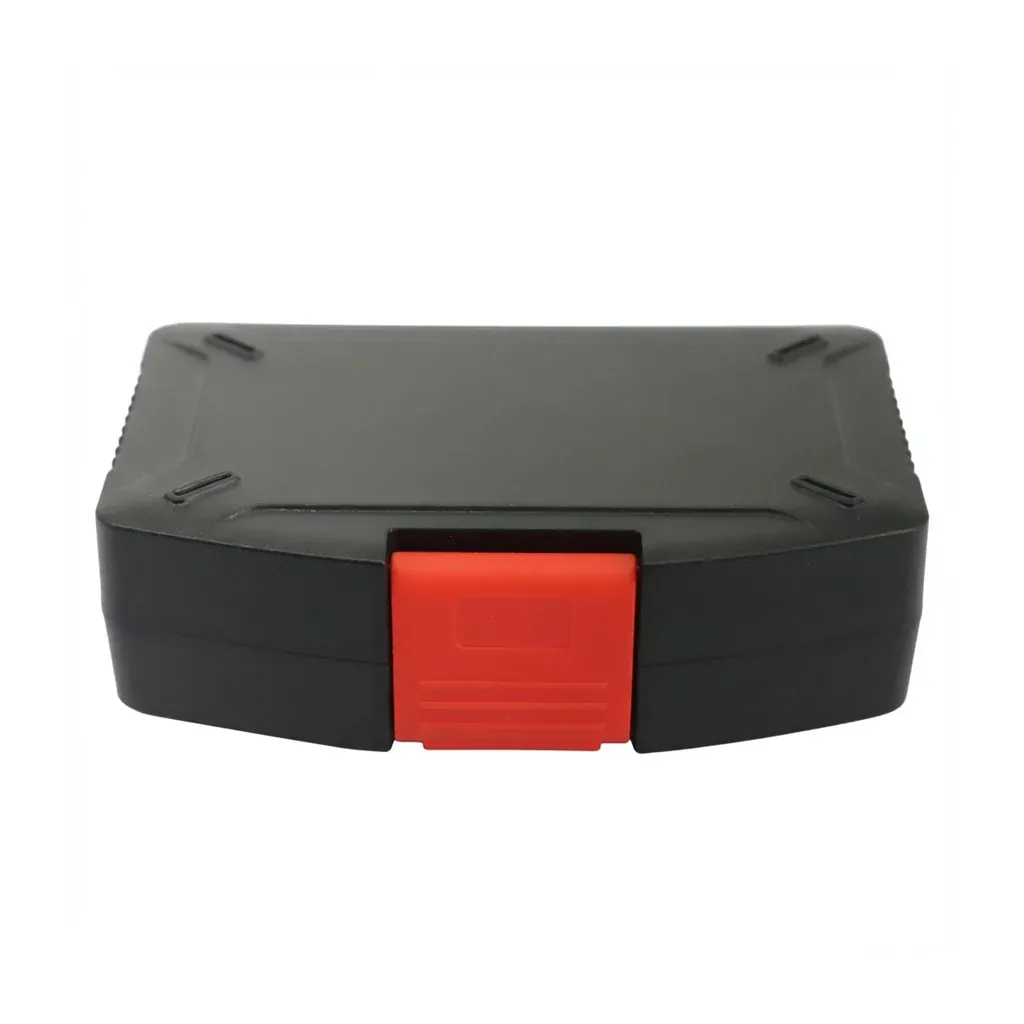
Over five years a 62 yuan injection box at 1.8% rework lands near 68 yuan all in. The 89 yuan blow-moulded option at 0.9% lands at 93. The 140 yuan rotomoulded option barely reworks, but carries 2.3 kg more, and at 0.6 yuan per kilogram over 12 shipments a year that adds 165 yuan.
Read together, the three routes sit closer than the quote sheet suggests. Blow moulding is often the most expensive of them. Rotomoulding puts its cost where you can see it, in weight. Injection's advantage is real but conditional on volume. Write the batch into the contract. Then the ledger becomes trustworthy.
What decides total cost is rework rate and service life, not unit price. Ask for those two numbers before you ask for a discount.
Conclusion
Comparing case assembly means walking from unit price to whole-life cost. Amortisation sets the start for small batches; rework rate sets the five-year total. The 27 yuan gap looks sharp, but the real divide is 1.8% against 0.9%. Feed both in, and the choice in case assembly stops being instinct.
This article discusses only the container (case body) side of specifications and design intent, and does not cover any handling, loading or use of the contents.
Related Reading
- Material routes for cartridge boxes compared
- How industry requirements differ for cases
- Material trade-offs in military packing boxes
- Metal ammunition boxes against plastic, on cost
Related Products
- 8 Series — Gun Cases; Military Equipment Cases; Camera Equipment Cases; Drone Cases; Watch Cases; Knife Cases; First Aid Cases; Electronics Equipment Cases
- WL8-2812 PP Gun Case — model WL8-2812
- All protective cases and toolboxes: 7 series, 158 models