

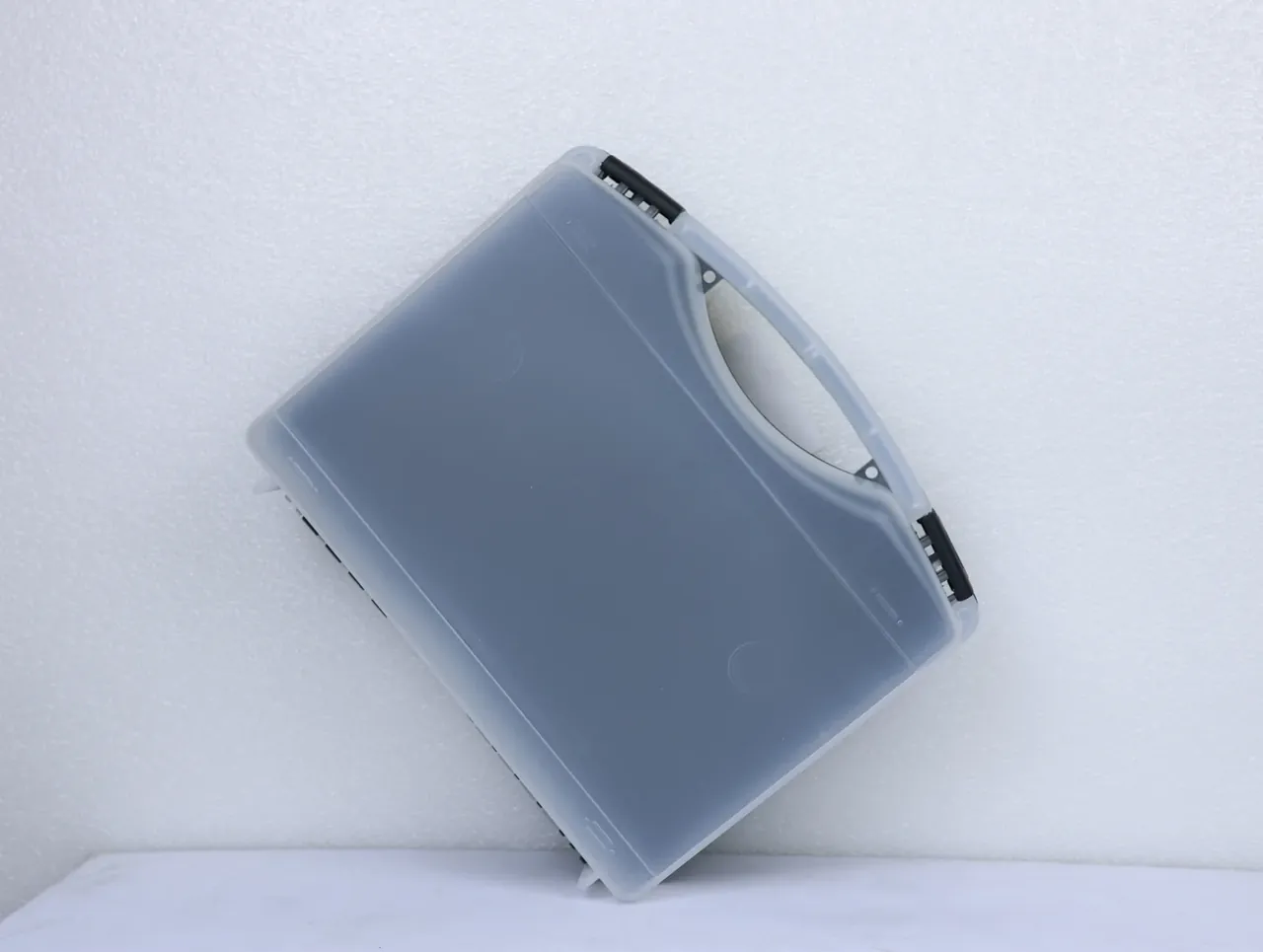
Quick answer: Small custom batches and high-volume lines need different actions. Eighteen units a shift turn on changeover and first-off checks; 260 a day turn on poka-yoke.
Table of contents
- Three industries, three sets of actions
- Small batches: changeover and first-off
- High-volume line: cycle and poka-yoke
- ESD and cleanroom hand movements
- Mobile bay at a field repair point
- Four rework locations and their limits
- FAQ
1. Three industries, three sets of actions
The same bench assembles an ammunition case and an electronics case with different hands. One presses a gasket and threads a seal wire dozens of times a shift; the other aligns a panel through a 3 mm gap.
| Duty | Size and main actions | Common mistake |
|---|---|---|
| Ammunition | 640 × 420 × 260 mm, 3 mm wall; liner, gasket, seal wire | Gasket out of groove |
| Electronics | 480 × 360 × 180 mm; conductive gasket, panel, inserts | Strap ungrounded, ESD |
| Instruments | 520 × 380 × 240 mm cavity; damping pads, levelling | Pad pinched, lid binds |
| Field repair | 800 × 500 × 340 mm, 21 kg; module swap, latch reset | Latch opens on the lift |
Handling splits three ways: carry, lift, hand over. A 21 kg case exceeds a comfortable one-person hold, so anything heavier goes to two people. Set the bench for the heaviest case and raise light ones on a platform.
Tooling changes too: a roller presses the gasket, an air driver closes latches at 2.8 N·m, electronics inserts accept 0.8 N·m. Lowering air pressure does not convert one driver into the other; the head changes.
2. Small batches: changeover and first-off
At 18 units a batch, changeovers outnumber assemblies. Twelve changeovers a shift at 28 minutes each consume 5.6 hours.
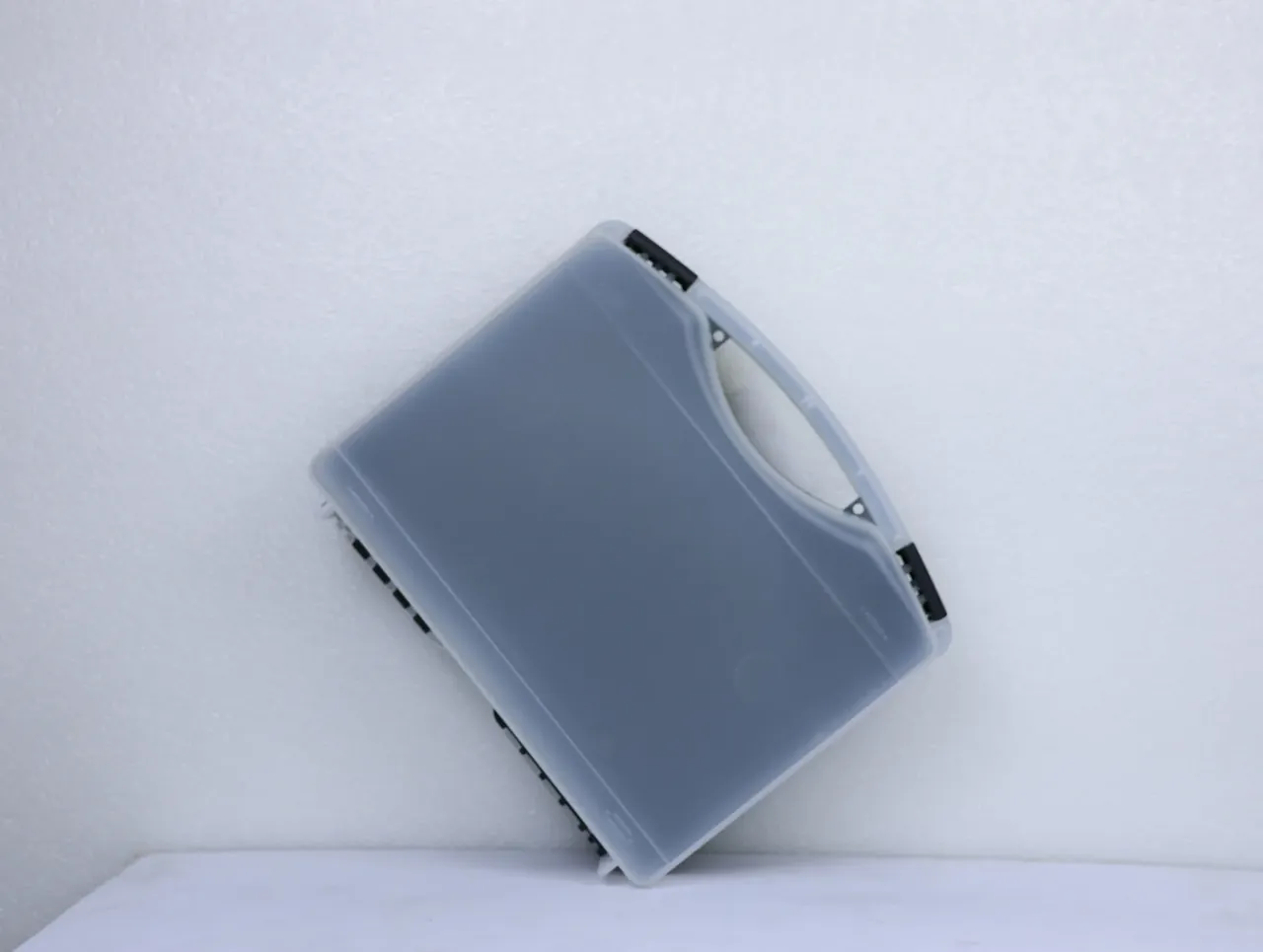
A 420-second unit is normal at that volume. Slow cycles are tolerable; a skipped first-off is not. Build 3 first-off units: one to keep, one torn down for latch witness marks, one for a leak test.
| Item | 18 units | 260 units |
|---|---|---|
| Changeovers | 12 per shift | 1 per shift |
| Unit time | 420 seconds | 95 seconds |
| Gate | 3 first-off units | Latch-present sensor |
Mistakes cluster right after the first-off. The operator sees a good unit, speeds up, misses gasket compression on unit four, and trims a liner 5 mm short by unit six. Training does not fix that; a switch that lights only when the clamp is fully down does.
Changeover has removable steps. Order the trolley by job sequence, hold the fixture with two eccentric clamps, use quick-disconnect fittings. Those three take 28 minutes to 12.
3. High-volume line: cycle and poka-yoke
At 260 units a day the cycle falls to 95 seconds. The bay stops assembling and starts preventing: a missed part becomes impossible rather than memorable.
Latches are the usual omission. A proximity switch that confirms the latch is seated keeps the conveyor from releasing an open case; visual inspection leaves roughly 1.8 per thousand, the sensor brings it under 0.1.
Torque needs a record. Fit the driver with a transducer, four screws per case, and stop the line on an out-of-range reading. At 260 cases and 1040 screws a day, sampling covers 3% at best.
Fast lines hide one more defect: a liner fitted upside down. EVA liners differ by 2 mm between faces, and a reversed liner still closes. A red pull tab on the back face makes it visible at a glance.
4. ESD and cleanroom hand movements
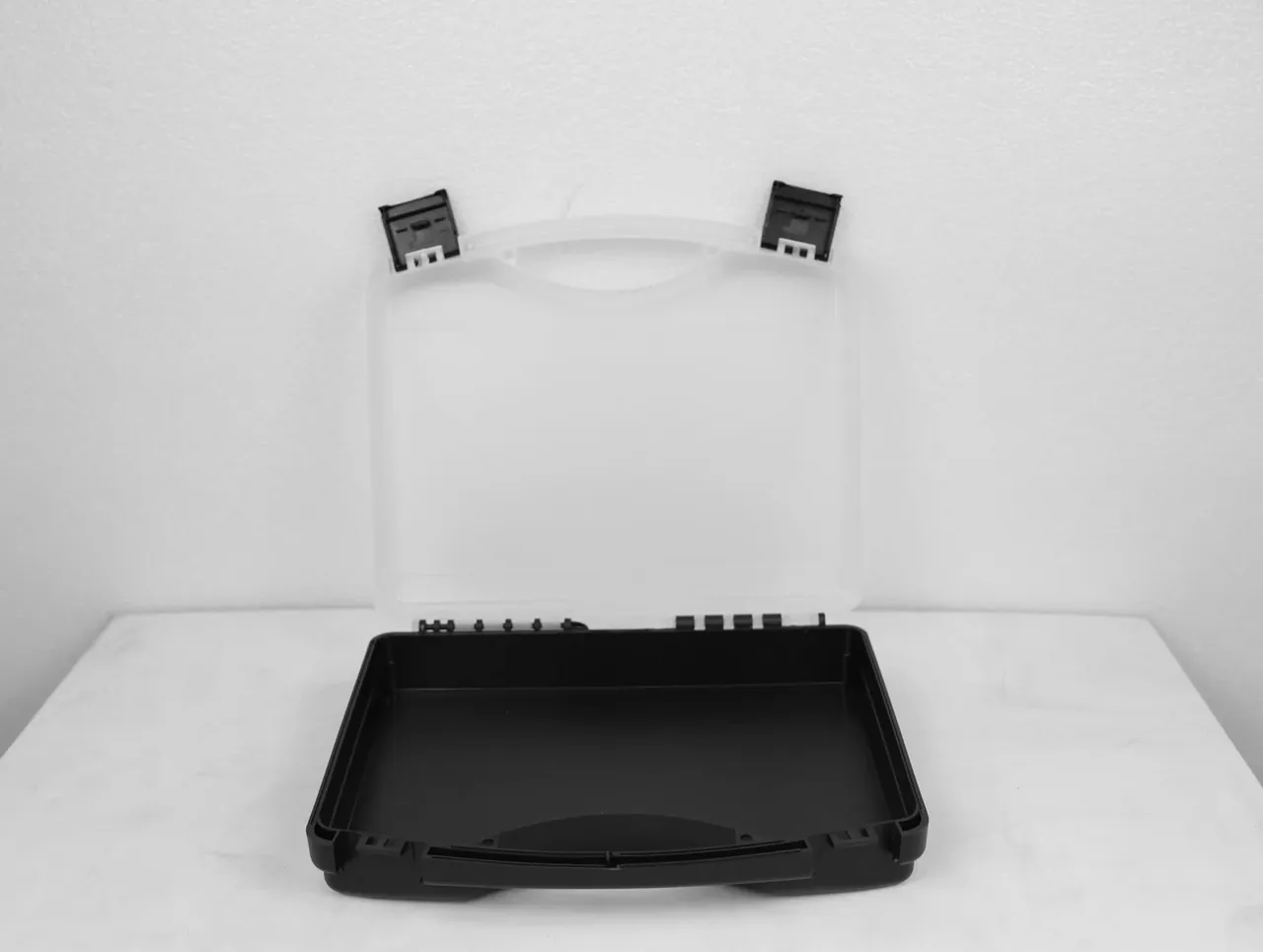
In an electronics bay the movements follow static rules. Bench resistance sits between 10⁶ and 10⁹ ohms, humidity between 45% and 60%, temperature at 22℃ plus or minus 3℃, illumination at 600 lux.
| Parameter | Range | Consequence of drift |
|---|---|---|
| Surface resistance | 10⁶ to 10⁹ ohms | Charge drains slowly onto panels |
| Humidity | 45% to 60% | Below 40% charging worsens |
| Illumination | 600 lux | Below 500 lux a gasket fault hides |
Ground first, then touch the case. Keep the liner 100 mm off the bench rather than laying it down. Hold panels by the edges only.
Failures concentrate on the first habit. A wrist strap clipped to a sleeve instead of skin reads above 10⁹ ohms, which equals wearing nothing. Test against a 1 megohm reference each shift.
One movement gets skipped: peeling the film. Do it while grounded, because the peel can generate 2000 volts, enough to destroy a 3 mm MOS device.
5. Mobile bay at a field repair point
A field repair point has no workshop, so the bay folds into a van. Unfolded it takes 6 square metres; two people erect it in 12 minutes and pack it in 8.
Power comes from a 5 kW petrol generator, and air tools give way to manual wrenches. At -15℃ air lines ice up and battery capacity drops 40%.
The typical failure is an unlevelled bench. Field ground varies 20 mm, the case sits tilted, and the latch lands 2 mm off; forced closure breaks the tongue. Four adjustable feet cost 3 minutes.
Coastal sites at 240 hours of salt spray add one habit: wipe the bench dry and oil the hinges before packing up.
6. Four rework locations and their limits
Rework is sorted by location, not by process. The same latch fault can come from a tall liner, a distorted case, or a latch never pressed home.
| Location | Limit | Action |
|---|---|---|
| Latch | Gap above 0.5 mm | Check liner, then flatness |
| Gasket | Compression below 25% | Replace the strip |
| Liner | Edge over 3 mm from wall | Recut, never shim |
| Label | Position off by 1 mm | Peel, clean, reapply |
Together those four sit near 4.2% rework at 26 yuan a unit. Getting under 1% does not need more inspectors; it needs the limits at the bench and a 25% sample block.
Log the location too. Five reworks in the same place over three days is a Case Assembly Workstation or material problem, and the line should stop.
Conclusion
Batch size sets the actions and duty sets the hands. Eighteen units need changeover discipline and a real first-off; 260 a day need poka-yoke and torque records; an ESD room needs grounding; a field point needs levelling. A Case Assembly Workstation earns its keep in those movements.
This article discusses only the container (case body) side of specifications and design intent, and does not cover any handling, loading or use of the contents.
Related Reading
- Saving motions in picking and flipping
- How material, tool and bench zones divide
- Ammunition case assembly in a field depot
Related Products
- 8 Series — Gun Cases; Military Equipment Cases; Camera Equipment Cases; Drone Cases; Watch Cases; Knife Cases; First Aid Cases; Electronics Equipment Cases
- WL8-2812 PP Gun Case — model WL8-2812
- All protective cases and toolboxes: 7 series, 158 models