

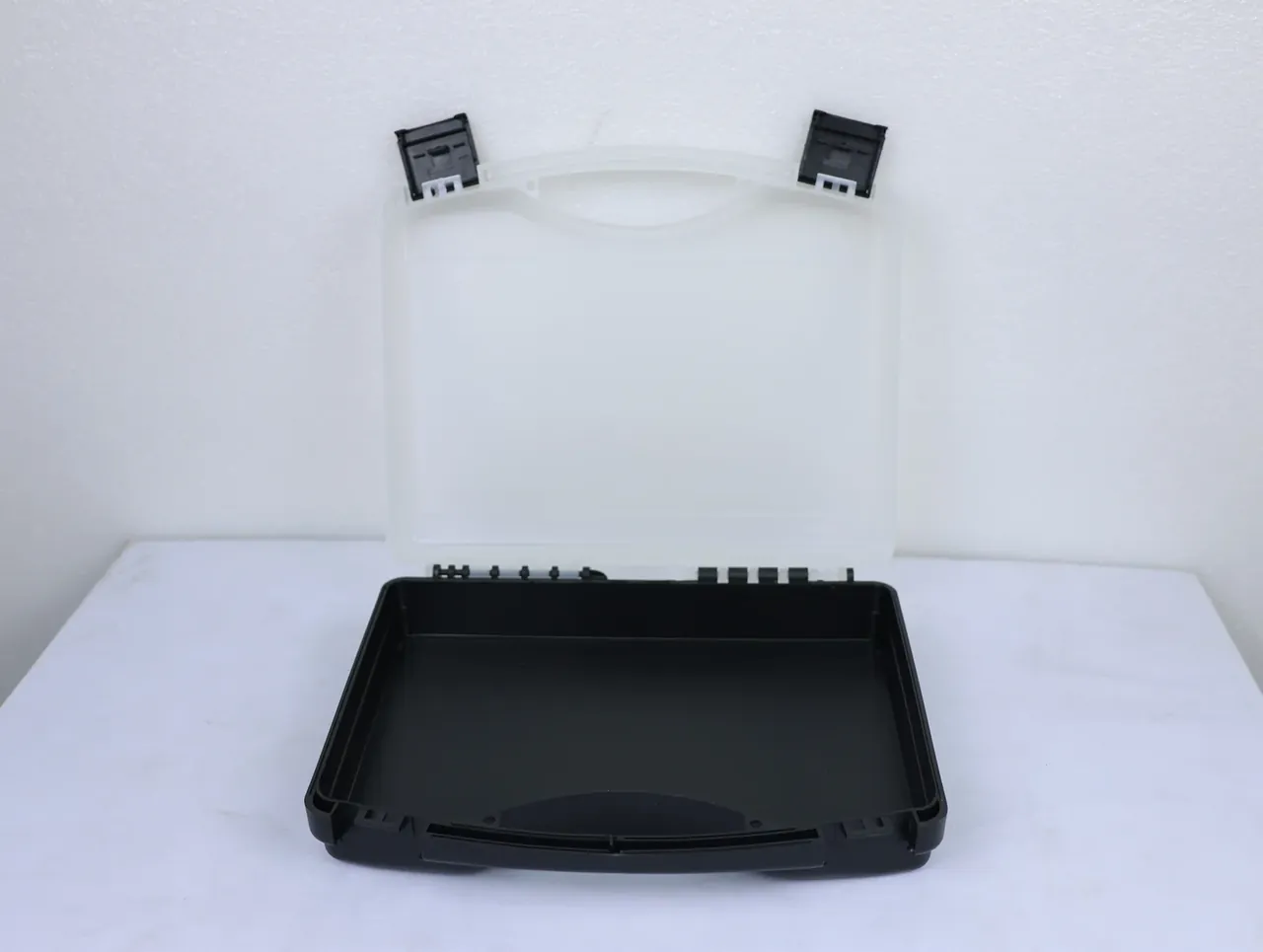
Quick answer: A Case Assembly Workstation pays back above roughly 30,000 units a year with under ten variants. Below 1,500 units, or above 40 variants, buying finished cases or running U-cells costs less.
Table of contents
- Three numbers to compare first
- High volume: the line wins on buffer
- High mix: cells win on changeover
- Heavy cases: benches and cranes
- Three cases where you should not build one
- FAQ
1. Three numbers to compare first
On a November night shift in Ningbo, a workshop swapped a straight line for a U-cell. Removing 18 metres of conveyor took six hours; the shift fell from seven operators to four, and output rose from 860 cases to 940. The hardware was fine, but the mix had gone from six variants to forty-two in two years.
Three numbers settle the comparison: seconds per case, minutes per changeover, full cost per unit. The first caps capacity, the second caps variant range, the third decides payback. Quotations tend to price labour and bench tops only.
| Layout | Cycle | Changeover | Footprint | Fits |
|---|---|---|---|---|
| Straight line | 45 s | 90 min | 18 m, 6 m² per station | Above 30,000 |
| U-cell | 78 s | 12 min | 32 m² per cell | 3,000 to 20,000 |
| Fixed bench | 210 s | 5 min | 9 m² per bench | Below 2,000 |
| Bought cases | n/a | n/a | 40 m² of racking | Below 1,500 |
The last column is a field boundary. A 260,000 yuan line depreciated over five years loads 26 yuan on each case at 2,000 a year, more than the moulding; at 30,000 it loads 1.7 yuan.
2. High volume: the line wins on buffer
Above 50,000 cases a year with eight variants or fewer, a straight line earns its keep through buffer, not pace: six to eight pieces between stations let an upstream cell stop for 40 minutes while packing ships.
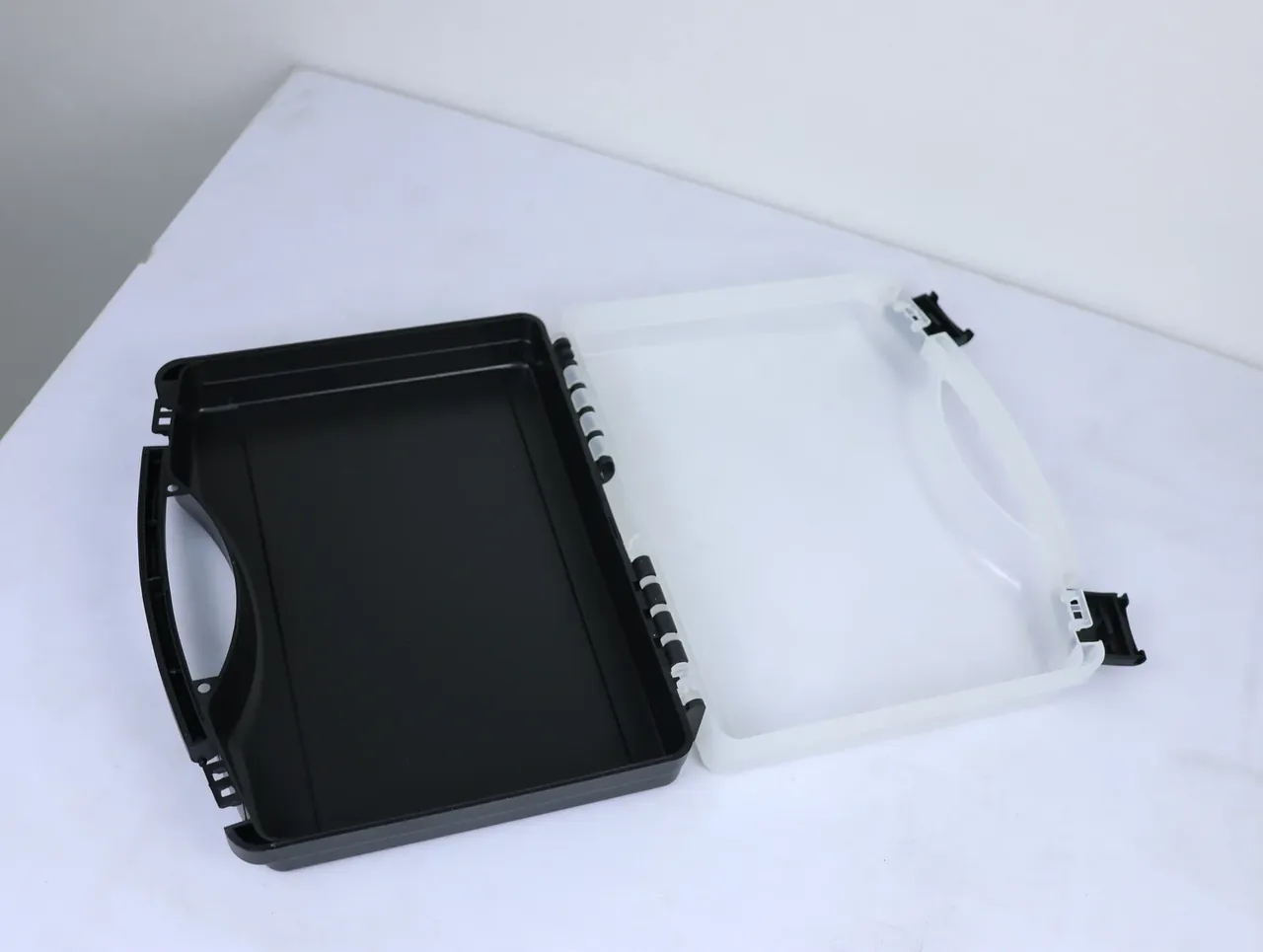
At 1,200 mm pitch and 0.12 m/s belt speed, nobody waits for transport. Six people over eight hours give 640 cases in theory; at 97.5% first-pass yield the count lands near 620.
Rigidity is the price. A new variant means a 90-minute stoppage, and twelve changeovers a month burn 18 hours, or 1.5 shifts.
Floor-side stock is the quiet cost: a two-hour buffer ties up 46,000 yuan, while a 20-minute cell needs a fraction.
3. High mix: cells win on changeover
With 42 variants at 200 pieces a batch, a straight line cannot compete, and changeover is why. A U-cell reaches 12 minutes on quick-change fixtures, parameter recipes and pre-kitted carts.
Bench height sits at 900 mm, material on three sides, one-hand reach under 4.5 m, which is 50th-percentile male elbow height minus 100 mm.
| Volume | Variants | Layout | Cost per case | What it costs |
|---|---|---|---|---|
| 80,000 | 6 | Straight line | 8.4 yuan | 90-minute changeovers |
| 12,000 | 42 | U-cell | 11.7 yuan | 78 s cycle |
| 3,000 | 15 | U-cell | 16.3 yuan | 55% utilization |
| 800 | 30 | Bought cases | 46 yuan | 35-day lead time |
At 800 a year, in-house costs 58 yuan against 46 bought, and the 12 yuan gap is tooling amortization.
The cell has a ceiling: at 78 s per case two shifts top out near 700 pieces, and each extra cell adds 32 m² and four people.
4. Heavy cases: benches and cranes
At 32 kg empty and 58 kg loaded, a conveyor stops being sensible. Turning 58 kg by hand puts over 30 N·m through the wrist, 200 times a day.
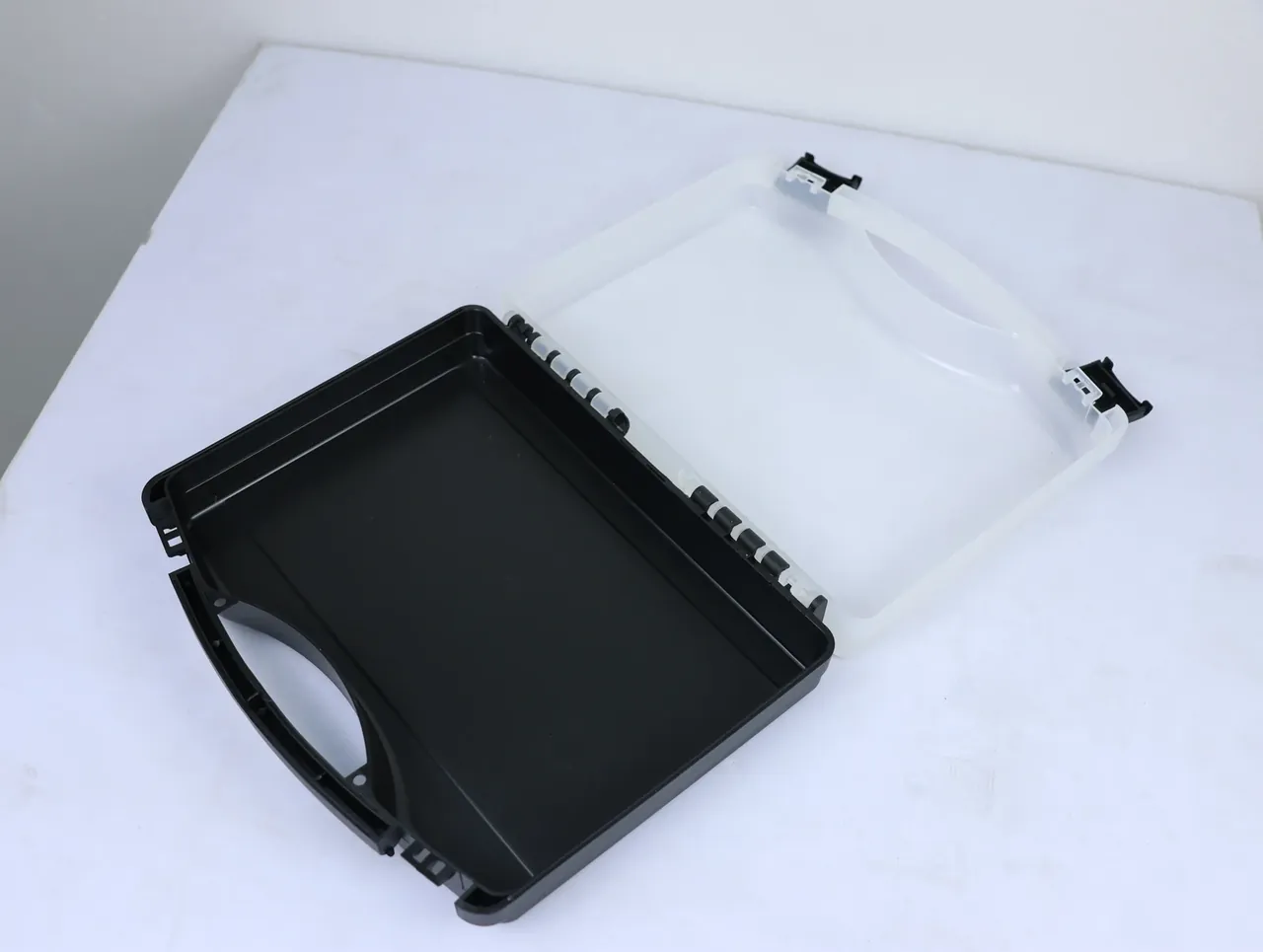
A fixed bench hands turning to a 500 kg single-girder hoist on a 1.5 m span, corners locked at 3.2 N·m, two turns replacing four. Bench height drops to 750 mm.
Cycle time is 210 s, slow until rework is counted: one knock deforms a latch by 0.8 mm and the seal is gone, which at 2% rework costs 19,000 yuan a year.
Forty kilograms is the second boundary, past which most safety regimes demand mechanical assistance.
5. Three cases where you should not build one
First, demand under 1,500 cases a year. Tooling and fixtures never amortize: 58 yuan in-house against 46 bought, a gap worth three years of freight.
Second, more than 30 changeovers a month. Fixtures still need five minutes, so 30 changeovers eat 2.5 hours before first-article inspection.
Third, cases longer than 1.6 m. Conveyor radii and aisle widths both fail, the station collapses into a single point, and cycle time falls past 300 s.
| Situation | What it looks like | Hidden cost | Better fit |
|---|---|---|---|
| 800 cases, 30 variants | In-house feels controllable | 12 yuan tooling per case | Buy, MOQ 500 |
| 30 changeovers a month | Changeover is five minutes | 2% yield loss on first articles | Subcontract line |
| Cases over 1.6 m | Just widen the bench | 1.2 m more aisle, 180,000 yuan | Bench plus hoist |
None of this argues against the layout, only against pushing it past stable variants, real volume and 1.6 m.
Conclusion
Twelve minutes against 90 minutes of changeover outweighs 45 s against 38 s of cycle. Match layout to order book: cells for high mix, a buffered line for stable volume, a bench and hoist for heavy cases. Settle volume, variants and unit cost before signing for automation, because that order decides payback more than the hardware, and it is why a Case Assembly Workstation deserves a second calculation.
This article discusses only the container (case body) side of specifications and design intent, and does not cover any handling, loading or use of the contents.
Related Reading
- Where material, tools and bench top sit around a station
- The 75 seconds a cycle loses to fetching and turning
- Two ways to lay out a fuze packing line
Related Products
- 8 Series — Gun Cases; Military Equipment Cases; Camera Equipment Cases; Drone Cases; Watch Cases; Knife Cases; First Aid Cases; Electronics Equipment Cases
- WL8-2812 PP Gun Case — model WL8-2812
- All protective cases and toolboxes: 7 series, 158 models