

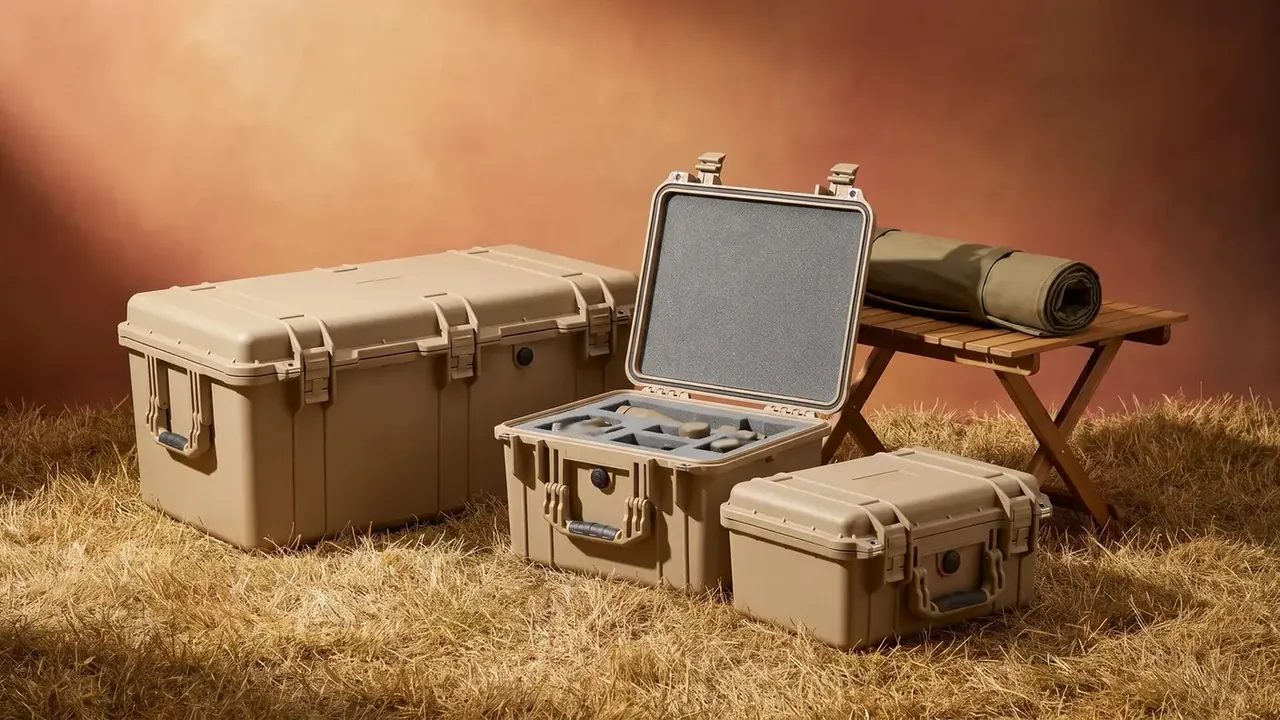
Quick answer: A fuze pack assembly choice rarely turns on wall thickness. It turns on empty weight, cell count, sealing and whether spares come singly. Rotomoulded PE with EPE suits storage, blow-moulded HDPE with EPP suits constant handling, aluminium with foam only light units in small batches.
Table of contents
- Three configurations that actually ship
- Empty weight and truck loading
- Sealing and temperature limits
- Opening cycle: latches set the cell count
- When not to choose rotomoulded PE with EPE
- The spare-parts bill in year three
- FAQ
1. Three configurations that actually ship
Three build-ups cover nearly every fuze pack assembly that ships on time: rotomoulded PE with an EPE liner, blow-moulded HDPE with EPP, aluminium with foam.
Strength lands elsewhere in each. The rotomoulded shell has no seam but weighs on every lift; the blow-moulded shell is light and cheap to tool, with thin spots where floor meets wall; the aluminium frame holds the most cells and wants care in damp air.
| Build-up | Empty weight | Cells | Sealing | Range |
|---|---|---|---|---|
| Rotomoulded PE with EPE | 12.6 kg | 12 | twin-lip gasket, draw latches | -40 to 71 °C |
| Blow-moulded HDPE with EPP | 8.9 kg | 16 | single-lip gasket, snaps | -30 to 60 °C |
| Aluminium frame with foam | 6.4 kg | 24 | clamp frame, rubber seal | -55 to 80 °C |
2. Empty weight and truck loading
Weight is a handling cost before a freight cost. At 12.6 kg against 8.9 kg the gap is 3.7 kg a trip, 148 kg over forty trips.
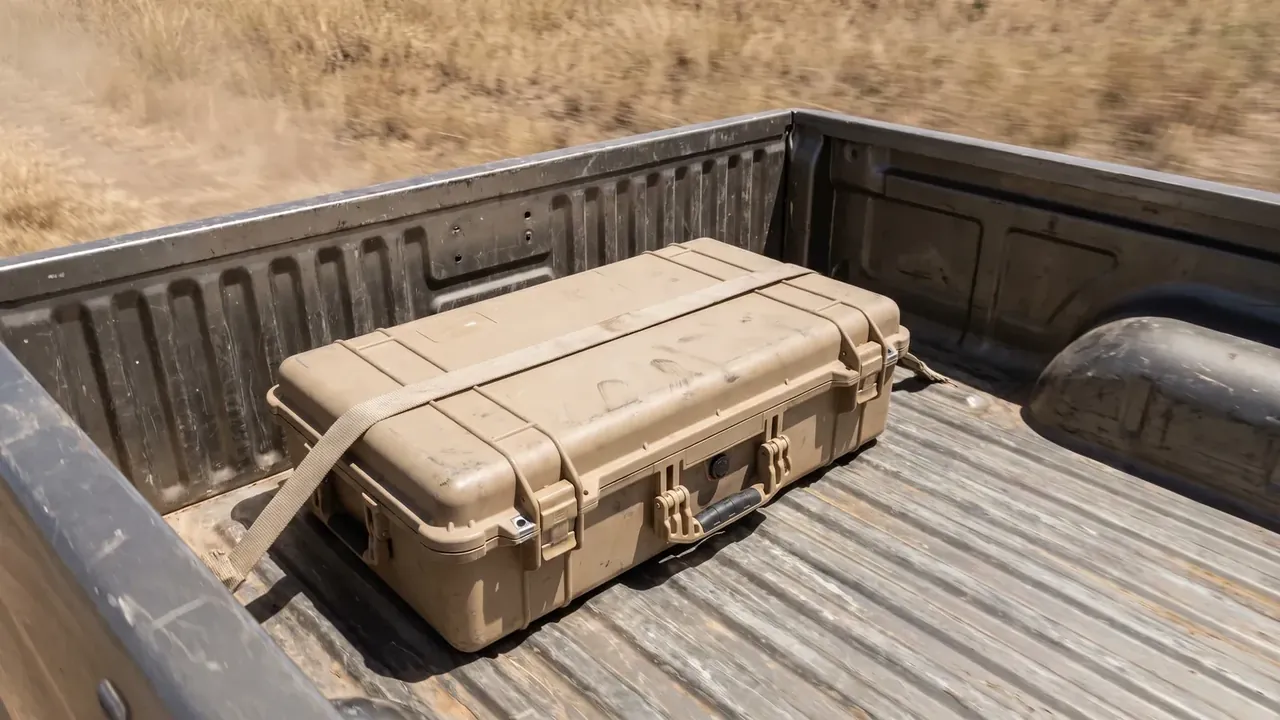
A corrugated bed touches a flat floor on a few ridges, and a strap pull slides the case; two 50 mm runs over the lid, sagging under 5 mm per metre, hold it. Liner walls and cell ribs eat near thirty percent of a 58 litre cavity.
3. Sealing and temperature limits
Sealing depends on how the gasket is squeezed. Draw latches pull the whole rim down, so compression follows latch travel and falls ten to twenty percent after two thousand cycles. A clamp frame loads four sides evenly, but one bend and the edge leaks. In damp air, 96 hours of salt spray rusts hinge pins.
Temperature reverses that order. At -40 °C the rotomoulded shell flexes while EPE stiffens; aluminium opens at -55 °C while foam powders. Above 71 °C EPE creeps.
4. Opening cycle: latches set the cell count
Each opening costs five moves: unlock, lift, take, close, lock. A three-dial lock runs four seconds, two latches three, so twelve cells move at nine seconds a unit; twenty-four cells, harder to find, run twenty-one.
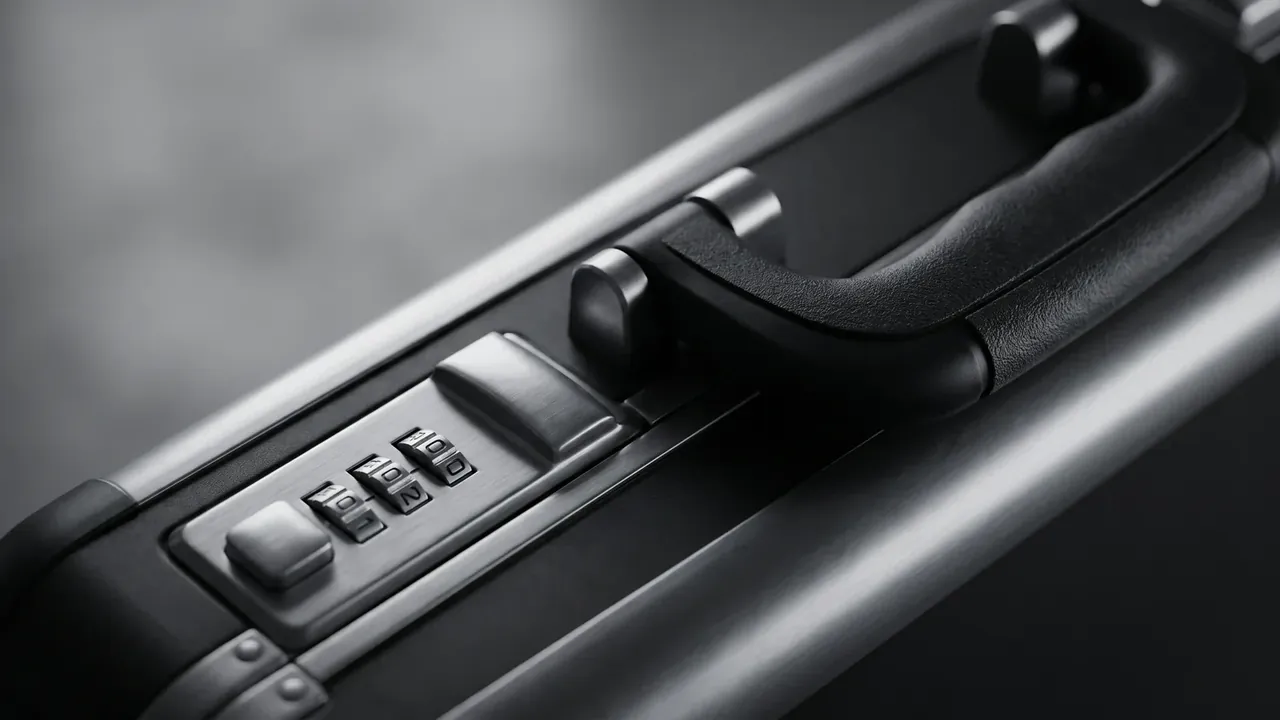
At three hundred movements a day that gap is an hour. More cells is not more throughput: count movements, then work back.
5. When not to choose rotomoulded PE with EPE
Four situations argue against it.
- Under 200 sets a year: tooling and liner moulds, spread over the batch, cost more than the cases.
- Heavy units in 20 cells or more: shell plus load pushes a two-person lift past comfort.
- Store humidity above 70 percent: EPE absorbs moisture, five years dry against two wet.
- Turnaround under 30 days, two or three units a trip: divided liners pay off in batches.
Reverse them and it wins: long storage, twelve units a case, cells within a millimetre after three years.
6. The spare-parts bill in year three
A second order is usually spares, not cases: after three years, gaskets, latches and liners go.
| Spare | Rotomoulded with EPE | Blow-moulded with EPP | Aluminium with foam |
|---|---|---|---|
| Gasket | common profile, 7 days | dedicated profile, 20 days | common profile, 10 days |
| Latch | single, replaceable | replaced in pairs | frame swapped whole |
| Liner | one cell block | full retool | cut on site |
| Hinge | pin replaceable | pin replaceable | rivets drilled out |
A rotomoulded latch is a stock item; a blow-moulded snap is tied to a parison, and a model change strands a fleet.
Conclusion
None is better in the abstract; each matches a rhythm. Storage favours rotomoulded PE with EPE, handling favours blow-moulded HDPE with EPP, light units favour aluminium with foam. Rank weight, cells, sealing and spares as the floor meets them, and a fuze pack assembly stops being a matter of taste.
This article discusses only the container (case body) side of specifications and design intent, and does not cover any handling, loading or use of the contents.
Related Reading
- How a fuze pack assembly is built in four layers
- Cushioning and locating design for the same pack
- Material routes for military packing boxes
- Comparing cartridge box body materials
- Strength and weight trade-offs in ordnance boxes
Related Products
- 8 Series — Gun Cases; Military Equipment Cases; Camera Equipment Cases; Drone Cases; Watch Cases; Knife Cases; First Aid Cases; Electronics Equipment Cases
- WL8-2812 PP Gun Case — model WL8-2812
- All protective cases and toolboxes: 7 series, 158 models