

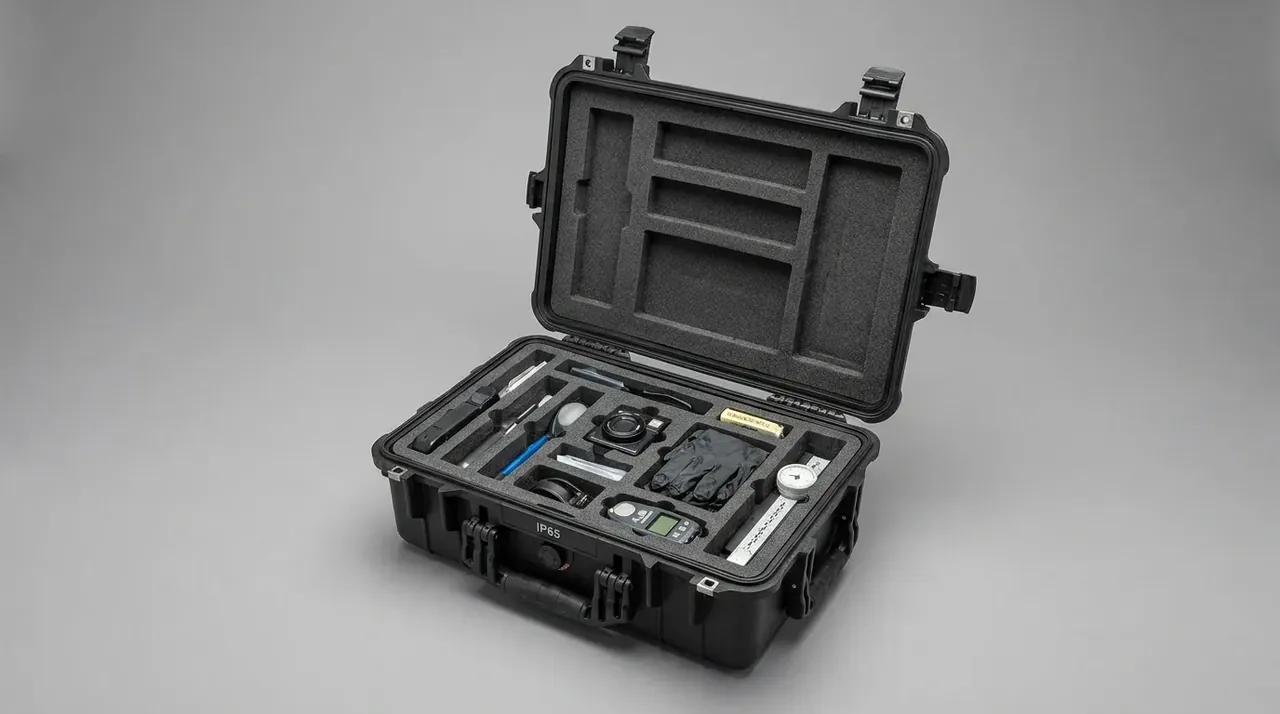
Quick answer: Case export brazil costs about 2.4 times FOB: a 60 USD case lands at 145 USD in Sao Paulo, where ANATEL work is only 5 USD of the gap.
Table of contents
- Splitting ANATEL from INMETRO
- When a Homologação number is required
- II and IPI stacking under NCM 4202.99
- Siscomex entries and wood packaging
- From 60 USD to 145 USD landed
- FAQ
1. Splitting ANATEL from INMETRO
A case at 60 USD FOB lands in Sao Paulo at 145 USD, and certification accounts for under 5 USD of that; tax moves the number. On any case export brazil job, separating the two regulators saves a pointless sample run.
ANATEL covers telecom products and telecom accessories, while INMETRO covers products on the compulsory certification list. A plain plastic case carries no radio module and sits outside that list, so neither body touches it directly; fit a Bluetooth tracker, a charging port or an electronic lock and the accessory enters ANATEL scope.
| Body | Covers | Trigger | Output | Lead time |
|---|---|---|---|---|
| ANATEL | Telecom products and accessories | Radio, cellular or charging port on the case | Homologação number | 8–12 weeks |
| INMETRO | Products on the compulsory list | Case is not listed | Not applicable | — |
| Customs | NCM classification and tax | Every import | Entry registration | 1–3 days |
The table settles the priority: certification is not the bottleneck, since 8–12 weeks can run ahead of production. Tax is the variable, and section 3 opens it up.
2. When a Homologação number is required
The Homologação number is held by a Brazilian legal entity, so an overseas manufacturer cannot own it. The importer or its agent applies, and the factory only supplies samples and technical files.
Three configurations need a number: a built-in Bluetooth or Wi-Fi tracker, cellular positioning, or a USB charging port. A plain case with none of them clears customs as ordinary packaging.
The number maps one to one with the model, so changing an internal module means a fresh registration. The ANATEL mark runs at 3 mm minimum height with the number beside it, printed on the case label rather than the carton only.
Sending a case that needs no certification into the process wastes 8–12 weeks and about 4,000 USD. That line usually hides under testing fees in a case export brazil quotation, and one question kills it.
3. II and IPI stacking under NCM 4202.99
Brazil does not levy one import tax but five stacked on each other. II comes first, IPI uses a base that includes II, PIS/COFINS applies to CIF, ICMS adds every earlier tax into its own base, and AFRMM rides on freight.
| Tax | Base | Nominal rate | On a 77 USD CIF |
|---|---|---|---|
| II import duty | CIF | 18% | 13.9 USD |
| IPI excise | CIF plus II | 5% | 4.5 USD |
| PIS/COFINS import | CIF | 11.75% | 9.1 USD |
| ICMS state tax | Landed value including prior taxes | 18%, base includes itself | 17.0 USD |
| AFRMM | Ocean freight | 8% | 1.3 USD |
| Total | — | about 59.5% | 45.8 USD |
The nominal rates add to 52.75% while the collected figure is 59.5%, and the gap comes from ICMS counting itself in the base. That is where the familiar 60% comes from, and quoting at 60% stays within about 1 percentage point.
Classification changes the base. Filed under plastics, the same case drops to an 11.2% II, but a case with moulded foam, a handle and latches normally goes in at 4202.99 because the classification follows the finished packed form. The spread is about 6.8 points, or 5.2 USD per case.
4. Siscomex entries and wood packaging
A Siscomex entry carries 8 fields: NCM, description, country of origin, gross weight, net weight, packages, volume, and freight with insurance. Rejections rarely come from typos; they come from a description that contradicts the NCM.
Three rejection types cover most of the volume: a plastic box description against a 4202.99 code, a suitcase description against a case with handle and wheels, and a blank wood treatment field. The first two cost 2–3 days to amend; the third parks the goods in the quarantine yard.
Wood packaging follows ISPM 15, with heat treatment and methyl bromide both accepted, an IPPC mark on every pallet or crate, and moisture below 20%. Untreated wood is returned or treated on site at 200 USD per pallet plus storage.
Documents are safest 3 days before sailing: invoice, packing list, draft bill of lading, wood treatment certificate and certificate of origin.
5. From 60 USD to 145 USD landed
Twelve lines carry a 60 USD case to 145 USD: 45.8 USD of tax, 34 USD of logistics and brokerage, 5 USD of certification amortisation, and the rest in insurance and port charges.
| Item | USD | Note |
|---|---|---|
| FOB value | 60.0 | Ex works |
| Ocean freight | 16.0 | Santos, 20 ft share |
| Insurance | 1.0 | 1% of CIF |
| CIF subtotal | 77.0 | Tax base |
| II | 13.9 | 18% |
| IPI | 4.5 | 5% on CIF plus II |
| PIS/COFINS | 9.1 | 11.75% |
| ICMS | 17.0 | 18%, base includes itself |
| AFRMM | 1.3 | 8% of freight |
| Port and THC | 6.0 | Discharge, storage, documents |
| Inland haulage | 7.0 | Santos to a Sao Paulo warehouse |
| Brokerage | 4.0 | Per entry |
| Certification amortised | 5.0 | 1,000 USD over 200 cases |
| Total | 144.8 | About 145 USD |
The 5 USD amortisation is the line buyers miss. Spread over 200 cases it is 5 USD each; over 2,000 cases it falls to 0.5 USD and the landed cost drops to roughly 140 USD.
Conclusion
Read the two tables together. The split table says a bare case enters neither ANATEL nor INMETRO, that only electronics trigger either body, and that the cost is 5 USD per case across a 200 case order. The stacking table says II and IPI come first, PIS/COFINS follows CIF, ICMS includes itself, and 52.75% nominal becomes 59.5% collected, so a 77 USD CIF case pays 45.8 USD. Together they turn 60 USD into 145 USD. Attach both to the quotation and settle tax before certification; reversed, the 8 weeks go into tests nobody needed.
This article discusses container-side specifications and design implications only, and does not cover any handling, loading or use of the contents.
Related Reading
- Matching export packaging with customs paperwork
- Preparing sample cases for customs
- Where transport certification applies
- How to verify an IP67 certificate
Related Products
- 8 Series — Gun Cases; Military Equipment Cases; Camera Equipment Cases; Drone Cases; Watch Cases; Knife Cases; First Aid Cases; Electronics Equipment Cases
- WL8-2812 PP Gun Case — model WL8-2812
- All protective cases and toolboxes: 7 series, 158 models