

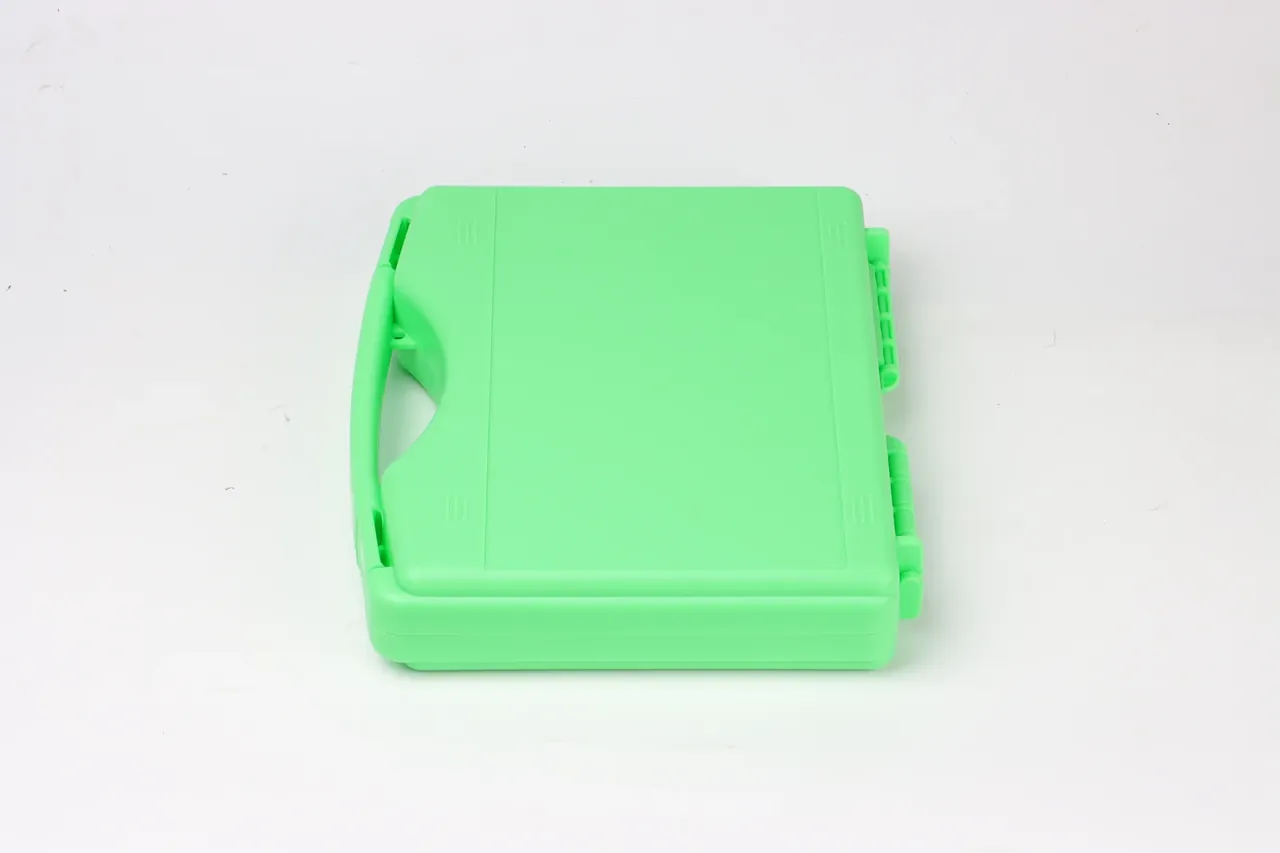
Quick answer: A Sample Case closes its seal chain with three items: two single-use seals plus one label recess, an eight-character number with a check digit, and a two-signature opening record.
Table of contents
- Seal points on a Sample Case
- Eight characters and one check digit
- Two signatures and the opening record
- Retained zones: keeping A and B apart
- FAQ
1. Seal points on a Sample Case
A seal is not a sticker applied at the end. The Sample Case body carries three fixed points: a slot across the front latch gap, a threading hole in the side wall, and a label recess in the lid. The first two take single-use seals; the third takes the label and carries no load.
On a 400 × 300 × 120 mm body the three points sit on one centre line, so a handler turning the case 90 degrees on a bench sees all three without flipping it. The hinge runs along the long side, and a case stood on end does not pop its lid.
| Point | Position | Detail | Contents |
|---|---|---|---|
| P1 | Front latch gap | 4 mm slot, 3 mm deep | Single-use seal |
| P2 | Side wall | 5 mm hole | Single-use seal |
| P3 | Lid recess | 90 × 40 mm, 0.8 mm deep | Label |
Wall thickness is 3.0 mm, 0.3 mm more than a standard tote, and the extra plastic goes to those three points. P1 is cut symmetrical, so a seal sits flat whichever side it enters from.
Spacing has a floor too: 80 mm between P1 and P2, 100 mm between P2 and P3, so cutting one leaves the other intact. Four 5 mm feet keep the label clear of grit.
2. Eight characters and one check digit
The seal number is eight characters: two for the year, two for the district code, three for the serial, one check digit. That last digit comes from a weighted mod-10 sum over the first seven, so a transcription slip shows up at the counter instead of in a review a week later.
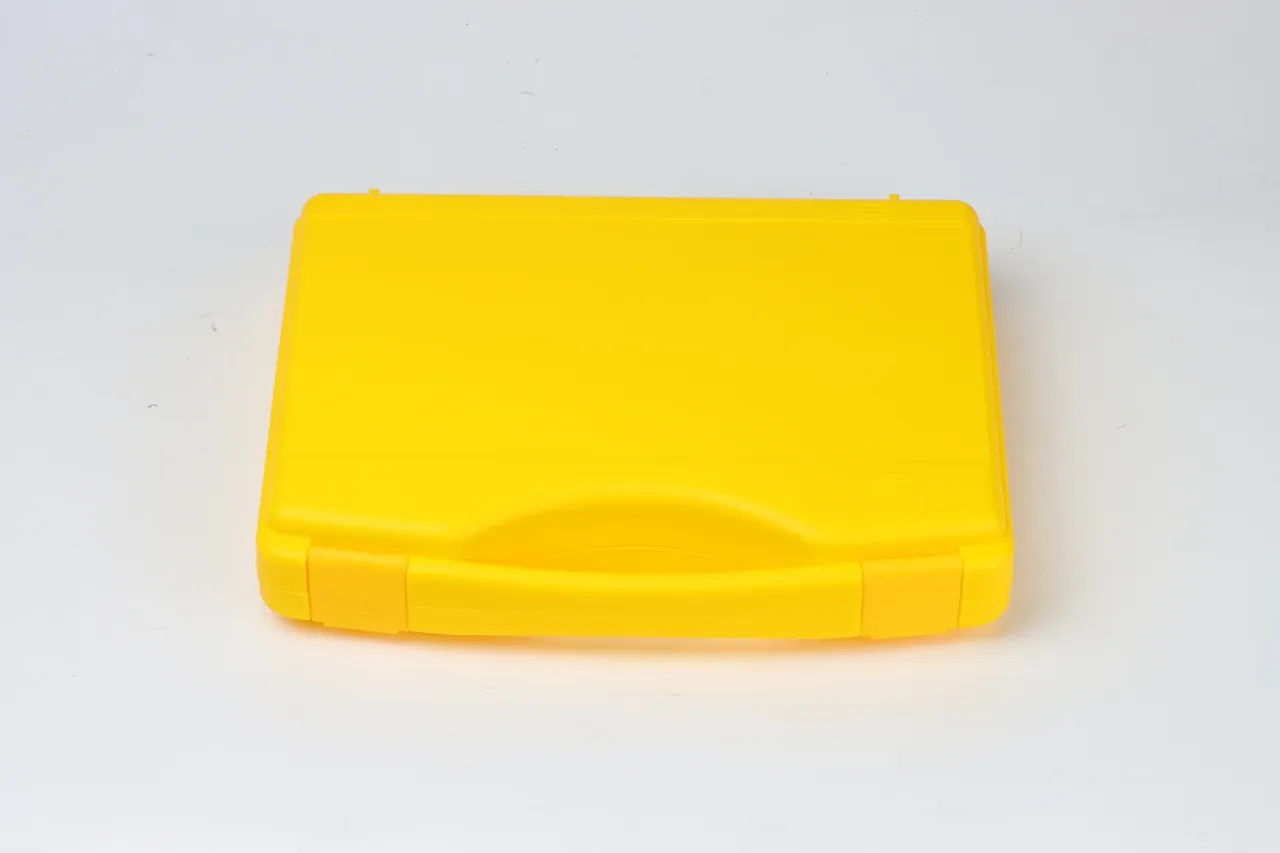
Numbers print on the seal itself at 3 mm minimum, at 3:1 contrast or better. Seals run 6 mm wide with an 18 N tear strength: below 12 N they open in transit, above 25 N they cannot be torn by hand and a cutter is needed. JUNZHIJIA rounds the slot mouth to R1 so a seal does not curl as it passes through.
Seal number and case serial live on separate carriers. A seal is single-use, so its number dies with it; the serial follows the case through every reseal. Splitting the two keeps the trail alive after the first opening, and the label is where the pair is written down.
Surface finish counts too. Slot walls are polished to 0.8 µm; at 3.2 µm a seal picks up white scuffs that read as a second application.
Number reuse is the other snag. The three-digit serial recycles on a two-year cycle, and retired numbers rest for five years. The lid recess is cut as a strip rather than a box, so a label swaps without tearing adhesive out of a corner.
3. Two signatures and the opening record
Two signatures means two separate fields, not two names in one box. Inside the lid each field is 70 × 22 mm, one for release and one for receipt, with an 8 mm rib between them so the ink never overlaps.
| Entry | Content | Position | Limit |
|---|---|---|---|
| Seal number | All 8 characters | Line 1 | 8 |
| Opening time | Date, hour and minute | Line 2 | 12 |
| Signatures | Release, receipt | Line 3 | 10 each |
| Zone code | A or B plus index | Line 4 | 6 |
| Reseal time | Date, hour and minute | Line 5 | 12 |
| Remarks | Write none when none | Line 6 | 20 |
Opening and reseal times are logged as a pair. A gap over 30 minutes gets flagged, which is why the time lines sit beside the signature line: both can be compared without turning a page.
Order matters. Release signs first, receipt second, and a gap over 15 minutes sends the case back through sealing. The fields stack vertically for that reason, so whoever signs second reads the time already written.
Paper needs holding down. A 12 mm rib above each field traps the top edge of the triplicate, and a 3 mm gap under the rib keeps a pen tip from catching.
4. Retained zones: keeping A and B apart
A 4 mm PP divider splits the interior into zones A and B. It drops into a locating groove in the floor rather than being bonded, so it lifts out for cleaning. Zone A measures 180 × 250 mm, zone B 150 × 250 mm, and each side can be opened without disturbing the other.
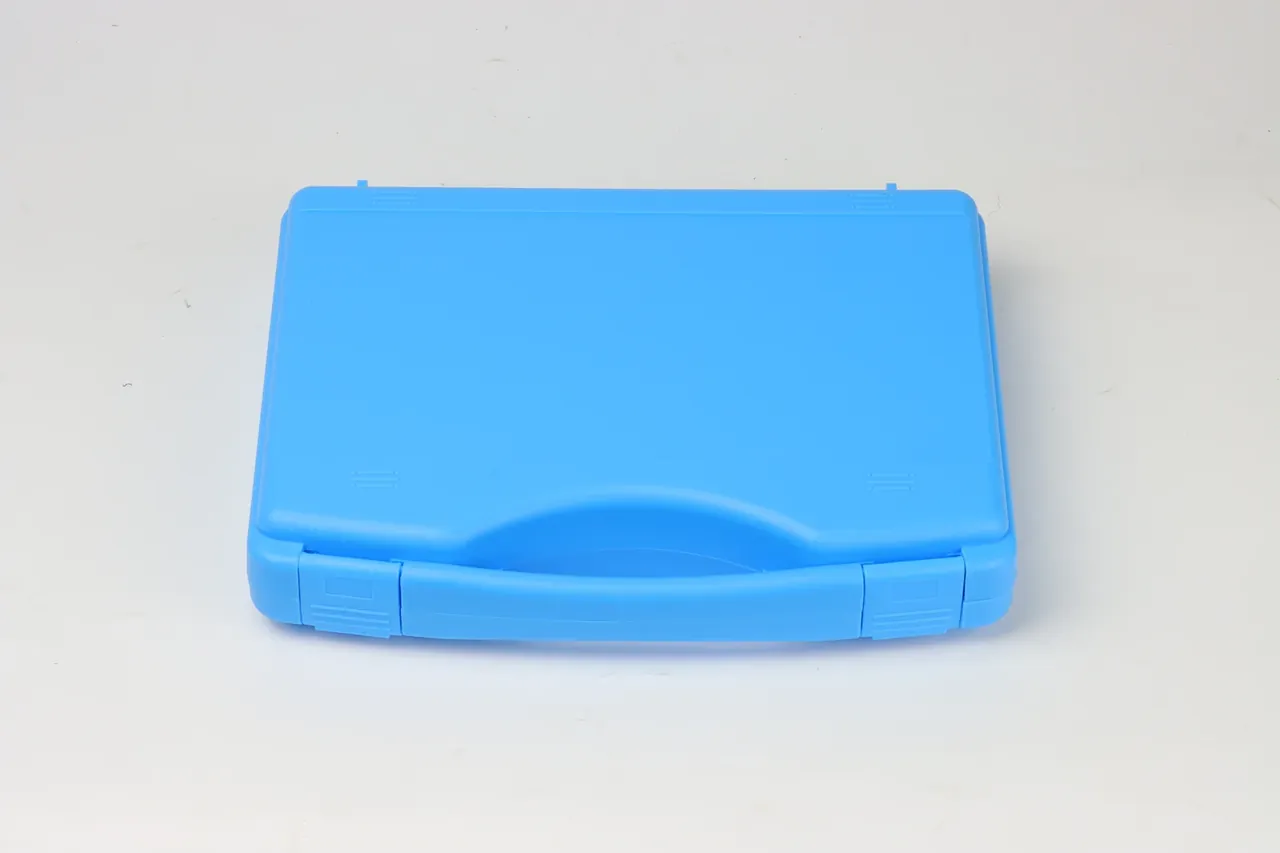
The divider reaches 92% of the interior depth; the remaining 8% is taken by a lid strip that presses on its top edge, so the divider cannot jump the groove when a case is set down upside. That strip is a 0.6 mm detail at tooling and a new mould if added later.
Zone indexes print on both faces of the divider: A1 to A6 on one side, B1 to B6 on the other, twelve positions that match line 4 of the opening record. Write A3 and only one place in the case answers to it.
The divider also floats: a 0.5 mm gap at the root lets it move with temperature instead of bowing the wall.
Environment figures sit on a label inside the lid: 15 to 25 °C, 40% to 60% RH. The case blocks light and cushions; it does not hold temperature. Two zones of the same material and wall stay within 1.5 °C over 4 hours at 40 °C, while a metal plate on one wall pushes the spread past 3 °C.
Conclusion
Judge a Sample Case by four body details: three seal points on one centre line, a number scheme with a check digit, signature fields stacked rather than side by side, and a divider that sits in a groove. With all four, two seals, eight characters, six entries and two zones keep a full opening under 30 minutes.
Related Reading
- Hopper mouths and split points on grain sampling cases
- Cold-weather zones and sample positions in field research cases
- Bench fit and wash-down points for forensic lab cases
Related Products
- 8 Series — Gun Cases; Military Equipment Cases; Camera Equipment Cases; Drone Cases; Watch Cases; Knife Cases; First Aid Cases; Electronics Equipment Cases
- WL8-2812 PP Gun Case — model WL8-2812
- All protective cases and toolboxes: 7 series, 158 models