

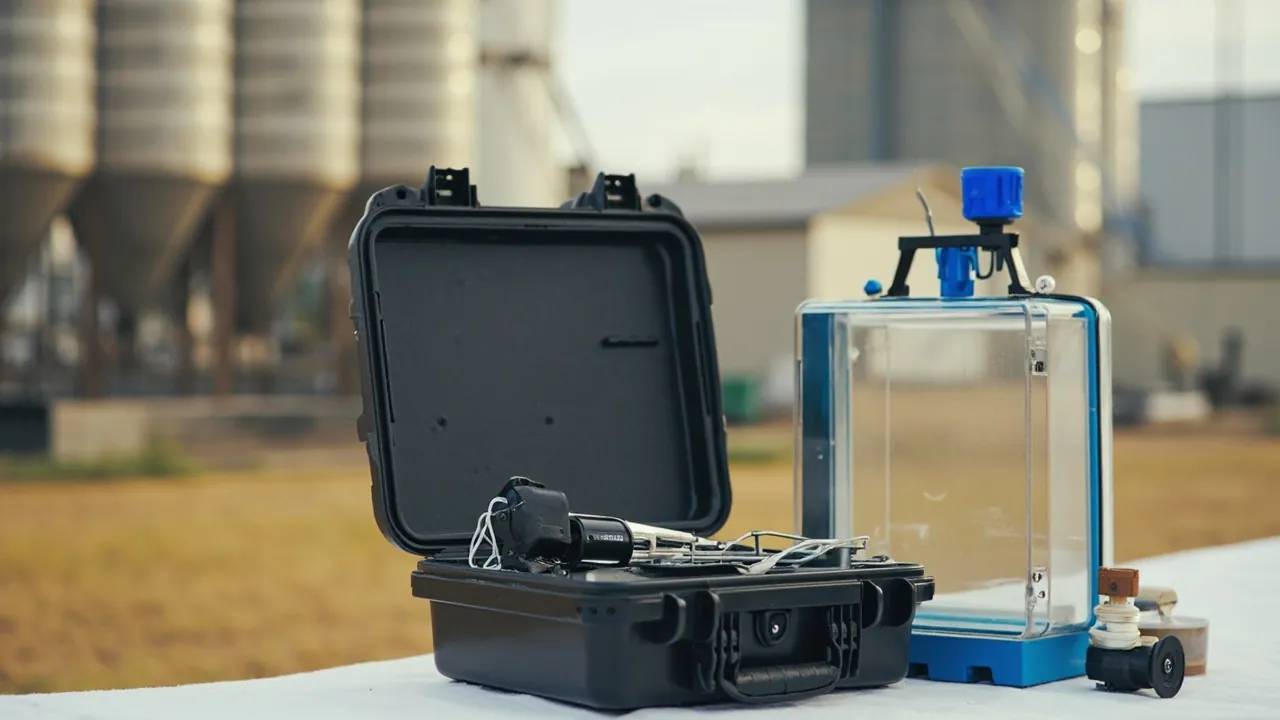
A grain sampling and testing equipment case protects the measurement result itself. Probe samplers, sample dividers, test weight apparatus, moisture meters, near-infrared composition analyzers, mycotoxin rapid test kits, and heavy metal testers together form the quality determination chain in grain purchasing and storage. These instruments share four traits: precision construction, glass and optical components, sensitivity to vibration and humidity, and the need to operate on site in extremely dusty conditions. Most critically, an instrument that loses accuracy in transit does not simply produce equipment loss. It produces a wrong inspection conclusion. A lot of grain can be misgraded because of instrument drift, or a payment dispute can erupt at the purchasing point. The first metric for a grain sampling and testing case is therefore not capacity but three conditions holding at once: instruments remain within calibration after transport, samples are not cross-contaminated, and on-site working efficiency is adequate.
Grain silo quality inspectors and purchasing organizations report four recurring problems: probe shafts and sampling tubes deforming in transit so sampling depth becomes inaccurate, moisture meter electrodes and sensors drifting after moisture exposure, NIR calibration baselines shifting under vibration and thermal cycling, and glassware such as measuring cylinders, sieves, and cuvettes breaking against each other inside the case. The working environment compounds this: silo buildings are thick with dust, temperature and humidity swing widely, and the working surface is often a narrow strip beside a conveyor. This article follows the path of equipment inventory, failure mechanisms, sealing and dust protection, vibration and calibration retention, insert and sample management, then acceptance and traceability, and provides specification parameters, size classes, a sample chain management table, and an inspection checklist.
Table of Contents
- 1. Protection Goals for Grain Sampling and Testing Cases
- 2. Sampling and Testing Equipment Inventory and Weak Points
- 3. Protection in Dusty Environments: IP6X and Sealing Structure
- 4. Moisture Control and Condensation: Critical for Moisture Meters and Balances
- 5. Vibration and Impact: Applying ISTA and GB/T 4857
- 6. Temperature, Humidity, and Retaining Instrument Calibration
- 7. Food Contact and Sample Compliance: The Boundaries of GB 4806
- 8. Insert Design: Compartments for Probe Shafts, Sieves, and Glassware
- 9. Sampling Representativeness and Cross-Contamination Prevention
- 10. Precision Protection for Optical and NIR Equipment
- 11. Portability Design for Field and Silo Operations
- 12. Pressure Equalization and Cross-Climate Shipping
- 13. Size Classes and Selection: From Probe Sampler to Rapid Test Bench
- 14. Marking, Traceability, and Sample Chain Management
- 15. Reliability of Hinges, Latches, and Gaskets
- 16. OEM/ODM Customization, Acceptance, and Life-Cycle Management
- Frequently Asked Questions
- Conclusion and Related Reading
1. Protection Goals for Grain Sampling and Testing Cases
What makes grain quality inspection special is that its output is a judgement, not a product. Protection goals must therefore be defined around the reliability of that judgement, not around keeping hardware intact.
Unpacked, a grain sampling and testing case must satisfy six categories at once.
The first is dust protection. Dust concentration at silos and purchasing points is extremely high, and it includes both organic dust such as husk and bran and inorganic dust such as soil and grit. Dust is the number one enemy of precision instruments. It degrades signal-to-noise once it reaches an optical window, scores sliding surfaces, and changes the conductive behavior of electrode cavities.
The second is moisture control and condensation prevention. Grain carries water, and silo humidity swings with season and temperature. Moisture meters, electronic balances, and NIR equipment are highly humidity sensitive. The harder problem is condensation: when equipment moves from a cold environment into warm humid air, its surfaces condense water rapidly, and powering up immediately can cause electrical faults or fogged optical windows.
The third is vibration and impact resistance. Probe shafts are slender with a high length-to-diameter ratio and bend easily in a drop or under vibration. Sample dividers and sieves are thin-walled. Test weight measuring cylinders are thin-walled metal. The optical components inside NIR equipment are extremely shock sensitive.
The fourth is retaining calibration. Whether an instrument is still within calibration after transport depends on whether acceleration, temperature, and humidity exposure stayed within permitted limits. This must be guaranteed by packaging design and transport validation, not left to recalibration on arrival, which in some settings cannot be performed fully in the field.
The fifth is cross-contamination prevention. Sampling equipment contacts grain directly. Without proper cleaning, high-moisture grain or a mycotoxin-positive sample from a previous bin contaminates the next bin's result. The cleanability of the case and the non-adsorbing nature of the insert therefore affect inspection conclusions directly.
The sixth is on-site working efficiency. During peak purchasing, sampling and rapid testing often happen at the roadside or beside a conveyor, with a very short working window and a harsh environment. The case must support retrieving high-frequency items in a dusty environment without opening the entire case.
Key judgement: what separates a grain quality testing case from an ordinary instrument case is that it must handle two constraints rare in other industries at the same time, high dust and sample contamination. The first is solved by sealing and dust ratings, the second by cleanability and non-adsorbing inserts.
JUNZHJIA supplies grain silo and testing equipment supply chains with configurations that treat a dust-tight structure, a washable insert, an isolated glassware cavity, and a dedicated sample zone as standard, so the same case serves as factory packaging and as a turnaround case for both the silo QC room and the field rapid test bench.
2. Sampling and Testing Equipment Inventory and Weak Points
Grouped by failure mechanism, grain sampling and testing equipment falls into six categories.
Group one: sampling and probing components. Electric probe samplers, manual probes, deep sampling shafts, sampling tubes, sample dividers in cone and riffle types, sampling scoops, and bag holders. Dominant mechanisms are shaft bending, riffle slot deformation that skews the dividing ratio, and internal wall scoring that leaves grain residue.
Group two: moisture and test weight components. Capacitive and resistive moisture meters, halogen rapid moisture analyzers, electronic balances, and test weight apparatus including cylinders, funnels, and strike-off tools. Dominant mechanisms are electrode moisture exposure and contamination, balance load cell overload, cylinder wall deformation, and strike-off edge damage.
Group three: composition and safety testing components. NIR composition analyzers, mycotoxin rapid testers, heavy metal testers, and pesticide residue testers. Dominant mechanisms are optical window contamination and fogging, light path shift under vibration, and reagent degradation from temperature and light exposure.
Group four: glass and consumable components. Measuring cylinders, beakers, cuvettes, sieves, filter paper, and reagent bottles. Dominant mechanisms are breakage, scratching, leakage, and cross-contamination.
Group five: electronics and data components. Portable data terminals, printers, barcode scanners, and associated power supplies and cables. Dominant mechanisms are dust ingress through vents, ESD, and connector oxidation.
Group six: tools and accessory components. Wrenches, cleaning brushes, sealed sampling bags, sealers, and label printers. Dominant mechanisms are loss and mix-up, which nonetheless has a large impact on operational continuity.
| Component group | Typical parts | Dominant failure mechanism | Key protective measure | Standards reference |
|---|---|---|---|---|
| --- | --- | --- | --- | --- |
| Sampling and probing | Electric probe samplers, shafts, dividers, scoops | Shaft bending, slot deformation, wall scoring leaving residue | Upright long-item support, anti-bend restraint, smooth washable interior | GB/T 4857 series, ISTA series |
| Moisture and test weight | Moisture meters, balances, test weight apparatus | Electrode moisture and contamination, sensor overload, wall deformation | Sealed moisture control, desiccant, load-direction support | IEC 60529, GB/T 4208 |
| Composition and safety | NIR analyzers, mycotoxin and heavy metal testers | Optical window contamination and fogging, light path shift, reagent degradation | Isolated cavities, light and heat separation, low-acceleration restraint | ISTA series, IEC 60529 |
| Glass and consumables | Cylinders, cuvettes, sieves, reagent bottles | Breakage, scratching, leakage, cross-contamination | Isolated cavities, soft wrap, secondary sealing | GB/T 4857 series |
| Electronics and data | Data terminals, printers, scanners, power supplies | Dust ingress, ESD, connector oxidation | Dust-tight sealing, ESD-safe insert, moisture barrier packing | IEC 61340 (ESD context), IEC 60529 |
| Tools and accessories | Cleaning brushes, sampling bags, sealers, labels | Loss, mix-up | Counted compartments, checklist management | GB/T 4857 series |
This table yields two key conclusions. First, high length-to-diameter items such as probe shafts must be stored upright or supported at multiple points, never laid loose on the base, because a single drop can cause irreversible bending. Second, glassware and reagents must be isolated from heavy metal items, and reagents need secondary sealing plus light and heat protection.
3. Protection in Dusty Environments: IP6X and Sealing Structure
Dust protection is the single biggest difference between a grain quality testing case and an ordinary instrument case. In the IP code defined by IEC 60529 and GB/T 4208, dust protection has two levels.
Level 5, dust protected. Limited dust ingress is permitted, provided it does not interfere with operation.
Level 6, dust tight. No dust ingress at all.
For grain sampling and testing cases, IP6X, dust tight, should be the baseline, because dust concentration and duration at silos and purchasing points far exceed ordinary environments, and the particles are fine, both organic dust and fine soil powder, so they enter small gaps easily. In practice the common target combinations are IP65, IP66, and IP67.
| Target rating | Dust capability | Water capability | Typical grain QC scenario | Structural cost |
|---|---|---|---|---|
| --- | --- | --- | --- | --- |
| IP54 | Dust protected, limited ingress | Splash resistant | QC room internal movement, short haul | Low |
| IP65 | Dust tight | Water jet resistant | Silo field testing, dusty operations | Medium; continuous gasket plus rigid mating surface |
| IP66 | Dust tight | Powerful water jet resistant | Field washdown, wet weather work | Higher; reinforced sealing faces and latch clamping |
| IP67 | Dust tight | Temporary immersion | Cross-climate shipping, extreme weather work | High; pressure equalization usually required |
Key points of sealing structure. Dust protection fails differently from water protection: it fails through gradual ingress rather than obvious leakage. Three details therefore matter.
- A continuous gasket with no breaks. Gasket joints are high-risk ingress points, so molded one-piece construction or a reliable butt process is preferred.
- Rigidity of the mating surface. If the mating surface lacks rigidity, handling loads open micro-gaps and dust migrates in along them. Rib layout directly determines this rigidity.
- Clamping force distribution across latches. On a long-sided case with only a few latches, the mid-span tends to be under-clamped. Add a mid-span latch or use a continuous clamping structure.
The dust-versus-heat conflict. Some equipment, such as NIR analyzers and electronic balances, needs ventilation. A fully sealed case allows heat to accumulate if equipment runs inside it, while adding vents destroys dust tightness. The usual resolution is a clear rule that equipment does not operate inside the case. The case serves as transport and storage packaging; on site the equipment is taken out, and the case serves as a work surface and spare source. Make this explicit in the operating procedure.
Engineering note: dust ratings are validated differently from water ratings, typically through a defined exposure period inside a dust chamber. Ask the supplier to state the test basis and conditions behind any dust rating claimed, rather than accepting a general "dust-proof design" statement.
The practical meaning of ingress ratings is explained in Understanding Case IP Waterproof Ratings and IP67 Protective Case Applications, and hinge, latch, and gasket matching logic in Toolbox Hinge, Latch, and Gasket Selection.
4. Moisture Control and Condensation: Critical for Moisture Meters and Balances
The second major enemy after dust is water. Grain carries moisture and silo humidity swings with season, so grain QC equipment faces tighter moisture requirements than ordinary laboratory instruments in transit.
Three classes of water risk.
- Ambient moisture ingress. During long storage, moisture migrates slowly past sealing faces, oxidizing electrodes and dampening circuit boards.
- Moisture locked inside at closing. Closing a case during the rainy season or in a humid period means the internal humidity starts high, and sealing then preserves it.
- Condensation. When equipment moves from cold into warm humid air, or the reverse, surface temperature drops below the dew point and water condenses rapidly. For equipment containing optical components and circuit boards, this is the most damaging class.
Countermeasures.
First, control the closing environment. Close cases in low-humidity conditions where possible and record ambient temperature and humidity before sealing as batch documentation.
Second, size the desiccant. Estimate required uptake from free internal volume, saturation moisture content at the target temperature, and moisture released by packaging materials, then apply a safety factor of 1.5 to 2.0. For silica gel, a design uptake of roughly 15 to 20 percent of its own mass is a reasonable working assumption, subject to the supplier datasheet.
Third, use a high-barrier inner layer. For moisture meter electrodes, balance sensors, and NIR optical assemblies, use aluminum-laminate or high-barrier bags individually, creating a double structure of case sealing plus inner barrier.
Fourth, allow temperature transition. This is the most frequently overlooked and lowest-cost measure. After removing equipment from a cold environment, wait with the case closed until its temperature equilibrates with ambient before opening and powering up. The wait depends on equipment mass and the temperature difference and is often several hours. Writing this into the work instruction prevents a large share of "fails on first power-up" incidents.
Fifth, avoid storing next to a cold source. Storing a case alongside refrigeration equipment or ice packs creates a local cold zone inside and aggravates condensation risk.
Field experience: the most common cause of post-transport inaccuracy in grain QC equipment is not vibration. It is moisture exposure and contamination of moisture meter electrodes, which produces gradual reading drift that is easily misdiagnosed as instrument aging.
5. Vibration and Impact: Applying ISTA and GB/T 4857
The transport route for grain QC equipment usually includes long highway sections plus unpaved silo-area roads, so both vibration and shock risks matter.
The ISTA series, from the International Safe Transit Association, emphasizes reproduction of real distribution chains and suits packaging validation for shipments from equipment makers to silos and testing bodies. The GB/T 4857 series covers basic test methods for transport packages in China, including drop, stacking, vibration, and impact, and is more common in domestic purchasing organization tenders and acceptance.
For grain sampling and testing cases, the following test items should be covered at minimum.
Drop testing. Select worst-case attitudes, covering corners, edges, and faces. Acceptance should go beyond whether the case cracked: check whether probe shafts retain straightness, whether divider slots deformed, whether glassware survived, and whether instruments remain within calibration.
Random vibration testing. This simulates road transport. Pay particular attention to probe shafts and other slender items: if not reliably restrained, they undergo bending vibration and accumulate deformation. Inserts should provide multi-point support rather than end support, which leaves a high-amplitude mid-span.
Stacking testing. Simulates long-term warehouse storage. Apply static compression at the actual number of levels plus margin, checking sidewall bulging and permanent gasket flattening on the bottom case.
Retest after temperature and humidity preconditioning. Apply preconditioning matching the actual transport climate before the mechanical test. For grain QC equipment, hot-humid preconditioning is recommended, because gasket softening and displacement is more readily exposed.
| Test item | Simulated risk | Grain QC inspection focus | System reference |
|---|---|---|---|
| --- | --- | --- | --- |
| Drop | Handling throws, vehicle drops | Shaft straightness, slot deformation, glass integrity, calibration state | ISTA series, GB/T 4857 series |
| Random vibration | Road vibration and resonance | Slender-item bending, fastener back-out, insert shift | ISTA series, GB/T 4857 series |
| Stacking | Long-term warehouse load | Sidewall bulging, gasket flattening | GB/T 4857 series |
| Temp/humidity preconditioning | Heat, humidity, rainy season | Gasket softening and displacement, electrode moisture | GB/T 4857 series |
| Concentrated impact | Balances and heavy metal items | Load-direction protection, isolated cavity integrity | ISTA series |
Test workflow and acceptance criteria are covered in Understanding the ISTA Transport Packaging Test Procedure and GB/T 4857 Transport Packaging Testing and Case Validation. In addition, the environmental test methods in MIL-STD-810H, covering temperature, humidity, vibration, shock, and drop, can serve as a methodological reference when building a test profile, for example a sequence of hot-humid preconditioning, then random vibration, then drop. It should be stated explicitly that this standard is referenced only as an environmental test method basis and does not imply military certification or any military qualification. For testing equipment makers exporting internationally, referencing the applicable clauses in the technical agreement allows one validation dataset to be reused.
6. Temperature, Humidity, and Retaining Instrument Calibration
Retaining calibration is the second defining characteristic of a grain QC equipment case. The core logic is that transport is itself an environmental exposure test, and the case's job is to keep that exposure inside the instrument's permitted limits.
Three classes of exposure to control.
- Acceleration exposure, from drops and vibration. NIR light paths, balance sensors, and capacitive moisture plates can all shift permanently once acceleration limits are exceeded.
- Temperature exposure. Heat can shift electronic component parameters, cold degrades LCD performance and battery capacity, and rapid temperature change causes condensation.
- Humidity exposure. Electrodes and optical windows lose performance once dampened.
What the case can do.
- Low-acceleration restraint. Insert conformance and cushioning layers reduce the acceleration transmitted to instruments.
- Thermal buffering. Wall thickness, insulated inserts, or phase-change layers slow the rate of temperature change, which matters most during rapid transitions.
- Moisture isolation. Sealing plus desiccant plus a high-barrier inner layer.
Post-arrival verification. Put "arrival verification" into the technical agreement, covering visual and structural inspection, glassware integrity, and a calibration check on key instruments using reference materials or reference devices. Examples include reference weights for balances, standard moisture samples for moisture meters, and reference reflectance plates for NIR. This step is simple but it is what converts transport reliability from a verbal assurance into a verifiable clause.
The role of records. If a temperature logger or transport shock indicator is fitted inside the case, transport exposure can be quantified. Where inspection reports may serve as a basis for settlement or arbitration, such records have real value.
Purchasing recommendation: make post-transport calibration verification an acceptance clause with a defined method and pass threshold. For purchasing organizations and testing bodies, this is worth considerably more than any parameter of the case itself.
7. Food Contact and Sample Compliance: The Boundaries of GB 4806
Grain sampling and testing touches food safety, so compliance boundaries must be drawn clearly.
Level one: material compliance of the case itself. A case body normally does not contact grain or samples directly, since samples remain inside sampling bags, tubes, or containers. It therefore generally falls outside the food contact requirements of the GB 4806 series, the Chinese national food safety standard for food contact materials and articles. Case materials should still meet basic requirements of no harmful substance migration, no odor, and no adsorption, because the internal environment contacts the outer surface of sampling bags over long periods, and odors or volatile substances can cross the bag wall and affect samples.
Level two: compliance of direct-contact components. If insert materials, compartment parts, sampling bag holders, or any component that may contact grain directly does so, those materials must meet the applicable material-specific requirements of the GB 4806 series, with a supplier compliance statement or test report. For the European Union, Regulation EU 10/2011 and related measures apply; for the United States, the relevant FDA provisions apply.
Level three: sample management compliance. Sampling and testing itself is governed by grain quality and storage administration rules, covering sampling method, sample storage conditions and retention periods, and traceability of inspection records. The case's role appears to be merely that of a container, but its sealing, light blocking, and temperature control capability directly affect the validity of sample storage.
Boundary recommendation. In the technical agreement, distinguish "case structural materials" from "components contacting samples" and state the applicable basis for each. This is increasingly requested in compliance audits at grain purchasing and storage organizations.
Light and temperature. Some samples, particularly those used for mycotoxin and pesticide residue testing, are sensitive to light and heat. Cases should block light and can be fitted with insulation as required. For low-temperature storage needs, refer to the insulation structure and temperature validation approach in Cold-Chain Food Transport Case Design.
8. Insert Design: Compartments for Probe Shafts, Sieves, and Glassware
The insert is the highest-return component of a grain QC equipment case, and its design is harder than for general instrument cases because the contents span an enormous range of shapes: probe shafts over a meter long alongside cuvettes a few centimeters across, heavy metal parts alongside fragile glassware.
Material selection.
- EVA foam: good rebound and precise cutting, suited to instrument bodies, glassware, and complex shapes.
- PE foam, including XPE and IXPE: lower cost, higher compressive strength, closed-cell and low water absorption, suited to load-bearing layers, metal parts, and washable areas.
- PU foam: good cushioning but highly hygroscopic, so it should be used cautiously in humid silo environments.
Beyond cushioning performance and water absorption, grain silos are dust-intensive workplaces with people moving through them, so the flammability characteristics of materials should also be part of the review. For the case shell and plastic insert components, requirements can reference the grade system of UL94, the standard test for flammability of plastic materials used to rate burning behavior at the material level, with the required grade and test basis stated in the specification. Note that UL94 evaluates material test specimens and is not equivalent to a fire certification of the finished case, so purchasing documents should avoid describing a material grade as a "flame-retardant case".
Three critical structures.
First, probe shaft support. Shafts should use multi-point upright or horizontal supports with three or more contact points, avoiding two-point support that leaves a free mid-span with high amplitude. If shafts are sectional, restrain each section independently. Contact surfaces should be soft-wrapped to avoid scratching shaft coatings.
Second, isolated glassware cavities. Measuring cylinders, cuvettes, and beakers must occupy separate cavities with soft walls, physically isolated from heavy metal items. Cavities should lift out for cleaning. For slender glassware such as cylinders, use an upright cavity with a cushioning pad at the base to avoid lateral loading.
Third, washable and non-adsorbing design. The sample-contact zone of the insert should be non-adsorbing, easy to clean, and scrub resistant. Use closed-cell materials with sealed seams so dust and grain cannot lodge in gaps and become residue. Partitioning logic is covered in Removable Divider Systems for Protective Cases.
Fourth, counted compartments for tools and consumables. Sampling bags, seals, labels, and cleaning brushes are high-frequency consumables. Use extractable compartment trays with counting units so that running out mid-operation is avoided.
Fifth, high-frequency items on the upper layer. In field rapid testing, the moisture meter, sampling bags, cleaning tools, and labels are high frequency and belong in upper fast-access positions. Test weight apparatus and spare shafts belong in the base layer.
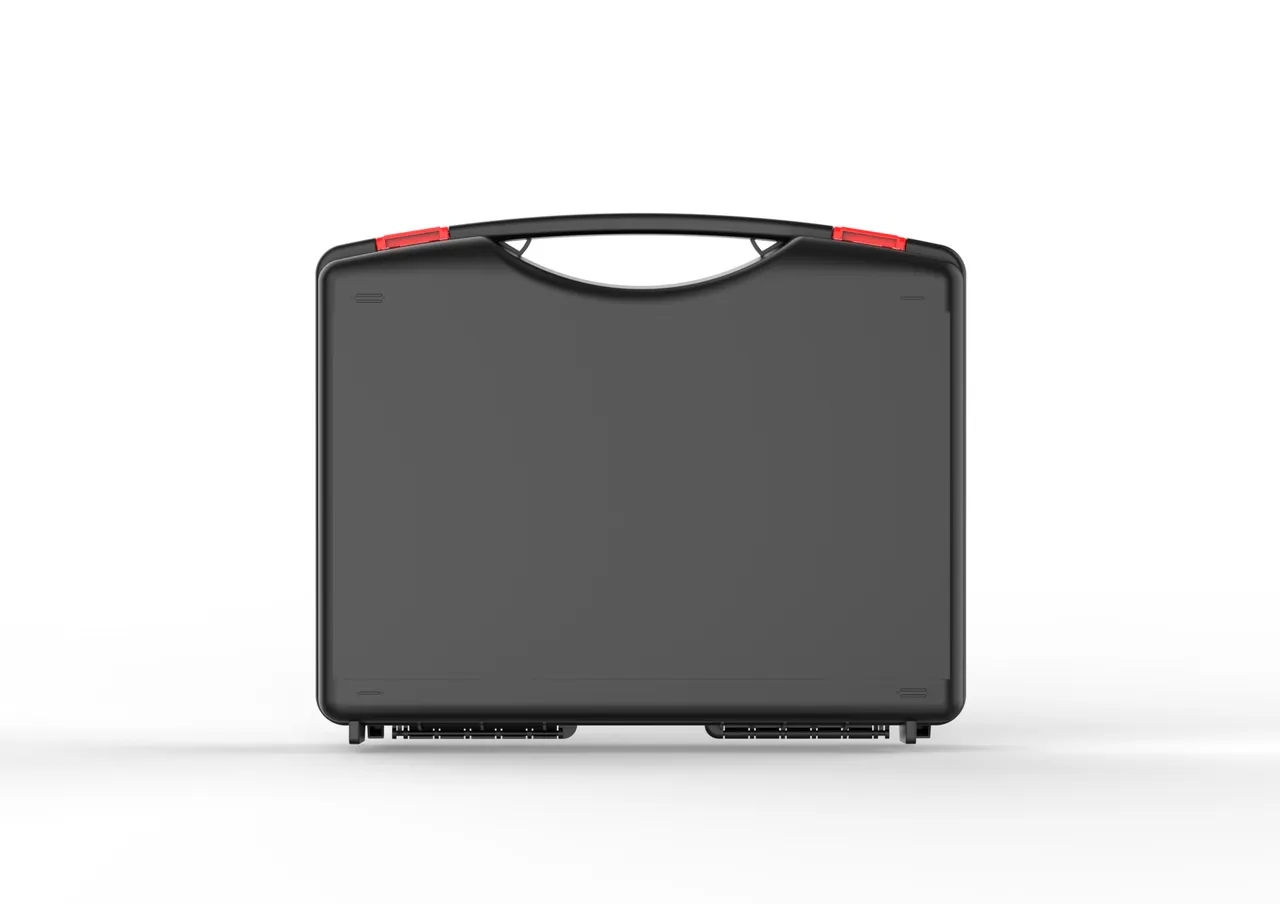
The full insert design process and sampling requirements are described in Custom Foam Insert Design Guide and EVA Foam Insert Customization Process.
9. Sampling Representativeness and Cross-Contamination Prevention
This is the most specialized and most frequently overlooked part of grain sampling case design. Sample contamination invalidates the inspection conclusion outright, and the case is one link in the contamination chain.
Three sources of contamination.
- Residue from the previous sample. Grain kernels, dust, and powder lodge in insert gaps and case corners.
- Reagent and solvent leakage. Volatiles released after leakage are adsorbed by the insert and slowly released during later use.
- Adsorption and release by case materials themselves. Some materials adsorb odors and release them as temperature rises.
Corresponding design responses.
Response one: eliminate dead spaces structurally. Radiused interior transitions, inserts cut from a single block rather than laminated, and sealed seams.
Response two: choose low-adsorption materials. Prefer closed-cell, low water absorption materials with no plasticizer migration risk. Avoid paper and wood components.
Response three: a dedicated sample zone. Provide a sample zone that lifts out as a unit and is physically separated from tools, spares, and reagents. It should be cleanable on its own and must not share a zone with reagents.
Response four: establish a cleaning procedure. Require cleaning after every sampling batch, specifying the method, drying method, and verification. The workflow in How to Clean a Protective Case can be adapted, adding steps specific to grain handling for dust and residual kernel removal.
Response five: records and traceability. Record the date and operator after each cleaning, plus the sample type carried previously, especially mycotoxin-positive samples, so contamination risk becomes traceable.
| Sample chain stage | Key risk | Case and insert response | Record requirement |
|---|---|---|---|
| --- | --- | --- | --- |
| Pre-sampling preparation | Residual contamination affecting the new sample | Batch cleaning plus visual confirmation | Cleaning record, operator |
| Sampling and holding | Dust and kernels lodging in gaps | Seamless insert cut, radiused interior | Sample type carried |
| Field rapid testing | Reagent leakage and cross-contamination | Independently sealed reagents, zoning | Reagent opening date |
| Sample transport | Temperature and light effects | Light blocking, insulation, temperature records as applicable | Temperature record where applicable |
| Post-testing reset | Residue not removed | Clean, dry, inspect insert | Cleaning and reset record |
10. Precision Protection for Optical and NIR Equipment
NIR composition analyzers and colorimetric rapid testers are the most delicate contents, and their protection logic differs from general electronics.
Optical window contamination. Once dust or fingerprints adhere to a window, reduced throughput shows up directly as baseline drift and lower signal-to-noise ratio. Protection requires an isolated cavity, a window cap, and a strict rule against bare-hand contact with windows. Keep dedicated cleaning items such as lens tissue and an air blower in the case, within reach.
Light path shift under vibration. Internal optical elements such as gratings, filters, and detectors are acceleration sensitive. Inserts should use surface-contact restraint and place the instrument in a low-acceleration zone, typically near the geometric center rather than at a corner. This differs from the usual advice to put heavy items at the center: for optical equipment, reducing acceleration matters more than lowering the center of gravity.
Humidity and fogging. A damp optical cavity can develop fogged or moldy surfaces. High-barrier bags plus desiccant are necessary. After arrival, allow temperature transition before opening to avoid instant fogging of optical windows.
Light sources and batteries. Halogen sources in some instruments are shock sensitive, and battery capacity falls at low temperature. Specify battery storage temperature ranges in the technical agreement and avoid long-term storage at high temperature.
Reference standard management. The surface condition of reference reflectance plates and reference filters determines calibration validity. Reference standards need their own compartments and caps, and must never share a compartment with metal items. Working surfaces must not be touched by hand or wiped with ordinary tissue.
Electromagnetic considerations. If strong magnets such as speakers or magnetic holders are stored in the same case as precision instruments, isolate them. General cases are not designed for EMC, but physical separation remains necessary. Related design thinking appears in ESD Shielding Case Solutions.
11. Portability Design for Field and Silo Operations
Grain QC equipment operates in three settings: the QC room with a bench and power, the silo building or conveyor side with heavy dust and no bench and possibly no power, and the roadside purchasing point with very tight space and time.
Three dimensions of portability.
- Mass and center of gravity. For a case one person carries frequently, aim for under 20 kg. Silo passages are narrow and floors may be covered with loose grain that makes footing slippery, so portability matters more than in general instrument settings. Keep the center of gravity near the middle so one-handed carrying does not create a heavy moment.
- Handles and carrying method. Use a retractable handle with an optional shoulder strap. Long items such as probe shafts are better carried in a separate long case or tube, rather than making the main case oversized to accommodate them.
- Case as a work surface. Where no bench exists, a lid that can carry a defined load and stay level, for example through adjustable feet or a reinforced lid structure, significantly improves working efficiency. State the load rating in the specification.
Splitting long items from the main case. This is an important design decision for grain sampling cases. Packing everything into one large case creates two problems: excessive mass that defeats portability, and bending stiffness of long items that constrains case structure. The recommended approach is a main case plus probe tube split: the main case holds instruments, glassware, and consumables, while a dedicated tube carries long items with multi-point anti-bend support.
Power and accessory management. Field sites may lack stable power, so provide separate compartments for batteries and power cables with short-circuit protection. Determine backup power capacity from the longest expected working session.
12. Pressure Equalization and Cross-Climate Shipping
A pressure equalization valve allows gas to pass slowly while blocking liquid water. For grain sampling and testing cases, three scenarios make it necessary.
- Cross-altitude and cross-climate shipping. Moving from a lowland silo to a highland silo, or from a northern winter environment to a humid southern region, combines pressure differential with thermal change.
- Rapid thermal change during seasonal transition. Moving equipment from winter outdoor air into a heated store creates internal negative pressure that draws external moisture in. For grain QC equipment, where humidity is the primary threat, this is the most dangerous class of condition.
- Air freight. Cargo hold pressure and temperature change rapidly, and repeated cycling accelerates gasket fatigue.
Mounting and supporting points.
- Locate the valve away from direct rain exposure and washdown spray.
- Confirm that the valve's own ingress rating matches the case rating so it does not become the weak link.
- For high-accuracy equipment such as moisture content measurement, evaluate whether the small gas exchange introduced by the valve could destabilize internal humidity. If so, combine pressure equalization with more generous desiccant, or choose a lower-permeability equalization structure.
Compatibility with cleanliness requirements. Note that an equalization structure is itself an air passage, so if its filtration is inadequate it can become a dust ingress path. Choose a valve with a hydrophobic and oleophobic membrane and locate it where dust is unlikely to reach. The working principle and selection criteria are covered in How a Case Pressure Equalization Valve Works.
13. Size Classes and Selection: From Probe Sampler to Rapid Test Bench
Selection should start from the working scenario and the handling unit. Grain QC equipment cases serve five main handling units: the QC room bench, the field rapid test bench, which may be a vehicle tailgate or a temporary table, standard pallets, racking, and manual carrying.
| Case class | Reference external length | Suggested loaded mass | Suitable equipment | Handling unit |
|---|---|---|---|---|
| --- | --- | --- | --- | --- |
| Hand-carried | 300 to 450 mm | 5 to 12 kg | Moisture meter, cuvettes, reagents, balance components | Manual carry, QC room bench |
| Portable mid-size | 450 to 650 mm | 12 to 20 kg | Sample dividers, test weight apparatus, data terminal, tools | Manual carry, field test bench |
| Large instrument class | 650 to 1000 mm | 20 to 40 kg | NIR analyzer, complete QC equipment set | Fixed vehicle position, pallet |
| Dedicated long tube | Above 1000 mm | Per design | Probe shafts, sampling tubes, deep sampling tools | Vehicle side mount, silo carrying |
| Modular case set | Configured per project | Per design | Complete QC room equipment and consumables | Racking, standard pallet |
Why modular sets matter. For a grain silo QC room, organize in four modules: instrument case, glass and consumables case, reagent case, and long-item tube. This supports flexible configuration across scenarios, indoor QC or field rapid testing, and prevents reagents, glassware, and metal tools from affecting one another.
Hard mixing rules. Three combinations must never share a compartment: reagents with instruments, because of leakage risk; glassware with heavy metal items, because of breakage; and strong magnets with precision instruments, because of magnetic interference.
14. Marking, Traceability, and Sample Chain Management
The marking system on a grain QC case serves both asset traceability and the sample chain.
Seven classes of marking should be designed in.
- Unique case number. For asset management and movement records.
- Equipment compatibility marking. State the applicable instrument models and matched accessories to prevent cross-equipment misuse.
- Contents QR code. Scanning displays the full contents list, quantities, and storage positions.
- Calibration validity field. Record the most recent calibration date and next due date for key instruments, which is the core field in QC compliance.
- Cleaning record field. Record the most recent cleaning date and the sample type carried previously.
- Ingress rating and operating notes. For example "do not invert" and "allow temperature transition before opening."
- Sample zone marking. Delineate sample, reagent, and tool zones to prevent mixing.
Marking durability matters just as much: silo dust and outdoor conditions accelerate label peeling. Use in-mold labels, laser etching, or high-weathering polyester labels, and validate adhesion and scrub resistance. For integration with a QC management system, case numbers can map to instrument numbers, calibration records, and sample batches, so a scan retrieves both the contents list and calibration status. JUNZHJIA can pre-form nameplate recesses and reserved label faces to a customer's coding rules in OEM/ODM projects and support first-article approval.
Compliance note: fixing "calibration validity" and "cleaning record" fields onto the case itself is an effective way to push quality management requirements down to the working level. Compared with recording in a management system, a record on the case is harder for field staff to skip.
15. Reliability of Hinges, Latches, and Gaskets
Hinges. Grain QC equipment cases are opened frequently, since field rapid testing requires repeated access. Hinges therefore endure repeated cycles plus full-load lateral force. Design guidance: metal pins, thickened and reinforced hinge bosses, and a pin design that cannot be driven out from outside. Dust accelerates pin wear, so consider dust protection for the pin or a self-lubricating material.
Latches. Prefer forms with a clear operating force, one-handed operation, an anti-accidental-opening feature, and adjustable tension. Adjustable tension matters especially in dusty environments: gaskets take a permanent set under long compression, and the latch must compensate to maintain dust tightness. On long-sided cases, mid-span clamping is often insufficient, so add a mid-span latch or use a continuous clamping structure.
Gaskets. The gasket must be replaceable without special tools. Selection criteria include material, where EPDM generally outperforms standard NBR outdoors and across wide temperature ranges, hardness, cross-section shape, and abrasion resistance, since dust accelerates gasket wear. In high-dust settings, shorten the inspection interval and keep sealing surfaces clean. Dust adhering to a sealing surface significantly degrades sealing performance, a point that is frequently overlooked.
Purchasing recommendation: require the supplier to provide gasket replacement specifications, material codes, a recommended replacement interval, and a sealing surface cleaning method. In grain QC applications, knowing how to clean the sealing surface matters as much as knowing when to replace the gasket.
Matching relationships and common failure modes are covered systematically in Toolbox Hinge, Latch, and Gasket Selection, and long-term decay of protection performance in Protective Case Service Life and Retirement Criteria.
16. OEM/ODM Customization, Acceptance, and Life-Cycle Management
Customization of grain sampling and testing cases comes from two sources: moisture meter, NIR, rapid tester, and probe sampler makers needing factory packaging or supplied spare cases, and silos, purchasing organizations, and testing bodies needing turnaround and sample cases that match a QC management system.
Step one: requirements and constraints. Define the contents list including long items, working scenario such as QC room, silo area, or purchasing point, target ingress rating, humidity and temperature requirements, sample management needs, marking and coding rules, and volumes with delivery cadence.
Step two: structural concept. Produce case dimensions, material, rib layout, hinge and latch type, sealing approach, whether pressure equalization is needed, and whether a dedicated long-item tube is required.
Step three: insert and dedicated cavity design. Build multi-point probe shaft support, isolated glassware cavities, secondary reagent sealing positions, and the sample zone from component 3D data, and confirm the feasibility of the cleaning concept.
Step four: sampling and first-article approval. Samples must validate appearance and dimensions, opening feel, sealing test results, anti-bend performance of shaft supports, glassware retention, insert fit and access convenience, and marking legibility plus scrub resistance. First-article approval should be documented as the batch acceptance baseline.
Step five: production and inspection. Apply the agreed sampling plan for appearance, dimensional, and functional checks; sample sealing performance at agreed frequency; and add dust testing or third-party documentation for cases claiming a dust rating.
Step six: packing, shipment, and documentation. Deliver test documentation, gasket specification sheets, cleaning and maintenance instructions, and spare-parts list and calibration verification record templates.
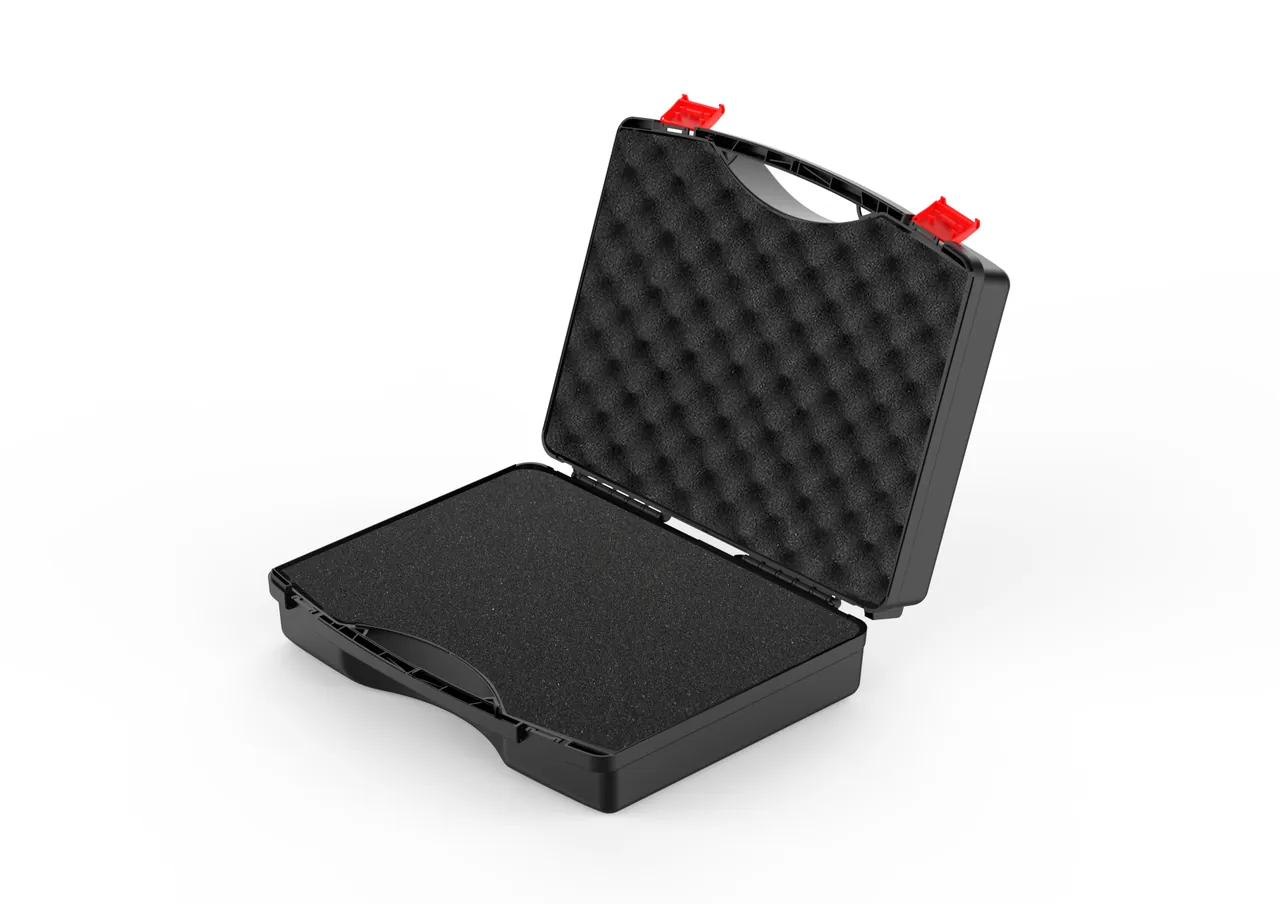
Cost structure and tooling investment logic are covered in Custom Case Mold Cost Analysis, and the instrument case selection framework in Instrument Case Selection Guide. JUNZHJIA, manufactured by Kexin New Materials (Guangdong) Co., Ltd., supports wholesale, distribution, OEM/ODM, and global supply programs, and provides ingress and environmental test documentation on request.
Acceptance and life-cycle management. Both the physical condition and the compliance status of a grain QC case must be managed, so the inspection regime should cover physical state and compliance records together.
Inbound acceptance, per case. Check for cracks and deformation, gasket seating without flattening, latch closing with a definite detent, hinge play, and legible markings. For cases claiming IP6X, sample sealing and dust tests at the agreed frequency. At the same time, complete post-transport calibration verification using reference weights for balances, standard samples for moisture meters, and reference reflectance plates for NIR, and record the results.
Quarterly inspection. Check whether gaskets have hardened, worn, or lost elasticity; whether sealing surfaces carry dust that needs cleaning; hinge pin wear; desiccant condition; insert deformation, soil retention, or lodged kernels; glassware integrity; and whether reagents have expired or leaked.
Pre-operation check. Confirm the temperature transition time has been observed; confirm contents match the QR record; confirm glassware is intact; confirm the sample zone is clean; and confirm calibration is within validity.
Post-operation reset. Refill vacant positions or install placeholder modules; clean and dry dusty or grain-contaminated components before returning them; confirm reagent bottles are sealed before returning them; and record the sample type carried in this session.
End-of-life assessment. Base retirement decisions on four indicators: sealing performance, structural rigidity, latch function, and hygiene condition including insert cleanability. The case body usually outlasts the gasket, so the sensible approach is periodic replacement of gaskets and inserts rather than whole-case scrapping. Cleaning and care methods are covered in How to Clean a Protective Case, and retirement logic in Protective Case Service Life and Retirement Criteria.
| Management stage | Inspection content | Acceptance criterion | Action |
|---|---|---|---|
| --- | --- | --- | --- |
| Inbound acceptance | Appearance, gasket, latches, hinges, markings | No cracks, gasket seated, latches engage | Reject or batch re-inspect |
| Post-transport verification | Calibration state using reference items | Within permitted deviation | Recalibrate or return for service |
| Quarterly check | Gasket, sealing surface dust, desiccant, insert, glass, reagents | Good rebound, no residue, reagents in date | Replace gasket or desiccant, clean, replace reagents |
| Pre-operation check | Temperature transition, contents match, sample zone clean | Transition observed, record matches | Clean and replenish, then release |
| Post-operation reset | Clean and dry, reagent sealed, sample type recorded | No residue, no leakage, record present | Clean, reset, log |
| Retirement review | Sealing, rigidity, latches, insert cleanability | Clear failure in any one | Replace gasket or insert, or retire |
Frequently Asked Questions
Q: What are the biggest differences between a grain sampling and testing case and an ordinary instrument case?
A: Three differences, all directly tied to the reliability of the inspection conclusion. First, dust protection. Silo buildings and purchasing points have extremely high dust concentrations, including both organic dust such as husk and bran and inorganic dust such as soil and grit. Dust entering an optical window directly lowers signal-to-noise ratio, and dust on sliding surfaces causes scoring, so dust tightness, IP6X, should be the baseline, whereas ordinary instrument cases usually address moisture only. Second, sample contamination prevention. If the case or insert has dead spaces, residual kernels or a positive sample from the previous bin contaminate the next bin's result and invalidate the conclusion, so inserts should be cut from a single block, seamless, closed-cell, and low-adsorbing, with a sample zone that lifts out for separate cleaning. Third, calibration retention. Instrument drift produces not equipment loss but wrong quality judgements, so the case must keep transport exposure inside the instrument's permitted limits through low-acceleration restraint, thermal buffering, and moisture isolation, and post-transport calibration verification belongs in the acceptance clause rather than a visual check alone.
Q: Does the case need a dust rating of IP6X?
A: For grain sampling and testing equipment, IP6X, dust tight, should be the baseline. Dust concentration and duration at purchasing points and grain transport routes far exceed ordinary industrial environments, and the particles are fine enough to migrate gradually through small gaps. Note that dust protection fails differently from water protection. Water failure usually shows up as obvious ingress, while dust failure is gradual and hard to detect in a short test, showing up only after long use as contaminated optical windows and degraded electrode performance. Beyond the rating itself, three structural details deserve attention: whether the gasket is continuous with no joints, since joints are high-risk ingress points; whether the lid-to-body mating surface is rigid enough, since insufficient rigidity opens micro-gaps under load; and whether latch clamping force is evenly distributed, since long-sided cases tend to be under-clamped at mid-span. Dust protection also conflicts with heat dissipation, so state clearly that equipment does not operate inside the case and that the case serves only as transport and storage packaging.
Q: What usually causes instruments to lose accuracy after transport?
A: Vibration is only part of the picture and is often not the main cause. Three causes are more common in practice. First, moisture exposure. Once moisture meter electrodes are damp or contaminated, reading drift becomes gradual and is easily misdiagnosed as instrument aging; balance load cells can also show zero drift in high humidity. Second, condensation. Equipment moved from cold into warm humid air condenses water rapidly on its surfaces, and powering up immediately can cause electrical faults or fogged optical windows. Third, overload. Balances, test weight apparatus, and some sensors take a permanent offset if subjected to shock beyond their rated load direction during transport. Genuine vibration-induced drift mostly occurs where optical elements lack surface-contact restraint, or where slender items such as probe shafts lack multi-point support and undergo bending vibration. The answer is therefore four measures in parallel, sealed moisture control, temperature transition, load-direction protection, and low-acceleration restraint, rather than thicker walls or more foam.
Q: How should long items like probe shafts be secured inside the case?
A: The core principles are multiple support points, no free spans, and soft contact. Use at least three support points distributed as evenly as possible, since two-point support leaves a free mid-span that undergoes high-amplitude bending vibration and accumulates irreversible deformation. Contact surfaces should be soft-wrapped to protect shaft coatings while increasing contact area to distribute stress. If shafts are sectional, restrain each section separately rather than laying the whole assembly across the case. From a structural standpoint, the recommended approach is a main case plus a dedicated probe tube: packing everything into one large case creates two problems, excessive mass that defeats portability and bending stiffness of long items that constrains case structure. A separate tube allows a cross-section and support layout better suited to long items and is easier to side-mount on a vehicle or carry on its own. Decide this early, because it significantly affects the case size family and insert concept. Verify straightness after each transport leg, since a shaft that is only slightly bent may still pass inspection but will bias sampling depth.
Q: Should the insert be EVA or PE foam?
A: In grain QC applications, the usual recommendation is PE-type foam as the load-bearing body with EVA around precision components. PE foam, including XPE and IXPE, costs less, has higher compressive strength, absorbs little water thanks to its closed-cell structure, and resists scrubbing, which suits load-bearing layers, metal parts, and areas cleaned frequently; it also does not readily retain soil in the humid, dusty silo environment. EVA has better rebound and cuts precisely enough to conform around instrument bodies, optical equipment, and glassware. PU foam, despite good cushioning, is highly hygroscopic and can hydrolyze in long-term humidity, so it should be used cautiously or avoided in grain applications. Another key point is contamination resistance: the insert should be cut from a single block rather than laminated, with necessary seams sealed so dust and kernels cannot lodge in gaps. In areas that contact samples directly, the material should be non-adsorbing, odorless, and free of harmful substance migration; if a component contacts grain directly, it should meet the applicable GB 4806 material requirements. Material trade-offs are compared in Case Foam Material Comparison.
Q: How do I prevent samples from cross-contaminating inside the case?
A: Address structure, material, and procedure together. Structurally, radius the interior and eliminate dead spaces, cut the insert from a single block rather than laminating, and seal seams; also provide a sample zone that lifts out as a unit, physically separated from tools, spares, and reagents, cleanable on its own and never sharing a zone with reagents. On materials, prefer closed-cell, low water absorption materials with no plasticizer migration risk, and avoid paper and wood components, which absorb moisture and odors and are difficult to clean. On procedure, establish cleaning after every sampling batch, specifying the method, the drying method, and verification, and record the sample type carried previously, especially mycotoxin-positive samples, on the case so contamination risk is traceable. Reagents must also be secondary-sealed and separated from the sample zone, because volatiles released after a leak are adsorbed by the insert and slowly released during later use, which is one of the most insidious contamination sources.
Q: Which marking fields are required for QC compliance?
A: At least four fields should be fixed onto the case. First, calibration validity, covering the most recent calibration date and next due date for key instruments, which is the core field in QC compliance and one of the most frequently checked items in audits. Second, the cleaning record, covering the most recent cleaning date, the operator, and the sample type carried previously, which supports contamination traceability. Third, the contents QR code, so scanning displays the full list, quantities, and storage positions for pre-operation checking and post-operation reset. Fourth, the ingress rating and operating notes, such as "do not invert" and "allow temperature transition before opening," which map directly to the most common field errors. The value of fixing these four fields onto the case is that, compared with recording in a management system, a record on the case is harder for field staff to skip and easier to turn into habit. Use in-mold labels, laser etching, or high-weathering polyester labels, and validate adhesion and scrub resistance, since silo dust and outdoor conditions accelerate peeling in ordinary printed labels.
Q: Can one case serve both the QC room and field rapid testing?
A: Yes, but the differences between the two settings must first be defined and designed for. A QC room has a bench, power, and a relatively controlled environment, while field rapid testing often has no bench, possibly no power, heavy dust, and a tight schedule. Four points make one case work for both. First, the lid should function as a work surface, with a defined load rating and the ability to stay level, so the case can be opened and used directly where no bench exists. Second, high-frequency items must move to the upper layer, with the moisture meter, sampling bags, cleaning tools, and labels in fast-access positions so they can be reached without opening the whole case in dusty conditions. Third, batteries and power supplies need separate compartments with short-circuit protection, and backup capacity should be sized to the longest expected field session. Fourth, long items should use a main case plus probe tube split, so the main case does not become oversized and unportable just to accommodate them. Also complete cleaning and a contents check when moving from the QC room to field work, and run the cleaning and reset procedure on return.
Conclusion and Related Reading
The value of a grain sampling and testing equipment case shows up in two moments. One is during peak purchasing, when an inspector opens a case beside a dust-choked conveyor and completes sampling, moisture measurement, and recording within minutes. The other is the first power-up after delivery to a new silo, when the instrument is still within calibration and the sample is free of contamination from the previous batch. These two moments correspond to the case's field-efficiency design and to the physical protection design of dust, moisture, vibration, and calibration retention. Missing either one reduces the equipment case to an ordinary container.
The logic reduces to seven purchasing principles:
- Use dust tightness as the baseline, and check gasket continuity, mating surface rigidity, and latch clamping distribution at the same time.
- Moisture control is the main line against drift, requiring a high-barrier inner layer, desiccant, and closing-environment control together.
- Write temperature transition into the work instruction, the lowest-cost and highest-return anti-condensation measure.
- Long items need multi-point support, since two-point support means a free mid-span.
- Glassware and reagents need isolated cavities, with glass away from heavy metal and reagents secondary-sealed.
- The sample zone must lift out for cleaning, and the previous sample type must be recorded on the case.
- Put post-transport calibration verification into the acceptance clause, so transport reliability becomes verifiable.
JUNZHJIA, manufactured by Kexin New Materials (Guangdong) Co., Ltd., serves probe sampler and testing equipment makers, grain silos and purchasing organizations, grain quality testing bodies, and testing equipment supply chains with protective cases for wholesale, distribution, OEM/ODM, and global supply programs, offering model-specific probe shaft supports, glassware cavities, secondary reagent sealing positions, and sample zoning, plus ingress and environmental test documentation on request for inclusion in purchasing agreements.
Related Reading