

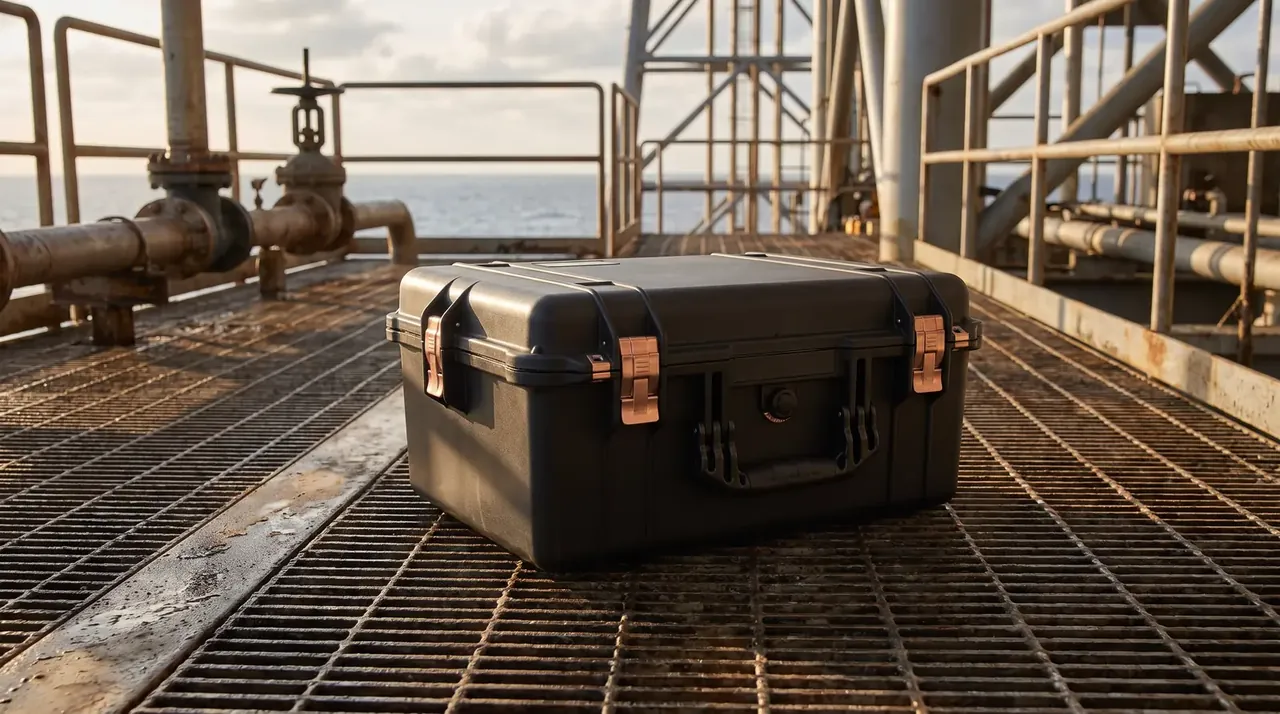
Quick answer: Transport Certification splits by mode: air uses a 1.2 m drop and 95 kPa differential, sea uses 3-tier stacking, and reports last 12 months.
Table of contents
- What the report actually certifies
- Air freight: DGR, pressure and drop
- Sea freight: IMDG and stacking
- Validity, samples and cost
- FAQ
1. What the report actually certifies
Transport Certification is not a product certificate. It answers one question: can this packed case survive the handling, stacking and pressure changes of a given mode. The same case needs one report for air and another for sea, because the test items differ. A sea report carried onto a flight is worth nothing.
The unit under test is the package, not the shell. Case plus foam plus closure method plus gross weight make one package. Change the insert and the gross weight moves, so the old conclusion no longer applies.
Where the two routes split is external conditions. An air cargo hold drops to roughly 75 kPa in cruise, and ground handling drops the package 1.2 m. A sea container sits on deck in sun with internal air reaching 60 °C, and stacking load accumulates with each tier. The two condition sets do not overlap, so the paperwork runs on two tracks.
| Item | Air | Sea |
|---|---|---|
| Rule set | IATA DGR | IMDG Code |
| Pressure | 95 kPa differential | Not applicable |
| Drop | 1.2 m, 6 faces | 1.2 m, 3 edges 1 corner |
| Stacking | Single package | 3 tiers, 24 hours |
| Typical lead time | 5 to 7 working days | 7 to 10 working days |
Three parties ask for it: the carrier, the forwarder at booking, and customs at destination.
2. Air freight: DGR, pressure and drop
The air route starts with IATA DGR, reissued every year, which fixes packaging, marks and document formats by hazard class. A case is rarely dangerous goods itself; what stops a shipment sits inside it. Equipment with lithium cells, aerosols or chemicals pushes the package into a packing instruction.
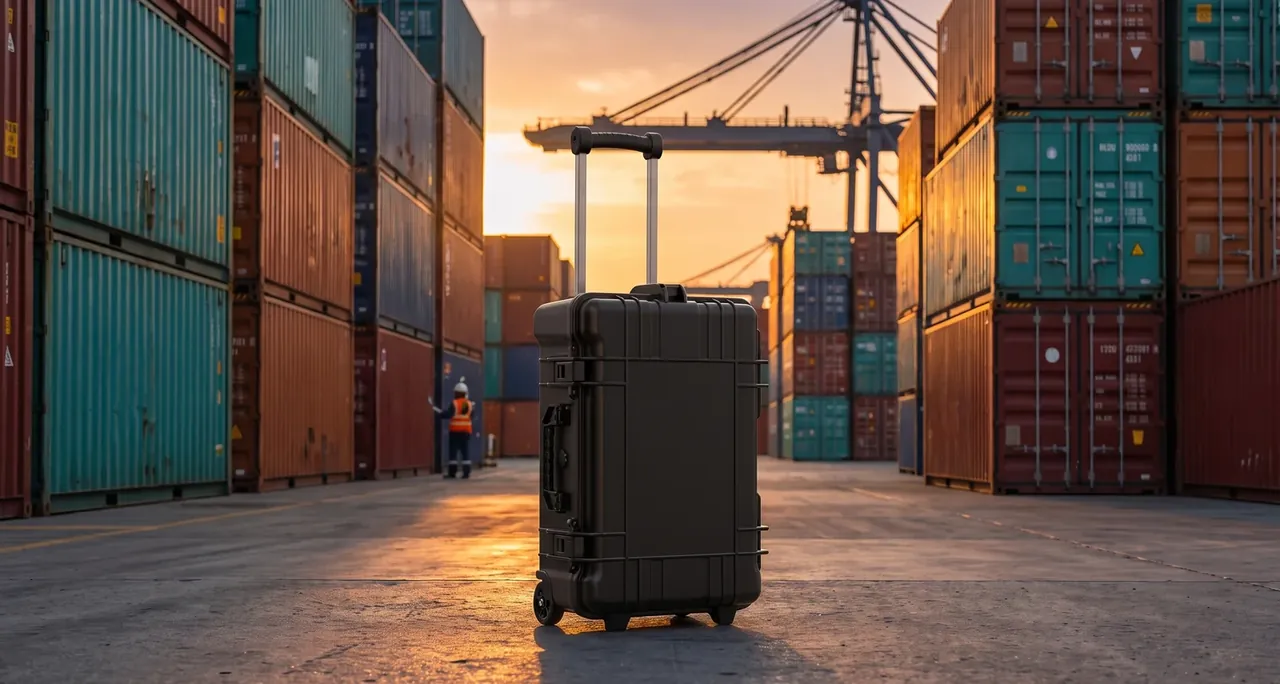
Lithium cells are the most common trigger. UN 38.3 covers 8 tests: altitude simulation, thermal cycling, vibration, shock, external short circuit, impact and crush, overcharge, forced discharge. They test the cells, not the case, but without them the air report cannot be completed.
The package side has three items. The drop runs at 1.2 m on all 6 faces, after which the shell must not crack, the latches must not release and the contents must stay inside. Pressure is checked at a 95 kPa differential in a chamber, standing in for a hold depressurisation, with no bulging or rupture. Cold pre-treatment is where some labs hold the sample at -18 °C for 4 hours before dropping, to see whether latches go brittle.
Gross weight and dimensions go in too. Above 30 kg per package, handling shifts to mechanical and the drop attitude changes; above 200 cm total of the three sides, the shipment is out of gauge.
3. Sea freight: IMDG and stacking
The sea route runs on the IMDG Code, revised every 2 years. Its concerns are the opposite of air: air fears pressure loss, sea fears compression and moisture.
Stacking is the main item. The test runs 3 tiers for 24 hours. Load is calculated at the bottom tier. Permanent deformation must stay under 2 mm, and so must the diagonal change. Real containers often go 4 or 5 high. That is why 3 tiers is a reproducible baseline, and anything above it is declared at booking.
Moisture is the item people skip. Container walls see a 20 °C swing between day and night, condensation forms, and cardboard softens. The case is sealed, but a gasket held at 40 °C and 90% humidity for 7 days takes a compression set above 25%, so reports add a leak retest.
| Test | Condition | Pass line |
|---|---|---|
| Stacking | 3 tiers, 24 hours, 40 °C | Permanent set 2 mm or less |
| Drop | 1.2 m, 3 edges 1 corner | Latches closed, no cracks |
| Leak | 500 Pa start pressure | Drop under 50 Pa per minute |
| Salt spray | 96 hours neutral | No red rust on hardware |
One more sea rule catches exporters: ISPM 15 for wood packaging. The case is plastic, but a timber pallet underneath needs its heat-treatment mark, or the port holds the pallet and the case with it.
4. Validity, samples and cost
Reports run 12 months from issue. That is industry practice rather than a legal limit, and most labs print the expiry on the cover. An expired report is not worthless, but a forwarder will not accept it at booking, which means a rerun.
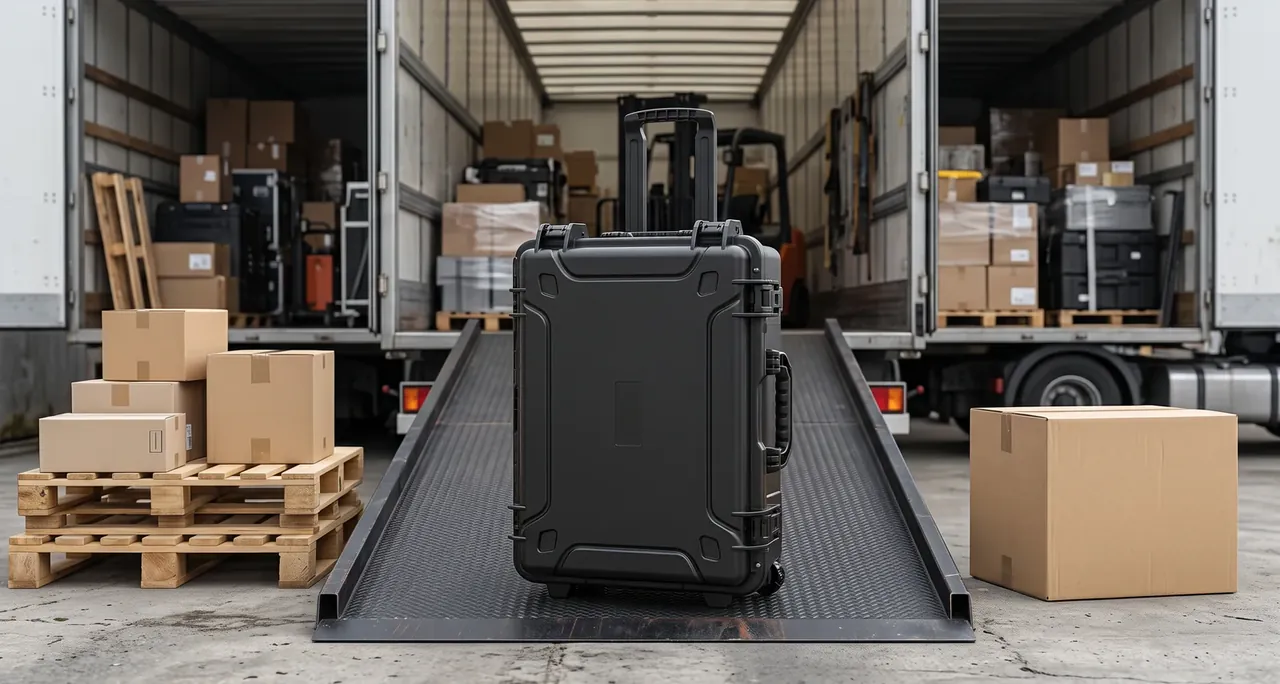
Send 3 samples: one for drop, one for stacking, one as reference. Never skip the third, since a retest depends on it. Samples must match production, with the same insert, latches and gasket.
Check two stamps. CNAS and CMA are the domestic lab accreditations, and a forwarder rejects a report without them. Overseas labs need an equivalent scope.
| Item | Range | Note |
|---|---|---|
| Cost per report | 1200 to 2600 CNY | Depends on test count and urgency |
| Lead time | 5 to 10 working days | 3 days with priority handling |
| Samples | 3 pieces | 1 kept as reference |
| Re-run on change | Full cost | Insert, latch or weight change |
Cost tracks the number of tests. Drop and stacking alone land between 1200 and 1600 CNY; adding pressure, leak and salt spray pushes toward 2600. Family declarations save money: cases with identical structure and material that differ only in internal volume can be filed as one family at about 1.5 times the single fee.
Conclusion
Decide the route before the mould: air needs a 1.2 m drop on 6 faces plus a 95 kPa differential, sea needs 3-tier stacking for 24 hours plus a leak retest. Transport Certification stays valid 12 months, takes 3 samples and costs 1200 to 2600 CNY per report. Put those numbers on the booking checklist and nothing waits at the terminal for paper.
This article covers specifications and design implications on the case side only. It does not address handling, loading or use of anything placed inside.
Related Reading
- How to read UN certification and package marks
- Choosing a protective case for air freight
- Reading CNAS and CMA test reports
- Certification for ammo transport boxes
Related Products
- 8 Series — Gun Cases; Military Equipment Cases; Camera Equipment Cases; Drone Cases; Watch Cases; Knife Cases; First Aid Cases; Electronics Equipment Cases
- WL8-2812 PP Gun Case — model WL8-2812
- All protective cases and toolboxes: 7 series, 158 models