

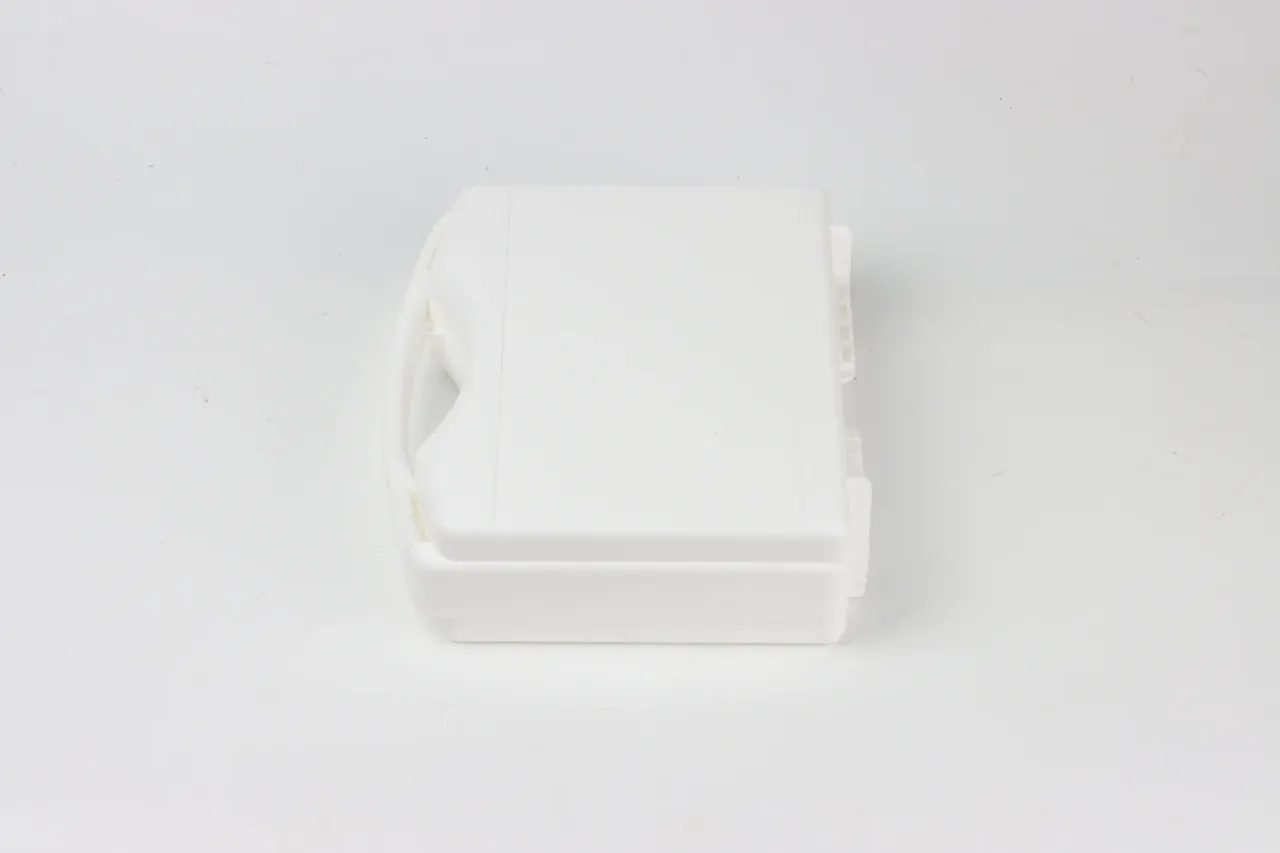
Quick answer: Six checks every 5 trips, each judged against one number: gasket set at 30%, latch gap at 1.5 mm, hinge pin play at 0.3 mm. Clean below 40 °C at pH 7 and dry 20 minutes before the lid goes down.
Table of contents
- Six Checks and Intervals Behind Case Export Packaging
- Cleaning: How Clean Is Clean Enough
- Gaskets and Latches: the Replacement Lines
- Hinges and the Handle Root: Early Wear
- Service Life: UV, Cold and the Label Pad
- Return Legs and Storage: the Next Trip's Cost
- FAQ
1. Six Checks and Intervals Behind Case Export Packaging
Case Export Packaging intervals follow trips, not the calendar. Every 5 dispatches trigger a quick pass, trip 15 brings gauges, trip 30 a retirement review. Idle stock needs one visual check.
The six points are shell, lid, hinge, latches, gasket and marking. Shell and lid show distortion, hinge and latches show clearance. The liner is the seventh: lift it 2 mm and it shifts.
| Item | Interval | Tool | Fail line | Action |
|---|---|---|---|---|
| Shell and lid | every 5 trips | eye, feeler gauge | 5 mm crack, 2 mm warp | quarantine |
| Hinge | every 5 trips | feeler gauge | 0.3 mm axial play | new pin or lid |
| Latches | every 5 trips | tension gauge | 1.5 mm gap, under 60 N | adjust or replace |
| Gasket | every 5 trips | caliper | 30% compression set | full ring |
| Marking | every 15 trips | tape peel | 3 mm lift | re-label |
| Cavity liner | every 15 trips | eye, hand | 2 mm lift | re-bond |
2. Cleaning: How Clean Is Clean Enough
The goal is salt, grit and oil off the mating faces. A case back from a sea leg gives up 0.4 g of salt when scraped, and that salt turns the latch channel into paste.
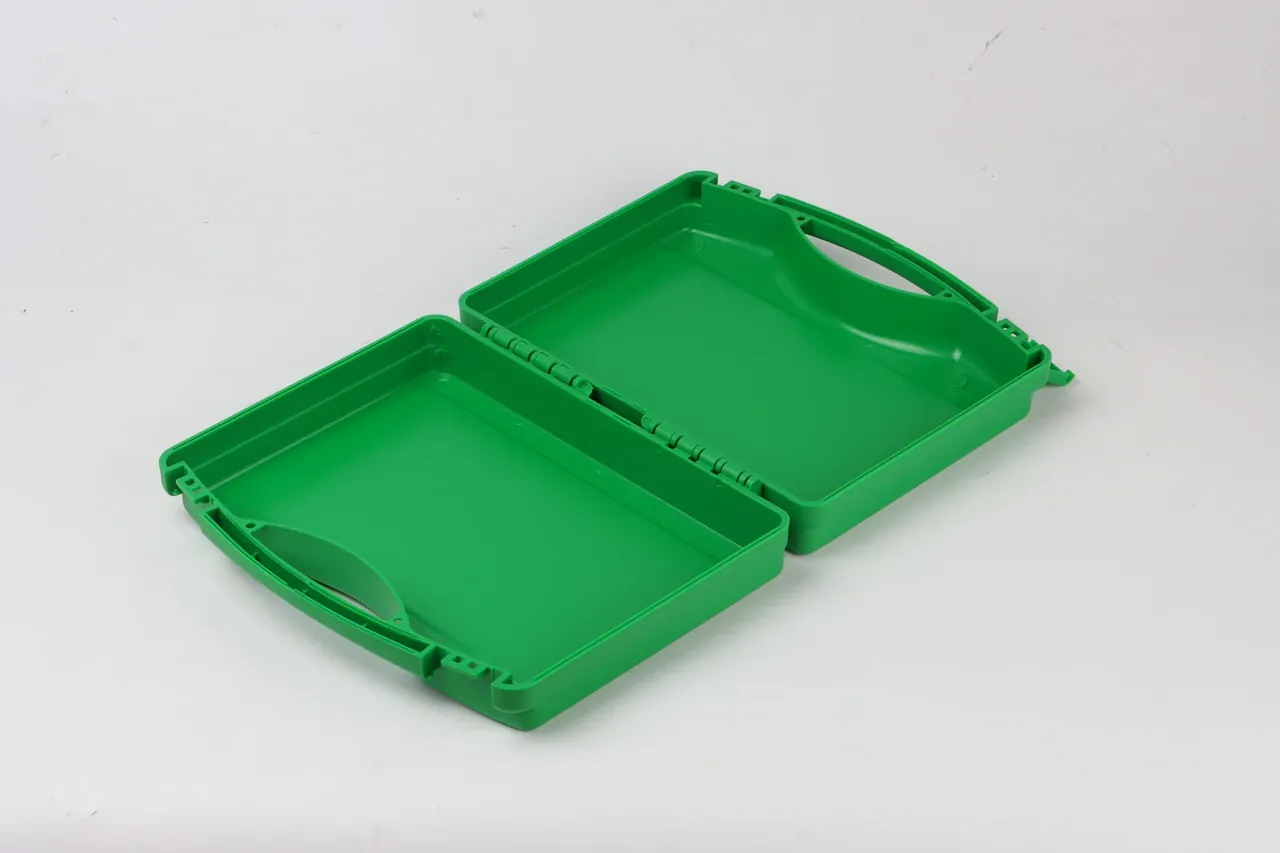
Water stays under 40 °C, agent at pH 7 and 2%. Alkaline cleaners strip gloss from ABS and harden rubber; acid works on hardware until a hinge pin rusts in 48 hours. Rinse low, because 0.5 MPa pushes water into the hinge gap.
Drying fails more often than washing: a wet lid leaks within 24 hours. Drain at an angle 5 minutes, blow 40 °C air for 20 minutes, close below 1% moisture.
3. Gaskets and Latches: the Replacement Lines
The gasket is the cheapest part and decides the result. An EPDM ring at Shore A 55, compressed 30%, should rebound within 3 seconds. Measure the section: 6 mm down to 4.2 mm means 30% set.
Latches carry two numbers, a 1.5 mm gap read with a feeler gauge and 60 N read on a hook gauge. At 1.5 mm the lid lifts on one side during a drop and drags the other side open.
Parts stay cheap against a new shell. A gasket ring is USD 2.5, a latch USD 3.7, a pin USD 1.3, labour 6 minutes each, so a refresh costs USD 11 against USD 54. They stay worth repairing until the shell cracks.
| Part | Fail line | Interval | Price | Labour |
|---|---|---|---|---|
| Gasket | 30% set, 4.2 mm | 24 months | USD 2.5 | 6 min |
| Latch | 1.5 mm gap, 60 N | 30 trips | USD 3.7 | 6 min |
| Hinge pin | 0.3 mm play | as needed | USD 1.3 | 10 min |
| Handle | 5 mm crack | as needed | USD 4.8 | 12 min |
4. Hinges and the Handle Root: Early Wear
The hinge carries the fatigue. A continuous hinge runs a 4 mm pin in 0.2 mm of clearance, and at 0.3 mm the lid rocks. Open to 90° and push; any play you feel is past the line.
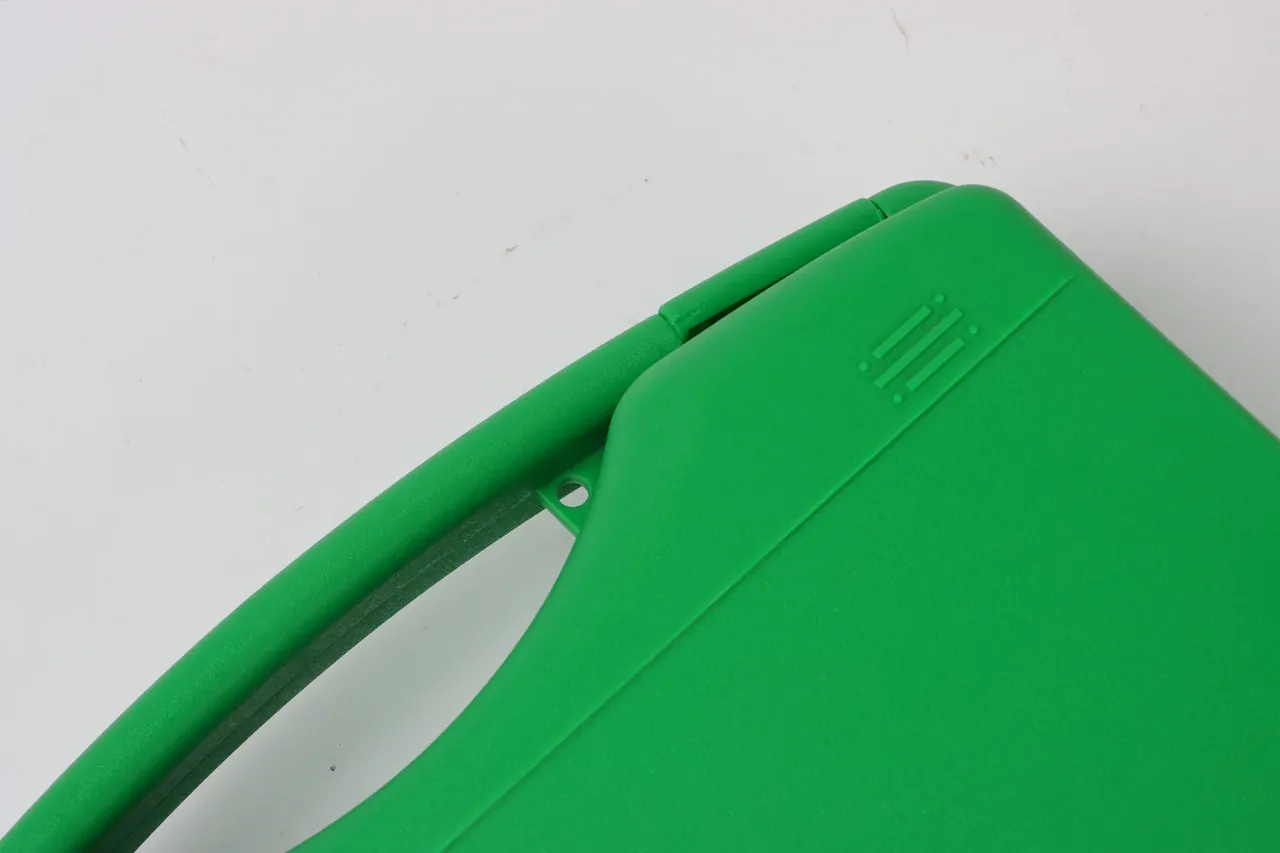
At the handle root, watch the weld line and drain hole. The weld line crazes first after 200 lifts at 46 kg; past 5 mm the handle is replaced. A blocked drain hole freezes and splits.
Fasteners need a torque figure: 3.5 N·m. Above 4.5 N·m the boss cracks, below 2 N·m the screw walks out after 30 minutes of vibration. Case Export Packaging batches tightened by feel come back twice as often.
5. Service Life: UV, Cold and the Label Pad
Half the life of a plastic case is spent outdoors. A 500-hour yard exposure equals 1200 MJ/m² at 340 nm, shifts colour by ΔE 3 and costs 15% of impact strength.
Cold is the second cliff. At −20 °C a 2 J drop cracks unmodified ABS; at 20 °C the same energy does nothing. Hold the case 12 hours above 15 °C so latches close at 60 N again. Case Export Packaging schedules that skip the warm-up pay in cracked corners.
The label pad has its own rule. Moulded pads have low surface energy, so ordinary adhesive lifts 3 mm at 60 °C. A 0.1 mm PET label or screen print removes 1.5 minutes of re-labelling.
| Factor | Threshold | Effect | Countermeasure |
|---|---|---|---|
| UV | 500 h, ΔE 3 | 15% impact loss | shade indoors |
| Cold | −20 °C | 2 J drop crack | 12 h warm-up |
| Salt fog | rust at 48 h | hinge seizure | grease quarterly |
| Heat | 60 °C for 24 h | 3 mm label lift | screen print |
6. Return Legs and Storage: the Next Trip's Cost
Stacking cases dirty after a return leg shortens life fastest. Grit between two bases grinds 0.2 mm off the floor over 800 km, and at 0.5 mm the corners whiten.
Storage rests on three figures: 1.8 m stack height, 60% humidity, 100 mm pallet clearance. Above 75% humidity mould takes hold, and a stack past 300 kg crushes the bottom corners.
Kept this way, a case rated for 30 trips reaches 40, and cost per trip falls from USD 1.8 to USD 1.35. Uninspected batches retire at 18 trips and USD 3 each.
| Item | Rule | Figure | Cost of ignoring |
|---|---|---|---|
| Stack height | per stack | 1.8 m | crushed corners |
| Humidity | relative | under 60% | mould in liner |
| Pallet clearance | floor gap | 100 mm | moisture uptake |
| Wash window | after return | 24 h | grit grinding |
Conclusion
Five, 40, 30, 1.5 and 1.8 carry the routine: a check every 5 trips, water under 40 °C, a ring at 30% set, a latch at 1.5 mm, a stack at 1.8 m. Ten extra trips saves USD 0.45 a trip, and Case Export Packaging margins are built from numbers like these.
This article discusses only the container (case body) side of specifications and design intent, and does not cover any handling, loading or use of the contents.
Related Reading
- How the three packaging layers stack up
- Quarterly service items for reserve cases
- Mould care and cavity cleaning order
- Daily check sheet for injection machines
- Wheel assembly upkeep on wheeled cases
Related Products
- 8 Series — Gun Cases; Military Equipment Cases; Camera Equipment Cases; Drone Cases; Watch Cases; Knife Cases; First Aid Cases; Electronics Equipment Cases
- WL8-2812 PP Gun Case — model WL8-2812
- All protective cases and toolboxes: 7 series, 158 models