

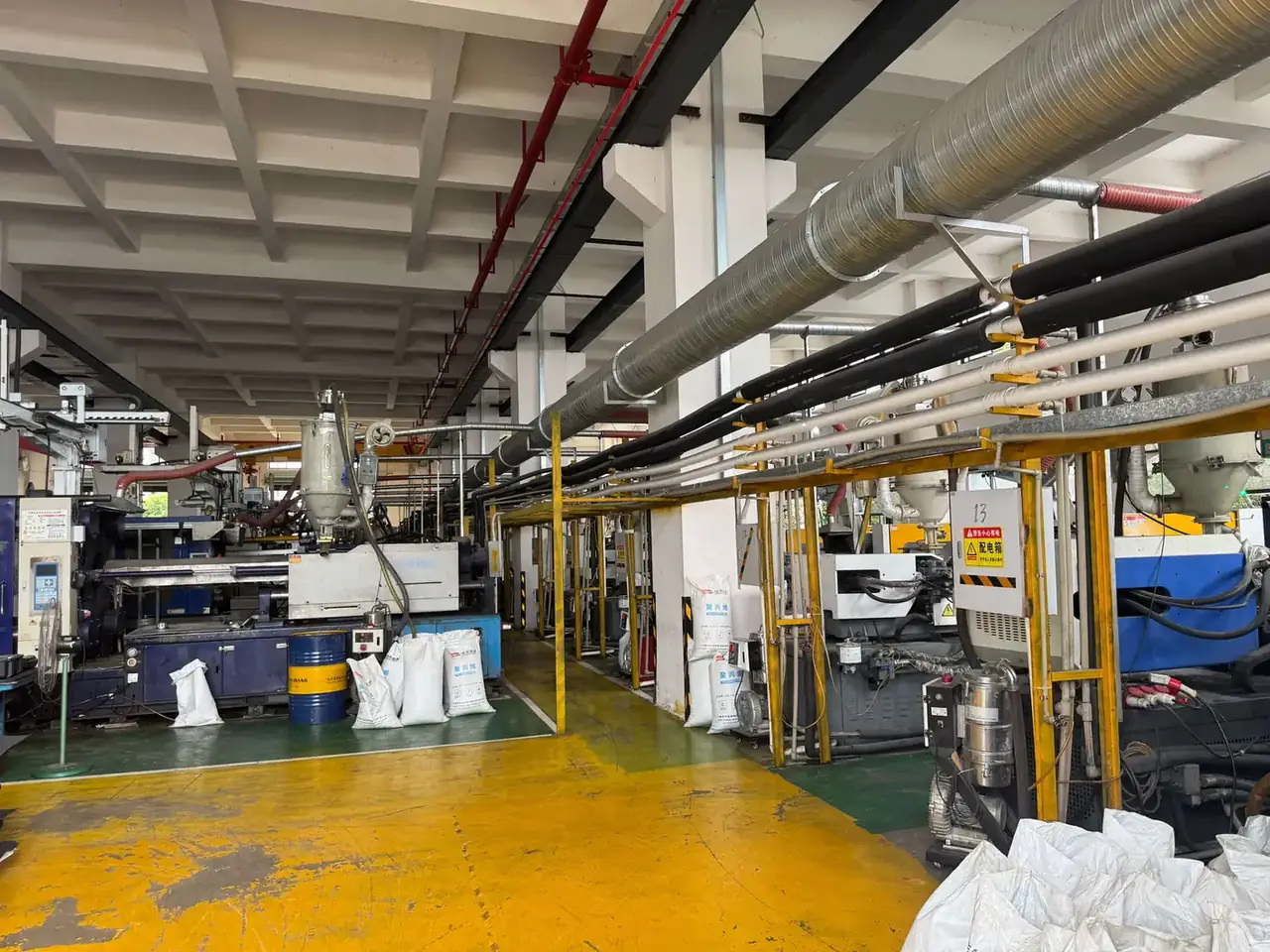
Quick answer: A Case Factory Tour needs twelve questions in three groups, four each on capacity, molds and inspection. Rehearse the strong and the weak answer first: minutes, shot counts and sample sizes are strong, adjectives are not. Write the exact words down and judge after you leave.
Table of contents
- Three Rules for Asking
- Capacity: Four Questions
- Molds: Four Questions
- Inspection: Four Questions
- Telling Truth from Rehearsal
- FAQ
1. Three Rules for Asking
On a Case Factory Tour, order matters more than wording. Ask for numbers, then records, then exceptions. Ask how quality is, and you will hear one word.
Pair every question with two possible answers before you speak. A changeover question is worth twenty-five minutes, two people and a cart, or it is worth a shrug: it depends.
Ask one layer at a time, since three questions in one sentence get the easiest answer only. Then write the exact words down: tone fades on the drive back, numbers do not.
2. Capacity: Four Questions
Daily output comes first. A strong answer multiplies single-shift count by shifts and subtracts changeover: one 1200 t press runs 130 bodies in eight hours, 260 in two shifts, roughly 6,700 a month over 26 days. A round figure that turns theoretical on follow-up is weak.
Changeover takes second place: 25 minutes including first-off is strong, past 60 minutes means no quick-change setup. Utilisation third: 78 percent with a stated basis is strong, while near full load usually means no room for your order. Breakdown cover last: a spare-parts list and a named backup press are strong; a shrug about rare stoppages is weak.
| Question | Strong answer | Weak answer | Follow-up |
|---|---|---|---|
| Daily output | 130 per shift, 260 per day | A round figure | What survives changeover |
| Changeover time | 25 minutes with first-off | Depends on the mold | Is there a cart |
| Utilisation | 78 percent, basis stated | Nearly full | Monthly or per press |
| Breakdown cover | Spares plus a backup press | We rarely stop | Last stoppage length |
3. Molds: Four Questions
On a Case Factory Tour, mold answers separate a real plant from a trading office. Count and ownership first: eighteen own molds is mid-size, while a vague many often hides customer-owned tools that cannot be scheduled.
Life second: 300,000 shots with a stated polishing interval is strong. A tool past its cycle without service brings flash and scoring at the same time. Trials third: T1 to T3 with dimensional reports is strong, one round is not. Repairs last: in-house in three to five days is strong, outsourcing adds two weeks to every date.
| Question | Strong answer | Weak answer | Follow-up |
|---|---|---|---|
| Mold count | 18 own tools | Many | How many are customer-owned |
| Shot life | 300,000 shots, polished on schedule | Lasts a long time | Show the service log |
| Trials | T1 to T3 plus reports | First try passes | Where is the T1 report |
| Repairs | In-house, three to five days | Sent out | How many toolmakers |
4. Inspection: Four Questions
First-off approval: quality signs off and three parts stay held until the order closes, which is strong; an operator glance is weak.
Shipment sampling: AQL 1.0, fifty pieces from a five-hundred lot, with full-inspection items listed separately. Checking everything means no sampling standard exists.
Leak and drop: 0.3 bar held for 30 seconds, then 1.2 m onto six faces. Hosing a body down proves only that it was dry that minute. Defects last: isolation, tagging, lot traceability, plus 0.6 percent monthly with a trend line, which a Case Factory Tour host has or does not.
| Question | Strong answer | Weak answer | Follow-up |
|---|---|---|---|
| First-off | Quality signs, three held | Operator glanced | How long records stay |
| Sampling | AQL 1.0, 50 of 500 | We check all | Which items are full |
| Leak and drop | 0.3 bar, 30 s, 1.2 m six faces | It stays dry | Where is the drop log |
| Defects | Isolated, traced, 0.6 percent trend | Very few | Last month's reject sheet |
5. Telling Truth from Rehearsal
Three cross-checks work. Repeat one number half an hour later, because a figure that changes was invented. Ask for the record behind it, since an unrecorded number is a spoken number. Ask for a recent bad case with a date, a lot and a disposition.
Pace gives it away too: steady speech with decimals means familiarity, adjectives mean the numbers are someone else's.
Write the key figures on the back of a card, dated. Before the Case Factory Tour ends, lay that card beside your notes; the gaps are the questions to send by mail.
Conclusion
Twelve questions in three groups all test one thing: whether the numbers match the records, and the records match the floor. Sharper questions are harder to answer vaguely. Run all twelve across two plants and a Case Factory Tour becomes a screening you can repeat.
This article discusses only the container (case body) side of specifications and design intent, and does not cover any handling, loading or use of the contents.
Related Reading
- How to Choose a Case OEM Factory
- Case Batch Incoming Inspection
- Pre-Shipment Inspection Cases
- Supplier Sample Evaluation Cases
Related Products
- 8 Series — Gun Cases; Military Equipment Cases; Camera Equipment Cases; Drone Cases; Watch Cases; Knife Cases; First Aid Cases; Electronics Equipment Cases
- WL8-2812 PP Gun Case — model WL8-2812
- All protective cases and toolboxes: 7 series, 158 models