

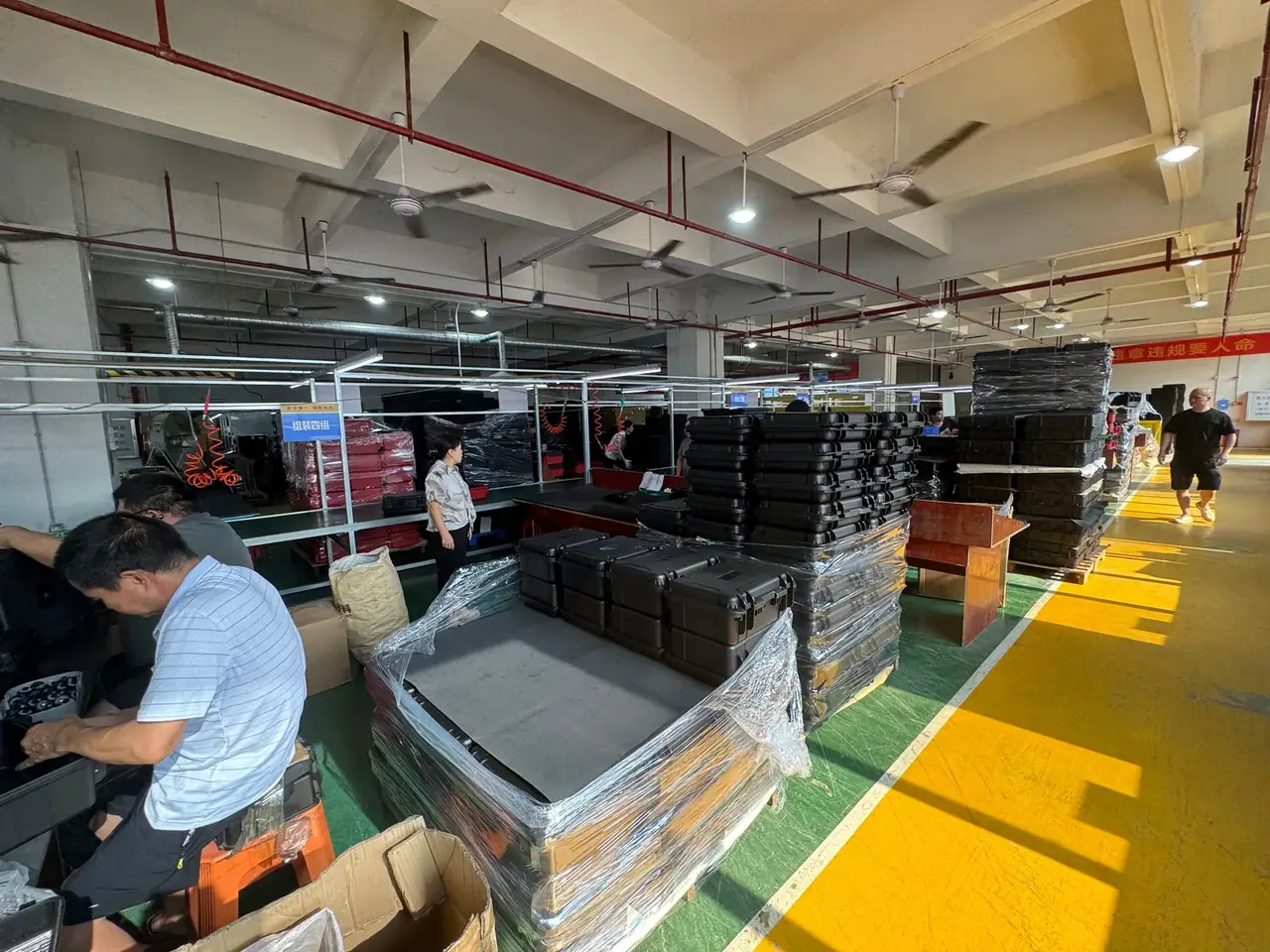
Quick answer: Going from 180 to 250 mm on the same 600×400 mm footprint adds 2100 mm to a 30-case stack, cutting pallet layers in a 2.6 m truck from 13 to 9.
Table of contents
- Where the 70 mm difference sits
- Upright versus flat loading
- Lid space for accessories
- Matching height to rack and truck clearance
- Volumetric weight and freight
- Four steps to work backwards
- FAQ
1. Where the 70 mm difference sits
A case height choice between 180 and 250 mm is measured over lid and base, and both come off the same 600×400 mm mould with a different core. The 70 mm is not split evenly: the lid takes 23 mm, the base takes 47 mm.
Stack 30 cases and the totals are 5400 mm against 7500 mm. That 2100 mm decides whether a stack clears a truck roof, and how many cubic metres the invoice counts.
| Item | 180 mm | 250 mm | Delta |
|---|---|---|---|
| Outside size | 600×400×180 mm | 600×400×250 mm | +70 mm |
| Single-case volume | 43.2 L | 60.0 L | +16.8 L |
| Empty weight | 4.1 kg | 5.0 kg | +0.9 kg |
| Usable lid depth | 22 mm | 45 mm | +23 mm |
| Base rib height | 26 mm | 47 mm | +21 mm |
| Volumetric weight, 6000 divisor | 7.2 kg | 10.0 kg | +2.8 kg |
The taller base carries 47 mm ribs against 26 mm, and 5 wall bands against 3.
2. Upright versus flat loading
Flat loading puts the 600×400 mm face down and builds at 180 or 250 mm per layer. Standing a case on its 400 mm edge shrinks the footprint to 400×180 mm, while height jumps to 600 mm.
On a 1200×1000 mm pallet with a 1200 mm limit, flat loading gives 4 per layer and 5 layers, so 20. Upright gives 15 per layer and 2 layers, so 30, a 50% gain. The 250 mm option runs 16 against 24, the same 50%.
Nothing is free. The stack centre rises from 600 to 1200 mm, doubling the roll moment in a forklift turn, so corner boards go on and strapping jumps from 1 band to 2. With the lid sideways the gasket sees shear, so storage stays under 30 days.
Upright, the 600 mm becomes height, so an 1800 mm bay holds only 2 layers.
3. Lid space for accessories
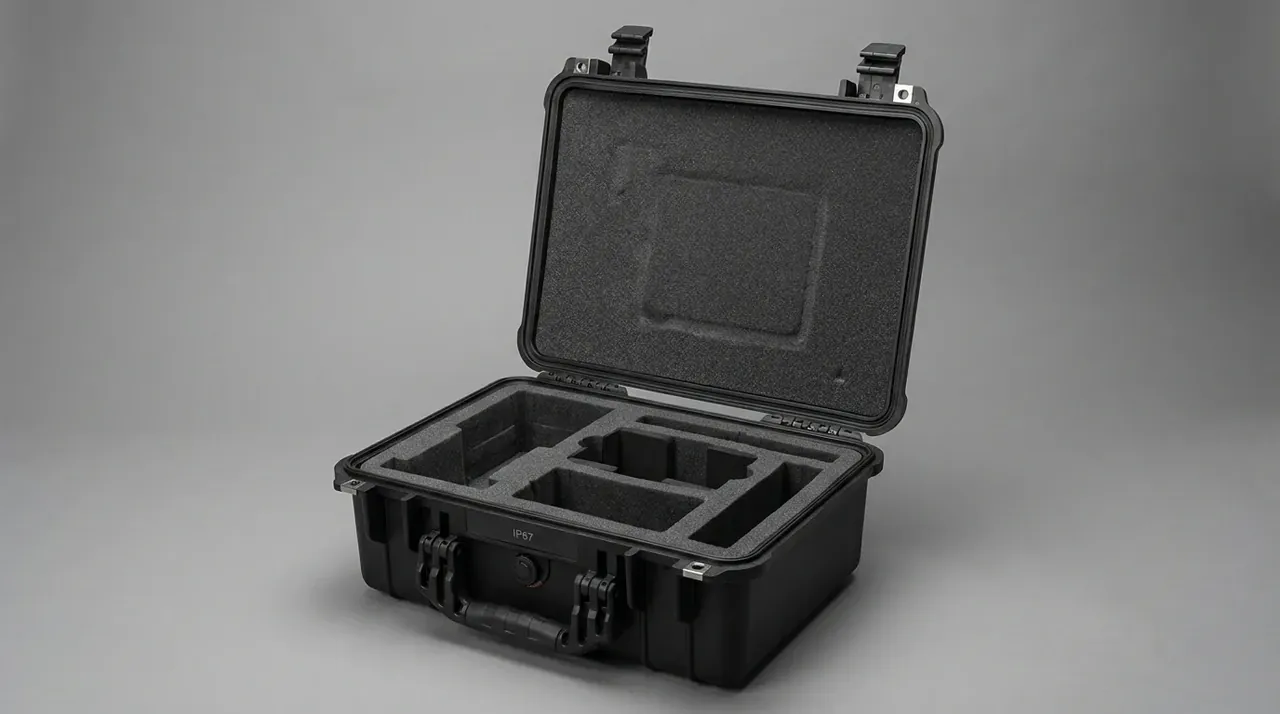
The lid is the part of a case height choice most often wasted. At 180 mm it is 22 mm deep, and a 10 mm liner leaves 12 mm. At 250 mm it is 45 mm deep and keeps 35 mm.
What 35 mm holds: a 38 mm adapter at 30°, a 30 mm cable reel flat, two 26 mm battery packs side by side, three 12 mm folders stacked. At 12 mm only folders survive.
That is the real argument for the taller case: accessories move inside. An external pouch costs USD 8 and adds 40 seconds to every count, or 22 hours a year.
4. Matching height to rack and truck clearance
Clearance is a hard limit, and a 20 mm error costs a whole layer. Measure from the deck to the beam, subtract 100 mm for hands, and the rest is usable.

A 2.6 m truck leaves 2450 mm after a 150 mm pallet: 13 layers at 180 mm, 9 at 250 mm, wasting 200 mm of roof.
| Setting | Usable height | 180 mm | 250 mm |
|---|---|---|---|
| 2.6 m truck minus pallet and gap | 2350 mm | 13 layers | 9 layers |
| 40 ft high cube | 2698 mm | 14 layers | 10 layers |
| Rack bay 1800 mm | 1700 mm | 9 layers | 6 layers |
| Rack bay 2400 mm | 2300 mm | 12 layers | 9 layers |
In a high cube the counts are 14 and 10, or 1400 cases against 1000 at 100 per layer, a 28.6% gap. On an 1800 mm bay the 250 mm case hits the beam at layer 7.
Lifts are a second gate: a 2100 mm lift breaks a 7500 mm stack into 4 trips against 3, each costing a count and a handover sheet.
5. Volumetric weight and freight
Volumetric weight follows outside dimensions, so height is billed in full: 7.2 kg against 10.0 kg at a 6000 divisor, or 84 kg on a 30-case shipment.
| Billing basis | 180 mm | 250 mm | 30-case delta |
|---|---|---|---|
| Air volumetric weight | 7.2 kg | 10.0 kg | +84 kg |
| Air at USD 4.5/kg | USD 32.4 | USD 45.0 | +USD 378 |
| Express at USD 7.2/kg | USD 51.8 | USD 72.0 | +USD 604.8 |
| LCL sea at USD 95/m³ | USD 4.1 | USD 5.7 | +USD 48 |
Light cargo pays most: a 3 kg instrument bills 10.0 kg against 8.0 kg actual, and at 2 kg the share reaches 83%.
Heavy cargo flips the sum: above 5 kg of instrument the gross weight passes 10.0 kg and the 70 mm never reaches the invoice.
6. Four steps to work backwards
Measure clearance, count layers, convert volumetric weight, compare annual cost. Step three is where teams slip: they price one case and forget annual volume.
Take 2000 cases by air: USD 12.6 more each, or USD 25200 a year, against USD 16000 for pouches. The gap of USD 9200 says stay at 180 mm.
At 800 cases the gap falls to USD 10080 and the taller case wins; the crossover sits near 1270 units.
Pallet positions belong in the same sheet: 39 positions at 52 cases per pallet against 56 at 36, or CNY 2040 a year more.
Conclusion
Settle the case height choice in two moves: let clearance cap the stack, then let the annual volumetric gap pick between survivors. If the taller case still stacks 9 layers after the gap is deducted, the accessories must ride inside, and the instrument weighs under 5 kg, the extra 70 mm earns its place. Any one of those failing sends the order back to 180 mm.
Layer count is the item most often skipped, because truck and rack heights are fixed. A case that stands 70 mm taller removes one whole layer, and no freight rate compensates for a pallet that no longer fits.
Three field actions close it out. Run a tape from pallet deck to beam and write the usable height down. Divide annual volume by 12.6, multiply by the freight rate, and put a number on 70 mm. Weigh one packed case to see whether gross weight covers the volumetric figure.
This article discusses container-side specifications and design implications only, and does not cover any handling, loading or use of the contents.
Related Reading
- Stackable toolbox height limits
- Reading interior case dimensions
- How to size a protective case
- Protective case size range explained
- Cross-border case freight billing
Related Products
- 8 Series — Gun Cases; Military Equipment Cases; Camera Equipment Cases; Drone Cases; Watch Cases; Knife Cases; First Aid Cases; Electronics Equipment Cases
- WL8-2812 PP Gun Case — model WL8-2812
- All protective cases and toolboxes: 7 series, 158 models