

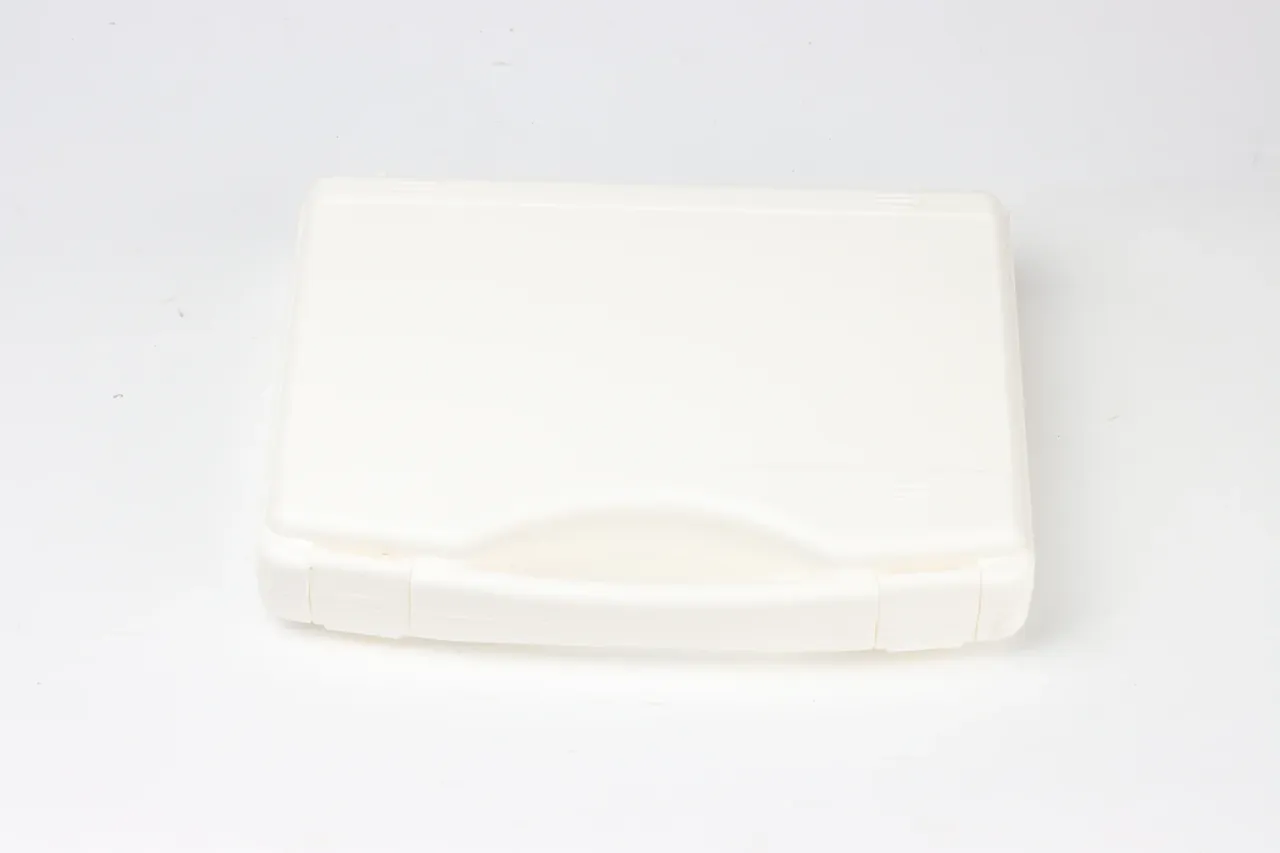
Quick answer: Case interior dimensions describe the clear span between inner walls, without latch bosses or hinge lugs; on a 600 × 400 class case that means an outline of 626 × 442 × 250 mm, a cavity of 560 × 376 × 200 mm and 500 × 316 × 140 mm usable once 30 mm foam goes on five faces.
Table of contents
- Three Numbers, Not One
- Mouth and Base Differ by 7 mm
- Corners, Ribs and Lid Recesses
- Working Back from the Item
- Writing the Numbers into an Order
- FAQ
1. Three Numbers, Not One
Most size disputes start with two people measuring different things. A supplier quotes 560 × 376 × 200, the buyer tapes the outside and reads 626 × 442 × 250, and both are correct. The outline is the largest envelope, latch overhangs, hinge lugs and feet included, and it governs freight volume, shelf pitch and truck layout. Case interior dimensions are the clear span between inner walls and govern what the equipment can be. Usable space is what survives foam, ribs and lid recesses, and governs whether the lid shuts and a hand fits.
| Item | Measured | Made of |
|---|---|---|
| Outline | 626 × 442 × 250 mm | latch 9 mm, hinge lug 6 mm, feet 5 mm |
| Cavity | 560 × 376 × 200 mm | base 154 mm plus lid 46 mm |
| Cavity volume | 42.1 L | three sides multiplied |
| Usable space | 500 × 316 × 140 mm | 30 mm foam on five faces |
| Usable volume | 22.1 L | 52.5% of cavity |
The 66 mm lost on length and width and 50 mm lost on height are wall stack, gasket ledge and lid skirt. Cases landing between 60 and 70 mm are usually single-shot mouldings; past 90 mm there is normally a second structural layer.
2. Mouth and Base Differ by 7 mm
One cross-section is not enough. Injection mouldings need draft, commonly 0.5° to 1° per side, so the cavity narrows toward the base. At 200 mm deep and 1° per side the base sits 7 mm narrower than the mouth, and a tape hooked over the rim overstates width by exactly that.
Fixed datums make a figure enforceable: length and width 20 mm below the rim, depth from inner base to lid roof, three readings per axis, smallest recorded. A steel tape reads to 1 mm above 500 mm, a vernier to 0.02 mm under 100 mm, and a depth gauge seated flat on the rim beats a tape.
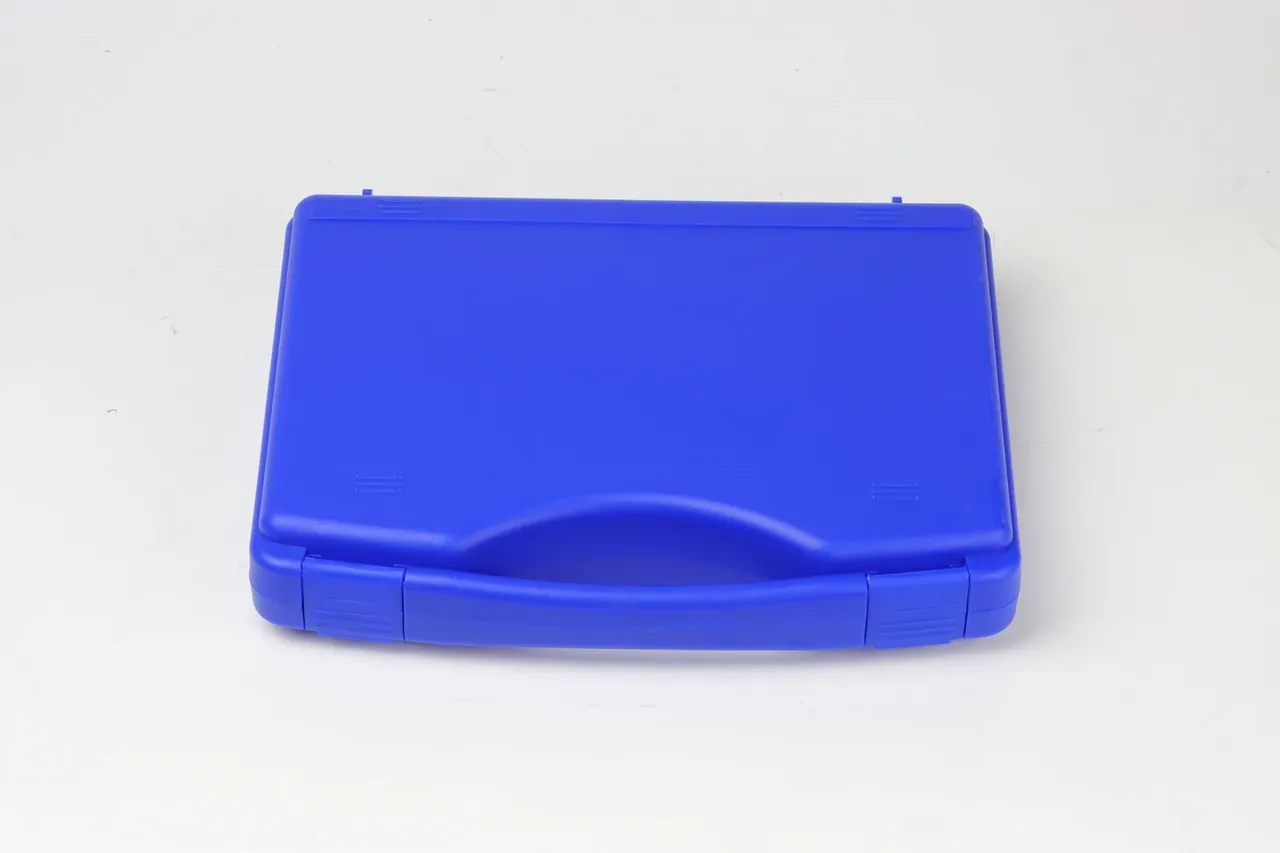
Height needs its own sum: a 154 mm base plus a 46 mm lid gives 200 mm, which is a ceiling rather than a working number. An 8 mm lid recess and a 4 mm rib upstand leave 188 mm for anything upright.
| Measurement | Datum | Instrument | Tolerance |
|---|---|---|---|
| Cavity length | 20 mm below rim | steel tape | ±2 mm |
| Cavity width | 20 mm below rim | steel tape | ±2 mm |
| Cavity depth | base to lid roof | depth gauge | ±3 mm |
| Clear opening | inside gasket ledge | vernier | ±2 mm |
| Lid recess | lowest point | depth gauge | ±1 mm |
3. Corners, Ribs and Lid Recesses
Corners take the square footage. R12 corners lose a 12 × 12 mm block at each of the four corners, which is why square equipment either sits with a gap or arrives chamfered.
Ribs take width. Vertical ribs every 60 to 80 mm stand 4 mm proud, so one ribbed wall costs 4 mm and a pair costs 8 mm. Quote the span between rib faces rather than between walls, and call out both figures on the drawing.
The gasket ledge takes the opening. A 6 mm shoulder compresses the seal and the clear opening ends up 12 mm narrower than the cavity, so a 380 mm flat instrument will not drop into a 376 mm cavity on edge.
The lid recess takes local height: 6 to 10 mm of step for latch travel, measured at the lowest point. After all of it, 42.1 L leaves 22.1 L usable, and every extra 10 mm of foam costs roughly 3 L.
4. Working Back from the Item
Running the sum backwards is faster. Item size plus clearance per side gives the minimum cavity, and clearance follows the packing method:
- Bare placement: 3 mm per side against paint rub
- Dividers: 5 mm per side plus 3 mm for the board
- Egg-crate foam: 10 mm per side
- Bonded foam: 15 mm per side, 20% compression allowed
Finger clearance goes on top: 25 mm for anything gripped by hand, and a cased instrument only counts once its handle is folded.
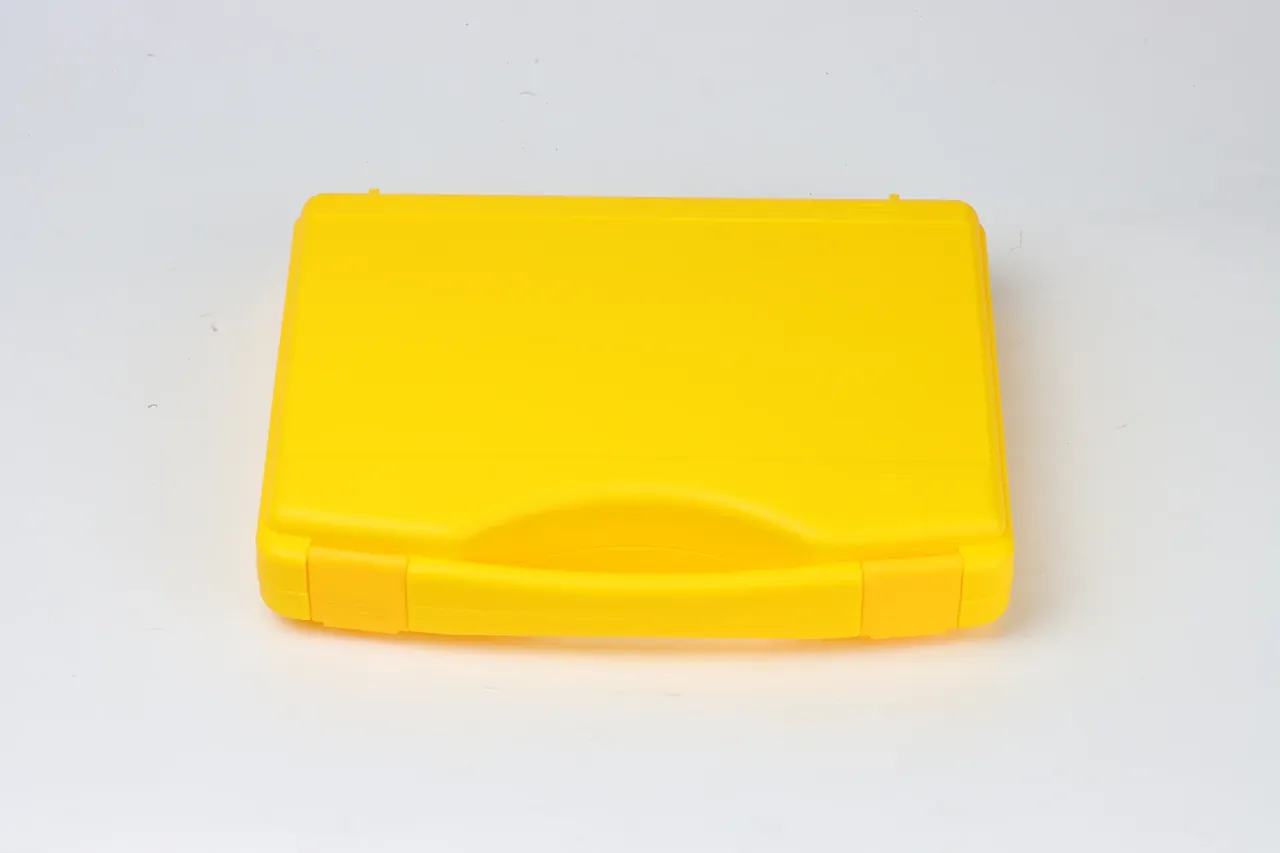
A 480 × 300 × 120 mm instrument with 15 mm bonded foam and 25 mm of finger room needs 535 mm of length, 355 mm of width and 150 mm of height. Against the cavity above, length clears by 25 mm, width by 21 mm and height by 50 mm, and a 5 mm divider board in the width leaves 16 mm, which is no longer finger room.
Stacking changes the sum by direction. Vertical stacks multiply single height by count and add a divider per layer; side-by-side stacks take the widest piece and discount the rest to about 80% of volume. The two methods can differ by 20 mm of depth on the same load.
5. Writing the Numbers into an Order
A usable clause carries four elements: figure, datum, tolerance and whether a liner is included. Drop one and the argument moves to inspection day.
One working line reads: case interior dimensions 560 × 376 × 200 mm, measured 20 mm below the rim, tolerance ±2 mm, foam excluded.
Quotations often quote the mouth, 7 mm larger than the base, so ask for the datum in writing or put the section line and reference face on the drawing. The outline needs the same note on latches, which add 8 to 12 mm and decide pallet layout.
Three line types settle it: solid for the outline, dashed for the cavity, dash-dot for usable space. Every 10 mm added to the cavity adds 10 mm to the outline, and freight billed by cubic metre moves up a bracket.
Conclusion
The outline carries freight, case interior dimensions carry the load, and usable space decides whether the lid shuts. A quote built on one figure guarantees rework; putting 626 × 442 × 250 beside 560 × 376 × 200, with a datum and a ±2 mm tolerance, removes most of the argument before it starts.
This article discusses only the specification and design intent on the container (case) side, and does not cover any handling, loading or use of the contents.
Related Reading
- Custom Size Plastic Case: Start From the Cavity, Not the O…
- Hard plastic case with foam insert: 1.5 mm beats a thicker…
- IP68 Waterproof Plastic Case: An Overnight Soak Proves Not…
- Stackable Plastic Storage Case Trial: Five Layers, One Til…
Related Products
- 8 Series — Gun Cases; Military Equipment Cases; Camera Equipment Cases; Drone Cases; Watch Cases; Knife Cases; First Aid Cases; Electronics Equipment Cases
- WL8-2812 PP Gun Case — model WL8-2812
- All protective cases and toolboxes: 7 series, 158 models