

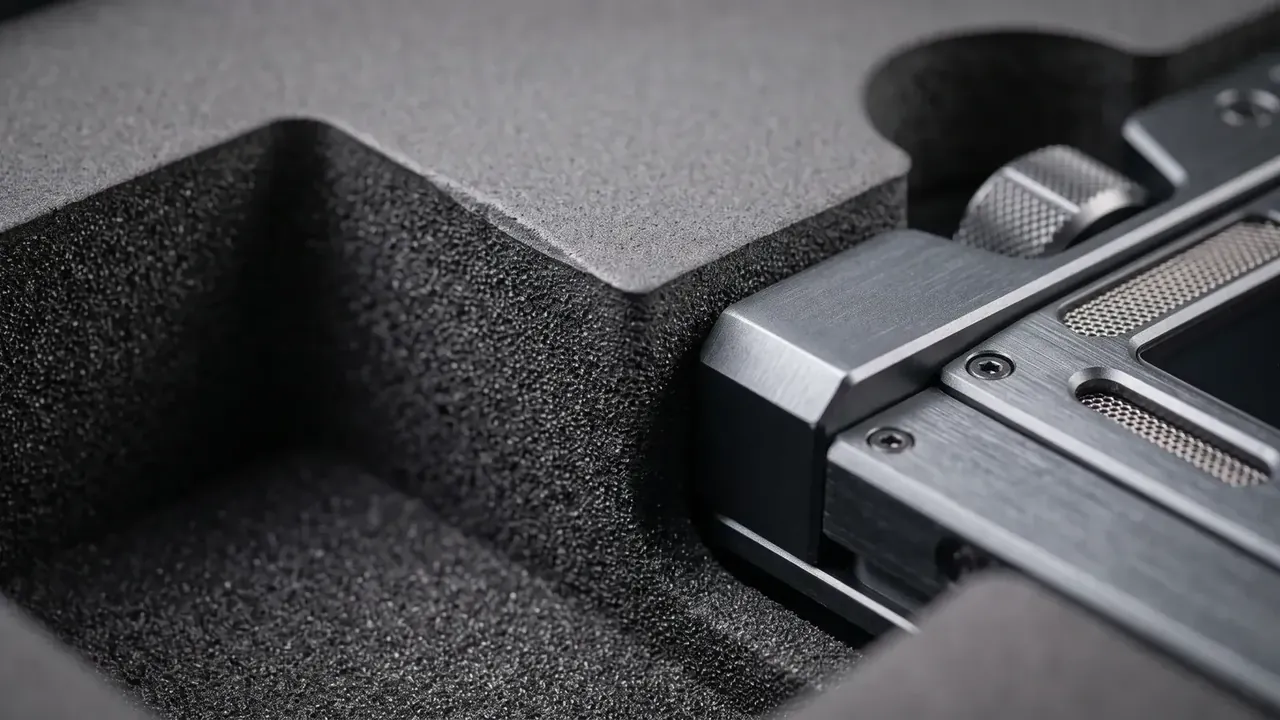
Quick answer: A hard plastic case with foam insert rarely leaks because the wall is thin. The insert is out of size against the cavity: 2 mm at the sides, 3 mm at the floor, 4 mm at the top, a lid strip pressed 1.2 mm, and travel under 2 mm after a drop.
Table of contents
- Wall Thickness Cannot Close the Gap
- Cavity Minus Insert
- Bonding or Clips
- Lid Strip at 1.5 mm
- Drop Displacement
- Matching Case Type
- FAQ
1. Wall Thickness Cannot Close the Gap
Thickening the wall is the obvious move and usually the wasted one. From 4.5 mm to 6 mm adds little stiffness, and the insert still shifts. What decides movement is the 1 to 4 mm of clearance around it.
The tolerances are not in the same class: a moulded body runs 1.5 mm longer between shots, a cut insert holds 0.5 mm. Clearance lives on the insert side.
A hard plastic case with foam insert at 42 litres weighs 5.6 kg; 1 mm of extra wall adds 0.7 kg.
2. Cavity Minus Insert
Insert outline equals cavity minus clearance, and clearance is three numbers.
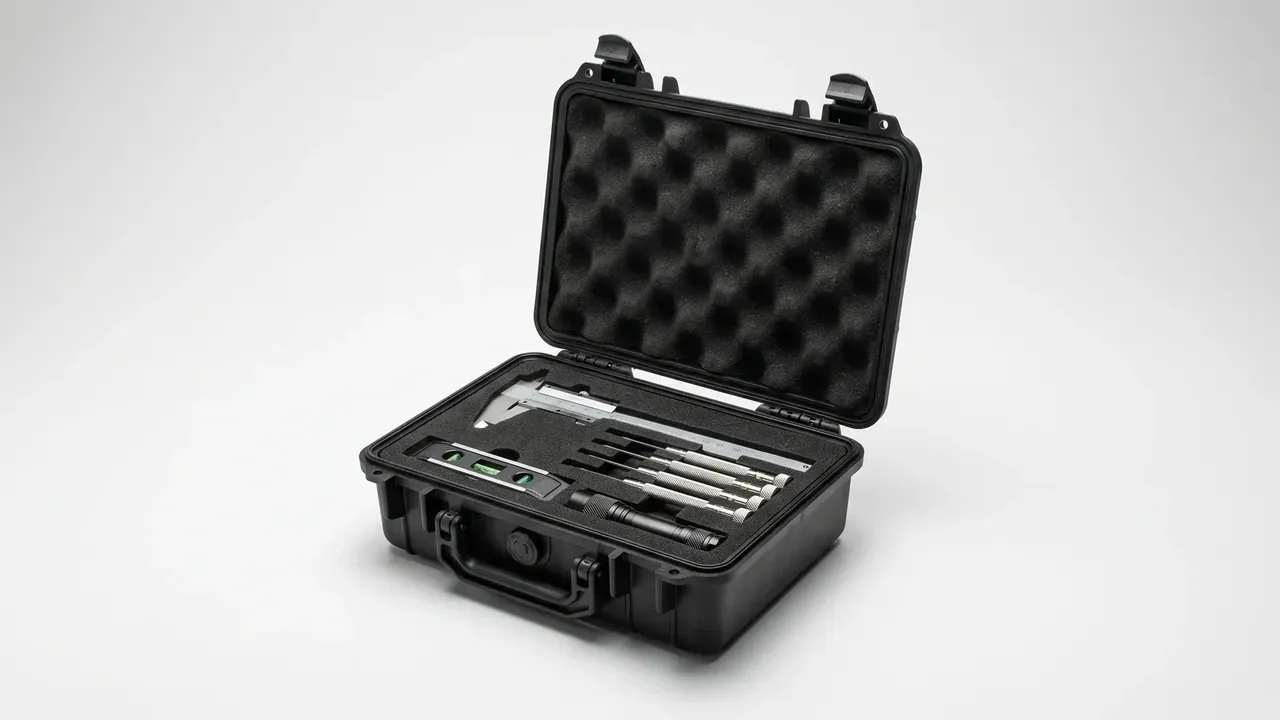
| Position | Clearance | Purpose | When it is wrong |
|---|---|---|---|
| Sides | 2 mm | Absorbs shrinkage | Under 1 mm corners lift |
| Floor | 3 mm | Clears radii, ribs | Insert rocks, lid rattles |
| Top | 4 mm | Room for strip | Lid lands on insert |
A 480 by 360 mm cavity takes a 476 by 356 mm insert, sliding in without a mallet.
Below 1 mm the insert must be forced, corners lift and the glue peels within two weeks. Above 4 mm it slides when the case tilts. On a hard plastic case with foam insert, the outline is its own dimension, never a follower of the body tolerance.
3. Bonding or Clips
The fixing method decides whether the case can be repaired: glue holds hardest and destroys the insert, clips leave holes.
- Full bond: 0.2 mm glue line, shear above 0.35 MPa.
- Spot bond: corners and midpoints, 18 mm beads.
- Clips: one every 120 mm, six per 42 litre case.
- Tape: samples only, it creeps above 60 °C.
- Screwed strips: removable, each hole needs a gasket.
Three variables decide. High repair frequency points to clips. Wash-down cleaning rules out tape, which lifts after one soak. A 40 °C range needs expansion room, or a full bond buckles. Two of the three justifies six holes. On a hard plastic case with foam insert the value is reuse, and glue makes it a one-way part. Clean the insert face first; dust beats glue grade.
4. Lid Strip at 1.5 mm
The lid strip is the only part that presses down. It carries no load; it holds parts against the pocket floor.
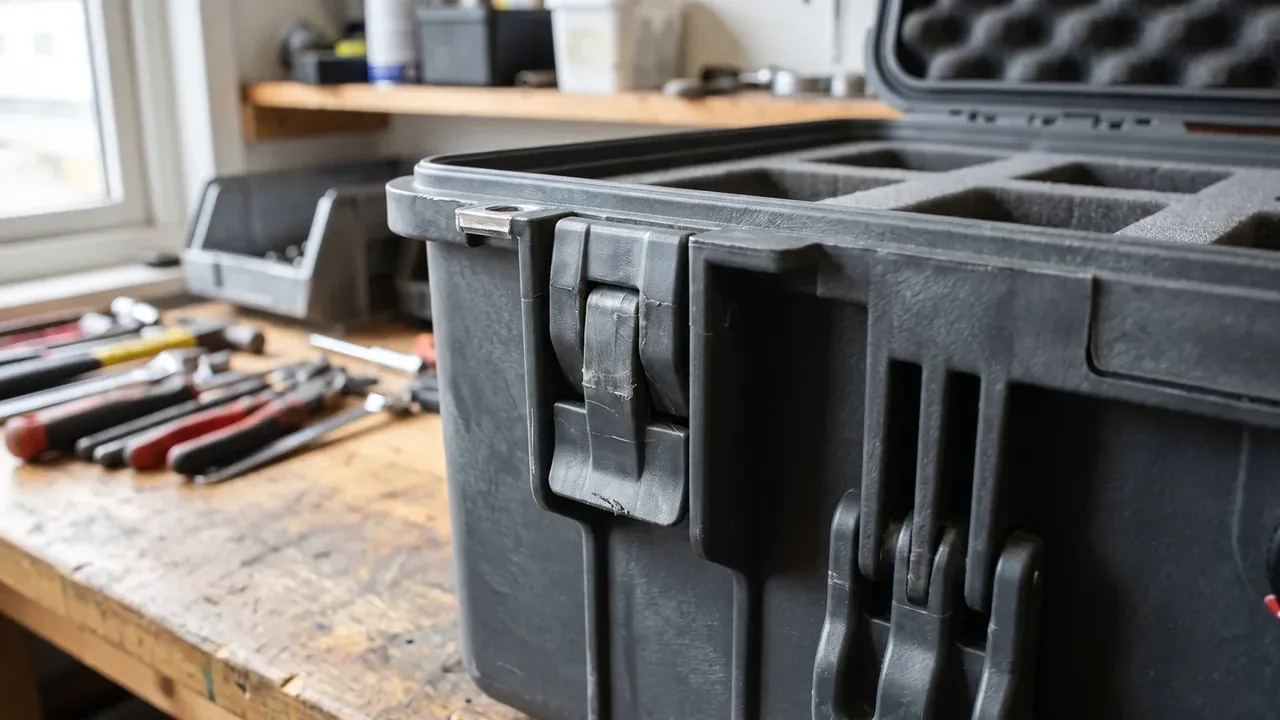
Use 3 mm EVA compressed 1.2 mm, leaving 0.3 mm preload. Too thick and the middle latch of six fails; too thin and parts jump.
Run the strip over the highest point and through the centre of gravity. Keep it under 80 mm wide or it prints a line on the part.
Do not pave the whole lid. On a hard plastic case with foam insert, two vent gaps stop container pressure lifting the insert.
5. Drop Displacement
Displacement is measured, not felt. Tape paper on the side gap, the floor gap and the strip line.
Drop from 1.2 m onto concrete, one face at a time, then read the offsets.
| Point | Allowed | What it means | Fix |
|---|---|---|---|
| Side | 2 mm | Insert does not grip | Add 1 mm side interference |
| Floor | 1.5 mm | Insert never seated | Take 1 mm off floor clearance |
| Top | Zero | Strip not pressing | Add 0.5 mm to the strip |
Side travel with a clean top means loose walls; top travel with a clean side means a short strip. A hard plastic case with foam insert that fails both points goes back to the insert outline, not to more foam.
6. Matching Case Type
Priority moves with case type: lid on a carry case, floor on a trolley, ends on a long one.
| Case | Fixing | Focus | Typical mistake |
|---|---|---|---|
| 42 litre carry | Spot bond plus strip | 4 mm at top | Strip crosses handle swing |
| Trolley | Clips and floor cradle | 3 mm at floor | Wheel vibration reaches pockets |
| 900 mm long | Clips at ends, free middle | 2 mm at sides | Full bond buckles with heat |
| 12 litre small | Full bond | 1.5 mm at sides | Insert too thick, lid stands proud |
A 900 mm insert grows nearly 2 mm at 60 °C; with both ends fixed the middle arches.
Conclusion
The fit of a hard plastic case with foam insert is a chain of tolerances: 2 mm at the sides, 3 mm at the floor, 4 mm at the top, then 1.2 mm of strip compression. A thicker wall changes none of those numbers and only adds weight. With them on the drawing, assembly and drop testing stop contradicting each other.
This article discusses only the container (case body) side of specifications and design intent, and does not cover any handling, loading or use of the contents.
Related Reading
- Materials and cavity cutting for custom foam
- Thickness and tolerance for foam inserts
- How a foam insert is fitted into a case
- Cavity, support and vibration in a gun case
- What to measure on a showroom visit
Related Products
- 8 Series — Gun Cases; Military Equipment Cases; Camera Equipment Cases; Drone Cases; Watch Cases; Knife Cases; First Aid Cases; Electronics Equipment Cases
- WL8-2812 PP Gun Case — model WL8-2812
- All protective cases and toolboxes: 7 series, 158 models