

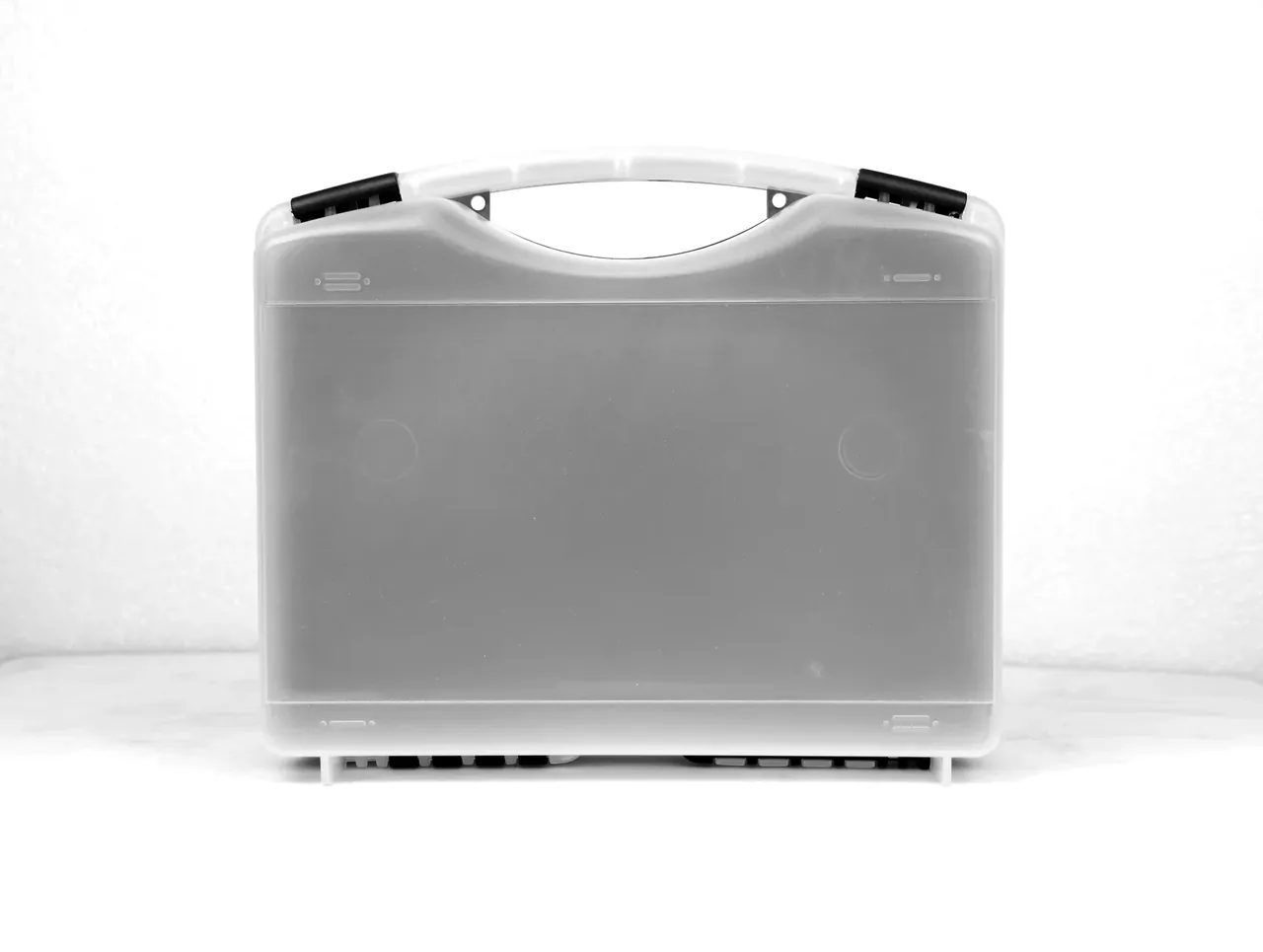
Quick answer: Acceptance rests on three documents, four fixed measuring habits and three disposal routes. Write the pass line as a number, the disposal as money and days, and nothing is left to argue about.
Table of contents
- Three documents behind every acceptance call
- Four measuring habits at the goods-in gate
- Dimensions and shot weight: which side of the tolerance
- Cycle and appearance: pace, weld lines, colour
- Repair, concession or return
- Writing the record so blame can be traced
- FAQ
1. Three documents behind every acceptance call
A 480 piece batch was passed last year on a concession note. Three months later 37 split at the base of the latch, the claim ran half a year, and both sides paid half. The sheet carried four words in the verdict column: appearance acceptable.
The inspector was not careless; the criteria were never pinned down. Three documents hold a case injection molding machine to account: the drawing for dimensions, the trial report for the process window, the receiving standard for sampling. Where they disagree the drawing wins, then the signed sample.
| Document | Covers | Usual gap |
|---|---|---|
| Drawing | 520 by 380 by 200 mm cavity, 3.2 mm wall, 0.25 mm tolerance | No datum face on key dimensions |
| Trial report | 3 first-offs, readings and settings | Says pass, omits readings |
| Receiving standard | Sample size, pass line, disposal | No disposal clause |
Sampling follows GB/T 2828.1 and dimensional grades follow GB/T 14486, but the numbers on the sheet come from the drawing; a standard settles method, never your tolerance.
2. Four measuring habits at the goods-in gate
Disputes at goods-in are rarely instrument error, they are habits that differ by shift. One case reads 519.8 mm before lunch and 520.4 mm after, and 0.6 mm justifies two opposite verdicts.
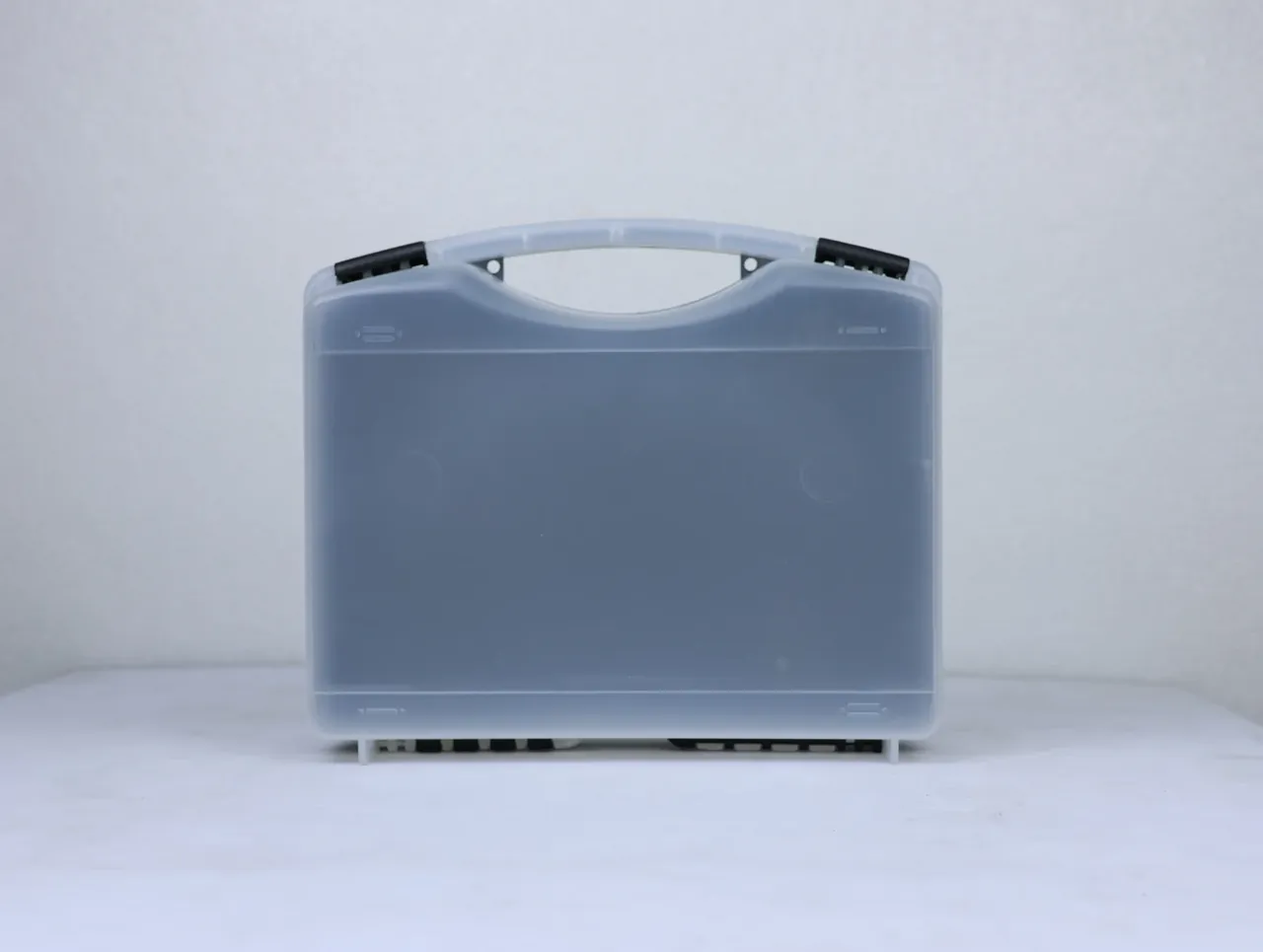
Rest the part 2 hours at 23 degrees, because a case off the tool still carries 60 and reads 0.3 mm small. Take three readings and keep the largest, since corners shrink differently. Blow flash off before weighing; a 0.15 mm sliver adds 4 g. Average the cycle over 10 shots.
| Item | Instrument | Rule |
|---|---|---|
| Cavity length, width, depth | Calliper, 0.02 mm | Three readings, 8 mm off corners |
| Part weight | Scale, 0.5 g | Air-clean flash, weigh 5 parts |
| Cycle time | Stopwatch | Average 10 shots |
| Colour | Spectrophotometer | Three faces against the sample |
Gauges are verified every 6 months and callipers every 12, or the figures a case injection molding machine is judged against mean nothing.
3. Dimensions and shot weight: which side of the tolerance
A 520 mm cavity at 0.25 mm gives a window from 519.75 to 520.25 mm. Oversize points to a cavity cut large or hold pressure low, undersize to a cavity cut small or cooling short. Those two faults need opposite corrections, so an out-of-window reading opens an investigation, not a grinder.
| Item | Nominal | Tolerance | Check first |
|---|---|---|---|
| Cavity length | 520 mm | 0.25 mm | Mould temperature, hold profile |
| Wall | 3.2 mm | 0.15 mm | Gate size, injection speed |
| Part weight | 2.4 kg | 2.5 percent | Melt temperature, back pressure |
| Base flatness | Zero | 0.4 mm | Water circuit, ejector balance |
Weight is the earlier alarm because it reads wall and cavity together. A 2.4 kg part at 2.47 kg is 2.9 percent heavy; a calliper still passes the wall, yet the latch no longer closes fully. On a 3.2 mm wall, 1 percent of weight is about 0.03 mm of thickness.
4. Cycle and appearance: pace, weld lines, colour
A case injection molding machine should hold a 58 second cycle as baseline, with 10 consecutive shots inside 3 seconds of it. Widen and the checks run melt temperature, mould temperature, transfer position, then the machine.
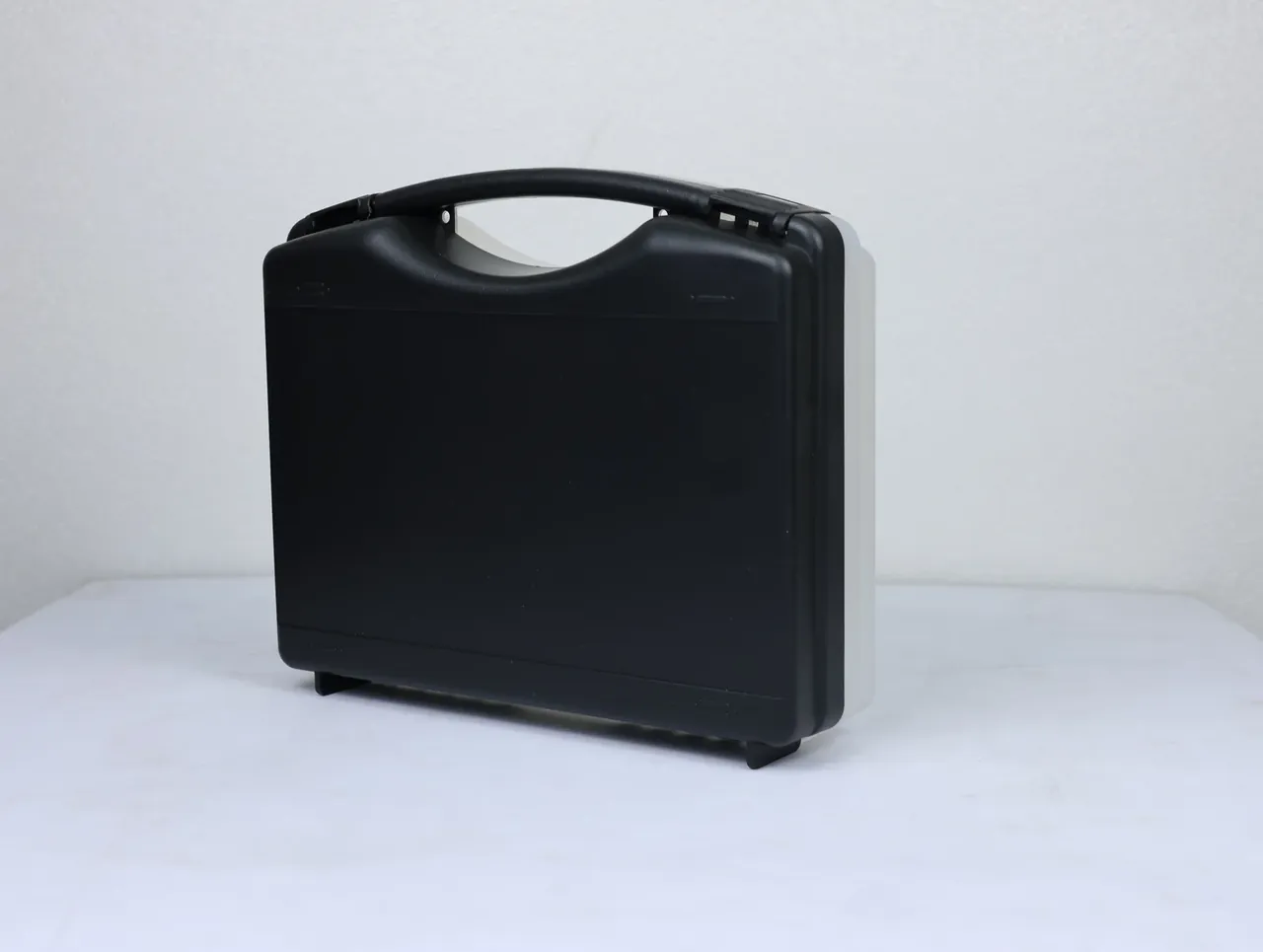
Weld lines belong to a deep cavity; depth matters, not presence. A fingernail that slides over one without catching reads about 0.08 mm and can ship; if it catches, raise mould temperature or move the gate. Colour is a difference against the signed sample: within 1.5 is one batch, beyond 3 returns whole, no masterbatch rescues that gap. A lid face sinking more than 0.3 mm means hold time under 8 seconds.
5. Repair, concession or return
A blank disposal clause means every nonconformance is argued from zero.
| Defect | Verdict | Disposal | Cost |
|---|---|---|---|
| Flash within 0.15 mm | Reworkable | Trim, re-inspect | 3.5 yuan |
| Cavity out by 0.3 mm | Assembly dependent | Concession, one batch | Zero |
| Wall 0.2 mm thin | Final | Batch return | 28 yuan |
| Weld line catches | Adjustable | Resubmit after reset | 2 hours stopped |
Rework covers surface faults only. Flash, burrs and drifted printing can be corrected; a dimensional fault cannot, because correcting it changes assembly, and the cavity on the case injection molding machine has to be recut.
Concessions need batch, quantity and use limits plus a technical signature; a verbal nod is worth nothing in a claim. Ten like defects in 480 pieces, or 2 percent, moves the batch to full inspection, and 3 failures after that return it whole. Repair costs 3.5 yuan against 28 for scrap, and one return burns 6,000 yuan in freight alone.
6. Writing the record so blame can be traced
A record has to reach the mould, the machine and the shift: move a mould to a second case injection molding machine and the cycle shifts 4 seconds while weight moves 0.05 kg, so a sheet without a machine number cannot separate tool from press.
Keep 3 first-offs off the case injection molding machine, one each for supplier, buyer and batch, valid 12 months so a dispute never demands remoulding. Re-verification every 6 months covers cavity dimensions and weight. Response times belong in the record rather than an annex: cause analysis within 24 hours, replacement within 7 days.
Conclusion
An acceptance standard is not a certificate; it is three documents, four measuring habits and three disposal routes bound together. Numbers for the pass line, money and days for the disposal, and the argument has nowhere to live. A missed case always returns as rework, a stopped line or a claim, which is why a case injection molding machine deserves a strict first batch.
This article discusses only the container (case body) side of specifications and design intent, and does not cover any handling, loading or use of the contents.
Related Reading
- How clamping and injection sequence run
- What poor maintenance shows at acceptance
- Drop and static load tests for airdrop cases
- Batch records for ordnance boxes
Related Products
- 8 Series — Gun Cases; Military Equipment Cases; Camera Equipment Cases; Drone Cases; Watch Cases; Knife Cases; First Aid Cases; Electronics Equipment Cases
- WL8-2812 PP Gun Case — model WL8-2812
- All protective cases and toolboxes: 7 series, 158 models