

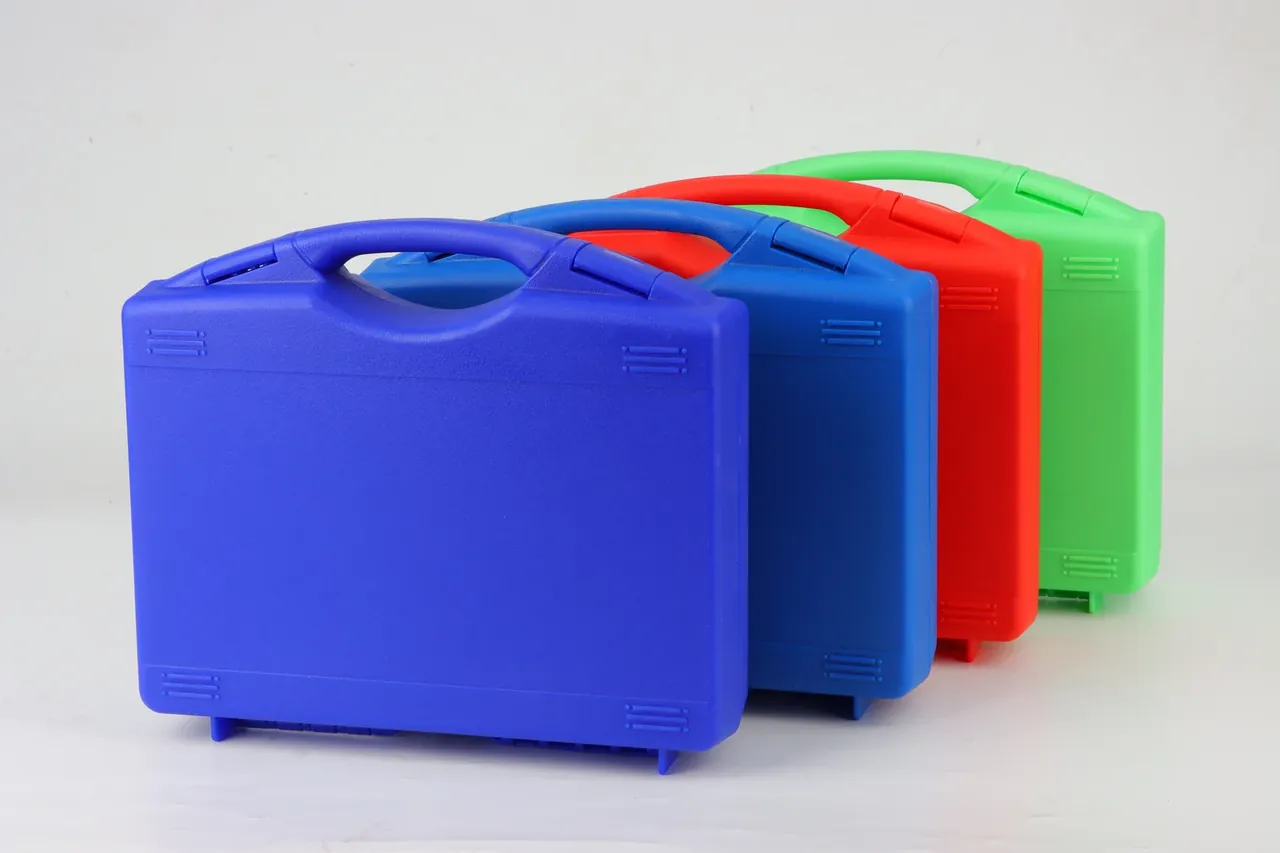
Quick answer: Sort the field setup by access rate first. A case opened over 20 times a day runs 12 cells at 25 mm square with 3 mm of clearance; one opened weekly runs 24 cells at 45 mm. Sharing a shell widens the slot from plus 2 mm to plus 2.4 mm so a Case Internal Divider still enters at minus 20 C.
Table of contents
- Sorting Field Setups by Access Rate
- Probe Bays: 12 Cells at 25 mm Square
- Spare Bays: 24 Cells at 45 mm
- Long Haul and Cold: Pull Force at Minus 20
- FAQ
1. Sorting Field Setups by Access Rate
One 400 by 300 mm shell carries probes in one job and spare parts in another, with a different Case Internal Divider layout for each. Three facts decide it: how often the lid opens, how square the longest item in a cell is, and whether the case travels upright.
| Tier | Opens per day | Cell | Slat | Seating |
|---|---|---|---|---|
| Hand-carried | Over 20 | 25 by 25 mm | 4 mm twin-wall | 4 mm groove, 10 mm EVA pad |
| Handover | 4 to 6 | 60 by 40 mm | 6 mm twin-wall | Cross slats, wall pockets |
| Stores | 1 to 2 a week | 45 by 45 mm | 6 mm twin-wall | Long runners, split cross slats |
| Fixed | Rarely | Routed per item | Solid EVA block | Block drop-in, lid ribs |
A 400 mm cavity at 45 mm cells with 6 mm slats gives a 51 mm pitch, and 400 divided by 51 is 7.8, so 7 cells with 18 mm at each end. Start from a cell count and the same shell stretches to a 312 mm cavity, past the width one hand carries.
Tier mismatch is the main cause of rework.
2. Probe Bays: 12 Cells at 25 mm Square
The probe is 22 mm across and 120 mm long. Each cell is 25 by 25 mm, 3 mm larger, so it sits without rattling and two fingers still reach it. Depth is 120 mm over a 10 mm EVA pad, so the nose lands on foam.
Twelve cells is 4 columns by 3 rows at a 31 mm pitch in a 124 by 93 mm cavity. One 6 mm sheet runs full length as the long slat, cross slats drop in as segments, each half-lap notch cut to half height. Long slats go in first: reverse it and the continuous slat has nowhere to land, so it is forced in at an angle and the notch edges crush.
Clearance opened to 6 mm is the common mistake, since the probe then swings and haze wears into the lens edge. Leave a 5 mm deep, R8 finger notch per row too.
3. Spare Bays: 24 Cells at 45 mm
The spare-parts shell has a 312 by 210 mm cavity cut into 6 columns by 4 rows for 24 cells at 45 mm on a 51 mm pitch. Forty-five millimetres takes a boxed filter element with room for fingertips.
Assembly and acceptance run in this order:
- Deburr the wall pockets, 0.5 mm by 45 degree chamfer, or a ragged edge shaves the sheet.
- Enter the long slat at an angle, straighten it past half depth, push on the end grain only.
- Add cross slats one at a time, checking each half-lap bottoms out.
- Run a straightedge over the tops and pull any slat more than 1 mm proud.
- Line up the two 8 mm base ribs; one rib off tilts the whole row.
- Close the lid; the rib should bear on slat tops, not on parts, then hold 1.5 kg on three random cells for 24 hours with deflection under 1.5 mm.
Each cell is rated 1.5 kg, so 24 cells come to 36 kg against a 2.4 kg shell and the closed weight stays under 40 kg, where the handle boss is still the weaker part.
4. Long Haul and Cold: Pull Force at Minus 20
The same slats pull at 35 N warm and need 50 N after four hours at minus 20 C, because 2 mm of root interference acts as a press fit rather than an elastic one and ten insertions leave white crazing at the mouth.
The fix is not a thinner slat: widen the slot to plus 2.4 mm, drop interference to 1.6 mm, and pull returns to about 40 N. Heat fails the other way, with 10 mm EVA at 60 C for 72 hours taking 8 percent compression set.
Verify warm assembly, 24 hours at minus 20 C, then 24 hours back at room temperature, checking for white slat ends or mouth cracks.
Conclusion
Starting a Case Internal Divider from access rate saves two rounds of rework. The hand-carried tier runs 12 cells at 25 mm with 3 mm of clearance, the stores tier runs 24 cells at 45 mm at 1.5 kg each, and a temperature band adds 0.4 mm. Line those numbers up and one shell family covers most jobs, which is where a Case Internal Divider becomes a step on the line.
This article discusses only the container (case body) side of specifications and design intent, and does not cover any handling, loading or use of the contents.
Related Reading
- Three numbers behind a Case Internal Divider
- Choosing a Case Internal Divider layout by batch
- Road case configurations for field work
Related Products
- 8 Series — Gun Cases; Military Equipment Cases; Camera Equipment Cases; Drone Cases; Watch Cases; Knife Cases; First Aid Cases; Electronics Equipment Cases
- WL8-2812 PP Gun Case — model WL8-2812
- All protective cases and toolboxes: 7 series, 158 models