

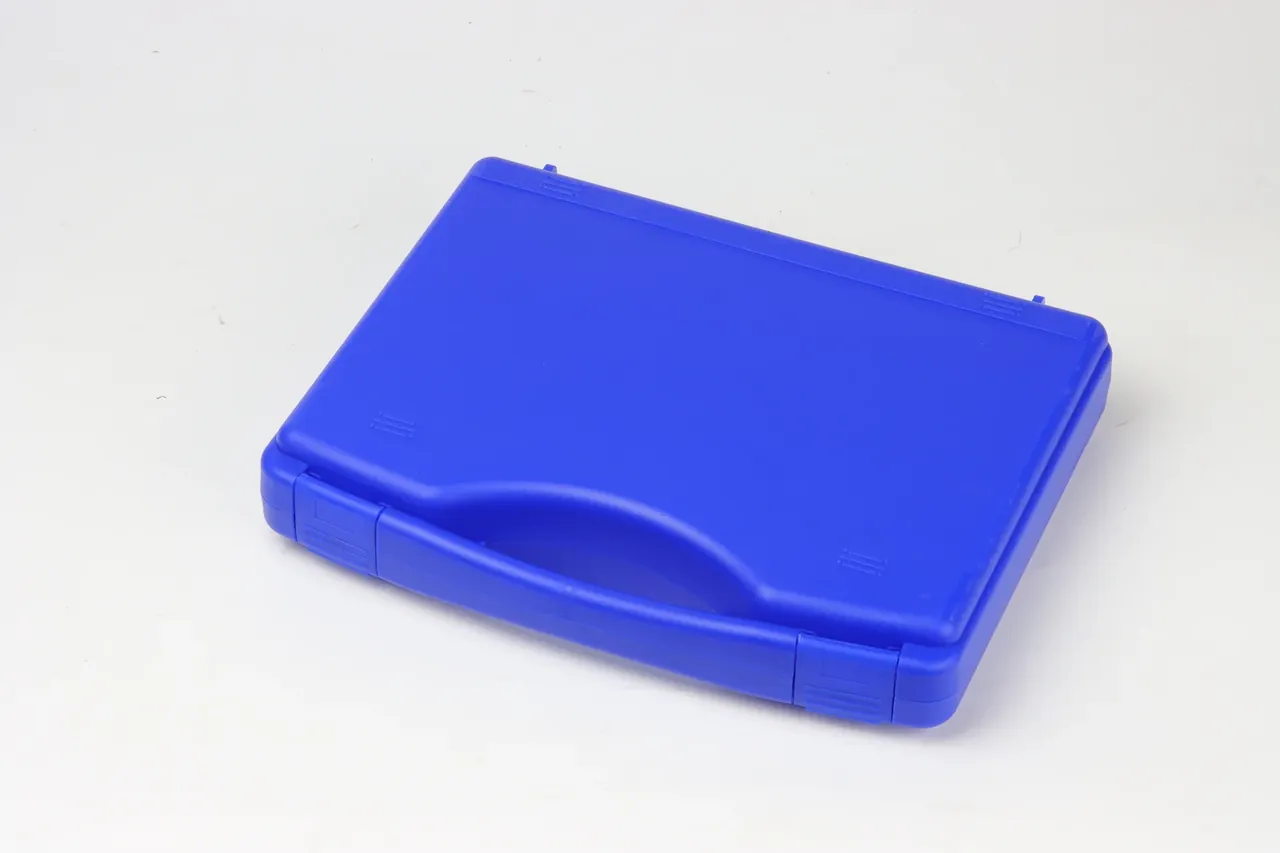
Quick answer: A Protective Case takes a seat only when three loads pass: 120 to 150 kg spread over the empty lid for 24 hours, twice the contents weight when full, and 80 kg on a 200 cm² pad with 3 mm or less at the centre.
Table of contents
- Three Loads, Not One Number
- Static Load on the Lid: 120 to 150 kg for 24 h
- Local Foot Load: 200 cm² at 80 kg
- Temperature, Handles and Case Load
- Three Cases You Cannot Sit On
- FAQ
1. Three Loads, Not One Number
Standing a person on a case and stacking goods on it are different loads. A 75 kg person on 200 cm² of sole puts about 37 kPa into the lid, while the same 75 kg spread over 0.3 m² gives 2.5 kPa. No Protective Case is summed up by one kilogram figure.
Each load fails the panel differently. Static load works on time, and plastic creeps. Dynamic load is a peak: a 25 kg case dropped 1.2 m reaches 40 g, which MIL-STD-810H Method 516.8 calls shock. Local foot load works on pressure, denting the panel before the ribs crack.
Mixing the three is how a static figure gets sold as a seat: an empty case rated 150 kg dents 4 mm with 80 kg at the centre.
| Load | Typical figure | Contact | Pass line |
|---|---|---|---|
| Static, empty | 120 to 150 kg | Whole lid | 1.5 mm set after 24 h |
| Static, full | Contents weight × 2 | Whole lid | Lid gap +0.4 mm or less |
| Local foot | 80 kg at one point | 200 cm² | 3 mm at the centre |
2. Static Load on the Lid: 120 to 150 kg for 24 h
Spread 120 to 150 kg of ballast over the lid. Leave it for 24 hours, because the creep curve flattens after a day. Unload it. Rest an hour, then measure: a Protective Case passes at 1.5 mm of permanent set at the centre. Longer holds add very little. That is why the test stops there.
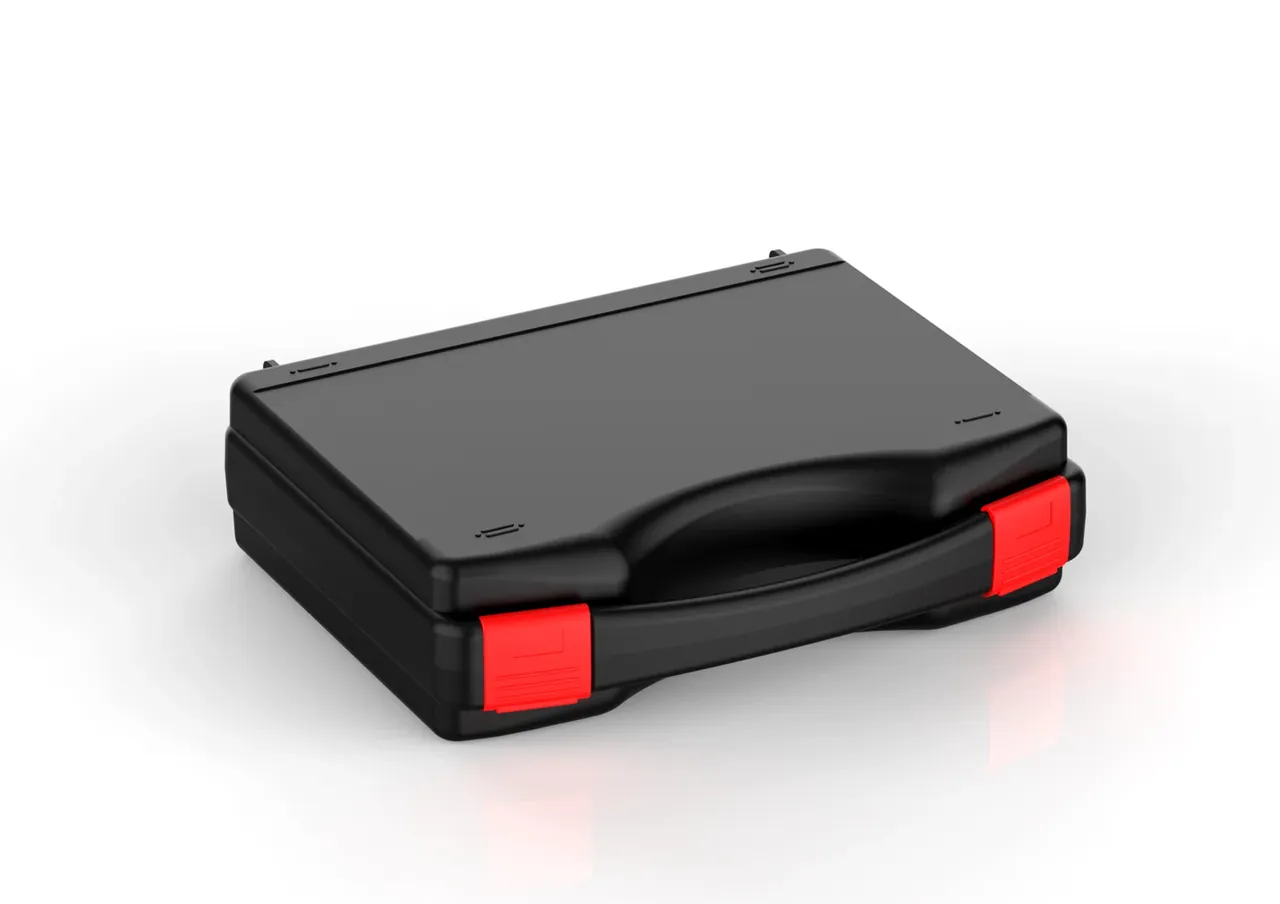
Full load is twice the contents weight, so a 40 kg Protective Case is tested at 80 kg, half standing in for stacking and half for shock.
Spacing of 80 to 120 mm with 6 to 8 mm of height is the common pairing; past 150 mm the panel between ribs acts as a supported plate and deflection climbs with the cube of the span.
Apply the ballast evenly. One heap doubles the measured set, so split it into 4 to 6 blocks with 20 mm gaps.
The lid gap on a Protective Case is the second dial: near 0.3 mm closed, under 0.7 mm after 24 hours at full load. Past that the lid has bowed and the seal line has followed.
3. Local Foot Load: 200 cm² at 80 kg
A foot test on a Protective Case needs its own rig. Press a 200 cm² rigid plate, roughly a size 43 sole, into the lid centre at 80 kg for 30 minutes: 3 mm at most, and 1 mm or less of set an hour later.
The centre deflects 2.5 times more than a point 60 mm in from the edge, so a centre test covers the lid.
Tread matters: a hard leather sole contacts about 60 percent of a trainer's area, lifting pressure 60 percent at 80 kg.
After 500 cycles at 80 kg, allow 1.5 mm of set; past that the rib roots have crazed.
The first failure is usually a cracked rib root, not a collapsed lid. A fillet under 1 mm whitens within 500 cycles and splits 10 mm along the root while the lid looks flat. A 2 mm fillet whitens without splitting. One creak and the test is over.
4. Temperature, Handles and Case Load
At -20 °C polypropylene keeps 40 percent of its impact strength and deflects 30 percent more, so the 3 mm limit becomes 3.9 mm.
| Temperature | Impact strength | Deflection | 80 kg foot limit |
|---|---|---|---|
| 23 °C | 100 percent | Baseline | 3 mm |
| 0 °C | About 70 percent | +12 percent | 3.4 mm |
| -20 °C | 40 percent | +30 percent | 3.9 mm |
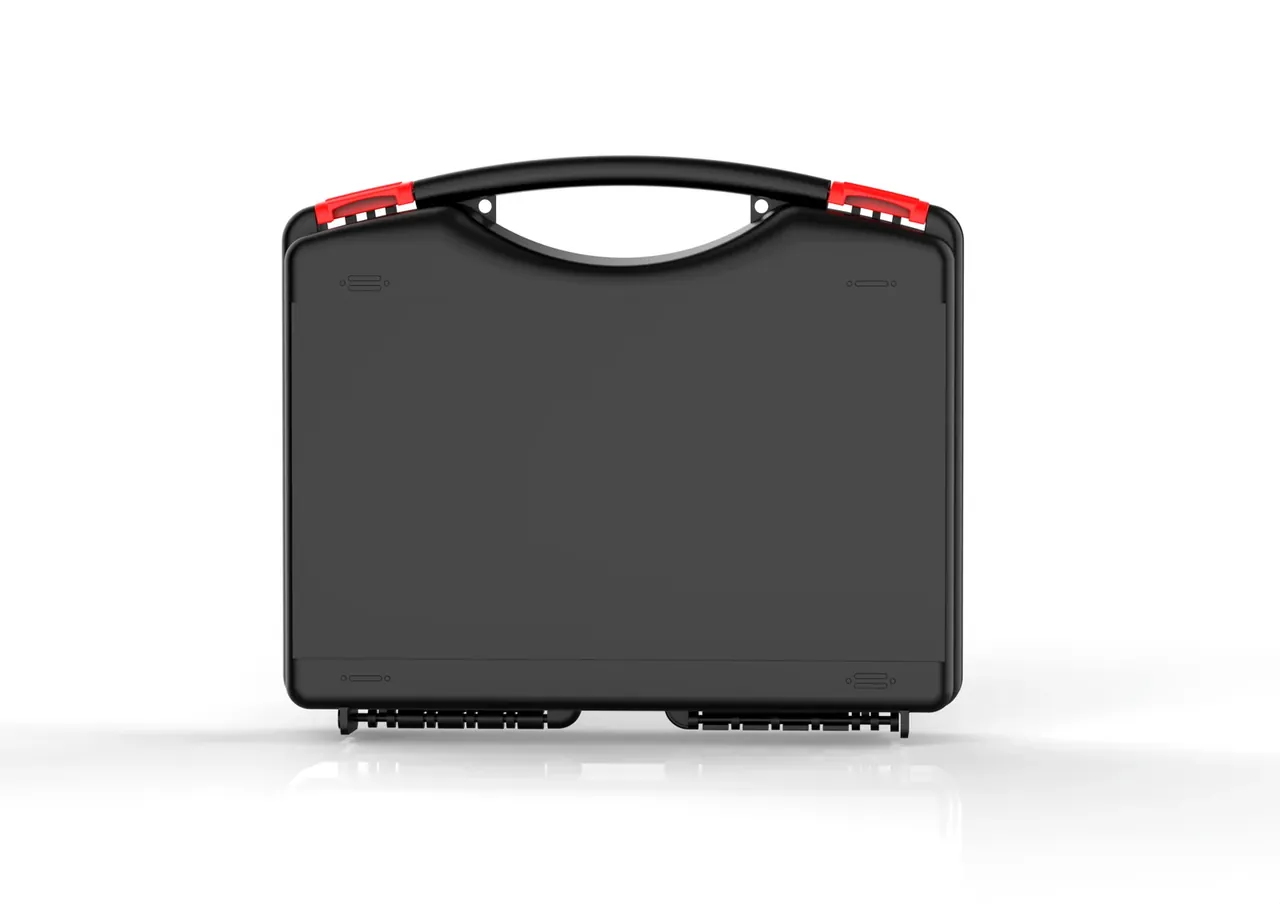
Handle capacity and Protective Case capacity are separate sums: a handle is rated at twice the full load static and 1.5 times dynamic, the body at twice static, because the handle loads two pins and the body loads the panel.
A handle that lifts 100 kg says nothing about sitting on the lid.
5. Three Cases You Cannot Sit On
Three structures cannot be sat on, whatever the brand: a lid with no internal ribs, which dents 4 mm at 80 kg; a volume of 60 L or more, where the span stretches; and a rotomoulded wall under 4 mm without a liner, which yields under the pad.
| Structure | Why it fails | Workaround |
|---|---|---|
| No ribs in the lid | Panel bends alone, 4 mm at 80 kg | Add a liner board |
| 60 L and above | Long span, cube-law deflection | Bench top only |
| Wall under 4 mm, no liner | Local yield, split rib roots | 12 mm plywood bearer |
One Protective Case sits between yes and no: ribs shorter than 6 mm. Deflection at 80 kg runs 1.8 times that of an 8 mm rib, and the lid gap opens before the lid collapses.
Write the clause as three items: static value, deflection limit, duration. 150 kg alone is not a specification for a Protective Case; 150 kg for 24 hours with 1.5 mm of set is.
A load figure without a duration cannot be tested.
Conclusion
Load capacity on a Protective Case is three sums: 120 to 150 kg over the empty lid for 24 hours with 1.5 mm of set, twice the contents weight when full with the lid gap held to 0.4 mm, and 80 kg on 200 cm² with 3 mm at the centre. All three and the case takes a seat; miss one and it stays a bench. A lid without ribs or a wall under 4 mm never becomes a seat, so write the static value, the deflection limit and the duration into the clause together.
This article discusses only the container (case body) side of specifications and design intent, and does not cover any handling, loading or use of the contents.
Related Reading
- Static and dynamic load tests for handles
- Running a comparable stacking test
- Where case weight and strength meet
- Durability load tests for tool boxes
Related Products
- 8 Series — Gun Cases; Military Equipment Cases; Camera Equipment Cases; Drone Cases; Watch Cases; Knife Cases; First Aid Cases; Electronics Equipment Cases
- WL8-2812 PP Gun Case — model WL8-2812
- All protective cases and toolboxes: 7 series, 158 models