

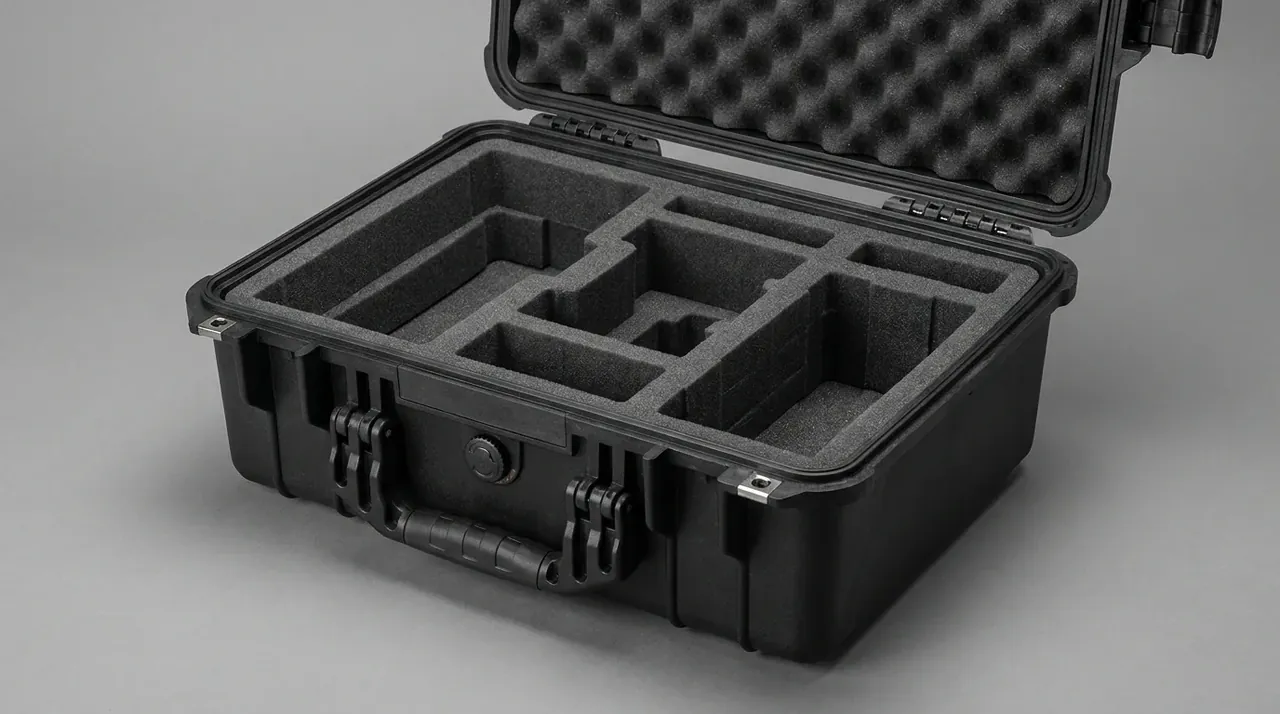
Quick answer: On a 30 unit project, case per device costs about 10,650 CNY for 30 boxes, while a shared layout costs 5,480 CNY for 8, a gap of 5,170 CNY. The shared case weighs 37.6 kg loaded and stretches a swap from 8 to 25 minutes, so scale decides whether the saving holds.
Table of contents
- What 30 devices cost under each layout
- Counting stock and issuing units
- Volume, weight and freight
- Downtime when a unit is swapped
- FAQ
1. What 30 devices cost under each layout
Take a real batch: 30 identical loggers, each 380 mm × 260 mm × 160 mm and 3.2 kg, shipping to six sites. Case per device means 30 boxes at 450 mm × 330 mm × 200 mm and 285 CNY each; a shared layout packs 4 units per box, so 8 boxes at 620 mm × 420 mm × 300 mm and 520 CNY each.
The boxes separate first: 8,550 CNY against 4,160 CNY, a 4,390 CNY gap before any foam. Add inserts at 70 CNY for the small cases and 165 CNY for the deep ones, and the totals run 10,650 CNY against 5,480 CNY, or 355 CNY against 183 CNY per device.
| Item | Case per device | Shared case |
|---|---|---|
| Cases | 30 | 8 |
| Price per case | 285 CNY | 520 CNY |
| Case subtotal | 8,550 CNY | 4,160 CNY |
| Insert subtotal | 2,100 CNY | 1,320 CNY |
| Total | 10,650 CNY | 5,480 CNY |
| Cost per device | 355 CNY | 183 CNY |
| Loaded weight | 6.4 kg | 37.6 kg |
Two hidden costs follow. Eight devices plus insert put a shared case at 37.6 kg, past comfortable repeated lifting, so loading takes two people and rises from 12 to 19 minutes. A change order then bites harder: two extra devices mean two more small boxes, but a new insert cavity set at 165 CNY, a 7 day lead time and a repack on the shared route.
2. Counting stock and issuing units
Case per device treats the box as packaging, numbered to one device. A shared case treats it as a returnable shell, numbered to the store. That ownership decides how counting works and how fast a unit can leave.
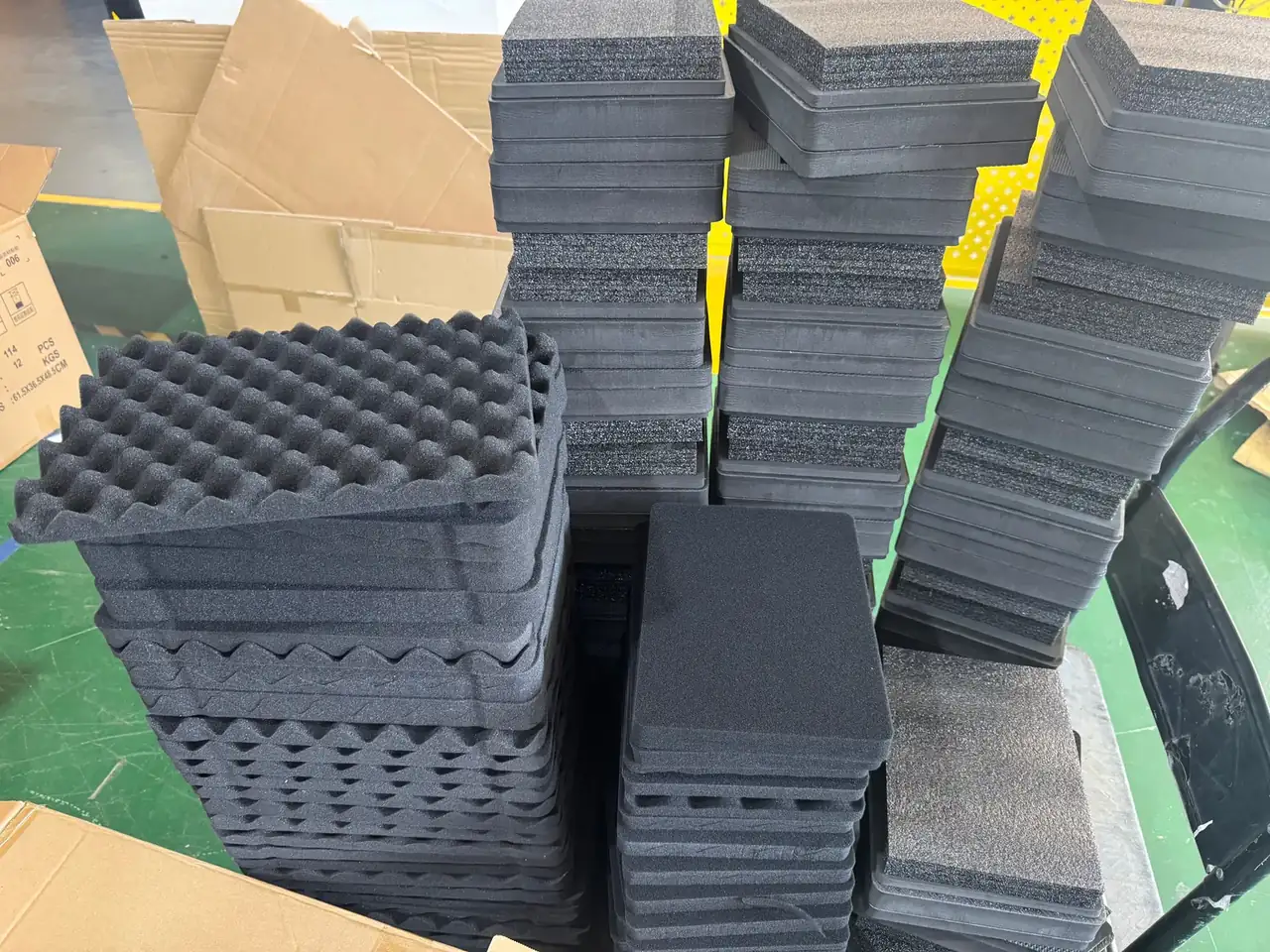
Counting favours the per device layout: thirty QR labels, two people, a handheld, 12 minutes. The shared layout has 8 boxes, but each must be opened to check which 4 units sit inside, 90 seconds each, so 22 minutes once every unit is matched.
Issuing separates them further. A per device box leaves whole in 40 seconds after one scan; a shared box needs the target pulled from four, logged as removed and the rest re-counted, 3 minutes on average.
| Item | Case per device | Shared case |
|---|---|---|
| Number belongs to | The device | The store |
| Counting 30 units | 12 minutes | 22 minutes |
| Issuing one unit | 40 seconds | 3 minutes |
| Annual loss rate | 0.8 % | 0.3 % |
| Mismatch rate | 0.2 % | 3 % |
The loss rate flatters the shared layout until it is priced: at 0.3 %, eight cases lose 0.024 a year, but one loss takes four devices with it and is charged at device value. Mismatch cuts the other way, since 3 % means about one of thirty units ships to the wrong site, a 260 CNY return plus three days of schedule.
3. Volume, weight and freight
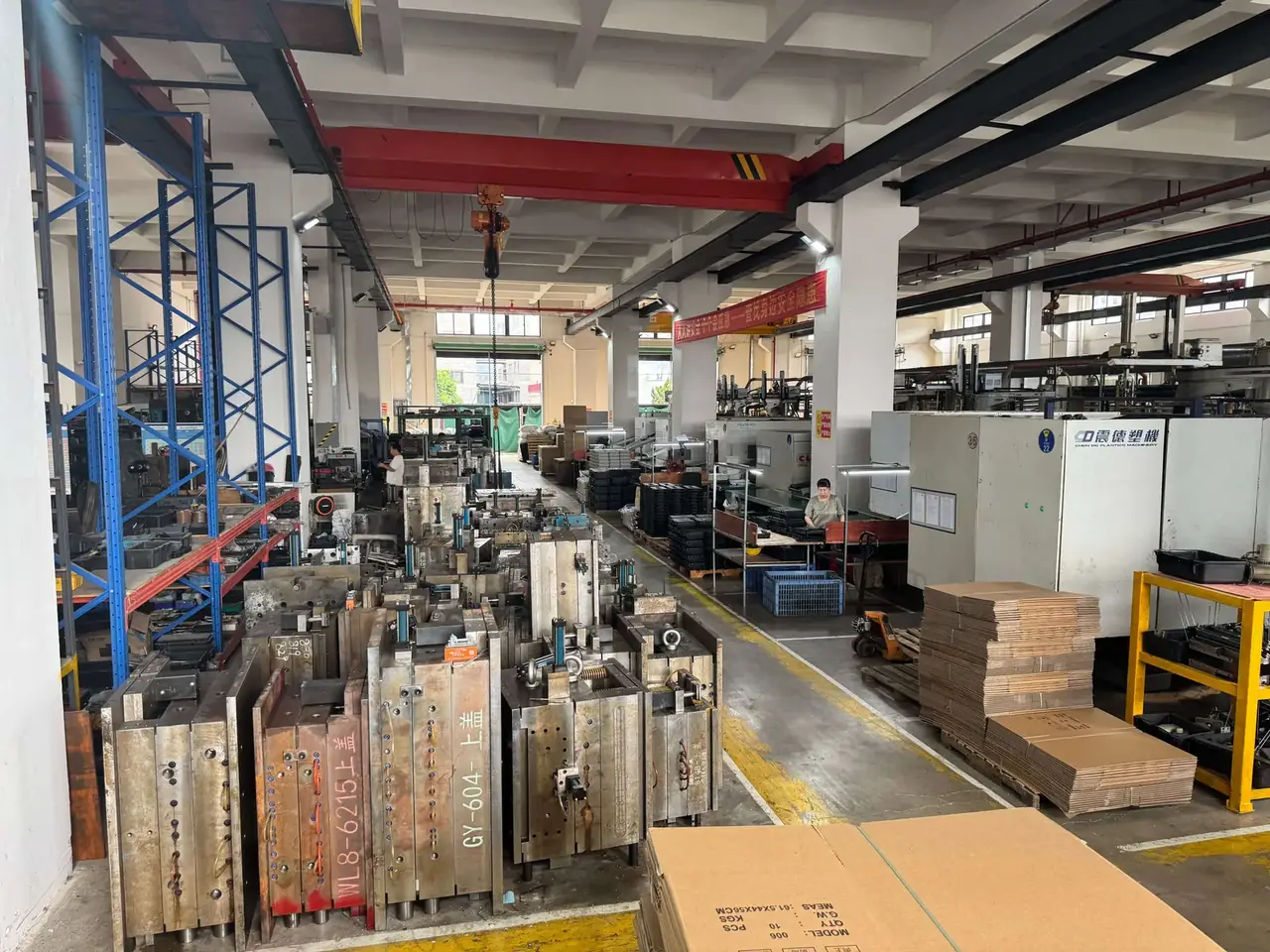
Freight pulls two ways. Fewer boxes cut shell material by 30 %, but each shell is larger, so pallet fill can fall rather than rise.
Volume first: 29.7 L per small case reaches 891 L across thirty, while 78 L per large case reaches 624 L across eight. That is 267 L less enclosed air, and shell weight drops from 156 kg to 77 kg.
Pallets are a wash. Small cases fit 8 per layer over 5 layers for 40, so 30 leave space spare; large cases fit 4 per layer over 3 for 12, so 8 also leave space spare. Each layout needs one pallet.
| Item | Case per device | Shared case |
|---|---|---|
| Footprint per case | 450 × 330 × 200 mm | 620 × 420 × 300 mm |
| Volume per case | 29.7 L | 78 L |
| Volume for 30 units | 891 L | 624 L |
| Shell weight | 156 kg | 77 kg |
| Pallets | 1 | 1 |
| Air chargeable weight | 149 kg | 104 kg |
Air freight bills 167 kg per cubic metre, so 891 L becomes 149 kg and 624 L becomes 104 kg, a 45 kg gap worth 292 CNY at 6.5 CNY a kilo, or 1,752 CNY across six shipments a year. Road freight narrows it: both loads fill under 40 % of a 1 tonne truck, so they ship as part loads billed on weight plus a volume ratio, and the gap falls to about 60 CNY.
4. Downtime when a unit is swapped
Case per device swaps the whole box: pull the old case, seat the new one, scan the label, 8 minutes on the line. A shared case is opened, the failed unit lifted out, the replacement seated in the same cavity, the lid pressed shut and the log updated: 25 minutes, longer if another unit took that cavity.
At 600 CNY an hour of downtime that is 80 CNY against 250 CNY a swap, and twelve swaps a year make a 2,040 CNY difference. At 30 swaps the shared route costs 5,100 CNY more than it saved.
So a shared case suits devices that rarely fail: under 5 % annual failure, high unit value, small footprint. The cheaper and more failure-prone the hardware, the stronger the case for one box per unit.
Conclusion
Pick by project size. Under 10 units, stay with case per device: the box order runs under 3,000 CNY, less than one wrong-site return. From 11 to 30 units, mix the two, giving dedicated boxes to anything that moves monthly and packing spares together for about 7,100 CNY. From 31 to 80 units, move to shared cases of three or four, which halves the box spend provided swaps stay under 12 a year. Above 80 units, numbering and quarterly teardown checks become mandatory, or a 3 % mismatch rate turns into dozens of returns. A shared case is not a universal answer; it trades scale for cost.
This article discusses container-side specifications and design implications only, and does not cover any handling, loading or use of the contents.
Related Reading
- What a case costs to build
- Numbering and tracking case assets
- Matching labels to an asset register
- How cases are billed in cross-border freight
Related Products
- 8 Series — Gun Cases; Military Equipment Cases; Camera Equipment Cases; Drone Cases; Watch Cases; Knife Cases; First Aid Cases; Electronics Equipment Cases
- WL8-2812 PP Gun Case — model WL8-2812
- All protective cases and toolboxes: 7 series, 158 models