

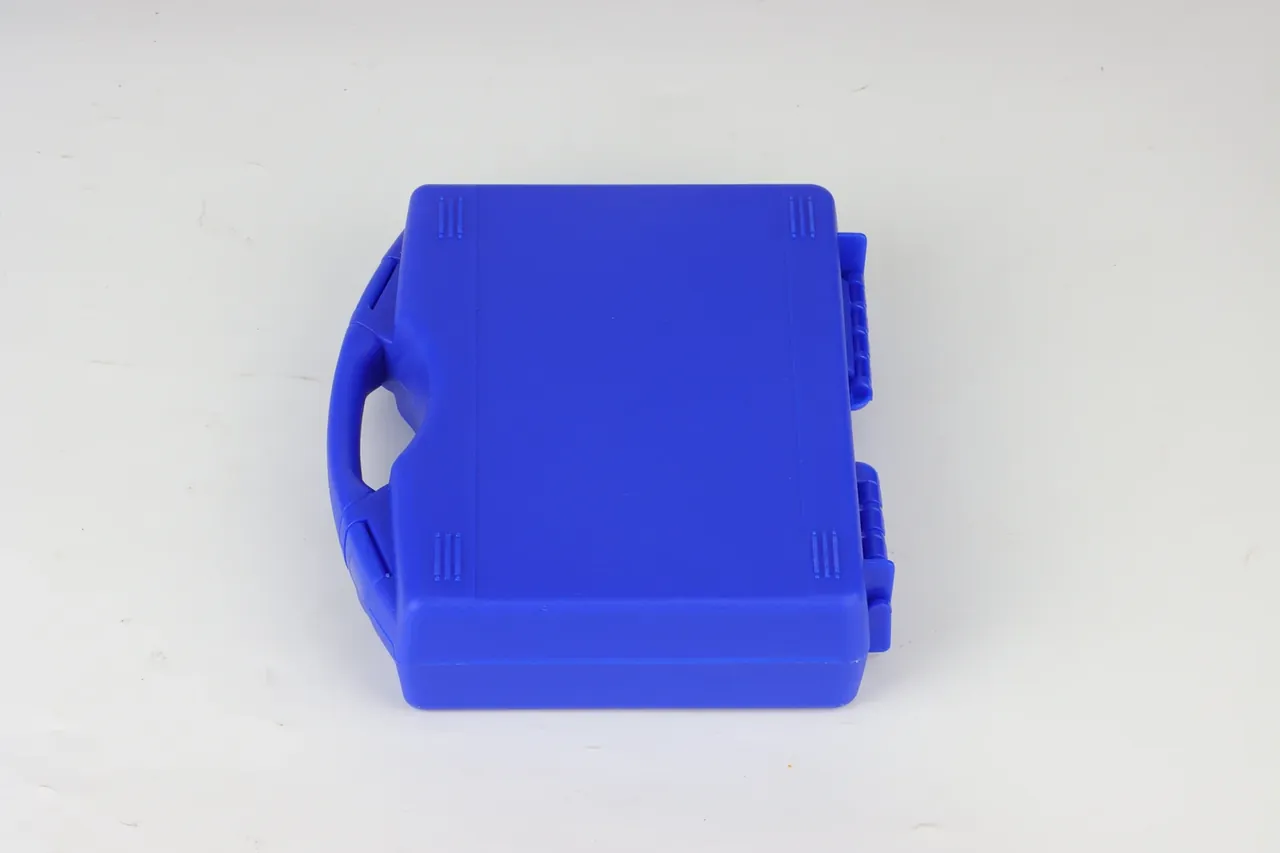
Quick answer: Samples in a Case Showroom age on three paths: light, settled dust, and visitor opening. Inspect daily, weekly and quarterly, and judge on four figures: colour shift in Delta E, dust per square metre, latch opening force, hinge pin clearance.
Table of contents
- Inspection Levels and Intervals in a Case Showroom
- Light Exposure and Colour Shift
- Dust Collection and Cleaner Compatibility
- Visitor Opening and Latch Wear
- Replacement Limits and Withdrawal
- FAQ
1. Inspection Levels and Intervals in a Case Showroom
A field case is counted in deliveries; a display sample never travels, so damage is a function of time: ten hours of light, dust in the rib channels, a dozen openings by visitors. That makes the calendar the right clock for a Case Showroom.
| Level | Timing | Items | Time | Record |
|---|---|---|---|---|
| One | Daily | Glass marks, drift, label lift, latches closed | 10 min | Exceptions |
| Two | Weekly | Dust wipe, latch feel, handle play, shelf sag | 45 min | Signed |
| Three | Quarterly | Colour, pin clearance, opening force, torque | 3 h | Figures |
The levels sample the same stock; skip the first two and the third arrives as a whole row withdrawn.
2. Light Exposure and Colour Shift
Fading starts in the window row. At 400 lux, nine hours a day and 300 showing days, one sample takes about 1080 kilolux hours a year, and a window position doubles that.
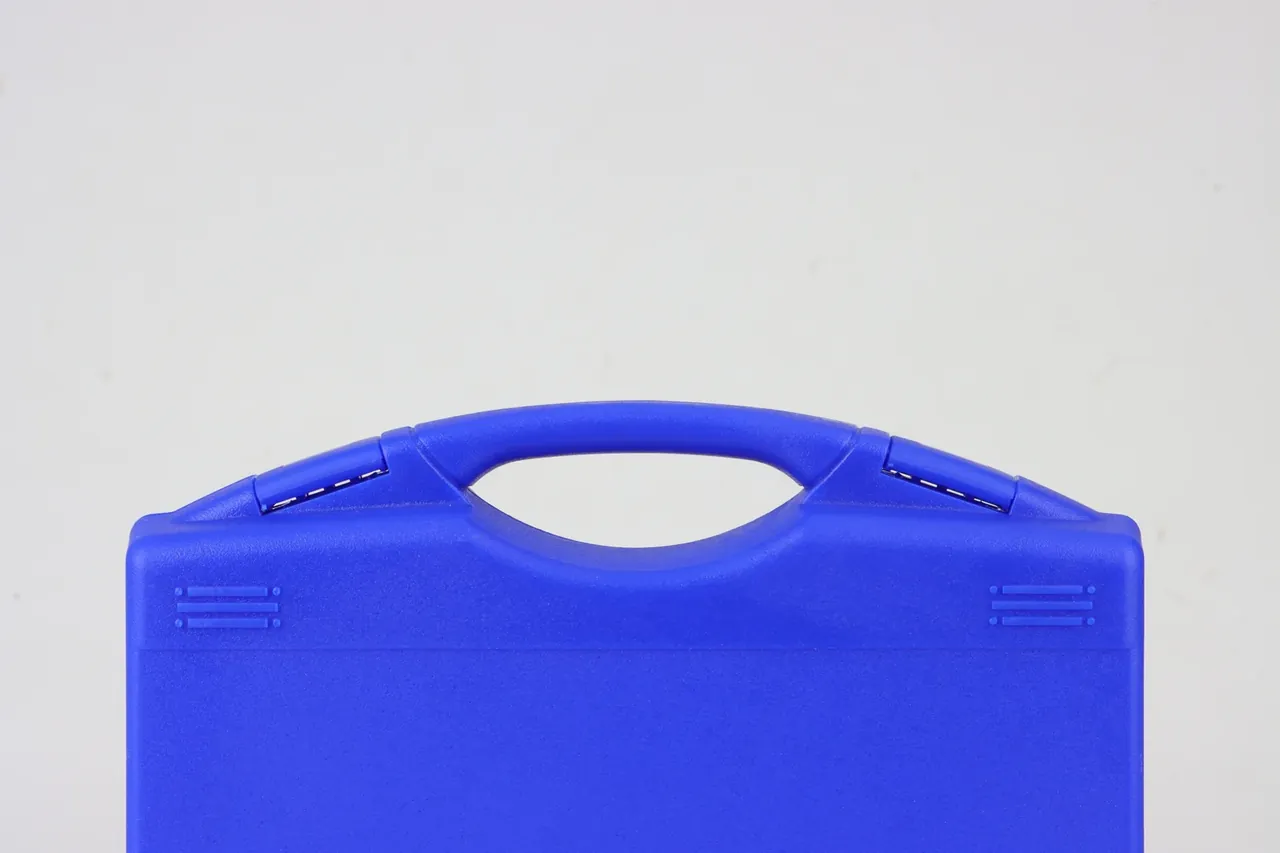
Film the glazing so transmission below 380 nm falls under 1 percent, keep dark samples within 1.5 m of glass, and cap exposure at 1000 kilolux hours a year, then rotate the row so every sample ages.
Read colour the same way each time: spectrophotometer at D65, 8 degree observer, 30 mm circle at the top face centre, converted to Delta E under ASTM D2244 and read on the ISO 105-A02 grey scale. For an accelerated check, UVA-340 lamps to ISO 4892-3 run 500 hours at 340 nm and 0.76 W per square metre.
| Delta E | Grey scale | Verdict | Action |
|---|---|---|---|
| Up to 1.5 | 4-5 | Pass | Stay |
| 1.5 to 3.0 | 3-4 | Watch | Move inward |
| Above 3.0 | 3 or lower | Over limit | Withdraw |
3. Dust Collection and Cleaner Compatibility
IP6X, the top dust grade in IEC 60529, covers what the case body keeps out, not a Case Showroom that lets dust pack the latch channels.
Measure it: a 300 mm square stainless plate on the shelf edge, weighed monthly, gives the rate, and above 4 g per square metre per month the air filter is due. Coastal halls add a second problem, since the 5 percent sodium chloride behind MIL-STD-810H Method 509.6 turns galvanised brackets white within six months.
Cleaners stay neutral at pH 6 to 8; acetone, thinner and chlorine disinfectant never enter the store, because a chlorinated solvent crazes a PC panel in thirty seconds.
Clean in seven steps, in this order:
- Lights off first, so fine scratches are not washed out
- Blow grit from the latch channel, at most 0.3 MPa
- Wipe with microfibre dampened in neutral solution, never dripping
- Work one direction, so grit is not dragged
- Brush the seams, then vacuum the debris
- Wipe again with clean water
- Leave the lid open 20 minutes, seal groove dry
4. Visitor Opening and Latch Wear
Opening is the hardest item to quantify in a Case Showroom. One bay sees 18 openings on a weekday and 40 at a weekend, about 540 a month and 6500 a year, while the latch is rated for 8000 cycles, so a set lasts barely 15 months. Failure starts as a drop in opening force, from 150 N to 95 N, and by then a knock on the plinth can pop the lid. Further down, bolt travel wears from 8 mm to under 5 mm, and closing becomes an illusion, with feedback in the hand and no engagement in the channel. The hinge is quieter: pin clearance starts at 0.25 mm and at 0.60 mm the lid rocks, pinching the seal on one side. Run two sets per bay, one openable, one static, swapped every two weeks.
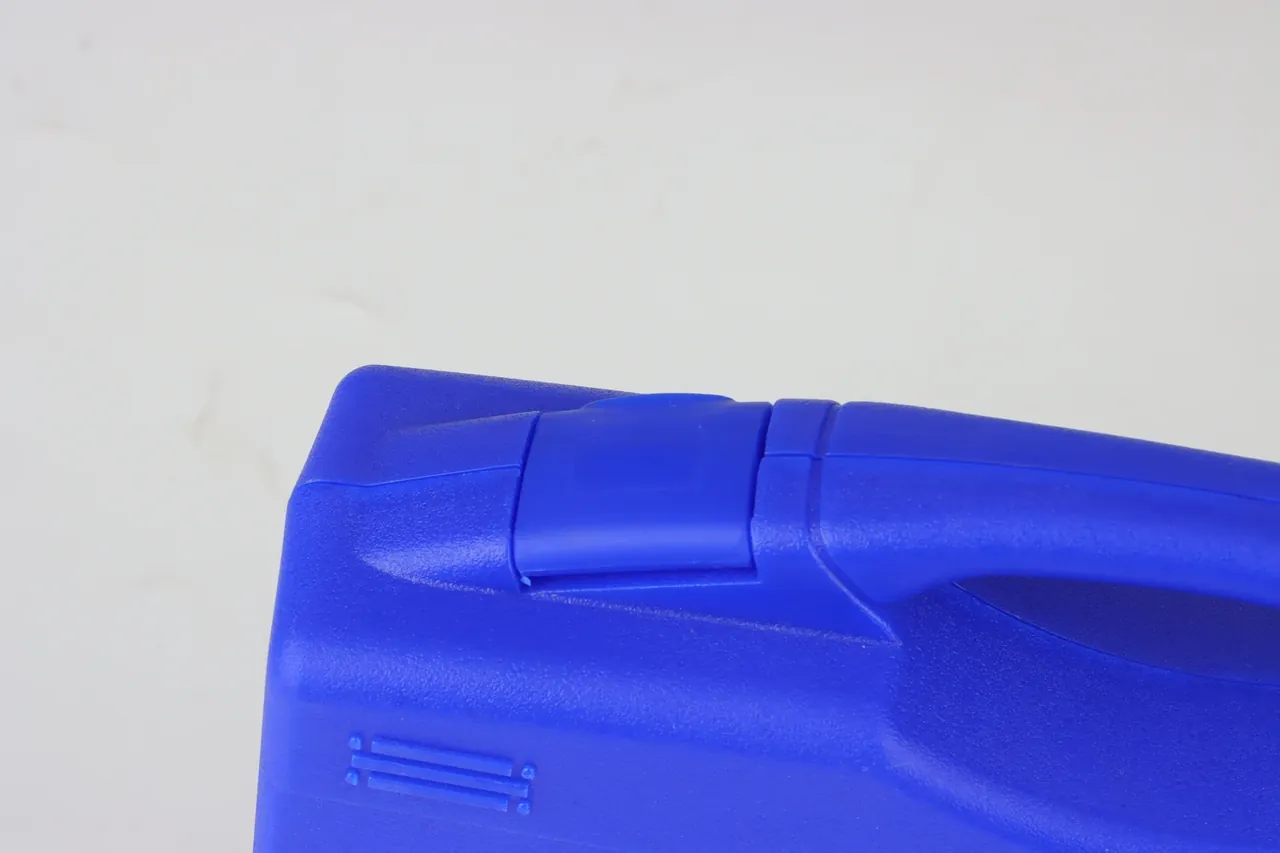
Read clearance with feeler gauges; if 0.60 mm enters, the bush is replaced. Grease only holds dust and speeds the wear it hides.
Opening force is read with a push-pull gauge at the lever. Once a week is enough; after three rounds the hand is faster than the instrument.
5. Replacement Limits and Withdrawal
| Part | Threshold | Action | Withdraw at |
|---|---|---|---|
| Colour | Delta E 3.0 | Rotate inward | Still over on re-test |
| Latch | 95 N opening | New latch | Travel under 5 mm |
| Hinge | 0.60 mm clearance | New bush | Boss cracked |
| Seal | 30 percent set | New cord | Groove distorted |
| Handle | 1.0 mm pin play | New handle | Boss cracked |
The order is fixed: rotate, replace, withdraw. Rotation costs a move outward, replacement needs spares, withdrawal covers structural faults. Fewer than three in ten retired samples need regrinding.
Three log columns are enough: bay number, last part changed with date, verdict. Chained, they show whether a sample fell behind at month 14 or month 20.
Conclusion
The difficulty in Case Showroom upkeep is not cleaning but replacing an impression with four figures: colour shift, dust rate, opening force and pin clearance. Set intervals by calendar and judge by threshold, and sample life becomes a curve in a log. Two years of columns give a spares budget that can be defended.
This article discusses only the container (case body) side of specifications and design intent, and does not cover any handling, loading or use of the contents.
Related Reading
- Sealing and periodic re-inspection of reserve cases
- Daily care and spares for hard-shell trolley cases
- Derusting and paint repair on metal ammunition boxes
- Weekly care and mould changes on injection machines
Related Products
- 8 Series — Gun Cases; Military Equipment Cases; Camera Equipment Cases; Drone Cases; Watch Cases; Knife Cases; First Aid Cases; Electronics Equipment Cases
- WL8-2812 PP Gun Case — model WL8-2812
- All protective cases and toolboxes: 7 series, 158 models