

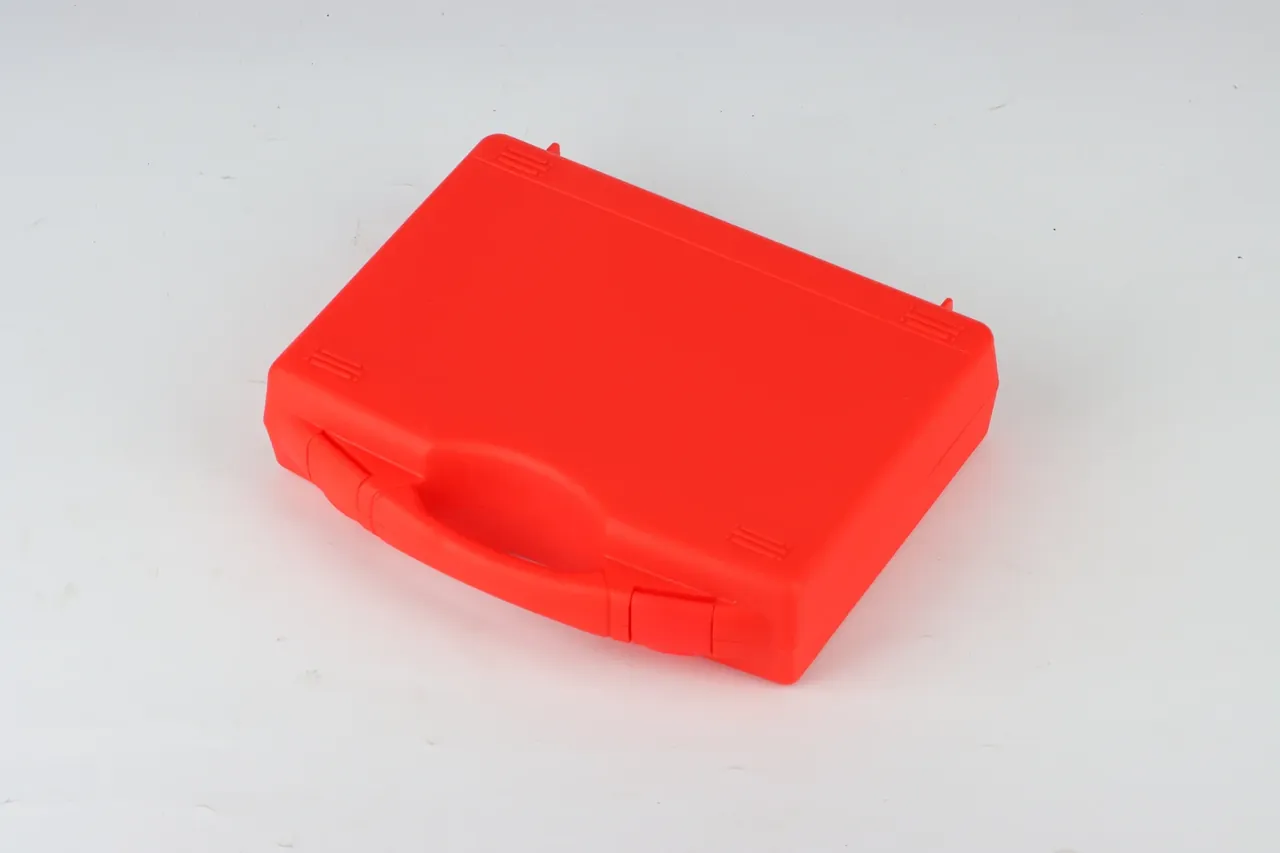
Quick answer: Three factories quote one drawing at 118, 137 and 156 yuan inside the same Case Showroom. The spread is billing scope, not profit: mould amortisation, masterbatch, packing, mixed loading. Split the quote into six blocks before arguing price.
Table of contents
- The Quote Is Six Blocks, Not One Number
- MOQ and Mould Ownership Divide the Same Fee
- Sixty-Eight Days From Tool to Loading Dock
- Payment Milestones Decide Who Carries the Risk
- Six Quote Traps and How to Check Them
- FAQ
1. The Quote Is Six Blocks, Not One Number
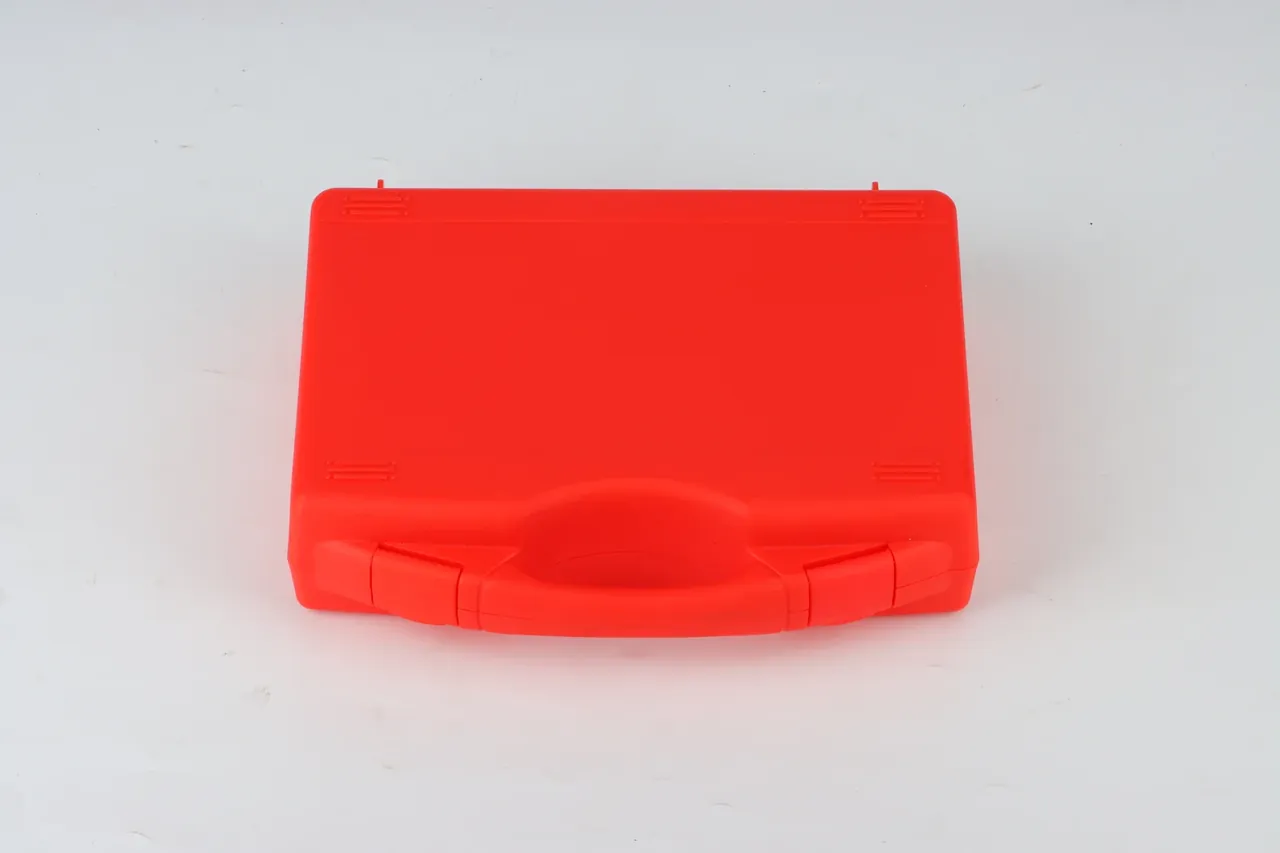
Three factories quoted the same 460 by 330 by 180 mm plastic case at 118, 137 and 156 yuan in one Case Showroom. Resin differs by under four yuan. The other 34 come from mould amortisation, masterbatch and what packing includes.
| Cost block | 118 yuan | 137 yuan | 156 yuan | Check |
|---|---|---|---|---|
| Resin | 44 | 46 | 47 | Weight × pellet price |
| Moulding | 26 | 28 | 30 | Cavities × machine hour |
| Hardware and gasket | 10 | 12 | 13 | Latch and seal list |
| Packing | 4 | 6 | 8 | Carton or pallet wrap |
| Mould amortisation | 0 | 8 | 12 | Total ÷ quantity |
| Overhead and margin | 14 | 17 | 20 | Includes inspection |
A zero in the mould column is not a free tool. It is billed once on the first order, or the contract leaves ownership with the supplier. The middle quote spreads 48,000 yuan over 6,000 units, 8 yuan each. The high quote spreads it over 4,000 units at 12 yuan and promises no second charge.
Using 118 as the benchmark returns a mould fee billed apart, colour billed apart, packing billed per carton, and a settlement above 137.
2. MOQ and Mould Ownership Divide the Same Fee
Minimum order quantity is changeover time divided by batch size. A 460 mm tool on a 250-tonne machine takes about four hours to swap, set up, shoot and confirm.
- 300 units: changeover adds about 6 yuan per case, and the tool fee sits outside the price
- 1,000 units: changeover drops to 1.8 yuan, and masterbatch comes in full 25 kg bags with no premium
- 3,000 units: changeover falls under 0.7 yuan and the batch earns a continuous machine slot
Mould ownership needs a clause: the buyer purchases the tool and keeps the right to move it; the supplier amortises per unit to a cap, then transfers it; or the buyer pays in full for staged refunds after an agreed volume.
The third is cheapest and argues most. Tie refunds to quarterly shipments, or two years pass with nothing returned.
One line is missing: who maintains the tool. A steel mould is rated near 50,000 shots, and every repair past that should be quoted, not promised as free service.
3. Sixty-Eight Days From Tool to Loading Dock
Lead time is five stages added together. This order ran 68 days, including one insert revision after trial shots.
| Stage | Days | Owner | Bottleneck |
|---|---|---|---|
| Tooling and trial | 22 | Tool room | Insert drawing sign-off |
| Sample approval | 8 | Both sides | Colour chip in transit |
| Production | 26 | Moulding | Masterbatch arrival |
| Inspection and fixes | 4 | Quality | Inspector scheduling |
| Loading and papers | 8 | Logistics | Space reallocation |
Only 15 of 22 tooling days are machining; seven wait for signatures. A day lost at the insert drawing pushes everything after it, while the launch date does not move.
The 26 production days assume one shift. Compressing means a second tool at 48,000 yuan, or a two-shift slot at 1.5 yuan per case, both agreed at order placement.
Loading is the least controllable. A 40-foot high cube takes 1,200 cases, and a missed sailing costs a week.
4. Payment Milestones Decide Who Carries the Risk
Thirty percent deposit, sixty after inspection, ten retained for 90 days is common. Below 20 percent, many schedule other work first; that is cash flow, not malice.
The inspection payment must hang on an executable event: a signed report, a confirmed packing list, loading photographs. A contract saying "before shipment" is executed as "after leaving the factory".
Retention should match the failure mode. Chipped latch teeth, hinge cracks and colour drift surface within 90 days; stretch it to a year and the supplier prices capital in at 1.2 percent.
5. Six Quote Traps and How to Check Them
- Mould cost amortised into price and charged again on order one; demand total and quantity
- "Standard colour included" covering only black and grey, others at 3 yuan more
- Packing meaning one carton, with pallet and film at 2.5 yuan per case
- Mixed loading defined as same specification, with an 8 percent fee for two models
- Inspection support meaning floor space, travel and overtime billed apart
- Seven-day validity without a lock clause, so a resin rise resets the quote
The best check in a Case Showroom is to have the six blocks written on paper and confirmed against the case itself; what cannot be written gets added later.
Conclusion
The spread inside a Case Showroom is one case described by different accounting. Split the quote into six blocks, price amortisation against the MOQ, write ownership down. Then the next Case Showroom quote becomes negotiable.
This article discusses only the container (case body) side of specifications and design intent, and does not cover any handling, loading or use of the contents.
Related Reading
- How a sample review round runs in a Case Showroom
- Metrics and weights on a supplier scorecard
- Which production stops to see on a tour
- Process steps and records in a gun case audit
Related Products
- 8 Series — Gun Cases; Military Equipment Cases; Camera Equipment Cases; Drone Cases; Watch Cases; Knife Cases; First Aid Cases; Electronics Equipment Cases
- WL8-2812 PP Gun Case — model WL8-2812
- All protective cases and toolboxes: 7 series, 158 models