

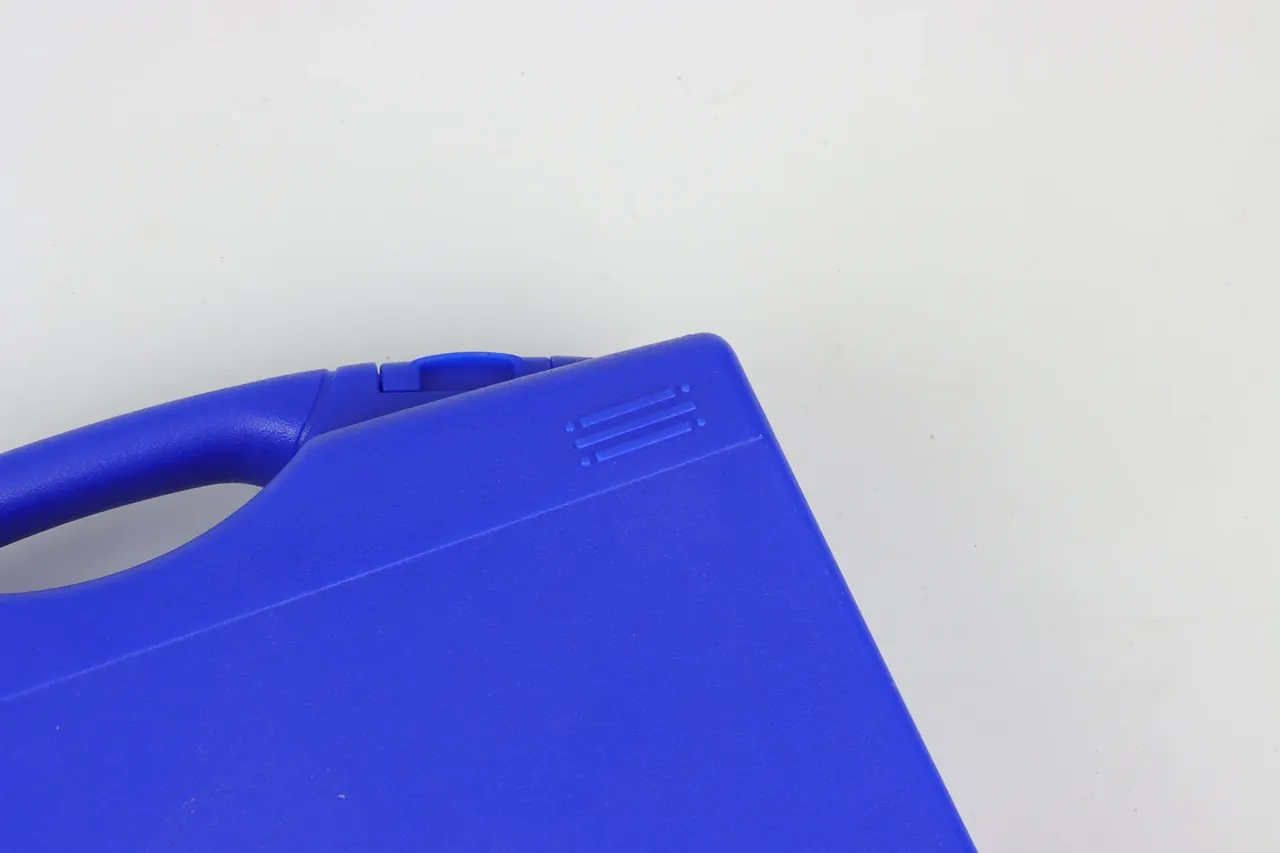
Quick answer: A Case Showroom is dimensioned one way only: bay cavity, shelf span, shelf load, deflection limit. Fix those four and board thickness, bracket section and post spacing follow; take them in another order and the bay fits neither the largest case nor a flat shelf.
Table of contents
- Setting the Bay Cavity in a Case Showroom
- Span and Load Are One Pair
- Working Back From Deflection to Bracket and Post
- Height, Tilt, Aisle and Illuminance
- FAQ
1. Setting the Bay Cavity in a Case Showroom
The cavity starts from the largest item on show, not a shelf catalogue. Measure the biggest case, add clearance for hands, lid and label, and the cavity falls out.
| Largest case L×W×H | Clearance per side | Bay cavity | Units per shelf | Level height |
|---|---|---|---|---|
| 1100×560×420 | 50 | 1200×660×480 | 1 | 450 |
| 800×400×300 | 60 | 920×520×360 | 2 | 380 |
| 600×380×260 | 60 | 720×500×320 | 3 | 340 |
Clearance is not a case of more is better. At 50 mm a visitor reaches down each side and straightens the body; at 120 mm it drifts and needs a lip; below 30 mm the moulded ribs, usually 8 to 12 mm proud, scrape the side panel.
Level height is cavity height plus lid clearance, since a top-hinged lid sweeps back 150 to 200 mm when it opens.
2. Span and Load Are One Pair
Span and load must be stated together; give one and the other is a guess. A Case Showroom runs a 1200 mm span, since the cavity is 1200 mm and posts land between bays.
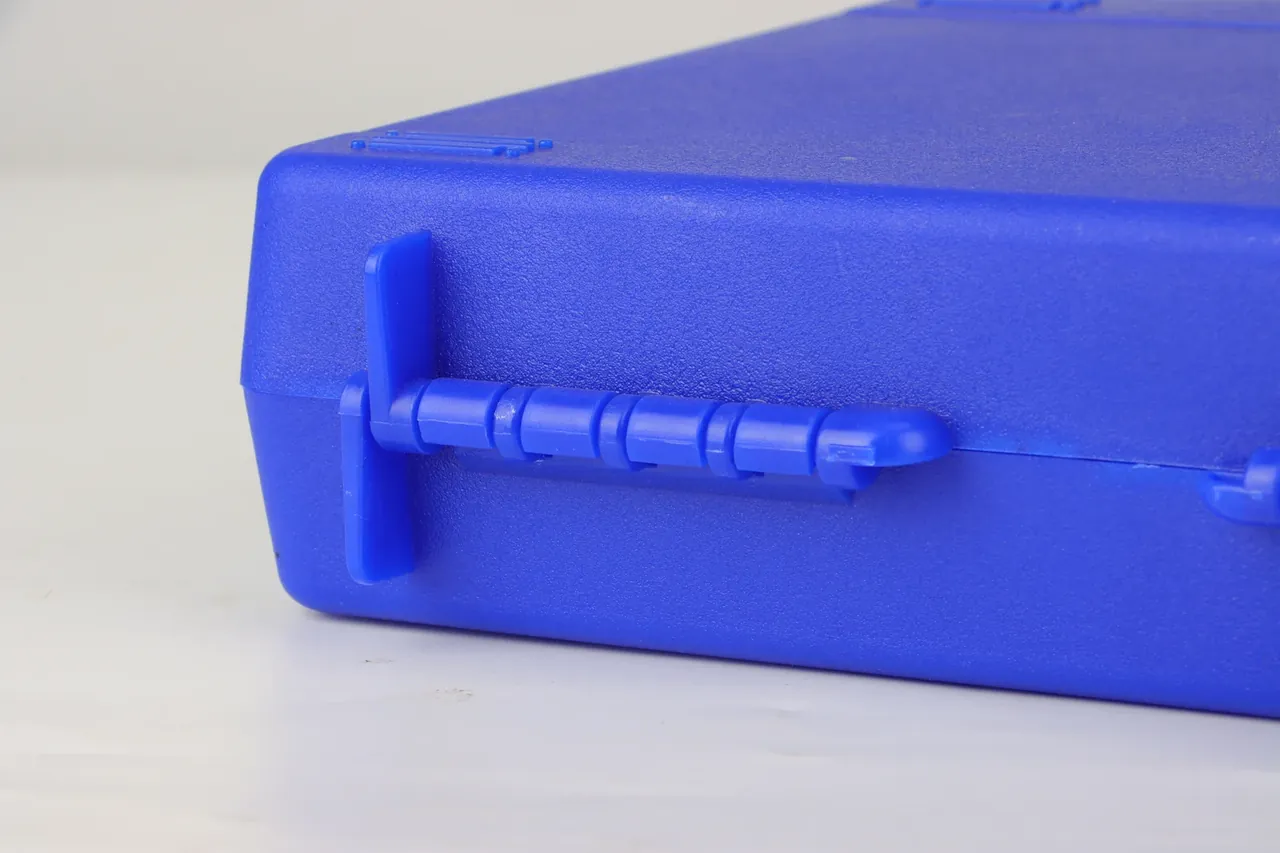
Load comes from the heaviest combination: the largest rotomoulded case is 28 kg, two medium cases 24 kg, a 25 mm board 22 kg, so a shelf carries under 50 kg. The design value is 110 kg, leaving room for a visitor leaning on it.
| Span mm | Board mm | Allowable load kg per shelf | Deflection at full load mm |
|---|---|---|---|
| 600 | 18 | 150 | 1.2 |
| 900 | 18 | 90 | 2.8 |
| 1200 | 25 | 110 | 4.0 |
| 1500 | 25 | 70 | 6.6 |
The last row is a warning: at 1500 mm a 25 mm board sags 6.6 mm against the 5 mm allowed by L/300, so a mid bearer is mandatory.
3. Working Back From Deflection to Bracket and Post
Bracket and post sections are calculated, not copied: the cantilever equals the 660 mm bay depth and holds half of 110 kg.
Five steps, in this order:
- Fix span and design load: 1200 mm and 110 kg are the inputs
- Take the moment as qL squared over eight, here 194 N·m
- Set allowable stress at 157 MPa for Q235, safety factor 1.5
- Back out the section modulus: 194 N·m over 157 MPa gives 1.24 cm cubed
- Check tip deflection against L/300, which is 2.2 mm
Run those numbers and a 40×40×2.0 tube, at 4.4 cm cubed, works at only 44 MPa. Deflection governs: at 1.5 mm wall stress stays safe while the tip drops 3.1 mm, past the 2.2 mm line. That is why a Case Showroom specifies 2.0 mm brackets, not for strength but for deflection.
Posts run 80×40×2.5 tube, strong axis outward, holes on a 450 mm module. M8 grade 8.8 bolts go to 25 N·m with flat and spring washers; 35 N·m dents the wall, 15 N·m works loose.
4. Height, Tilt, Aisle and Illuminance
The first three numbers are structural; these are about looking. Height runs in three tiers, tilt falls as it rises, and viewing distance grows.
| Tier | Surface mm | Tilt | Viewing distance mm | Illuminance lx |
|---|---|---|---|---|
| Lower | 450 | 12 degrees | 800 | 750 |
| Middle | 900 | 10 degrees | 900 | 500 |
| Upper | 1350 | 8 degrees | 1200 | 300 |
Tilt drops with height because of sight line: at 450 mm the visitor looks down about 40 degrees and 12 degrees squares the lid to the eye, while at 1350 mm the sight line is near level and more tilt shows the base. An aisle of 1600 mm suits two-way traffic with people stopping, 1200 mm works one way, and a sample trolley needs 1800 mm. Measure clear width, deducting handrails and overhanging signs. Illuminance splits three ways: 750 lx at feature bays, 200 lx ambient, 3500 K, colour rendering index 90 or better. Circuits run six bays to a 2.5 mm squared feed on a 16 A breaker, luminaires at least 500 mm above the case top so heat does not distort the lid. Check the slab last. A single-sided three-tier run loads 370 kg per linear metre, past the 350 kg per square metre live load of most factory floors; a double-sided island sharing one aisle drops it to about 240.
Conclusion
The Case Showroom chain runs one way: cavity sets span, span and load set board thickness, board and deflection set the section, then come height, tilt and light. Let one load number be a guess and everything after it is trial and error. Put the 1200 mm cavity, 110 kg load and 4.0 mm limit on the drawing, and the 2.0 mm bracket follows in any Case Showroom.
This article discusses only the container (case body) side of specifications and design intent, and does not cover any handling, loading or use of the contents.
Related Reading
- Walking route and talk order for a Case Showroom visit
- Deriving missile box dimensions and wall thickness
- Cushion structure and wall thickness in shockproof cases
Related Products
- 8 Series — Gun Cases; Military Equipment Cases; Camera Equipment Cases; Drone Cases; Watch Cases; Knife Cases; First Aid Cases; Electronics Equipment Cases
- WL8-2812 PP Gun Case — model WL8-2812
- All protective cases and toolboxes: 7 series, 158 models