

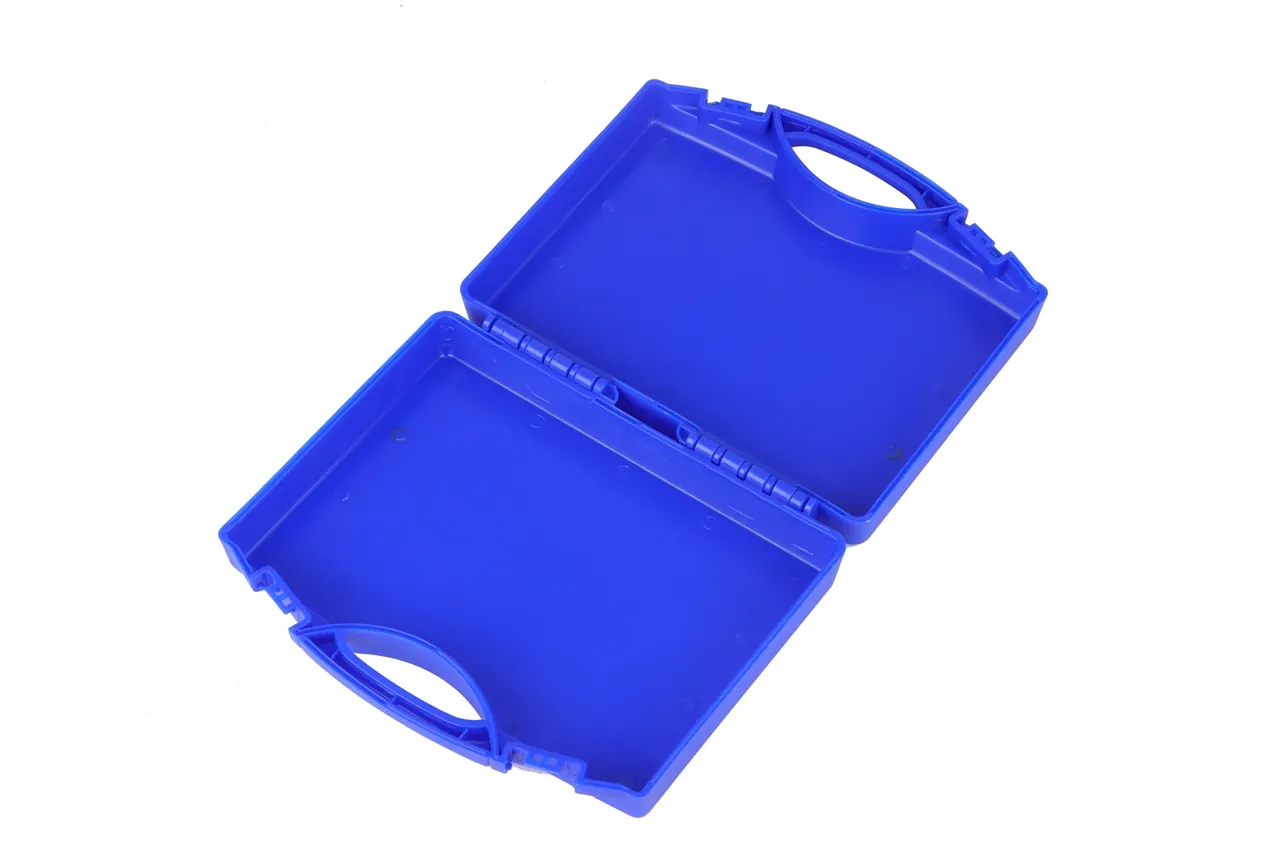
Quick answer: A Case Showroom acceptance repeats only when the criteria sheet is signed before anything opens, sampling is calculated, and each failure is graded. Forty-six samples, nine checks, two reworks.
Table of contents
- The First Sheet Comes Before the First Case
- Measuring 46 Samples by Hand
- Latches, Lids and Three Numbers
- 96 Hours of Salt Spray and Thermal Cycling
- Grading a Failure and Closing the Loop
- Records That Survive the Next Year
- FAQ
1. The First Sheet Comes Before the First Case
Forty-six samples stood in two rows in the Case Showroom, each numbered in pencil. The factory wanted to open cases first and agree on limits after; the buyer refused.
| Check | Sampling | Limit | Source |
|---|---|---|---|
| Colour | All 46 | ΔE up to 1.5, no through-scratch | Chip + spectrophotometer |
| Dimensions | All 46 | Nominal ±0.8 mm | Drawing + caliper |
| Lid seam | All 46 | 0.25 mm feeler blocked, step under 0.4 mm | Feeler + depth gauge |
| Wall | 2 per model | 3.2 mm ±0.15 mm | Ultrasonic gauge |
| Latch force | 1 per model | 180 N without release | 500 N gauge |
| Hinge life | 3 units | 5,000 cycles, gap under 0.2 mm | Cycling rig |
| Sealing | 3 units | 30 minutes at 1 m, paper dry | Tank + paper |
No limit says "feels fine". Twenty-three models at two units puts appearance and dimensions on everything; destructive checks take seventeen pieces.
2. Measuring 46 Samples by Hand
Measurement runs large to small: length, width, height, then cavity, rim and base wall. Six points per case are marked on the floor, so another operator lands in the same spot next morning.
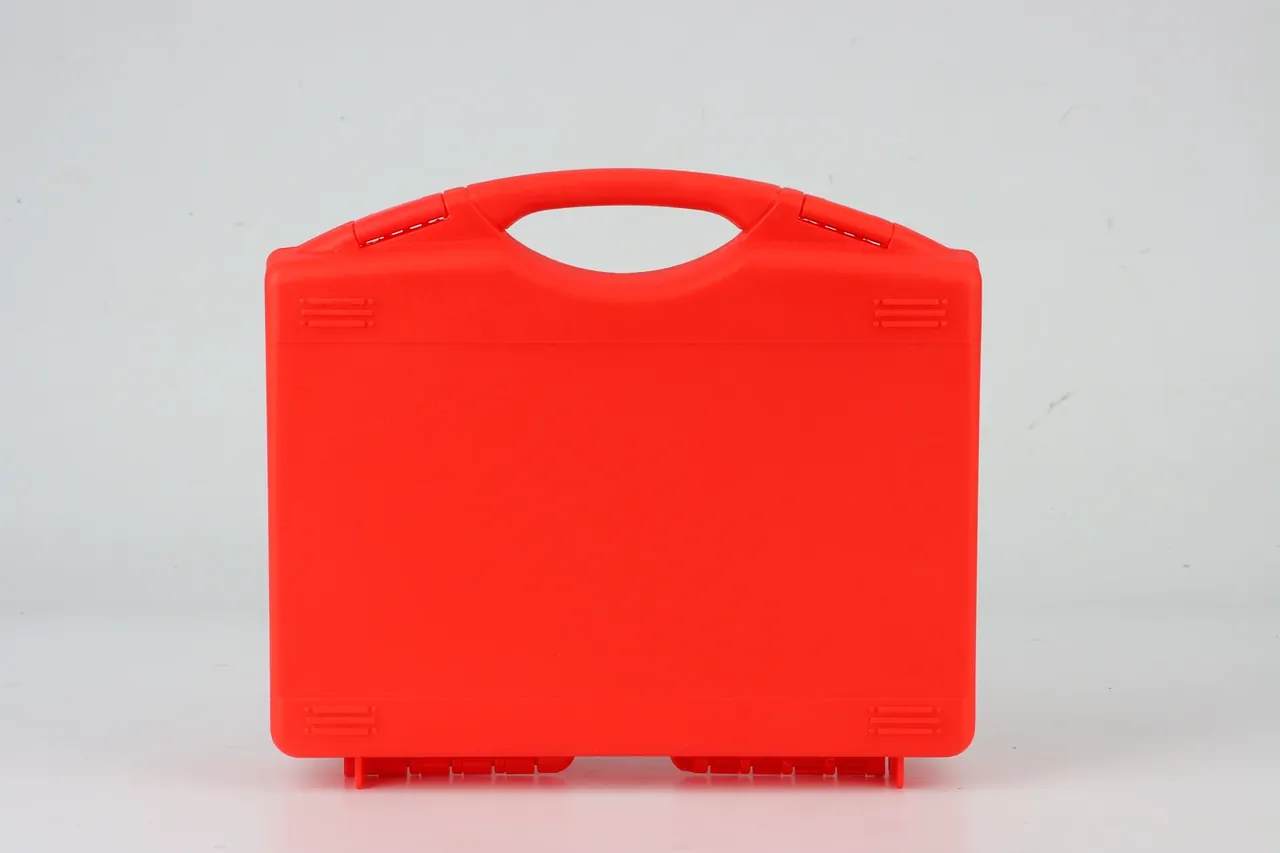
Six points across forty-six cases is 276 numbers, called twice. One 1,180 mm case failed at 1,181.1 mm while another cavity of the same mould read 1,180.2 mm, so the shrinkage spread had been stretched by the long dimension.
Seams take feeler stock. A 0.25 mm blade runs the joint, and wherever it enters, the case is marked down.
3. Latches, Lids and Three Numbers
Holding force comes from a 500 N gauge at the latch root, pulled at 50 mm per minute, three pulls with the median kept. This batch read 205, 198, 212 and 196 N against a 180 N line. Median, not mean, so one slipped hook does not drag the result.
Lid loading runs at 80 kg for 24 hours, deflection read at once, 2 mm or less passing.
Hinge life runs at 20 cycles a minute, so 5,000 cycles takes four hours ten minutes; these units grew 0.08 to 0.14 mm at the root.
4. 96 Hours of Salt Spray and Thermal Cycling
Salt spray applies to hardware only. Latches, hinge pins and lock cores go in three sets each for 96 hours, then get rinsed, dried and held against a rust chart. Past 5 percent, the first question is material grade, not the plater.
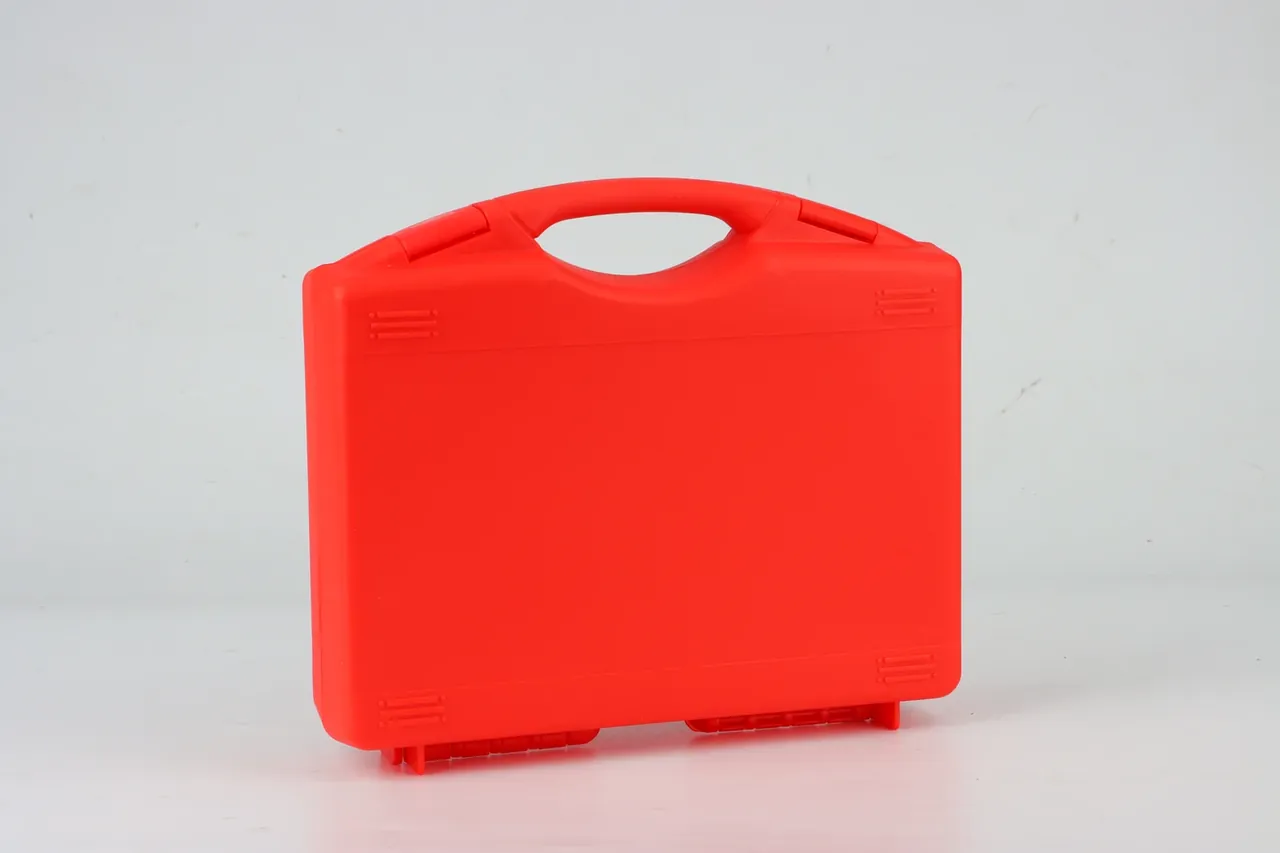
Thermal cycling holds −25 °C and 60 °C for four hours each, three rounds, with two hours at room temperature before anything opens. Cold breaks latches; heat shows as sagging beside the handle.
Drops run from 1.2 m onto corner, edge and face, and skipping them moves the acceptance to a loading dock.
Sealing is tested on the whole case: four sheets of paper inside, lid latched, thirty minutes at 1 m. Wipe the shell first, or condensation reads as leakage.
5. Grading a Failure and Closing the Loop
Nine checks produced two problems: three cases with a 0.45 mm lid step, twelve with ΔE at 1.9. The first went to mould repair, the second was re-shot with corrected masterbatch.
| Grade | Typical item | Action | Re-check | Signs off |
|---|---|---|---|---|
| 1 Critical | Leakage, crack, latch release | Stop batch, re-inspect all | Same rig, extra cavities | Both quality leads |
| 2 Major | Dimension, colour, hinge gap | Rework and re-sample, or written concession | Same gauge, same points | Buyer's project lead |
| 3 Minor | Light scuff, label off 1 mm | Log only, rework after three | Visual | Inspector |
Concessions belong on paper. No Case Showroom batch leaves on a verbal nod.
Re-checks use the same gauges and people within 48 hours; a pass from fresh hands with a fresh caliper proves nothing.
6. Records That Survive the Next Year
A Case Showroom record worth keeping comes from these moves, not the last signature:
- One disposable number per sample, as day code, model and sequence, such as 926-A17-03
- Three photos per check: reading, feature, whole case
- Reworked units boxed apart, labelled with item and date
- One signed sheet per side, each failure carrying its real number
- Files in three levels — model, batch, item — dated in the name
Conclusion
An acceptance is worth the readings it can reproduce six months later. Forty-six samples, nine limits and two reworks in a Case Showroom compress into two signed sheets and a set of photographs. Fix the limits, zero the gauges, grade the failures. Then the next Case Showroom visit starts from a signed sheet.
This article discusses only the container (case body) side of specifications and design intent, and does not cover any handling, loading or use of the contents.
Related Reading
- Acceptance items and limits for airdrop cases
- Inspection items for mould storage
- Inspection items for artillery shell boxes
- Pallet marking rules and checks
- Work instruction steps and limits
Related Products
- 8 Series — Gun Cases; Military Equipment Cases; Camera Equipment Cases; Drone Cases; Watch Cases; Knife Cases; First Aid Cases; Electronics Equipment Cases
- WL8-2812 PP Gun Case — model WL8-2812
- All protective cases and toolboxes: 7 series, 158 models