

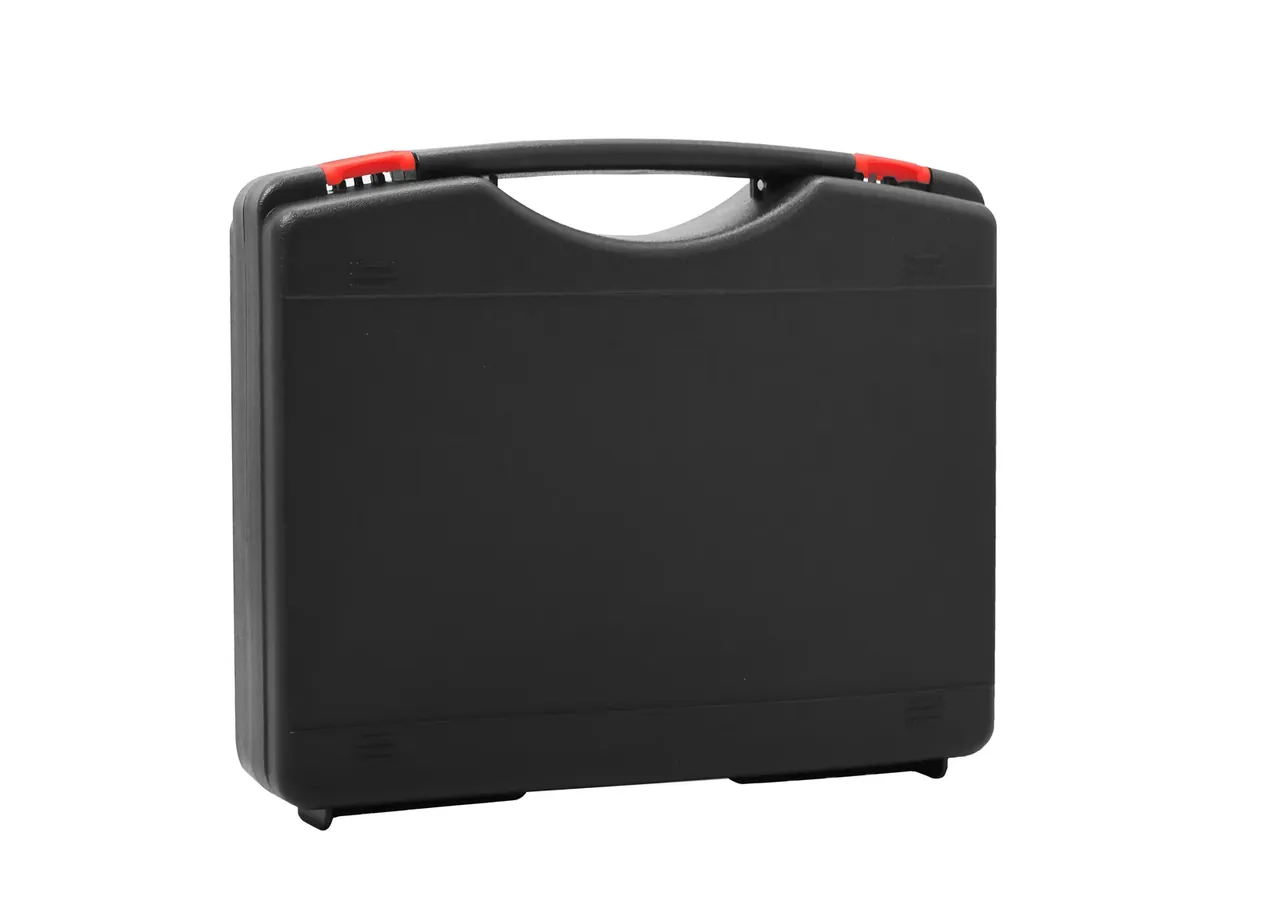
Quick answer: Cases for SE Asia must hold a 28 °C, 85–90% RH internal climate with closed-cell foam, 20 g/m³ desiccant and drained grooves working together.
Table of contents
- Internal climate on a coastal site
- Condensation at the moment of opening
- Foam water uptake and the mould threshold
- Desiccant dose and replacement interval
- Gasket grooves, drain holes and stacking
- FAQ
1. Internal climate on a coastal site
Cases for SE Asia work in 28 °C and 85–90% RH most of the year. Closing a lid there seals wet air in: at 32 °C and 90% RH a cubic metre carries about 30 g of vapour, so a 60 L case brings 1.8 g with it.
The internal climate follows the shell. PP near 0.2 W/(m·K) with little thermal mass lets a 45 °C lid pull trapped air to 40 °C within 2 h, while a night drop to 24 °C leaves the interior lagging. A standing 4–6 °C gap condenses vapour and re-evaporates it.
Three sources feed that vapour, in unequal shares.
| Source | Amount | Share | Fix |
|---|---|---|---|
| Air trapped at closing | 1.8 g in 60 L | 70% | Shorter lid time, desiccant |
| Foam and liner | 3–5% by weight, open cell | 20% | Closed-cell foam |
| Gasket groove | 3–5 mL per metre | <10% | Drain holes, tilt |
2. Condensation at the moment of opening
Condensation arrives in Cases for SE Asia within the first minute. Air at 32 °C and 90% RH has a dew point near 30 °C, so a 25 °C wall sits 5 °C past it and fogs at once; a 4 °C gap beads water within 30 s.
That film is not a leak. Close the lid for 10 min and reopen: beads that clear were condensation, while beads that stay under one latch mean compression below 25–30%.
Cases for SE Asia are handled three ways. Open in an air-conditioned room or shade, where 24 °C and 55% RH keeps the gap under 2 °C. Hold each opening below 30 s and below two per hour. Add an indicator sachet to flag uptake before the foam shows it.
3. Foam water uptake and the mould threshold
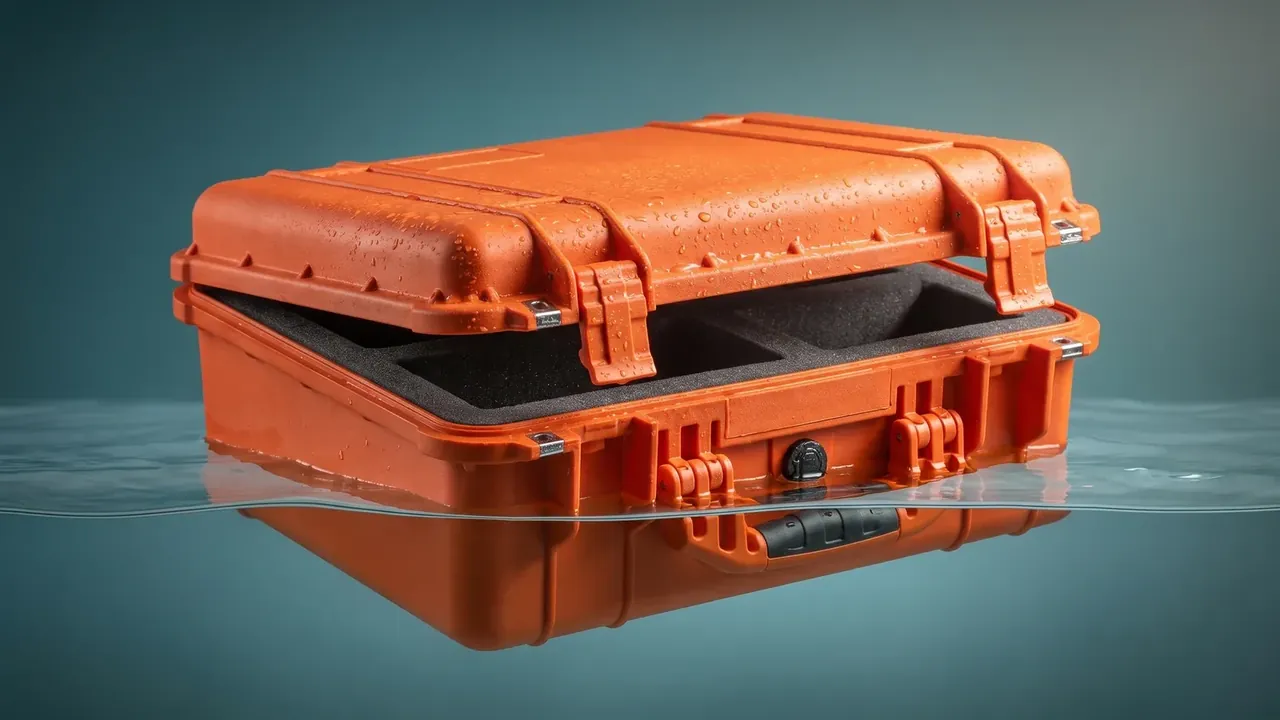
Foam is the biggest reservoir inside. EVA is closed cell at under 1% uptake in 24 h; EPE and PU are open cell at 3–5%, holding 3–5 times more in the same air. Uptake predicts mould better than density does.
For Cases for SE Asia the threshold is 75% RH held for 48 h: past that most spores germinate, and a week brings visible spots. A 40 ft box runs 80–90% for 14 days at sea, squarely inside that window.
Antimicrobial and antifungal are separate jobs. Silver zirconium phosphate at 0.3–0.8% targets bacteria, not mould. OBPA contains arsenic and is restricted in most EU consumer goods; IPBC is commonly capped near 0.1%.
Uptake can be checked in house: dry a 50×50×20 mm sample at 105 °C for 2 h and treat any loss above 2% as wet.
| Foam | Cells | 24 h uptake | Mould risk |
|---|---|---|---|
| EVA | Closed | <1% | Low |
| EPE | Open | 3–5% | Medium |
| PU | Open | 3–5% | High |
4. Desiccant dose and replacement interval
Cases for SE Asia start at 20 g/m³ and then add margin. A 60 L case is 0.06 m³, so the base dose is 1.2 g; two 5 g sachets go in, covering four or five openings across 6 months. A gasket that stops sealing doubles the figure.
Set the interval at 6 months, not the sachet shelf life. Silica gel saturates in 2–3 weeks in open 90% RH air and lasts half a year inside an IP67 shell. Log any opening past 10 min and replace early after five.
Placement decides efficiency: hang the sachet in the lid where convection carries vapour to it, never under the load. Split across four corners and uptake runs about 40% faster.
| Volume | 20 g/m³ base | Fitted | Interval |
|---|---|---|---|
| 60 L | 1.2 g | 5 g × 2 | 6 months |
| 120 L | 2.4 g | 10 g × 2 | 4 months |
5. Gasket grooves, drain holes and stacking
The gasket groove in Cases for SE Asia is where water collects. EPDM seals on a continuous line only at 25–30% compression, and the groove holds 3–5 mL per metre; laid flat, it leaks inward daily.
Drain holes and angle solve it. Drill Ø3 mm at the lowest point every 200 mm, deburr the edge, and ship at a 2° tilt. Never drill under a latch, where compression peaks.
In the box, leave air gaps: 50 mm between cases, 50 mm off the wall, 100 mm off the roof, with 0.5 m/s of movement. A tight stack runs 10–15 points wetter on the blind face.
A 30 min logger beats judgement for Cases for SE Asia: a curve past 85% within 48 h of loading says the wet air went in at closing, and that batch should be opened within 7 days.
Conclusion
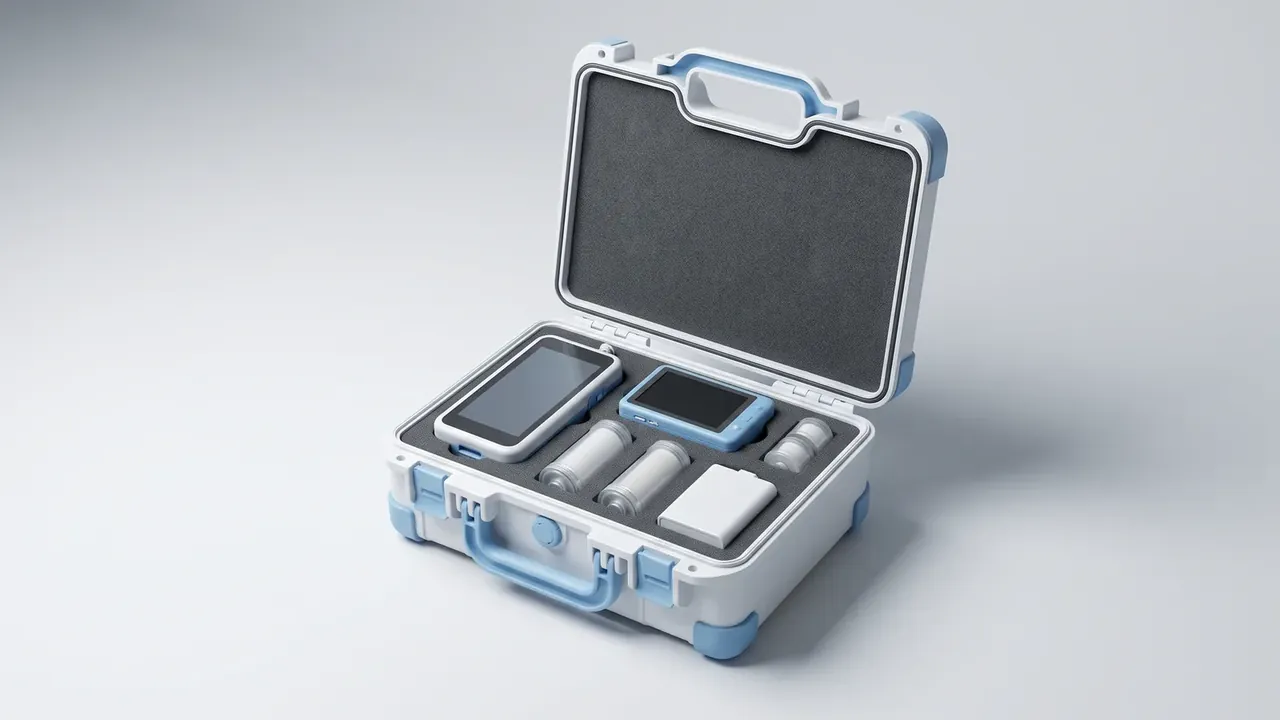
Moisture control for Cases for SE Asia is a chain, not a sachet: less wet air at closing, closed-cell foam under 1% uptake, a drained groove, 50 mm of air gap, and 20 g/m³ of desiccant covering 6 months of permeation. Break one link and the rest cannot compensate. A 30 min logger curve held under 60% is the verdict.
This article discusses only the container (case body) side of specifications and design intent, and does not cover any handling, loading or use of the contents.
Related Reading
- How condensation forms inside a sealed case
- Gasket and O-ring material choices
- Loading rules for full truckload and LTL
- How to judge a dustproof case
Related Products
- 8 Series — Gun Cases; Military Equipment Cases; Camera Equipment Cases; Drone Cases; Watch Cases; Knife Cases; First Aid Cases; Electronics Equipment Cases
- WL8-2812 PP Gun Case — model WL8-2812
- All protective cases and toolboxes: 7 series, 158 models