

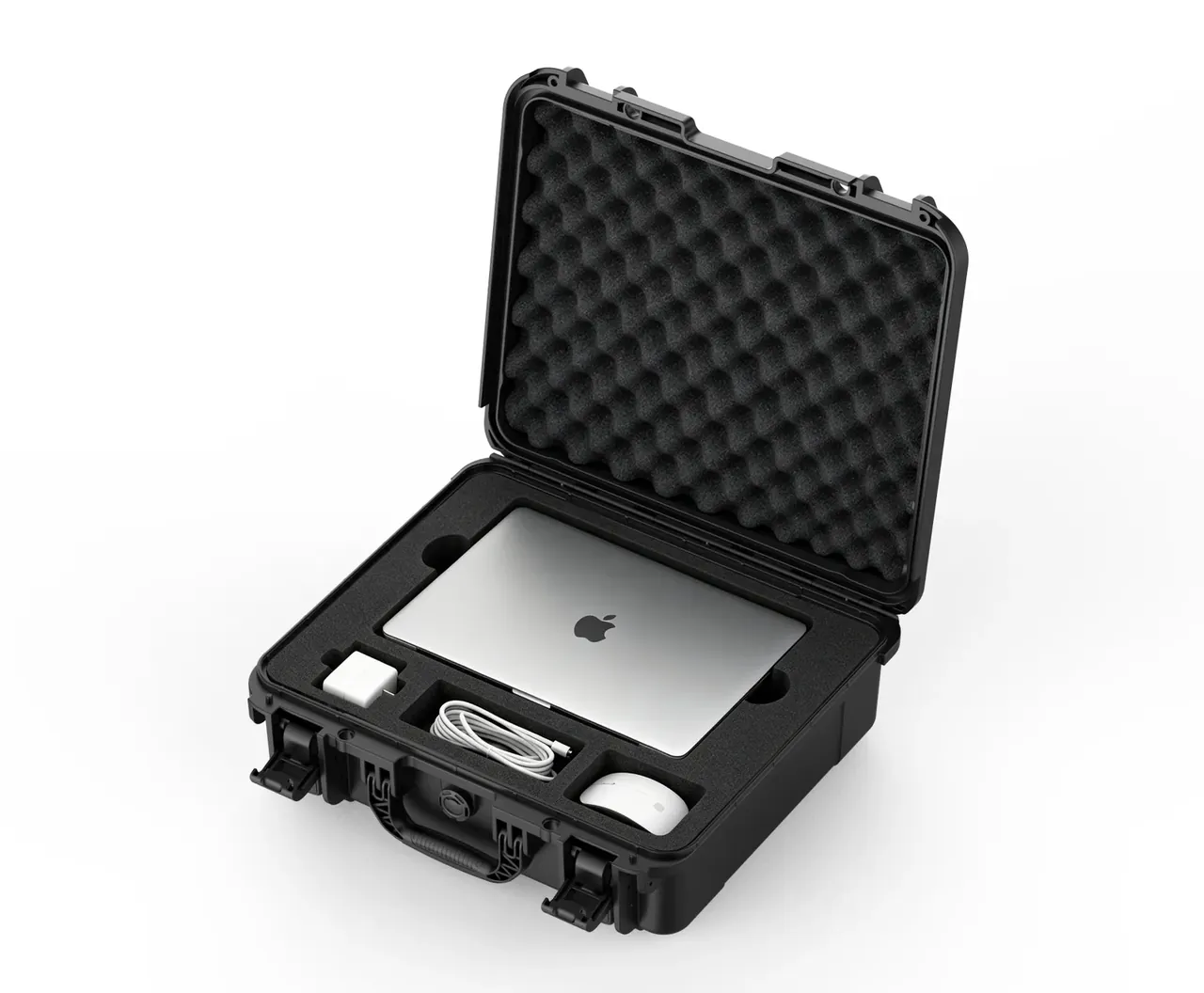
Quick answer: An IP67 case does not become explosion proof once a safe meter sits inside: the 0.15 mm flame path, not the seal, carries the certification.
Table of contents
- The shell is not the difference
- Flame path gap and joint length
- Earthing and hydrostatic test
- Where the boundary sits
- Three common misuses
- FAQ
1. The shell is not the difference
Two enclosures can share a moulding, a latch and a gasket and still belong to different worlds. The protection case is certified to IEC 60529: 1 m of water for 30 min, dust-tight at level 6; the explosion-proof unit to IEC 60079-1: an internal ignition whose flame must not escape.
The test items barely overlap: 30 kPa of external pressure against 1.5 times internal reference pressure. One keeps water out, the other keeps fire in, so wall thickness, gasket compression and fastener count diverge.
Timing splits too: an IP67 verification closes in 2 weeks, while an Ex d type test runs to 6 weeks for ignition, flame transmission and temperature class.
The marking is the fastest check: an Ex d plate carries five pieces, Ex d, IIB, T4, Gb and a certificate number, while a protection case carries IP67 and a standard number. Miss one of the five and the shell has no flameproof status, however thick it looks.
2. Flame path gap and joint length
Two numbers define the flameproof joint: gap and length. For group IIB gas in a 2 L enclosure the maximum planar gap is 0.15 mm and the joint must run at least 25 mm. They are a matched pair and cannot be judged one at a time.
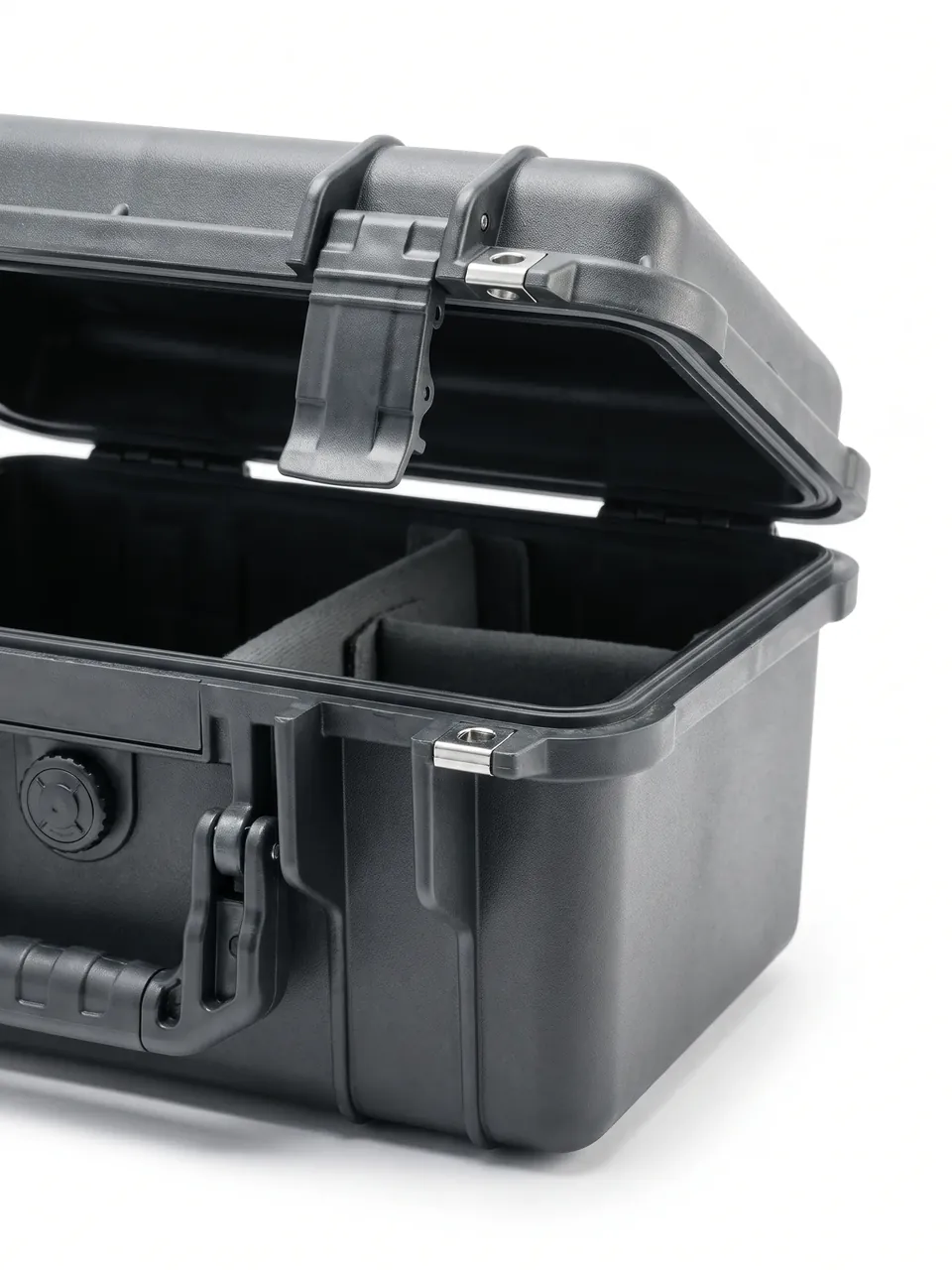
At 0.2 mm the escaping jet still ignites the surrounding mixture; under 0.05 mm machining and thermal movement stop the lid seating. The 0.15 mm value leaves margin on both sides.
| Structural item | Ex d IIB T4 | Typical protection case |
|---|---|---|
| Planar gap | ≤0.15 mm | Not controlled, gasket seals |
| Joint length | ≥25 mm | No such concept |
| Fasteners | 8 × M6 at ≤100 mm pitch | 2 latches |
| Surface class | T4, ≤135 ℃ | Not measured |
| Cable entry | Flameproof gland, ≥6 threads | Plain sleeve |
Joint length is how far the flame travels: 25 mm cools the gas from 1800 ℃ to below 200 ℃ as the wall absorbs the heat. No gasket replaces that path, because a burnt gasket stops nothing.
Fastener count is not redundancy either. Eight M6 screws at 100 mm pitch keep the joint closed at peak pressure; drop 2 and the gap opens to 0.3 mm, which voids the 0.15 mm limit entirely.
Volume sets the ceiling: 0.15 mm holds for group IIB up to 2 L, while at 5 L the gap must narrow and the joint grows past 30 mm. A protection case cannot be scaled into an explosion-proof one by small edits.
3. Earthing and hydrostatic test
Earthing belongs to the flameproof structure, not the electrical fit-out: two terminals outside the shell, each bonded with at least 4 mm² of copper, resistance at or under 0.1 Ω, kept clear of the joint face so tightening leaves lid contact untouched.
The hydrostatic test runs at 1.5 times reference pressure for 60 s with no leakage and no permanent set. Reference pressure comes from the ignition test, around 0.3 MPa for a 2 L IIB enclosure, so the test lands near 0.45 MPa; a protection case takes 30 kPa of external water instead.
| Test | Explosion-proof criterion | Protection case criterion |
|---|---|---|
| Hydrostatic | 1.5 × reference, 60 s, no leak | 30 kPa external, 30 min immersion |
| Ignition transmission | Internal ignition, no outside light | Not performed |
| Surface temperature | T4 class, ≤135 ℃ | Not performed |
| Earth resistance | ≤0.1 Ω at 2 terminals | Not performed |
Temperature class is skipped most often. T4 caps the hottest external point at 135 ℃ under normal and fault conditions, while a protection case has no class at all: a 90 ℃ shell still passes.
Five points need measuring: lid centre, both latch seats, a base rib and the gland root. The hot spot is rarely the lid but the root, where the wall is thinnest; on one 2 L shell the lid read 78 ℃ and the root 112 ℃, a 34 ℃ spread.
4. Where the boundary sits
The Zone 1 boundary compresses to one line: if the equipment sits in Zone 1 and runs on power inside, the enclosure needs Ex certification; if the shell only carries it with no power inside, a protection case is enough. The test is energy, not appearance.
Does putting a meter in a protection case make it explosion proof? No. The case neither withstands an internal ignition nor limits surface temperature nor controls the gap, so it only keeps water and dust out, and any certification belongs to the meter rather than the shell.
Three lines settle it: is there a powered part inside, which pulls the enclosure into the flameproof scope; can gas accumulate inside, which demands flameproof or pressurised construction; and are entries fitted with flameproof glands, without which the joint fails from the first hole.
Responsibility is a fourth layer. A protection case answers for its IP rating only, an explosion-proof enclosure for the whole flameproof performance, joint machining, torque and marking included; mixing certificates leaves the chain broken at the first incident.
Transport and storage is the case waved through most often: unit indoors, lid shut, equipment unpowered, and the protection case does the same job.
5. Three common misuses
The first is using IP67 as if it were Ex: the certificate cites the wrong standard and the report holds immersion and dust but no ignition test and no temperature class, which wet workshops let pass because the enclosure does not leak.
The second is drilling a cable entry and fitting an ordinary sleeve. Every opening needs a flameproof gland with at least 6 threads engaged and no free path around the thread; a plain sleeve turns the hole into a second vent, well past the 0.15 mm limit.
The third is refitting fewer fasteners after service: three of the eight M6 screws come out for rewiring and only six go back, so the joint opens at peak pressure while the outside looks untouched. Only a refit list and torque marks catch this.
| Misuse | Column | Failure mechanism | Correct practice |
|---|---|---|---|
| IP67 sold as Ex | Certification | No ignition or temperature test | Check IEC 60079-1 on the plate |
| Plain cable sleeve | Structure | Hole becomes a second vent | Flameproof gland, ≥6 threads |
| Missing fasteners | Structure | Joint opens to 0.3 mm | Refit list and torque marks |
Two of the three sit in the structural column and one in the certification column, which is why the price gap cannot be read off the certificate alone: structural cost hides in machining and fasteners.
Conclusion
The comparison fits into two columns. The certification column lists the standard number, temperature class, ignition test and certificate scope; the structural column lists the 0.15 mm gap, the 25 mm joint, 8 fasteners, 2 earthing terminals at 4 mm² and the 1.5 times hydrostatic test. Read certification first and stop at any mismatch; then read structure, where one failing row on gap, joint, fasteners or cable entry sends the enclosure back into the protection-case category. Pass both and it is an explosion-proof enclosure; pass certification while the structure has been modified and the certificate is void. That order beats memorising any single figure, because it forces both halves of the claim into one pass.
This article discusses container-side specifications and design implications only, and does not cover any handling, loading or use of the contents.
Related Reading
- Explosion-proof case certification and standards
- IP67 protective case rating criteria
- How to verify an IP67 certificate
Related Products
- 8 Series — Gun Cases; Military Equipment Cases; Camera Equipment Cases; Drone Cases; Watch Cases; Knife Cases; First Aid Cases; Electronics Equipment Cases
- WL8-2812 PP Gun Case — model WL8-2812
- All protective cases and toolboxes: 7 series, 158 models